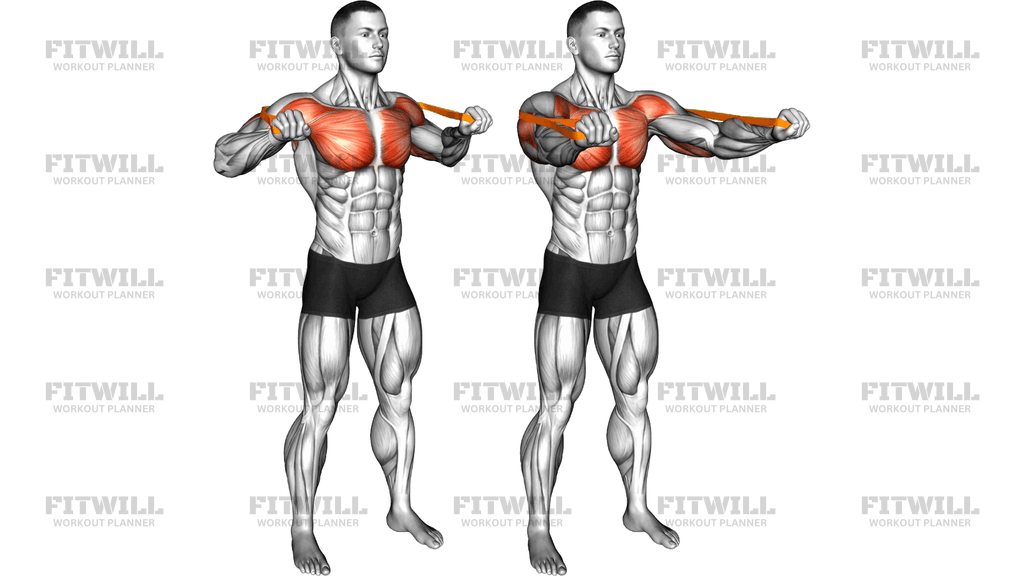
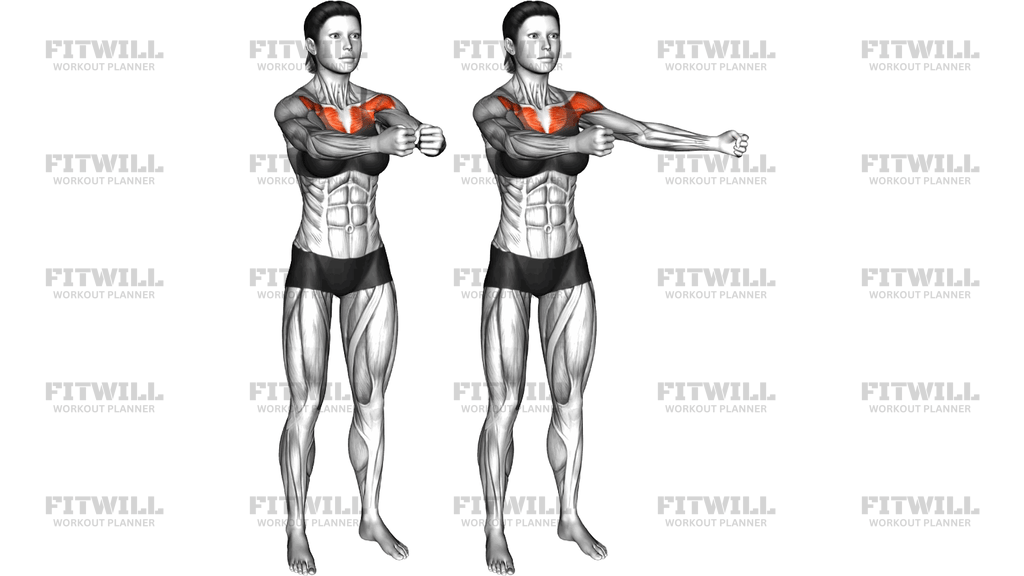
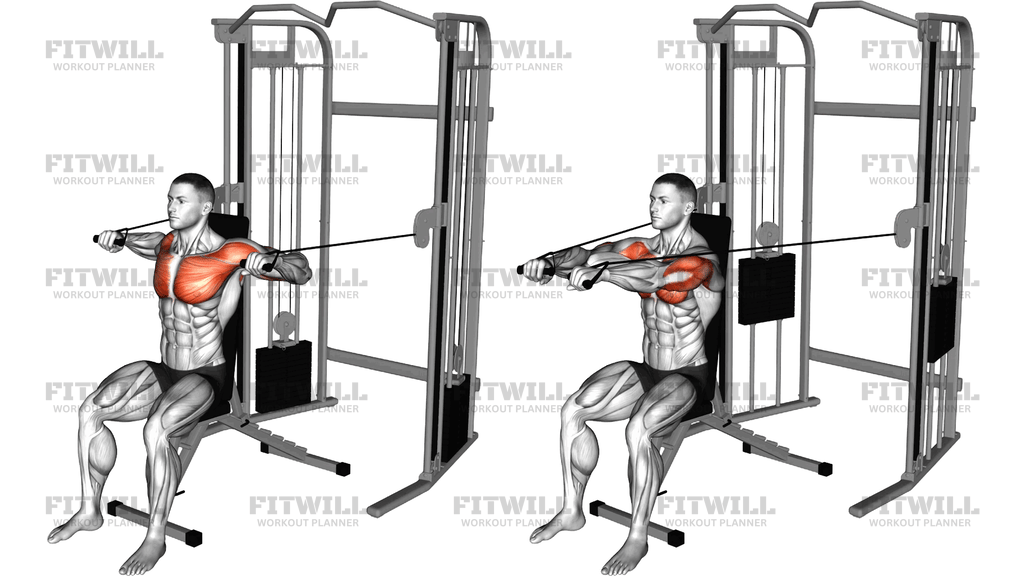
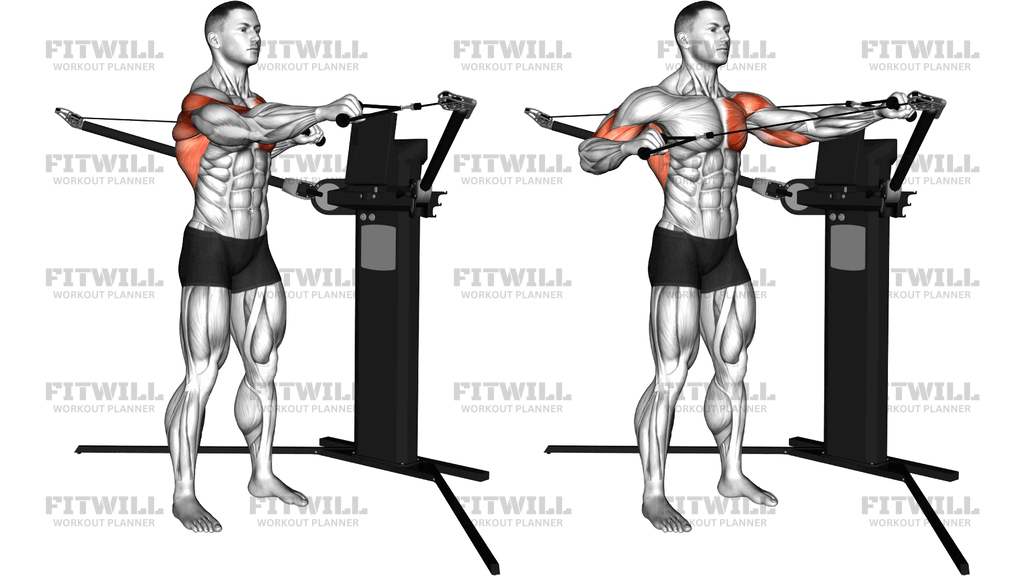
Cable Standing Fly Hugs
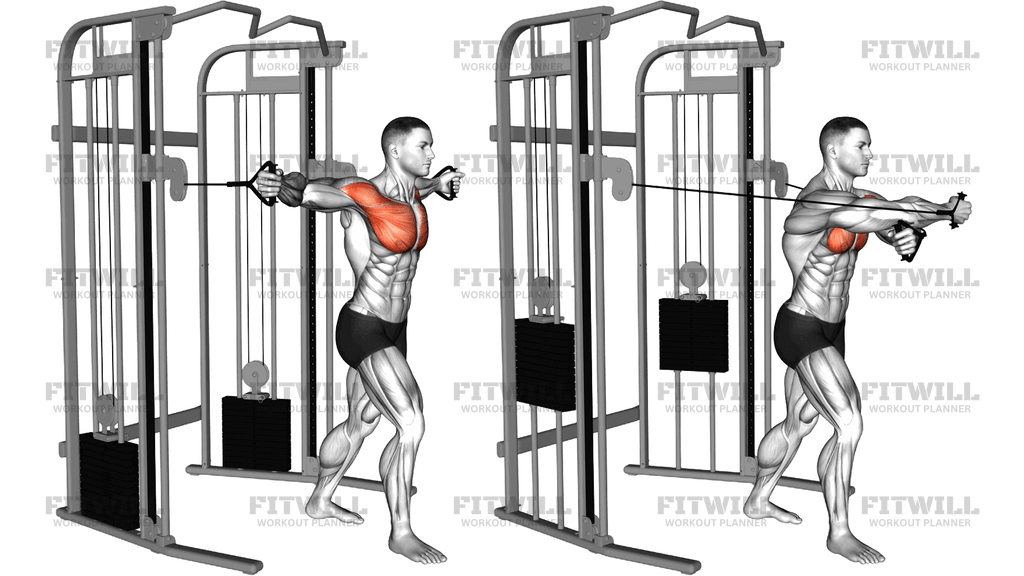
Cable Standing Fly Hugs are a chest isolation exercise performed between two cable pulleys set at roughly shoulder height. You stand centered between the stacks with a handle in each hand, arms open wide to the sides, and then sweep the handles forward and together in front of your chest in a wide hugging arc. Because the cables pull outward and slightly behind you at the start, the chest stays under tension through the entire range, which is hard to achieve with dumbbell flyes.
This movement suits anyone who wants focused chest work with constant resistance: lifters who feel dumbbell flyes only at the stretched position, people managing shoulder comfort who prefer the free path of cables over a fixed machine, and intermediate to advanced trainees looking for a finishing movement after presses. Beginners can use it too, starting with light weight to learn how horizontal adduction actually feels.
The primary muscles worked are the pectorals, with the sternal head of the chest doing most of the work as the arms sweep down and across. The front delts assist, and the muscles of the upper back, shoulders, and core work statically to hold your torso steady while the cables pull you backward. Standing instead of lying down also demands more from your legs and trunk for balance.
Setup matters more here than in most chest exercises. The pulley height determines the line of pull: set at shoulder height, the resistance travels straight through the mid-chest, and a split stance with a slight forward lean gives you a stable base and keeps the cables from dragging your shoulders back. If you stand too upright or too far forward, you lose tension at the start and turn the set into a partial rep.
To execute well, keep a soft, fixed bend in the elbows and move only at the shoulder joints. Think about wrapping your arms around a barrel: lead with the elbows slightly down, bring the hands together in front of your sternum, and let them overlap or meet for a brief squeeze before opening back up under control. The return is where most reps are wasted; resist the cables instead of letting them fling your arms wide.
Use Cable Standing Fly Hugs after your main pressing work for 2 to 4 sets of 10 to 15 reps, where the constant tension really pays off. Keep the weight moderate; this is a feel exercise, not an ego lift, and heavier loads tend to pull you out of position or turn the movement into a press.
[ Workout Log & Planner ]
Put your next workout in Fitwill
Keep your plan and training log ready when you are.


Instructions
- Set both pulleys of a dual cable machine to shoulder height and attach a single handle to each side.
- Grip one handle in each hand and step forward into a staggered stance, one foot ahead of the other, so the cables cross slightly behind you and pull your arms out wide.
- Lean your torso forward a few degrees from the hips, brace your core, and let your arms open until you feel a stretch across the chest, keeping a soft bend in both elbows.
- Exhale and sweep the handles forward and together in a wide hugging arc, as if wrapping your arms around a large barrel.
- Continue until your hands meet or cross slightly in front of your sternum, elbows staying just below shoulder level, and squeeze the chest for a beat.
- Inhale and slowly let the arms open back out along the same arc, resisting the pull of the cables until you reach the starting stretch.
- Keep your torso, head, and legs fixed throughout; only the shoulder joints should move during each rep.
- Complete all reps on one side of the body position, then turn around and repeat facing the opposite direction so both sides get equal work.
- Reset your stance and brace between sets, and step the handles back to the stacks in a controlled manner rather than releasing them under tension.
Tips & Tricks
- Choose a weight you can stop at the end of the hugging motion without stepping forward; if the stack pulls you onto your toes, the load is too heavy for a flye pattern.
- If your shoulders roll forward as the hands meet, think about keeping the elbows slightly below wrist height and leading with the elbows instead of the hands.
- Bending the elbows more as you fatigue turns the movement into a pressing motion; lock in your elbow angle at the start and hold it for the whole set.
- Stand far enough back that you feel tension even at the fully open position; if the weight stack settles or the cable goes slack before your arms open, take a half step back.
- The rear foot in your split stance is doing real work. Push it into the floor to stop your hips from twisting as the cables pull backward.
- A slight downward angle at the finish, hands crossing near your lower chest, biases the sternal chest; raising the hands toward the face shifts work toward the upper chest and front delts.
- Do not let the cables snap your arms back on the return. Count two to three seconds on the way out to keep the stretched position honest.
- If one side dominates, try single-arm versions facing the same direction each set so you can spot and correct left-right differences in range or squeeze.
Frequently Asked Questions
What muscles do Cable Standing Fly Hugs work?
The pectorals are the prime movers, especially the sternal head as the arms sweep across the body. The front delts assist, while the upper back, rear shoulders, and core stabilize your torso against the backward pull of the cables.
Why stand with a split stance instead of feet side by side?
The staggered stance lowers your center of gravity and braces you against the cables pulling you backward and slightly upward. A square stance makes it much harder to stay balanced, especially near the stretched position.
What pulley height should I use for Cable Standing Fly Hugs?
Shoulder height is the standard setup and gives a line of pull straight through the mid-chest. Lowering the pulleys and finishing lower biases the lower fibers, while a higher setup shifts emphasis toward the upper chest.
How are these different from a regular cable crossover?
The hugging action emphasizes a wide, sweeping arc with the intent of wrapping the hands around each other, rather than a straight press-like crossing. It keeps the movement purely at the shoulders and encourages a stronger peak squeeze in front of the chest.
Can beginners do this exercise?
Yes, but start with a light weight and focus on keeping the elbow angle fixed and the torso still. The standing position adds a balance demand that takes a few sessions to feel comfortable.
What is the most common mistake with Cable Standing Fly Hugs?
Using too much weight and turning the flye into a press by bending and extending the elbows. The second most common is letting the cables snap the arms back to the start, which removes most of the tension from the chest.
What can I substitute if my gym only has one cable tower?
Use a single handle and work one arm at a time, or do standing dumbbell flyes with a slight forward lean. Resistance bands anchored behind you at chest height also mimic the outward line of pull well.
Where should this exercise fit in my workout?
Place it after your heavy pressing movements like bench or incline presses, as a finisher for 2 to 4 sets of 10 to 15 reps. Constant cable tension makes it fatiguing on already-tired chest muscles, so it rarely works well as a first heavy lift.
Is it safe for my shoulders?
For most people, yes, as long as you keep the stretch position comfortable and never force the arms wider than your natural range. If you feel pinching at the front of the shoulder, reduce the range slightly, lower the weight, and keep the elbows a touch lower as you hug.
Should my hands cross at the end of each rep?
Allowing the hands to overlap or cross by a few centimeters in front of the sternum is fine and can improve the squeeze. Just avoid crossing so far that your shoulders roll forward and round.