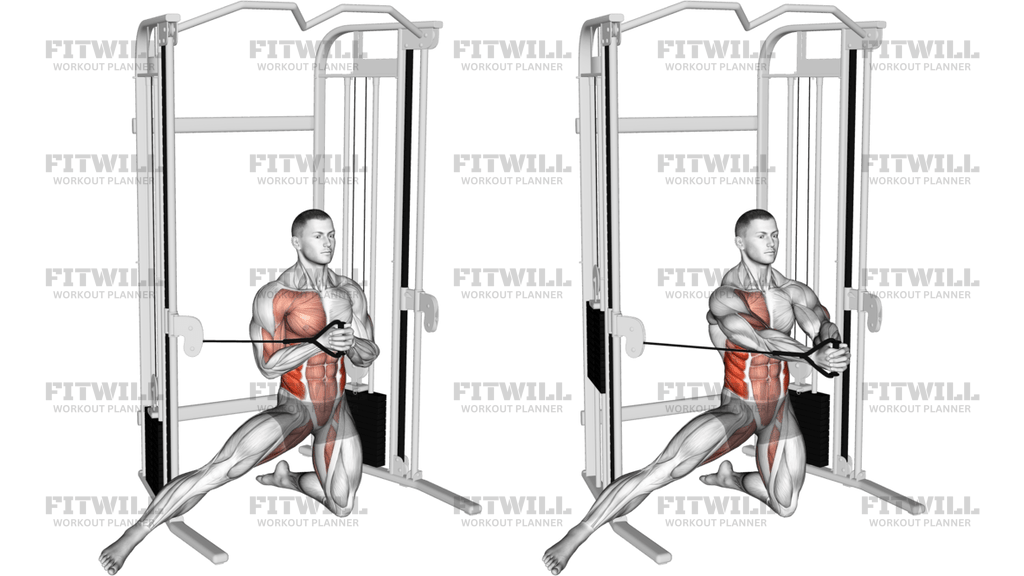
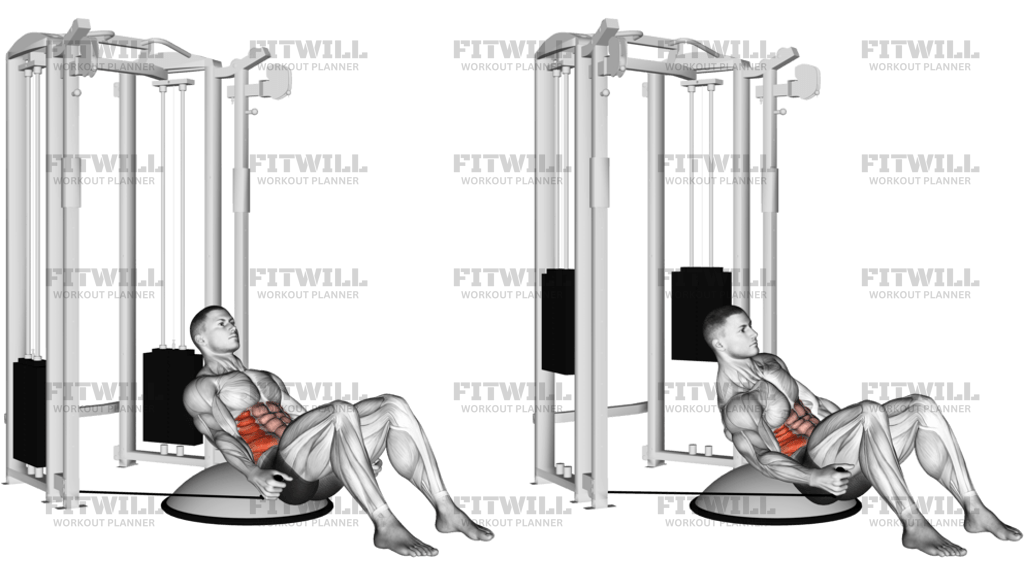
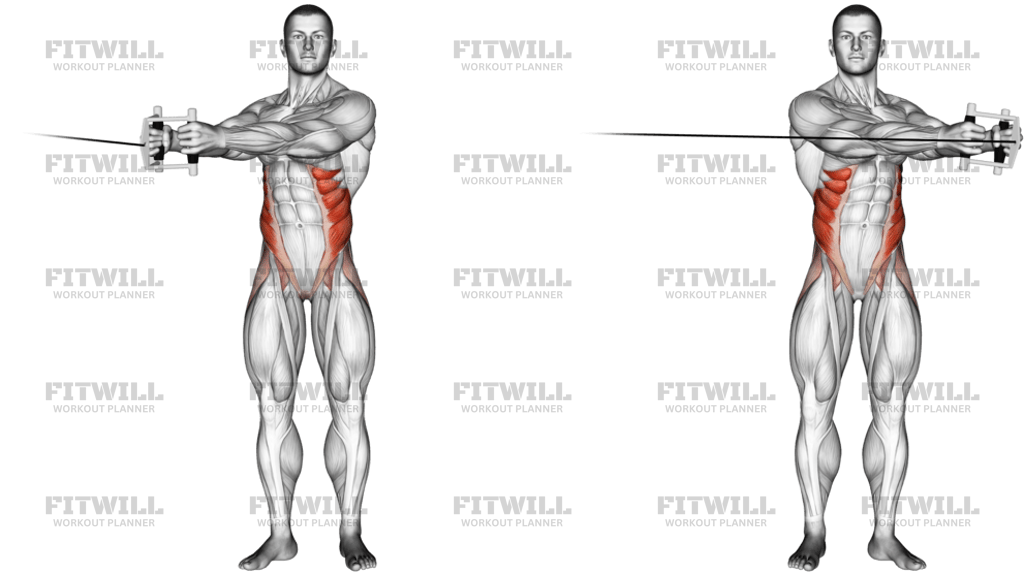
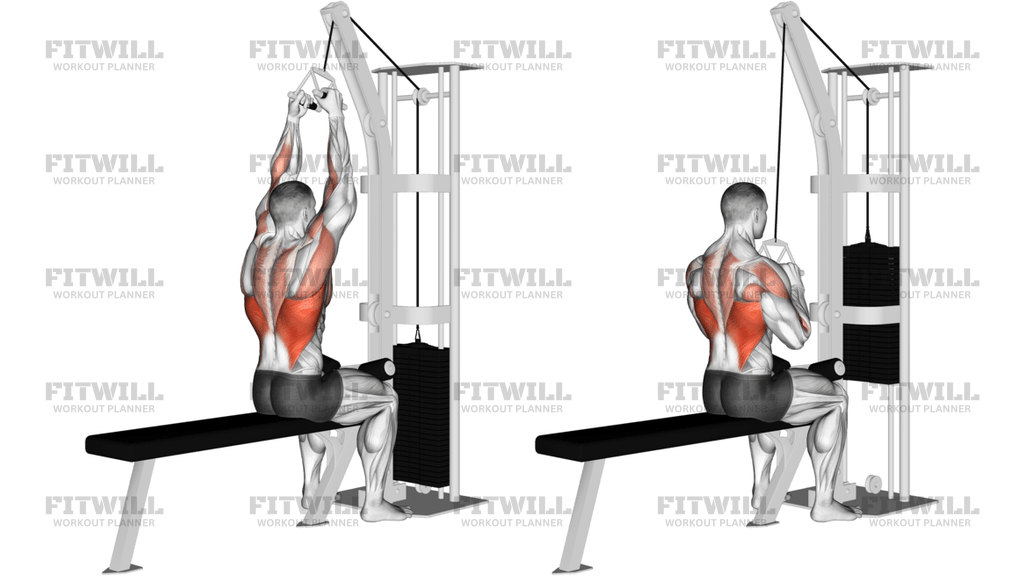
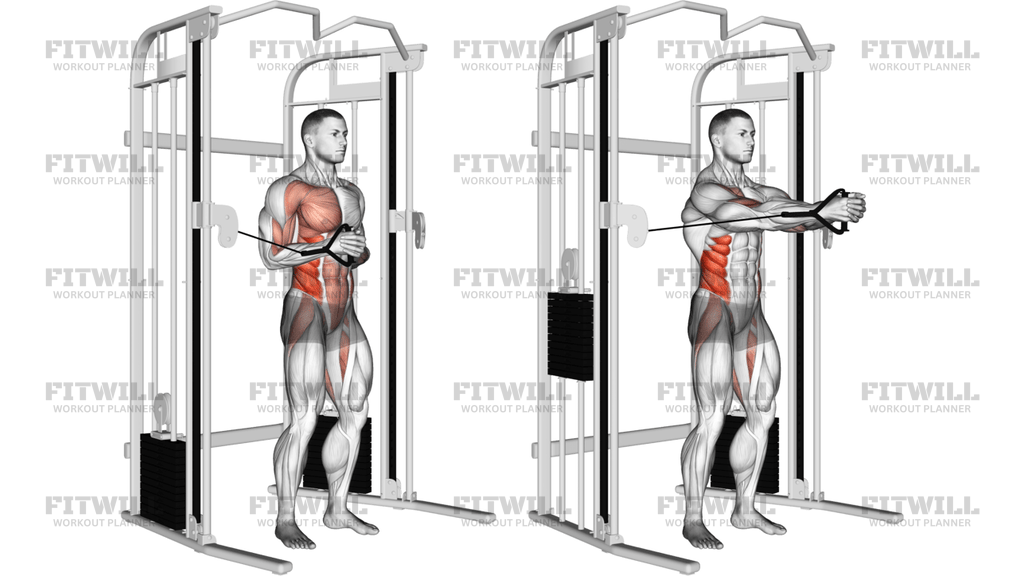
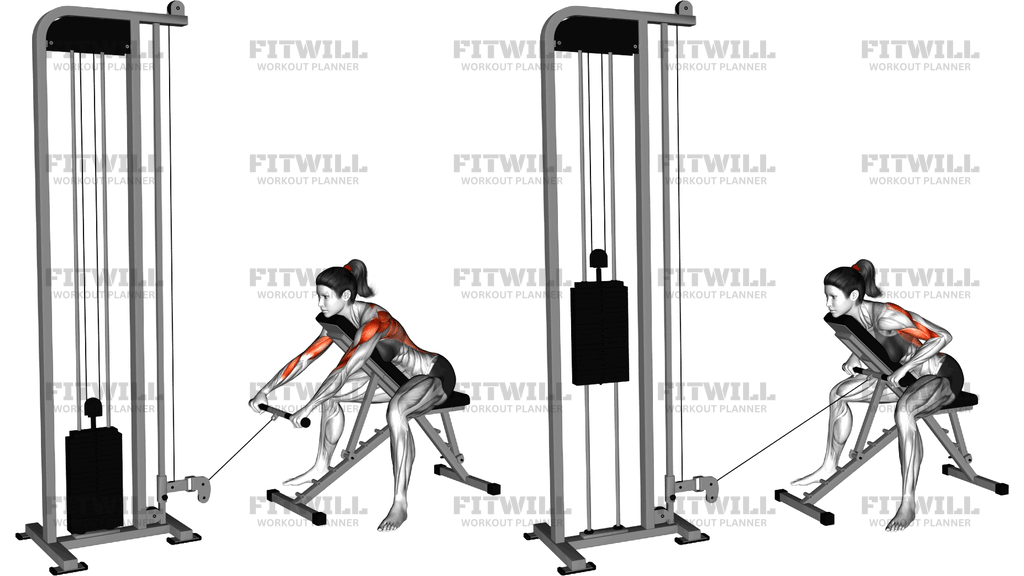
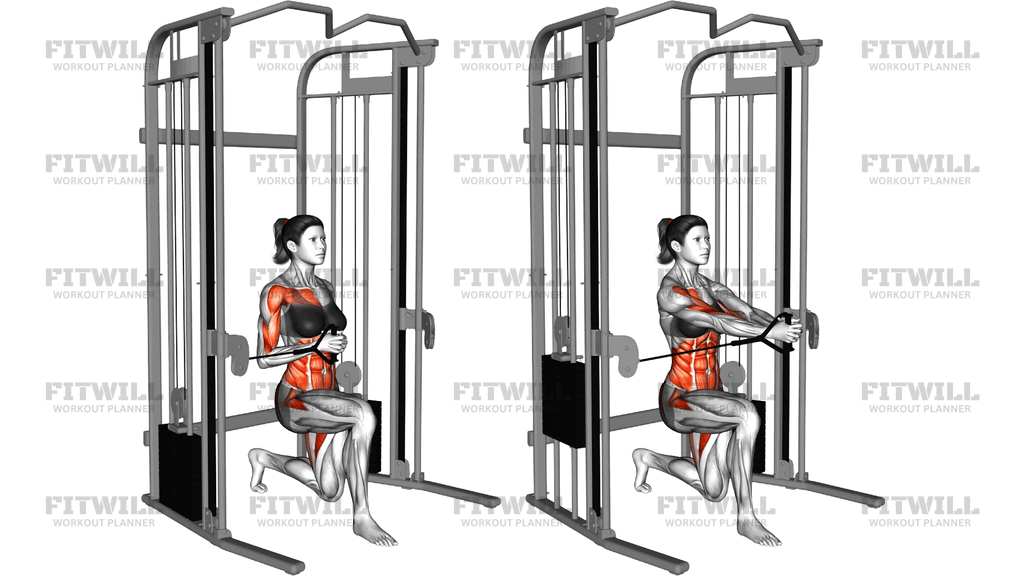
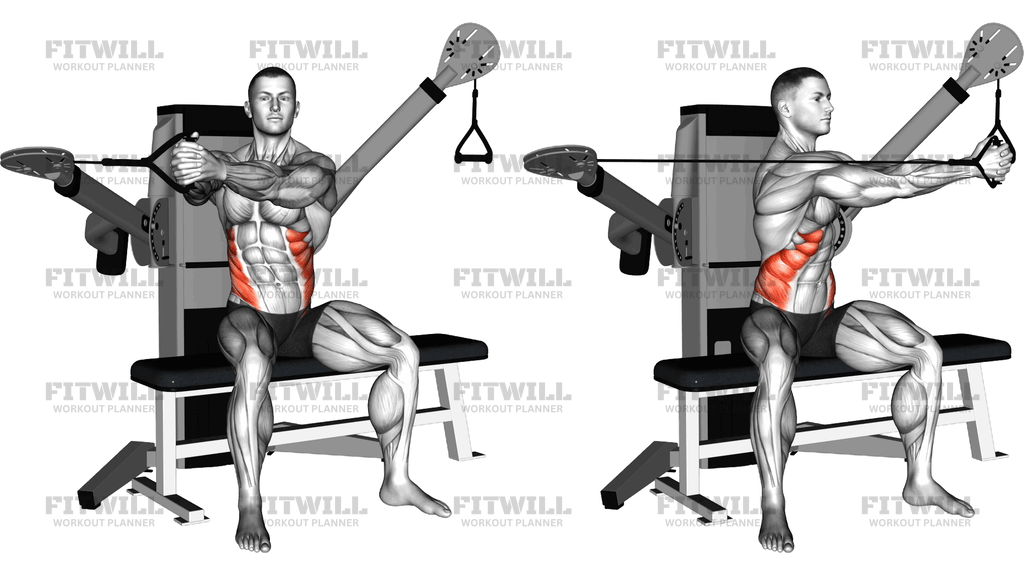
Cable Lying Bench Single Arm Cross Lateral Raise
The Cable Lying Bench Single Arm Cross Lateral Raise is a unilateral chest isolation exercise performed on a flat bench positioned beside a cable machine. You lie on your back with your head near the pulley, hold a single handle attached to the low pulley with one hand, and sweep your straightened arm in an arc from out at your side up and across your body toward the opposite shoulder. The moving arm stays mostly extended throughout, which gives the pec a long lever and a continuous tension curve that dumbbell work on a bench cannot fully replicate.
The highlight of this setup is the direction of resistance. Because the cable pulls from behind and slightly below you, the pec is loaded most heavily in the stretched, out-to-the-side position, and the tension stays smooth as the arm crosses the midline. That makes the movement especially useful for lifters who feel flat presses mostly in their front shoulders or triceps but want to isolate the chest, as well as for anyone rehabilitating or prehabbing the shoulder with controlled, low-impact arcs.
Working one arm at a time also has real benefits. It lets you spot and fix side-to-side differences in chest development and strength, and it forces your trunk to stay anchored to the bench while the cable tries to rotate you, which quietly trains your core and shoulder stabilizers as well.
Setup quality determines everything here. Position the bench so the pulley, your working shoulder, and the arc of the handle all line up in one clean plane, with enough clearance that the cable never drags across your body or the bench. Keep your feet planted, your head and upper back in contact with the bench, and a soft bend locked into the elbow so the elbow angle never changes during the sweep.
To execute well, think of the arm as the hand of a clock sweeping from roughly the four o'clock position up across your chest to ten o'clock, driven by the pec rather than the biceps or shoulder. Pause briefly with the handle over your chest near the opposite shoulder, then resist the cable on the way back down until you feel a comfortable pec stretch. Slow negatives are where most of the value lives in this exercise, so keep the return controlled instead of letting the stack pull your arm back.
Use this movement as a secondary chest exercise after your pressing work, typically for two to four sets of ten to fifteen controlled reps per side. Because it isolates one arm and stretches the pec under load, start lighter than you think you need and earn range gradually. If the cable path feels awkward or your shoulder pinches at the bottom, adjust the bench position or the pulley setting before adding weight.
[ Workout Log & Planner ]
Put your next workout in Fitwill
Keep your plan and training log ready when you are.


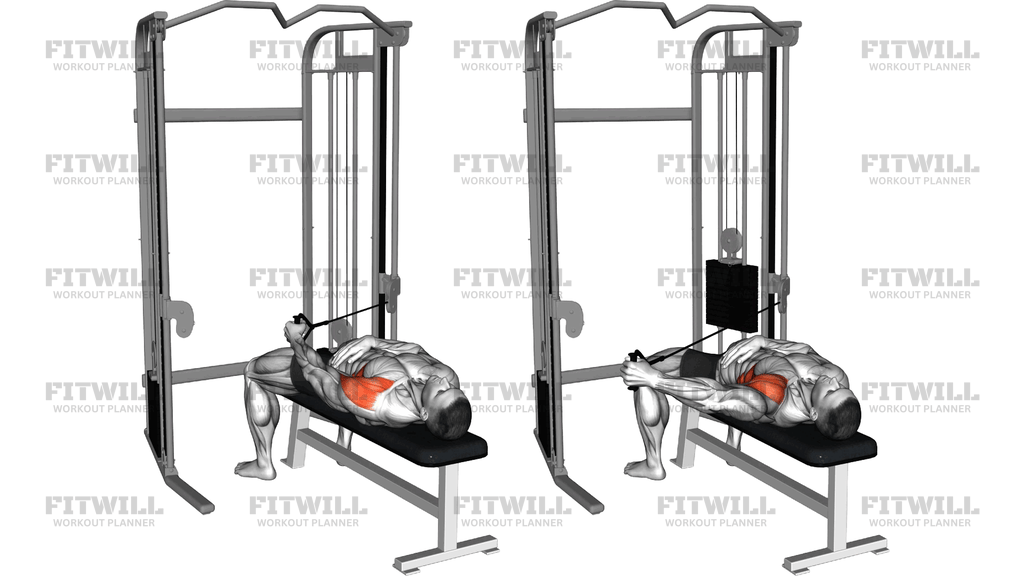
Instructions
- Set a flat bench beside a cable machine so your chest lines up with the low pulley and the cable can travel freely alongside your body without rubbing the bench.
- Attach a single handle to the low pulley, select a light weight, and lie flat on your back with your head closer to the machine and both feet planted on the floor.
- Grasp the handle with the hand on the pulley side, extend that arm out to your side at roughly chest-to-hip height, and lock in a small, fixed bend at the elbow.
- Rest your free hand on your chest or stomach, press your head, upper back, and hips into the bench, and brace your core so the cable cannot rotate your torso.
- Sweep the handle up and across your body in a smooth arc toward your opposite shoulder, letting the movement come from the shoulder joint while the elbow angle stays unchanged.
- Finish with the handle above your chest near the opposite shoulder and squeeze the pec for a beat at the top of the arc.
- Reverse the path slowly, fighting the cable's pull until your arm is back out to the side and you feel a mild pec stretch without any shoulder discomfort.
- Exhale as you sweep the handle across your body and inhale as you lower it back to the starting position.
- Complete all reps on one side, then re-grip and perform the same number of controlled reps with the other arm.
- When finished, let the handle down with control, keep hold of it until the stack is fully settled, then sit up and reset the pin or switch attachments.
Tips & Tricks
- The most common mistake is bending and straightening the elbow during the sweep, which turns a chest exercise into an arm exercise; rehearse the arc with no weight until the elbow angle never changes.
- If the cable drags across your torso or the edge of the bench, move the bench a few inches farther from or closer to the machine until the cable runs in a clean line parallel to your arm's path.
- Do not let the working shoulder lift off the bench at the start of the rep; if it rides up, the weight is too heavy or you are starting from too deep a stretch.
- Avoid jerking the handle across the midline using momentum from your trunk; if your torso twists toward the working arm, brace harder and drop the load.
- Stop the arc at the top instead of pulling the handle past your shoulder line; yanking it behind the opposite shoulder shifts stress onto the shoulder joint with no extra chest benefit.
- Keep your wrist neutral with the knuckles facing up through the sweep; a bent-back wrist at the stretch position is a common source of forearm and shoulder discomfort in this exact setup.
- Because each side is loaded separately, match your weaker side's rep count and do not let the stronger arm do extra reps or extra weight.
- A slow three-count on the return does more for pec development here than a heavier stack, since the cable loads the stretched position harder than a dumbbell ever will.
- If your shoulder pinches at the bottom of the arc, shorten the range slightly and raise your starting arm position a few inches rather than forcing the full stretch.
Frequently Asked Questions
Which muscles does the Cable Lying Bench Single Arm Cross Lateral Raise work?
The pectoralis major, especially the sternal portion of the chest, is the primary mover as the arm sweeps across the body. The front and side of the shoulder assist, and your core works to keep your torso from rotating against the cable's pull.
Why lie on a bench instead of doing this standing?
Lying on the bench removes momentum and leg drive, so the pec has to do all of the work. It also supports your upper back, which makes it easier to keep the shoulder stable through the long arc.
Is the Cable Lying Bench Single Arm Cross Lateral Raise suitable for beginners?
Yes, provided you start with a light weight and master the straight-arm arc before loading it. Because the cable provides smooth resistance and supports the arm, many beginners find it easier to feel their chest working here than on presses.
Where exactly should the handle finish at the top of the movement?
The handle should finish above your chest, in line with or slightly toward your opposite shoulder. Pulling it further across toward the floor past your shoulder line adds stress to the shoulder joint without extra chest work.
How close should the bench be to the cable machine?
Close enough that the cable runs cleanly alongside your body and stays taut at the start of the rep, but far enough that it never scrapes your torso or the bench. Test the full arc with a very light setting before committing to your working weight.
Should my elbow be bent or straight during the sweep?
Keep a small, constant bend, roughly what you would use in a fly, and hold it fixed from start to finish. If the elbow angle changes, the arms take over and the chest loses tension.
What is the most common mistake with this exercise?
Letting the cable yank the arm back down on the return, which turns the lowering phase into an uncontrolled stretch. The eccentric portion is where this movement shines, so lower the handle over two to three seconds.
What can I substitute if my gym has no low pulley free?
A single-arm lying dumbbell fly on a flat bench is the closest replacement, though the resistance will drop off at the top of the arc. A one-arm standing cable crossover with a low-to-high path is another option if lying down is not practical.
Is it safe to stretch the chest fully at the bottom of each rep?
A moderate stretch is fine and productive, but stop before the shoulder rolls forward off the bench or you feel pinching at the front of the shoulder. Shorten the range first and build up gradually rather than forcing the deepest position under load.
How many sets and reps work best for the Cable Lying Bench Single Arm Cross Lateral Raise?
Two to four sets of ten to fifteen controlled reps per side works well as a finisher after your main pressing. Prioritize smooth tempo over load, since heavier weights tend to break the straight-arm path quickly.