High Plank To Frog Squat
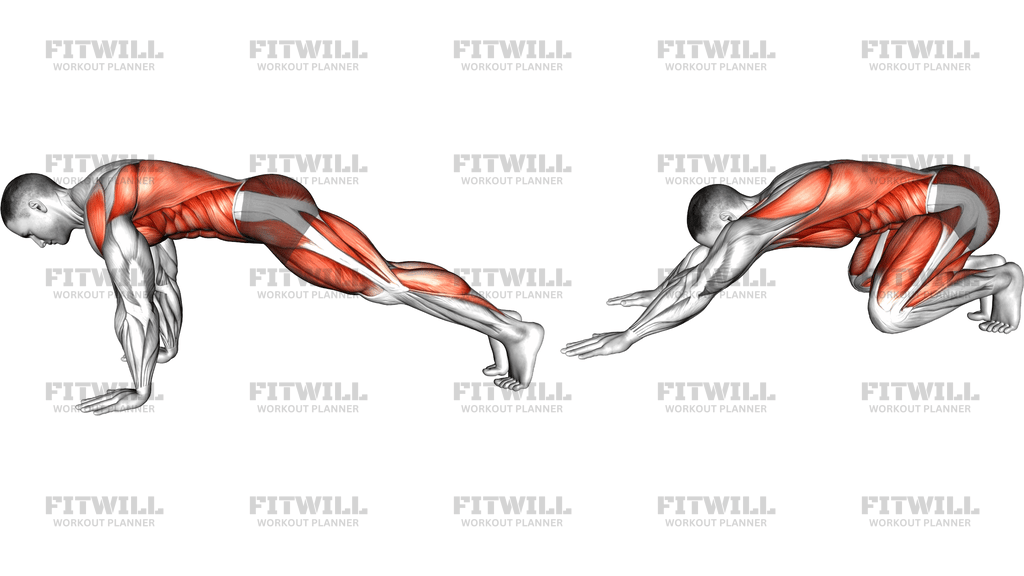
High Plank To Frog Squat is a bodyweight flow that links two very different positions through one controlled hip movement. You start in a rigid high plank with your hands under your shoulders and your body in a straight line, then jump or step both feet forward to land outside your hands, dropping into a deep, wide frog squat with your hips low and your knees bent fully. From there, you push back to the plank and repeat. Because the whole movement happens on the floor with no equipment, it fits into warm-ups, circuit training, and short home sessions alike.
The transition is what makes this exercise valuable. Moving from plank to the low squat forces your core to control a rapid shift of your hips while your shoulders hold your upper body steady, and the frog position itself demands real mobility from your hips, adductors, ankles, and groin. The deep squat also loads your quads and glutes as they absorb your weight and drive you back out. You are training strength, mobility, and coordination in a single rep instead of isolating one quality.
Setup details matter more than people expect. Hand placement roughly shoulder-width sets the target zone for your feet, and keeping your shoulders stacked over your wrists in the plank protects the shoulder joints. If your hands sit too far forward or your hips sag in the plank, the jump forward turns sloppy and your lower back absorbs stress it does not need. A clean plank first, then an accurate landing, is the order that keeps this movement sharp.
Execution comes down to two checkpoints. On the way in, bring your heels toward the floor if your mobility allows, keep your chest lifted in the squat, and let your elbows gently press your knees outward so your groin stays comfortable. On the way back, snap your hips up and back so your feet return behind you together, and re-tighten your plank before the next rep. Rushing turns this into a sloppy hop; controlled speed turns it into a strength and mobility drill.
This exercise suits beginners who want a safe introduction to floor-based conditioning, as well as experienced lifters who use it between heavier sets to keep the hips open and the heart rate up. If landing softly is uncomfortable, stepping the feet forward one at a time gives you the same positions with far less impact, and you can progress to the jump as your control improves. Anyone with acute knee, hip, or wrist irritation should work within a pain-free range or choose a low-impact variation instead.
[ Workout Log & Planner ]
Put your next workout in Fitwill
Keep your plan and training log ready when you are.


Instructions
- Place your hands on the floor shoulder-width apart and step your feet back until you are in a high plank, with wrists directly under shoulders and your body forming one straight line from head to heels.
- Spread your fingers for a stable base, brace your abs, and squeeze your glutes so your hips neither sag nor pike before you move.
- Shift your weight slightly onto your hands, then jump both feet forward at the same time, aiming to land them just outside your hands.
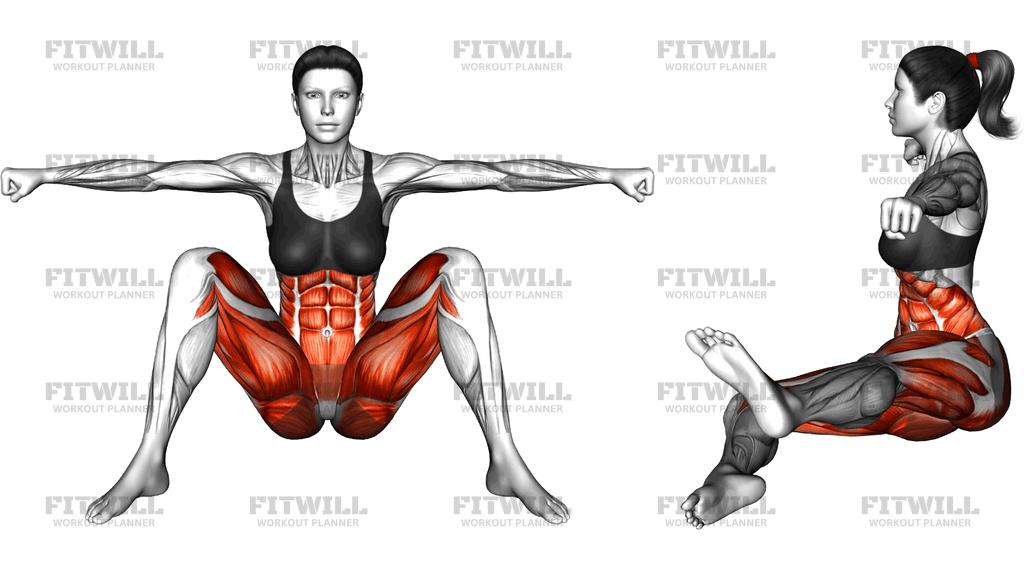
- As your feet land, bend your knees deeply and drop your hips down and back into a low frog squat, letting your elbows press gently against the inner sides of your knees.
- Keep your chest tall and your weight balanced across your whole foot in the squat; allow your heels to lower toward the floor if your ankle mobility permits.
- From the frog squat, push through the floor, snap your hips up and back, and return both feet to the high plank position together.
- Re-brace your core and confirm your plank line before starting the next rep rather than bouncing straight out of the bottom.
- Exhale as you jump forward into the squat, inhale briefly at the bottom, and exhale again as you return to the plank.
- Move at a controlled rhythm, and finish each set by standing up slowly rather than popping out of the plank position.
Tips & Tricks
- If your knees collapse inward when you land in the frog squat, actively drive them outward against your elbows; this protects the knees and stretches the groin safely.
- Landing with your feet too far back, so they end up behind your hands, shortens the squat and dumps stress into the wrists. Aim for your heels roughly in line with your fingertips.
- A common mistake is letting the hips shoot up first when jumping back, which turns it into a pike jump. Lead the return with your hips moving backward and keep your torso low a moment longer.
- If your wrists ache, press the floor away slightly in the plank to engage the shoulders, or place your hands on a folded mat or set of push-up handles for a more neutral wrist angle.
- Tight calves or ankles often keep the heels high in the squat. Work within that range at first and let mobility build over weeks instead of forcing the heels down.
- Keep your neck neutral by looking at a spot on the floor between your hands in the plank, rather than craning forward toward the wall.
- Move quietly. A loud, heavy landing usually means you are letting your weight fall instead of absorbing it through your quads and glutes.
- For a low-impact version, step one foot forward at a time into the squat and step back the same way; the positions are identical, only the transition changes.
- Use this movement early in a workout to open the hips before squats or deadlifts, or as a conditioning station where the focus is rhythm rather than speed.
Frequently Asked Questions
What muscles does High Plank To Frog Squat work?
Your abs and deep core stabilize the plank and control the hip transition, while the quads and glutes load and drive the deep frog squat. Your hip flexors and inner thighs are also challenged through the jump, and your shoulders and wrists support your upper body throughout.
Is High Plank To Frog Squat suitable for beginners?
Yes, especially if you step your feet forward one at a time instead of jumping. Once the plank and squat positions feel comfortable, add the jump for a greater core and conditioning challenge.
Why should my feet land outside my hands in the frog squat?
Landing outside your hands puts your knees in line with your feet in the deep squat and keeps your hips low between them. Feet landing too far back force your weight onto your wrists and turn the squat into a shallow, cramped crouch.
Can I do High Plank To Frog Squat if I have wrist discomfort?
Try pressing the floor away slightly to load your shoulders rather than resting on the wrists, or use push-up handles or a folded mat for a more neutral angle. If discomfort persists, choose a standing squat variation and address the wrist issue separately.
What is the most common mistake in this exercise?
Rushing the transition and losing the plank, so the hips sag and the lower back takes over. Slow the movement down and re-brace your core each time your feet return to the plank before starting the next rep.
How is this different from a burpee?
There is no push-up, hop, or vertical jump. High Plank To Frog Squat stays low to the floor and emphasizes the deep hip and groin position, making it more of a mobility-strength drill than a full-body plyometric.
My heels stay lifted in the frog squat. Is that a problem?
Not initially; limited ankle mobility keeps many people's heels high. Work at the depth you can control and gradually encourage the heels toward the floor as your mobility improves rather than forcing them down.
How many reps should I do?
For mobility and warm-up purposes, 8 to 12 controlled reps work well. In a conditioning circuit, 30 to 45 seconds of steady reps is a simple way to dose it.
Is the jump back to plank hard on the knees or lower back?
Not when you land softly with your knees tracking over your feet and re-brace your abs in the plank. If you have sensitive knees or a cranky lower back, use the step-back version, which removes the impact entirely.
Can I use High Plank To Frog Squat as a stretch?
Yes, holding the frog squat position for a few breaths before returning to the plank turns each rep into a dynamic hip and groin stretch. Just keep the knee position controlled and never bounce into the bottom.