Dumbbell Burpee Press
The Dumbbell Burpee Press combines two demanding movements into one continuous flow: a burpee performed while holding a pair of dumbbells, followed by an overhead press once you stand back up. Unlike a standard bodyweight burpee, keeping the weights in your hands the entire time means you never get a break — your grip stays loaded through the squat, the plank, the jump back in, and the press at the top. This makes it one of the most efficient full-body movements you can do in a small space with minimal equipment.
The movement trains nearly everything at once. The squat and jump-in phases load the quads, glutes, and hamstrings; the plank position challenges the chest, triceps, and core; and the finisher press hammers the shoulders and triceps while your midsection works hard to keep your ribs stacked over your hips. Because the whole sequence is performed at speed, your heart rate climbs quickly, so the Dumbbell Burpee Press works as both a strength builder and a conditioning tool depending on how you program it.
Setup matters more here than in most presses. Your dumbbell weight has to be light enough that you can control it through a burpee — swinging, slamming, and landing — yet heavy enough that the overhead press at the top feels like actual work. Most lifters go significantly lighter than they would for a standing press alone. If you normally press 30s overhead, start with 10 to 20-pound dumbbells and adjust from there.
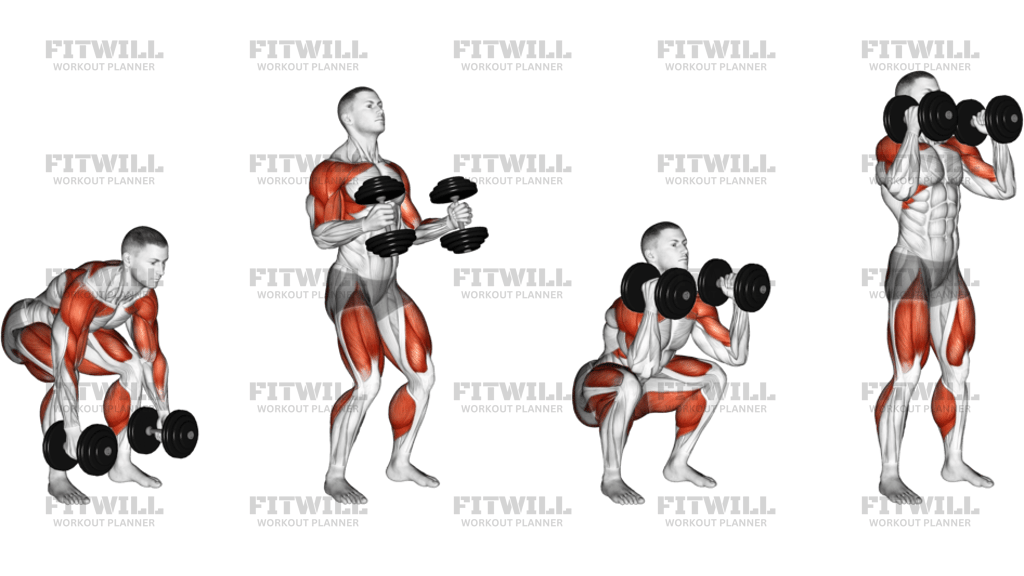
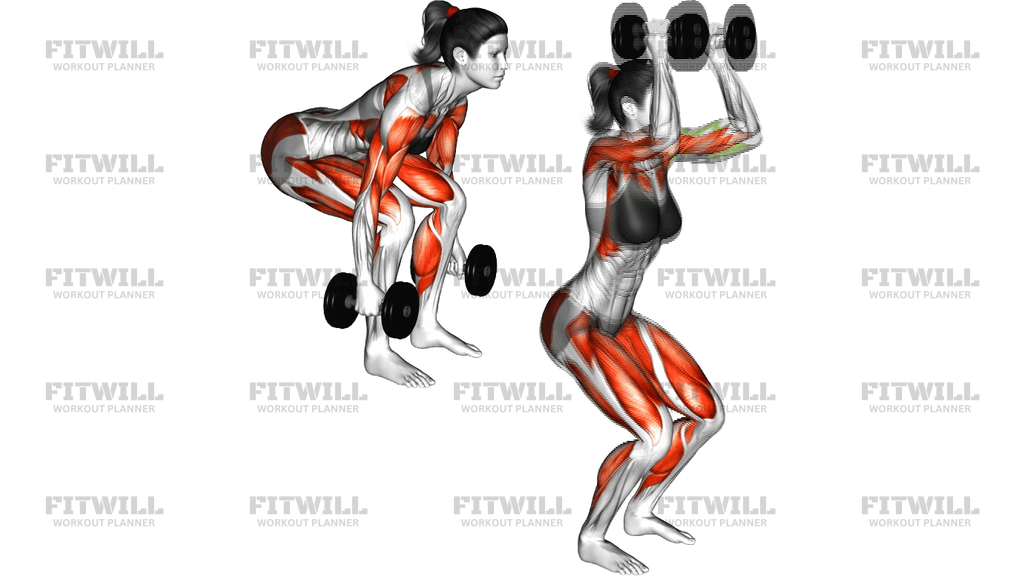
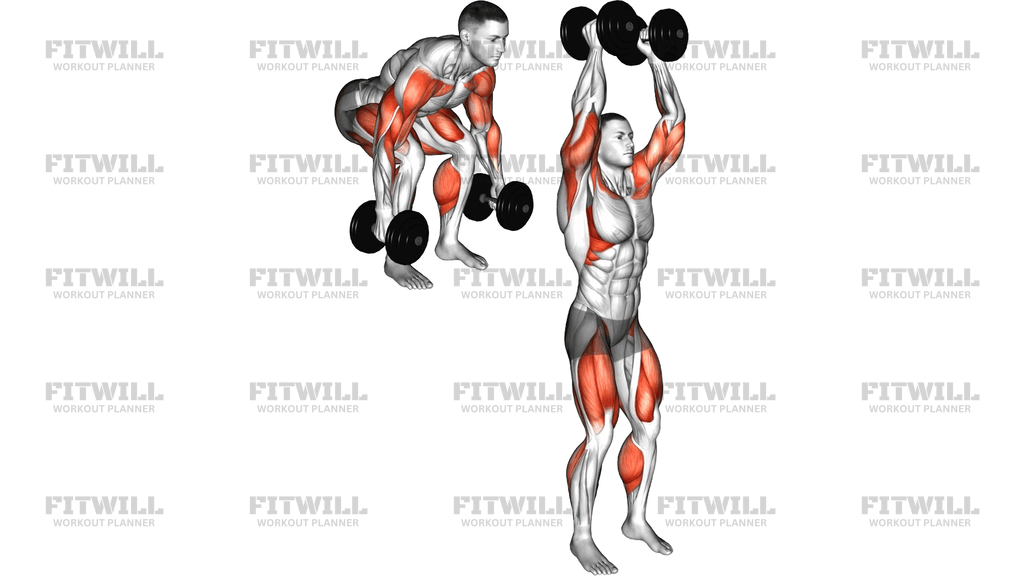
To execute it well, think of the movement as one fluid rhythm rather than four separate exercises. Squat down and place the dumbbells on the floor, kick your feet back into a plank, keep your body in one straight line, jump your feet back toward your hands, and drive through the floor to stand. As you come up, use the momentum from your legs to help press both dumbbells overhead in one motion, then lower them under control as you reset for the next rep.
This exercise suits intermediate lifters and conditioned athletes looking for a time-efficient conditioner, and it fits well into circuit training, finishers, or short home sessions. Beginners can absolutely work up to it, but the smartest path is to master bodyweight burpees and a standing dumbbell press separately before combining them. Keep the emphasis on clean landings, a braced trunk, and a press that finishes with the dumbbells stacked over your shoulders rather than drifting out in front of you.
[ Workout Log & Planner ]
Put your next workout in Fitwill
Keep your plan and training log ready when you are.


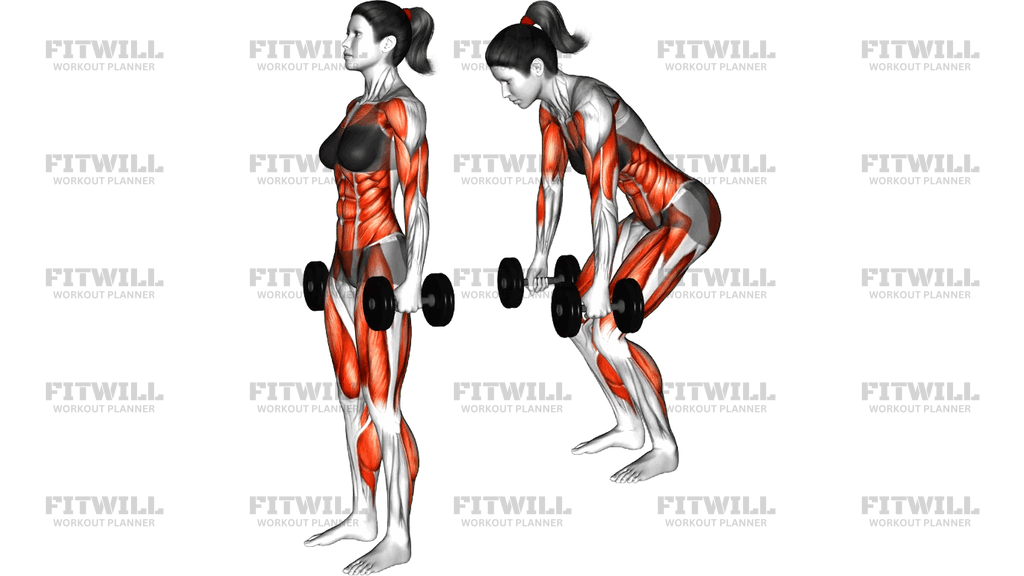
Instructions
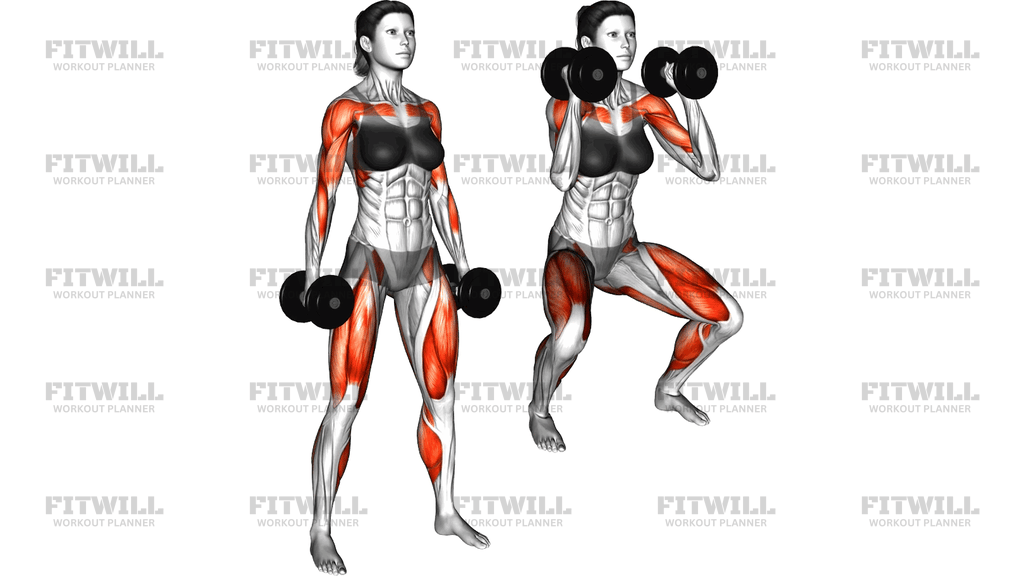
- Stand with your feet about hip-width apart, holding a dumbbell in each hand at your sides with a firm neutral grip.
- Choose dumbbells you can press overhead for multiple clean reps, then set your stance so you have room to kick your feet back without clipping anything behind you.
- Brace your core and pull your shoulders down away from your ears before you start each rep.
- Squat down by pushing your hips back and bending your knees, and lower both dumbbells until they touch the floor just inside your feet.
- Kick your feet straight back and land in a plank with your body forming one line from head to heels, dumbbells still gripping firmly in your hands.
- Optional but common: perform one push-up here, keeping your elbows at about 45 degrees to your torso and your hips from sagging.
- Jump your feet back in and plant them just outside the dumbbells, landing softly with bent knees.
- Drive through your heels to stand up and press both dumbbells straight overhead, finishing with your arms locked out and the weights stacked over your shoulders.
- Lower the dumbbells back to your shoulders as you exhale and settle into your stance, then re-brace before starting the next rep.
- Breathe in on the descent to the floor, exhale sharply as you press overhead, and keep every rep moving at a steady, repeatable rhythm.
Tips & Tricks
- The most common mistake is choosing dumbbells sized for a normal press. Your form falls apart on the plank and jump-in long before the press challenges you, so start 30 to 50 percent lighter than your usual press weight.
- If your hips sag or pike during the plank phase, widen your feet slightly and think about pulling your ribs down toward your hips before you kick back.
- Avoid bouncing the dumbbells off the floor on the squat-down. Place them down with intent so they don't roll sideways or tip mid-rep.
- If your wrists ache during the plank, rotate the dumbbells so they rest flat on the floor and your grip stays relatively neutral instead of bent back.
- Use the leg drive from your stand-up to assist the press rather than muscling it up with your shoulders alone — this keeps the shoulder joint out of risky positions as you fatigue.
- Land with your whole foot, not just your toes, when you jump back in. Toe-heavy landings shift your weight forward and make the press start from a leaned-back position.
- Do not let the dumbbells drift behind your head at the top of the press. Finish with them in line with your ears or slightly forward.
- Slow the movement down for a few reps whenever your rhythm gets sloppy. A slightly slower burpee with a straight body line beats a fast one with a sagging hips.
- On soft flooring or grass, check that the dumbbells sit level before you lift your hands off them — an uneven surface can roll one weight mid-set.
Frequently Asked Questions
What muscles does the Dumbbell Burpee Press work?
It hits the entire body: the shoulders and triceps on the press, the chest during the plank or push-up, the quads and glutes on the squat and jump-in, and the core through every phase. No single muscle does most of the work — the demand comes from linking them all together.
How heavy should my dumbbells be for the Dumbbell Burpee Press?
Pick a weight you can press overhead for at least 8 to 10 solid reps while fresh. Because the burpee portion fatigues your grip and shoulders before the press even starts, most people need to go one or two sizes lighter than their normal press dumbbells.
Can beginners do the Dumbbell Burpee Press?
Yes, with modifications. Learn the bodyweight burpee and a standing dumbbell press separately first, then combine them with very light weights, stepping your feet back instead of jumping until the rhythm feels controlled.
Should I do a push-up during the Dumbbell Burpee Press?
It's optional. Adding the push-up increases chest and triceps demand and makes the set harder, but skip it if your hips sag or your press form suffers later in the set.
Why do my dumbbells feel unstable during the plank position?
You're likely gripping with a bent-back wrist or setting the weights down at an angle. Place the dumbbells flat on the floor parallel to each other, keep your wrists straight, and distribute your weight evenly between hands and toes.
What can I substitute if I don't have dumbbells?
A plain bodyweight burpee works the same conditioning pattern, though you lose the overhead press. You could also do a bodyweight burpee followed by a separate set of presses, or hold a light single object like a medicine ball if that's what you have.
Is it safe to press overhead while fatigued from the burpee?
It is, as long as the weight is light enough and your ribcage stays stacked over your hips. If you find yourself leaning back or shrugging the weights up, stop the set rather than grinding out sloppy presses.
How should I program the Dumbbell Burpee Press?
It works well for timed sets of 30 to 45 seconds or reps of 6 to 10 in a circuit. Because it spikes your heart rate fast, place it early in a circuit or give yourself enough recovery that technique doesn't collapse.
My lower back feels worked after this exercise — is that normal?
Some core and lower back involvement is expected since your trunk stabilizes through the plank and the press. But if you feel strain rather than fatigue, check for sagging hips in the plank and excessive arching during the overhead press.