Dumbbell Incline Alternating Cross Raise
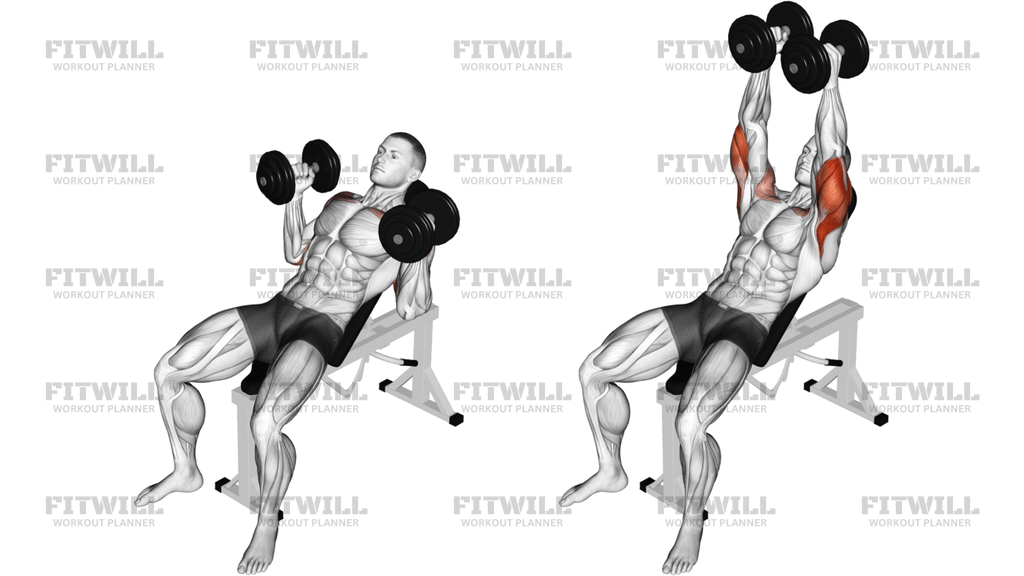
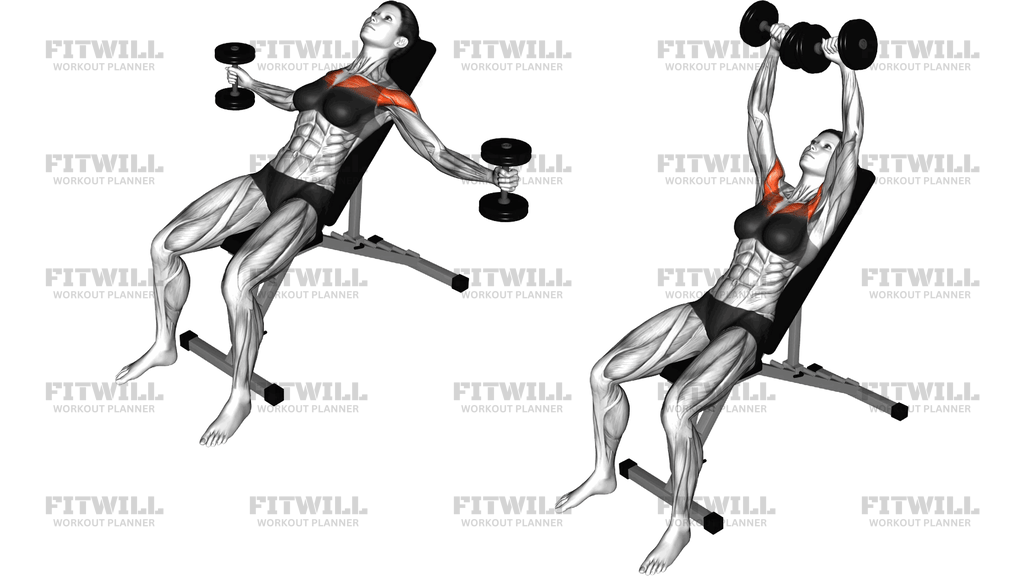
The Dumbbell Incline Alternating Cross Raise is a seated incline movement where you raise one dumbbell at a time up and across your body toward the opposite side, tracing a diagonal path instead of a straight vertical lift. Leaning back on an incline bench changes the angle of pull so the upper chest fibers work through a range they rarely get from flat pressing or standard front raises. Because each arm works on its own while the other holds its position at your side, you also get a mild anti-rotation challenge through the trunk.
This movement is especially useful for lifters whose upper chest lags behind the rest of their pecs. The incline angle combined with the cross-body path drives the arm toward the midline as it rises, which is exactly the line of pull the clavicular head of the pectoralis major is built for. The front delts assist on every rep, and the stabilizing shoulder musculature works hard to keep the dumbbell on its diagonal track without drifting outward.
Setup matters more here than in most raise variations. Set the bench to roughly 30 to 45 degrees, plant your feet flat on the floor, and keep your entire back, including your head, in contact with the pad. If your bench angle is too steep, the lift turns into a shoulder-dominant raise; too flat and you lose the upper chest emphasis that justifies the incline. Start with light dumbbells, since the cross-body path gives you less mechanical advantage than a straight raise.
To perform the movement, let both dumbbells hang at arm's length by your sides with a neutral grip. Exhale and raise one dumbbell up and across your torso toward the opposite shoulder, keeping a soft bend in the elbow and leading with the hand rather than the elbow. Pause briefly near the top when the dumbbell is roughly at eye or shoulder height across your midline, then lower it slowly along the same diagonal path. Complete all reps on one side or alternate arms rep by rep, keeping the non-working arm relaxed at your side.
Common use cases include upper chest accessory work after presses, adding unilateral volume to correct left-to-right imbalances, and training the pecs through end-range horizontal adduction without loading the elbow joint the way pressing does. It pairs well with incline presses and flyes in a chest-focused session.
From a safety standpoint, the biggest risks are using too much weight and letting momentum swing the dumbbell upward, which can strain the shoulder at the top of the arc. Keep the tempo deliberate, stop the set when you can no longer control the descent, and skip the exercise entirely if the cross-body angle causes any pinching at the front of the shoulder.
[ Workout Log & Planner ]
Put your next workout in Fitwill
Keep your plan and training log ready when you are.


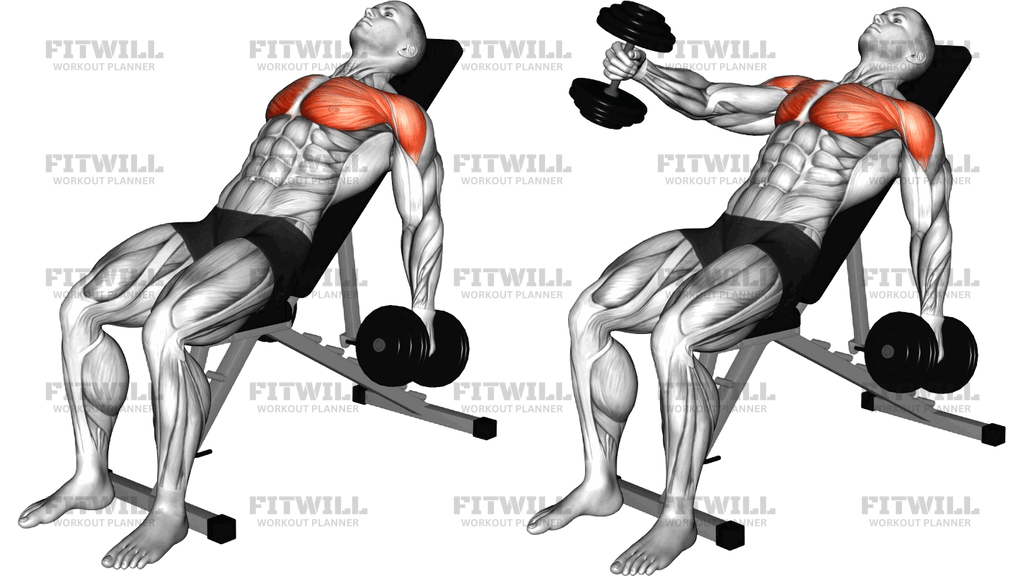
Instructions
- Set an incline bench to roughly 30 to 45 degrees and sit on it with your feet flat on the floor, hip-width apart.
- Hold a dumbbell in each hand with a neutral grip and let both arms hang straight down at your sides, palms facing your thighs.
- Press your back and head against the pad, brace your abdominal muscles lightly, and retract your shoulder blades to set a stable base.
- Exhale and raise one dumbbell up and across your body toward the opposite shoulder, keeping a slight bend in the elbow and your palm turned down or slightly inward as you cross the midline.
- Continue the diagonal arc until the dumbbell reaches about shoulder or eye height across your torso, squeezing the upper chest at the top for a one-second pause.
- Inhale and lower the dumbbell slowly along the same cross-body path until your arm is back at full extension by your side.
- Either complete all reps on one arm before switching, or alternate arms rep by rep, keeping the non-working arm still at your side.
- Avoid shrugging or swinging; if the weight pulls your shoulder off the pad, it is too heavy for the next set.
- Finish the set by setting both dumbbells on the floor before standing up from the bench.
Tips & Tricks
- Lead the raise with your hand, not your elbow. Driving the elbow first turns the movement into a lateral raise and shifts tension away from the upper chest.
- The crossing hand should aim roughly at the opposite shoulder, not straight up in front of your face. If your arm travels vertically, you are doing a front raise, not a cross raise.
- Keep the dumbbell light enough that your torso stays glued to the pad. If you feel yourself twisting toward the working side, cut the weight by 20 to 30 percent.
- A small turn of the palm toward the floor as you cross the midline can improve the squeeze at the top without stressing the shoulder.
- Do not lock the elbow hard at the bottom; a soft bend keeps continuous tension on the pec and protects the joint at the stretch position.
- Control the descent for two to three seconds. The lowering phase is where the upper chest is under the most stretch, and dropping the dumbbell quickly wastes half the rep.
- If your shoulder pinches near the top, stop the arc slightly earlier, around chest height, rather than forcing the full cross-body range.
- Because each arm works alone, start with your weaker side and match the reps with your stronger side to keep both sides even.
- Use lighter dumbbells here than you would for incline front raises or lateral raises. The diagonal path across the body is a weaker lever position for the shoulder.
Frequently Asked Questions
What muscles does the Dumbbell Incline Alternating Cross Raise work?
The primary muscle is the upper chest, specifically the clavicular head of the pectoralis major, with the front delts assisting on every raise. Grip and stabilizing muscles around the shoulder also contribute to controlling the diagonal path.
Why raise the dumbbell across the body instead of straight up?
The upper chest fibers run diagonally from the collarbone toward the arm, so crossing the midline as you raise matches their natural line of pull. A straight front raise leans more heavily on the front delts and misses some of that upper chest emphasis.
What bench angle should I use for the Dumbbell Incline Alternating Cross Raise?
Set the bench between 30 and 45 degrees. Lower angles reduce the upper chest focus, while steeper angles shift the work toward the front shoulders.
Can beginners do this exercise?
Yes, as long as they start with very light dumbbells and prioritize the diagonal path over the amount of weight. The cross-body angle is unfamiliar to most beginners, so learning the movement pattern matters more than load.
Should I alternate arms or finish all reps on one side?
Both approaches work. Alternating rep by rep keeps the set moving and challenges your torso to resist rotation, while finishing one side first makes it easier to match reps between your weaker and stronger arm.
How heavy should the dumbbells be for the Dumbbell Incline Alternating Cross Raise?
Use noticeably less weight than you would for presses or even standard front raises, since the arm crosses the body at a mechanical disadvantage. A good sign you are too heavy is your shoulder blade lifting off the pad or your torso twisting toward the working side.
What can I substitute if I do not have an incline bench?
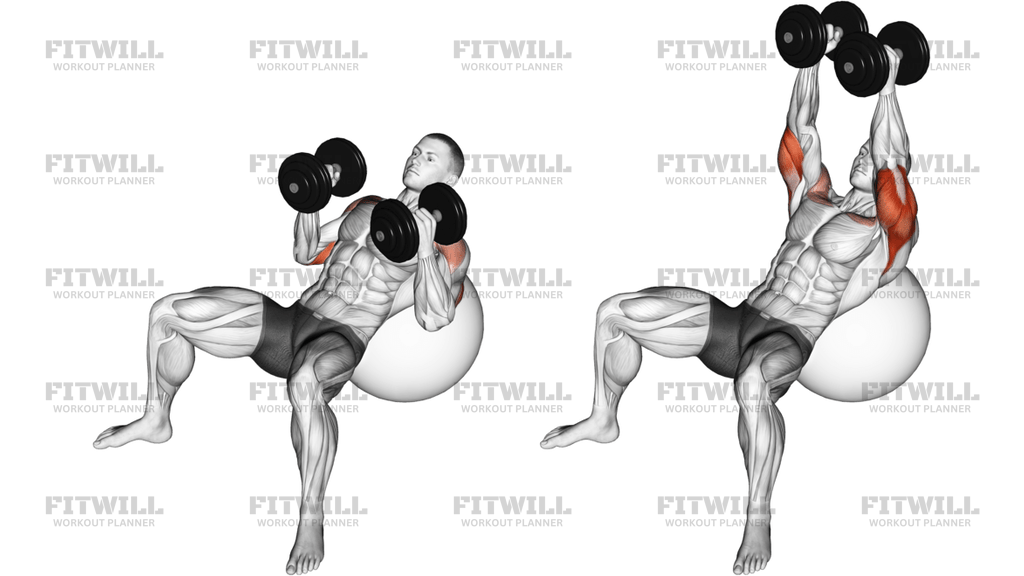
You can perform the same cross raise standing or seated upright, though the upper chest angle is reduced. A stability ball braced against a wall can mimic the incline position, but expect less stability and use even lighter dumbbells.
Why does my front shoulder hurt at the top of the cross raise?
The pinching usually comes from forcing the arm too high across the body or from an internally rotated shoulder at the end range. Shorten the arc so the dumbbell stops around chest height, keep the elbow slightly turned out, and reduce the weight.
Where should this exercise fit in my workout?
Place it after your main incline or flat pressing as an accessory for the upper chest, typically for two to three sets of 10 to 15 reps per arm. It also works well as a finisher when the pecs are already pre-fatigued.
How do I keep my torso from twisting during the alternating reps?
Keep both shoulder blades retracted against the pad, brace your abs before each rep, and consciously keep your hips square on the bench. If twisting still occurs, the weight is too heavy or you are rushing the raise.