Star Plank Toe Tap
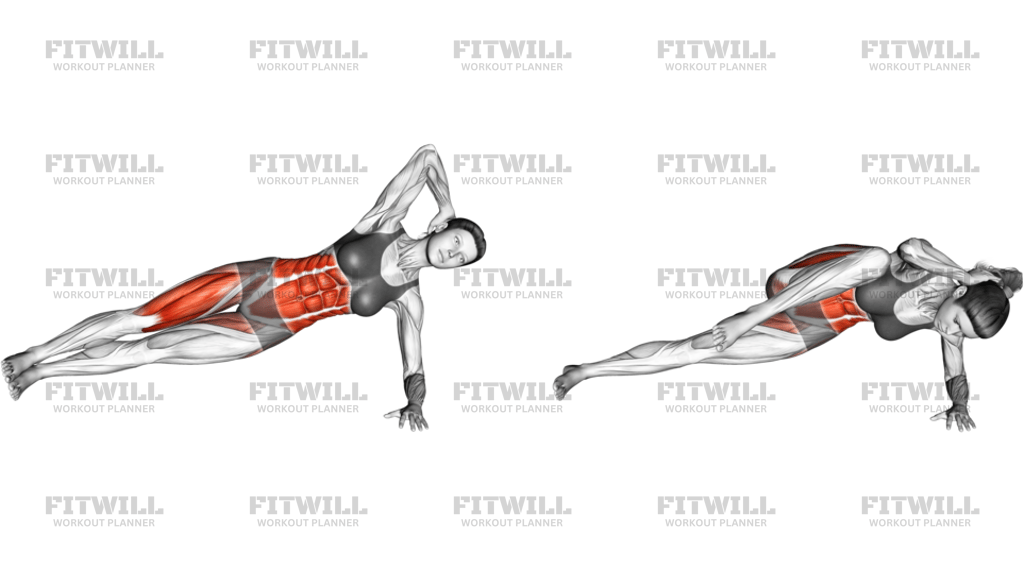
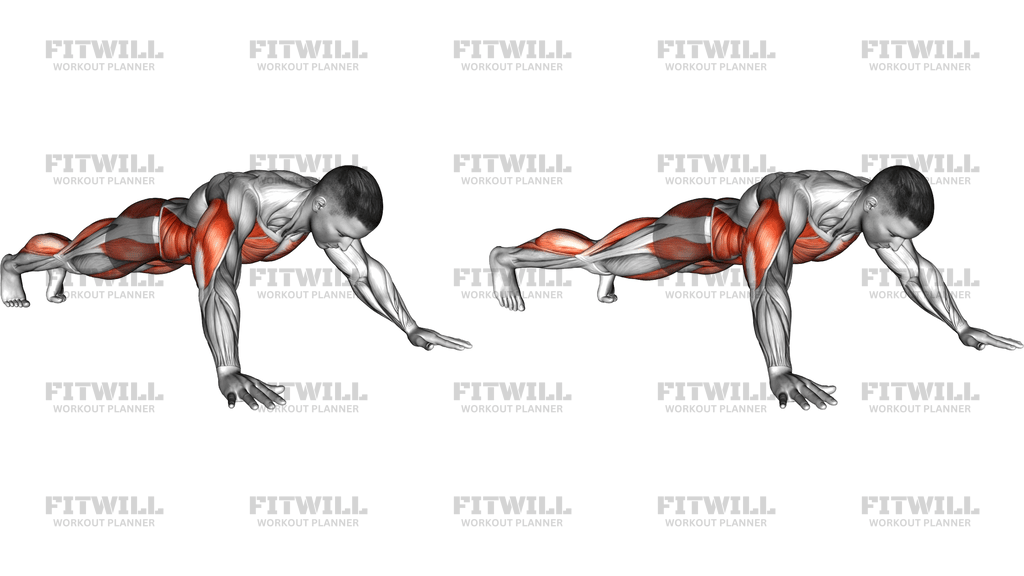
The Star Plank Toe Tap takes a regular plank and spreads it out. Instead of stacking your hands under your shoulders and your feet under your hips, you plant your hands wide and your feet wide so your body forms a rough star or X shape on the floor. From that spread-out position, you lift one foot and tap your toe out to the side, then bring it back. The wide base changes everything: your core has to fight rotation and side-bending the entire time, and the moving leg adds a dynamic challenge on top of that.
This movement earns its place in a core routine because it trains stability and control rather than flexion. Your abs and obliques work to keep your hips level and your torso square to the floor while one limb leaves the ground. Your glutes and outer hip muscles control the tapping leg, and your shoulders and triceps hold you up on the supporting side, which carries extra load every time a foot lifts. It is a genuine full-body brace with one moving part.
The wide setup is not decoration. With your feet spread, your hip has room to abduct and tap the toe out without your pelvis tipping, and the wide hand position widens your support base so the tap is a controlled core challenge rather than a balance panic. If you set up too narrow, you will roll toward the tapping side and turn the exercise into a wobbly side plank by accident.
To execute it well, think of your torso as a rigid board with two jobs: stay level and stay facing the floor. Grip the floor with your fingers, spread your weight across the whole supporting hand, and keep a soft but not locked elbow on each support arm. The tap itself should be deliberate — reach the toe out wide, touch lightly, and return it under control. Two or three clean taps per side beat ten rushed ones every time.
This exercise fits well as a second or third core drill in a strength session, or as part of a bodyweight circuit where you want anti-rotation work without equipment. It also suits people who find static planks too easy and need a way to add limb movement without jumping or loading the spine. Because it is done on hands and toes, it does ask for comfortable wrists and reasonable shoulder tolerance.
A few practical points will keep it productive. Start with a narrower stance than you think you need and widen it as your control improves. Shorten the tap distance before you let your hips sag or rotate. If your lower back starts to arch or your hips begin to drift sideways mid-set, that is your cue to stop, reset, and do fewer reps with better positioning.
[ Workout Log & Planner ]
Put your next workout in Fitwill
Keep your plan and training log ready when you are.


Instructions
- Set up on an exercise mat or firm floor in a high plank with your hands spread much wider than shoulder width and your feet spread wider than hip width, so your body forms a wide star shape.
- Position your supporting hand directly below its shoulder with fingers spread and gripping the floor, and keep your arms straight with elbows soft, not locked.
- Brace your abs and squeeze your glutes so your body forms one straight line from head to heels, with your hips level and your neck relaxed, eyes on the floor.
- Shift a little more weight into your opposite hand so the leg you are about to move can lift without your torso tipping.
- Lift one foot off the floor and reach that toe out to the side, away from your body, in a smooth arc until you lightly tap the floor wide of your starting stance.
- Keep the tapping leg mostly straight and the toes of your planted foot pointing down, and resist any pull of your hips toward the moving side.
- Return the foot to its original wide position under control, without dropping the knee or letting your torso twist.
- Breathe steadily throughout — exhale as you reach the toe out, inhale as you bring it back.
- Complete the planned number of taps on one side, then reset into a clean star plank before switching to the other leg.
- Between sets, stand up and shake out your wrists and shoulders rather than resting sagged on the floor.
Tips & Tricks
- If your hips rotate toward the tapping side, narrow your foot stance slightly — an overly wide base often tempts people to swing the leg too far and lose pelvic control.
- Spread your fingers and actively press the floor away with the supporting hands; collapsed knuckles and sunk shoulders are the most common reason the plank position feels heavy on the wrists.
- Tap the toe lightly rather than driving it into the floor — a hard plant usually means the leg is moving on momentum instead of hip control.
- Keep the tapping foot's toes pointed down and the leg reaching long; bending the knee and pulling the heel up turns the drill into a random leg flail and offloads the glutes.
- Watch for the head dropping toward the floor as fatigue builds — fix your gaze on a spot on the floor slightly ahead of your hands to keep the neck in line with the spine.
- If your wrists complain, do the set on closed fists or on a pair of light dumbbells lying parallel so your wrists stay neutral, or move to forearm support if even that is uncomfortable.
- Do not let the supporting elbow bend and sink as load shifts to that side — straighten the arm and think of pushing the floor away on every tap.
- Start with 5-6 taps per leg and earn more range before adding reps; the tap distance should grow only when your hips stay perfectly level throughout.
- Put this drill before more fatiguing core work if anti-rotation control is your priority — a shaky plank produces sloppy taps.
Frequently Asked Questions
What muscles does the Star Plank Toe Tap work?
Your abs and obliques do the main stabilizing work to keep your torso square and hips level, while the glutes and outer hip muscles control the tapping leg. Your shoulders and triceps support your upper body throughout, with the supporting side taking extra load during each tap.
Is the Star Plank Toe Tap suitable for beginners?
Yes, if you can already hold a solid high plank for 20-30 seconds. Beginners should use a slightly narrower stance and a shorter tap distance, and start with just a few reps per side before building up.
Why are my hands and feet so wide apart in this exercise?
The wide star position gives your hip room to reach the toe out to the side and widens your base so the tap challenges your core without tipping you over. A narrow setup forces your body to roll sideways and changes the exercise into an unstable side plank.
Should my hips stay level during the toe tap?
Yes — level hips are the whole point. A small amount of tilt is normal on the far reach, but if you can see or feel your hips rotating or sagging, shorten the tap distance and re-brace your abs and glutes.
My wrists hurt when I do the Star Plank Toe Tap. What can I do?
Spread your fingers, press the floor away, and make sure your hands stay wide and directly under the shoulders. If discomfort continues, perform the hold on your fists or on light dumbbells so your wrists stay straight.
Can I substitute the Star Plank Toe Tap with another exercise?
A standard plank with alternating shoulder taps or a plank with slow leg lifts covers similar anti-rotation and hip-control ground. Both are slightly easier because the base stays narrower and the tap path is shorter.
How many reps and sets of the Star Plank Toe Tap should I do?
Two to three sets of 6-10 controlled taps per leg is a solid working range. Because the quality of each tap matters more than the count, stop the set when your hips start to rotate or sag.
Should the tapping leg stay straight or can I bend the knee?
Keep it mostly straight with the toes pointed down. Bending the knee and pulling the heel up shortens the lever, removes most of the glute and hip work, and makes it easy to swing the leg with momentum.
Is it safe for my lower back?
When your glutes and abs stay braced and your hips hold level, the spine stays supported in a neutral plank position. If you feel your lower back arching or straining, end the set and build up more slowly with a shorter hold and fewer taps.
Where should I put the Star Plank Toe Tap in my workout?
It works well early in a core block when you are fresh, or as a station in a bodyweight circuit alongside squats, push-ups, and carries. Avoid placing it after exercises that have already exhausted your shoulders and trunk, or your plank position will break down.