Sumo Squat Jack
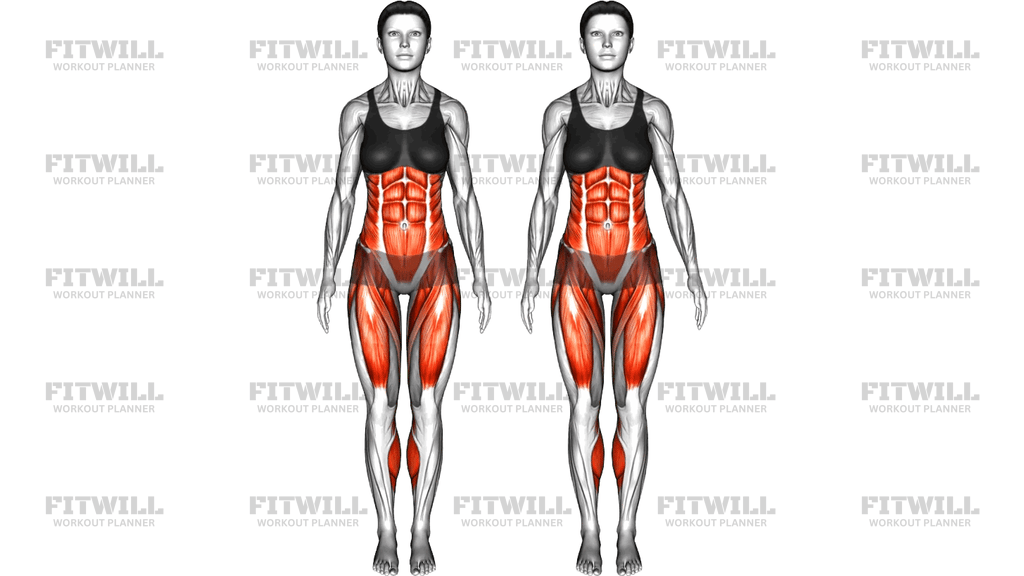
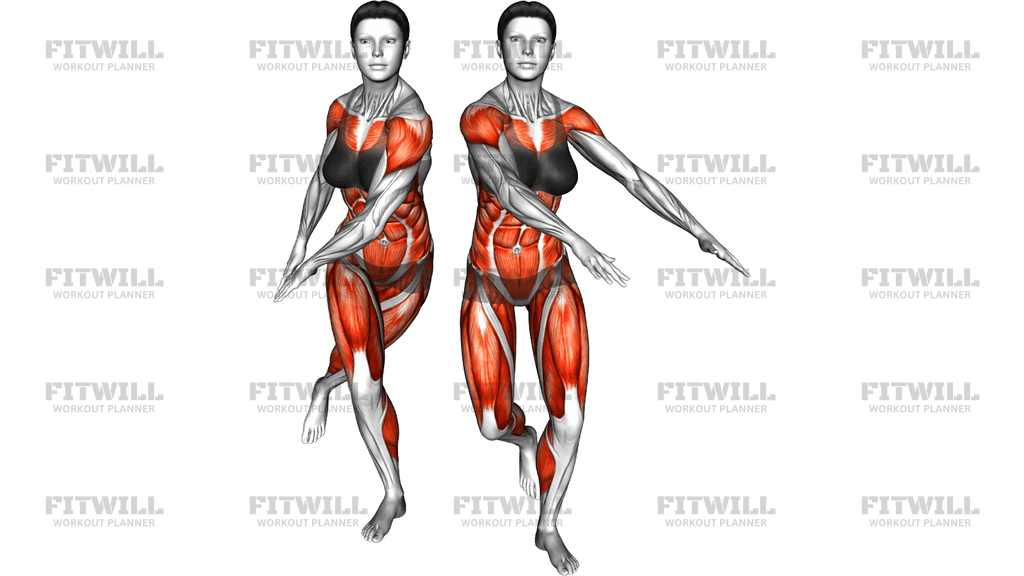
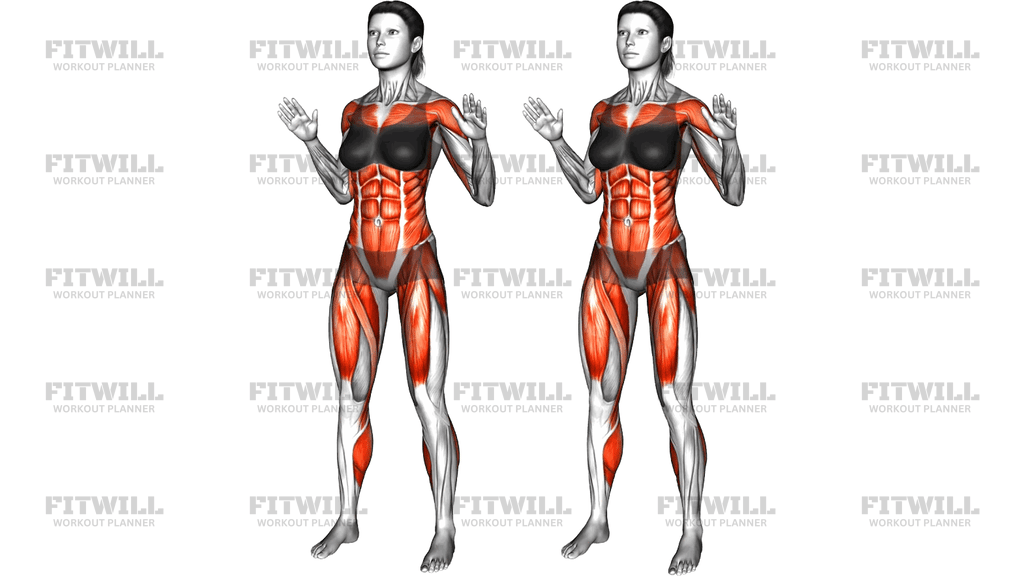
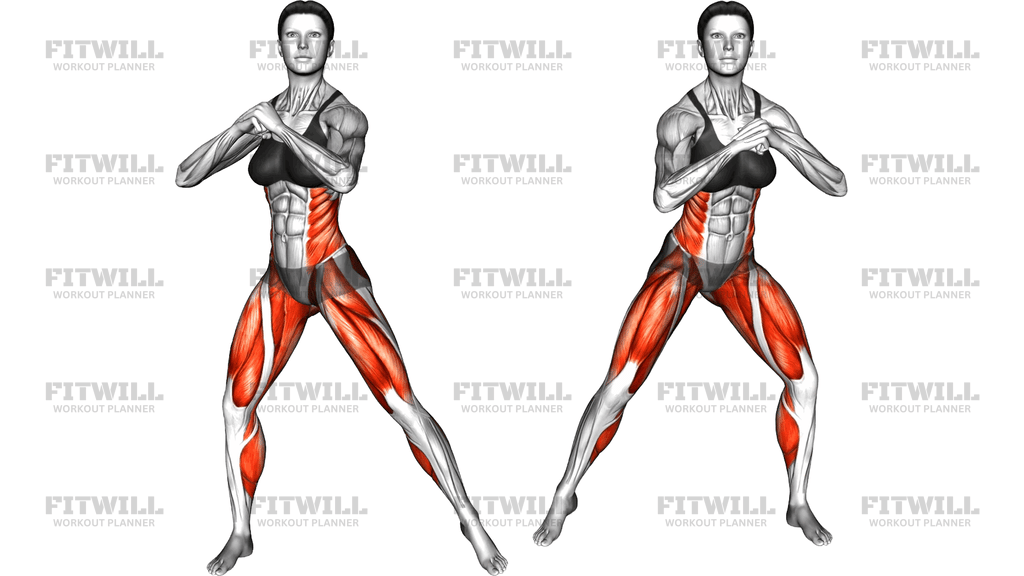
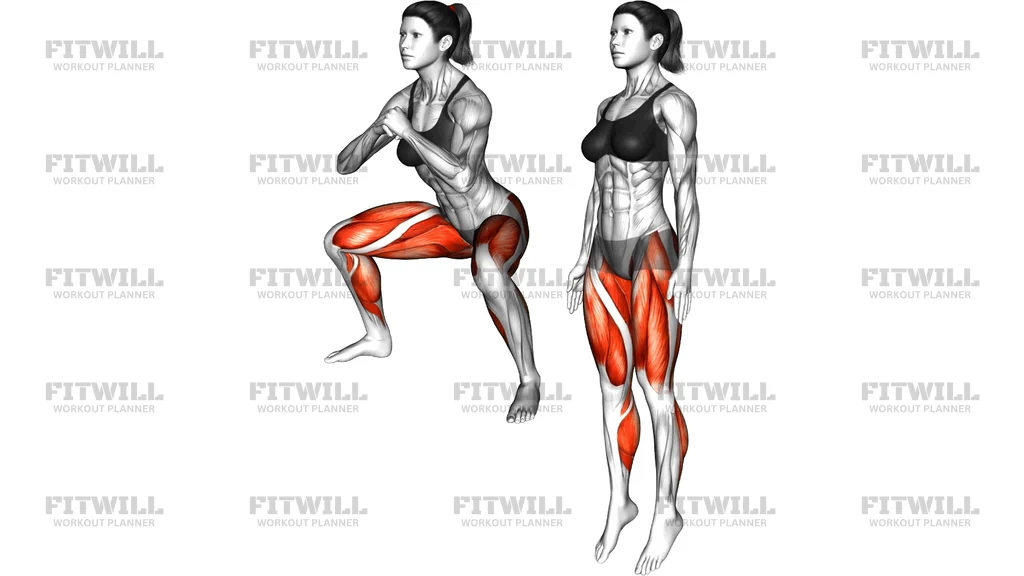
The Sumo Squat Jack is a bodyweight plyometric exercise that combines a wide-stance sumo squat with the rhythmic foot action of a jumping jack. You drop into a deep sumo squat, then explosively jump your feet together to a narrow standing position, and jump back out to the wide squat. The result is a movement that trains your legs like a squat while spiking your heart rate like a cardio drill.
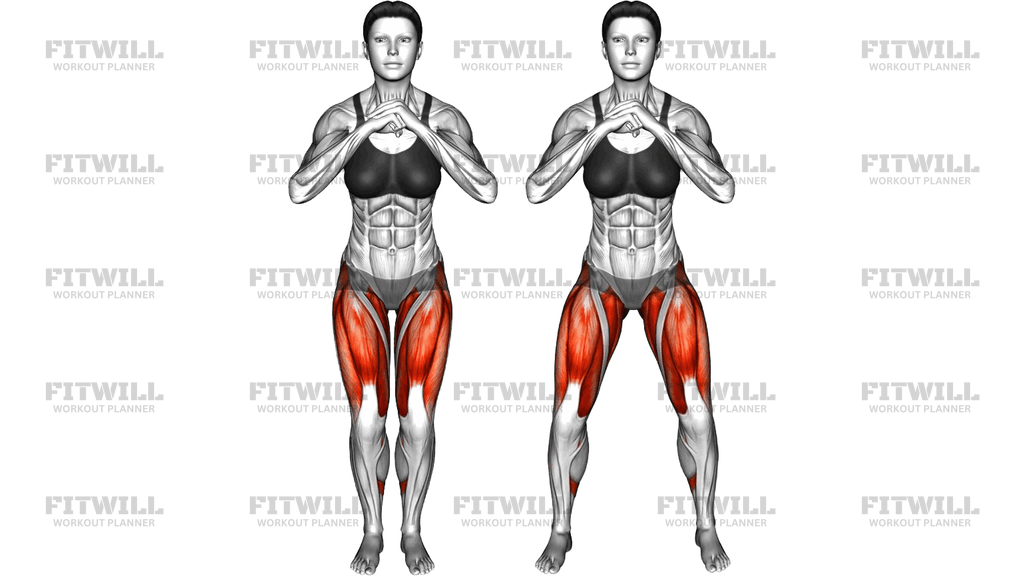
The main work comes from the quadriceps and inner thighs, which control the wide-stance squat and drive the jumps. The glutes assist on the way up, the calves power each takeoff and absorb each landing, and your core stays busy holding your torso upright through every transition. Because the feet travel in and out repeatedly, the adductors get more demand here than in a standard squat or jumping jack.
This exercise suits anyone who wants lower-body conditioning without equipment: home workouts, warm-ups, circuit training, or finishers at the end of a lifting session. It is also a useful progression for people who find regular jumping jacks too easy but are not ready for heavier plyometric work, since the wide squat position naturally limits how high you need to jump.
Setup matters more than most people expect. Your stance in the squat phase should be genuinely wide, roughly one and a half shoulder widths, with toes turned out about 30 to 45 degrees. That alignment lets your knees track over your toes and puts the inner thighs in the right position to work. If your stance is too narrow or your feet point straight ahead, the knees collapse inward and the movement loses both its effectiveness and its safety margin.
To execute it well, sink your hips back and down until your thighs are at least near parallel, keep your chest tall, and clasp your hands in front of your chest for balance. Jump up just enough to bring your feet together, land softly with slightly bent knees, then immediately jump back out into the sumo squat. The rhythm should feel like an in-out pulse rather than two separate exercises glued together.
Keep the pace honest but controlled. Fast, sloppy reps with knees caving in defeat the purpose; moderate reps with clean landings build conditioning and movement quality at the same time. If the impact bothers your knees or ankles, you can step one foot in and out at a time instead of jumping, and still get most of the training effect.
[ Workout Log & Planner ]
Put your next workout in Fitwill
Keep your plan and training log ready when you are.


Instructions
- Stand with your feet roughly one and a half shoulder-widths apart, toes turned out 30 to 45 degrees, arms relaxed at your sides.
- Clasp your hands together in front of your chest and brace your core as if preparing for a light impact.
- Push your hips back and bend your knees out over your toes, lowering into a sumo squat until your thighs are close to parallel with the floor.
- Keep your chest lifted and your weight spread across your whole foot, heels in contact with the ground.
- From the bottom of the squat, explode upward and jump both feet inward, landing softly with your feet together under your hips and your knees slightly bent.
- Absorb the landing by bending your knees, then immediately jump your feet back out to the wide sumo stance and lower straight into the squat.
- Breathe steadily throughout, exhaling on each jump and inhaling as you sink into the squat.
- Continue the in-and-out rhythm for your target time or rep count, then stand fully upright and shake out your legs between sets.
Tips & Tricks
- If your knees cave inward at the bottom of the squat, widen your toe angle or slightly reduce your squat depth until you can keep the knees tracking over the toes.
- Land on the balls of your feet with soft knees; stiff, heel-heavy landings are the most common cause of sore joints in this movement.
- Do not let the squat become a shallow bounce. If you find yourself only dipping a few inches, pause the set and reset to a full-depth sumo squat.
- Keep your clasped hands at chest height rather than swinging them, so your arms help balance instead of adding momentum.
- The jump in the middle should be small and quick. Jumping excessively high fatigues your calves before your thighs and breaks the rhythm.
- If your inner thighs cramp, shorten the sets and add a brief standing adductor stretch between rounds.
- Start with fewer reps than you think you need; the repeated in-and-out landings add up faster than a normal jumping jack set.
- On the final rep of each set, stand up under control instead of collapsing out of the squat position.
- Wear cushioned shoes or work on a mat if you are training on a hard floor, since you will be landing dozens of times per set.
Frequently Asked Questions
What muscles does the Sumo Squat Jack work?
The quadriceps and inner thighs do most of the work, since they control the wide-stance squat and the repeated in-and-out foot action. The glutes, calves, and core support each jump and landing.
How wide should my stance be in the Sumo Squat Jack?
Aim for roughly one and a half shoulder-widths, wide enough that your thighs approach parallel when you squat. Your toes should angle outward 30 to 45 degrees so your knees can track over them.
Is the Sumo Squat Jack suitable for beginners?
Yes, if you start with a modest number of reps and controlled landings. Beginners can also step one foot in and out instead of jumping, then progress to the full jump once the squat pattern feels solid.
Why do my knees cave in when I do the Sumo Squat Jack?
It usually means the stance is too narrow, the toes are not turned out enough, or the inner thighs are fatiguing. Widen your base, check your toe angle, and cut the set short before form breaks down.
Can I do the Sumo Squat Jack every day?
Because it is a low-load bodyweight movement, frequent practice is realistic for most people, but the repeated landings still stress the calves, ankles, and knees. Alternate harder and easier days if you train it often.
What can I use instead of the Sumo Squat Jack if jumping is uncomfortable?
Step-out sumo squats, where you step one foot in and out at a time from the wide stance, keep the same muscle emphasis with no impact. Slow bodyweight sumo squats are another low-impact substitute.
How is the Sumo Squat Jack different from a regular jumping jack?
A regular jumping jack keeps your legs mostly straight and emphasizes the shoulders and calves, while the Sumo Squat Jack adds a deep wide-stance squat between each jump, shifting the work to the quads, inner thighs, and glutes.
How high should I jump between squat positions?
Only high enough for your feet to clear the floor and come together, usually a few inches. Extra height wastes energy and makes the landings harsher without adding training benefit.
Where should my hands be during the Sumo Squat Jack?
Clasp them in front of your chest. This keeps your torso upright, helps you balance in the deep squat, and avoids the shoulder fatigue that overhead arm swings would add.
How many reps should I do per set?
Start with 10 to 15 reps or 20 to 30 seconds and build toward 30 to 45 seconds as your landings stay clean. Stop the set as soon as your knees start drifting inward or your squat depth disappears.