Cable Squat Side Leg Kick
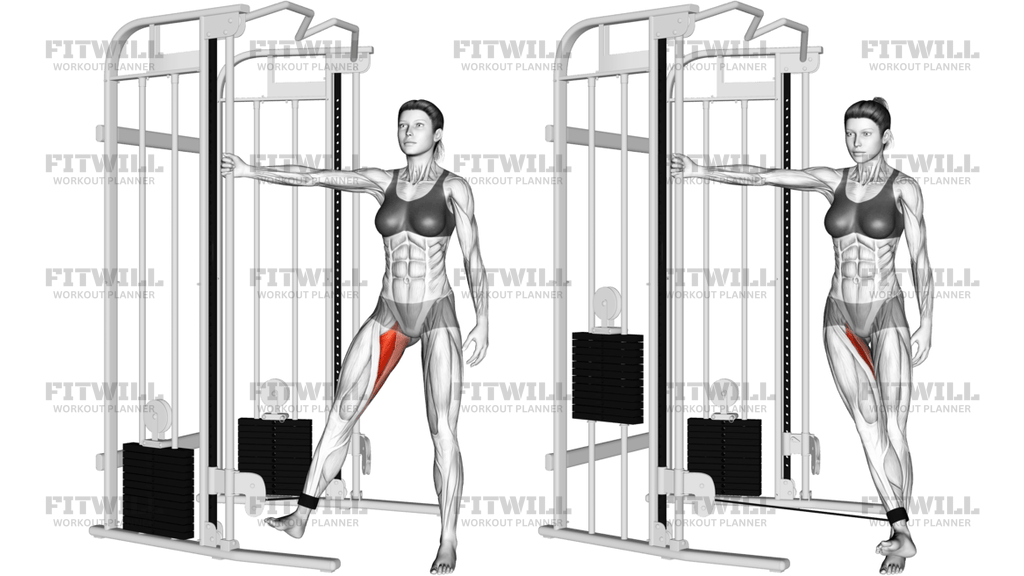
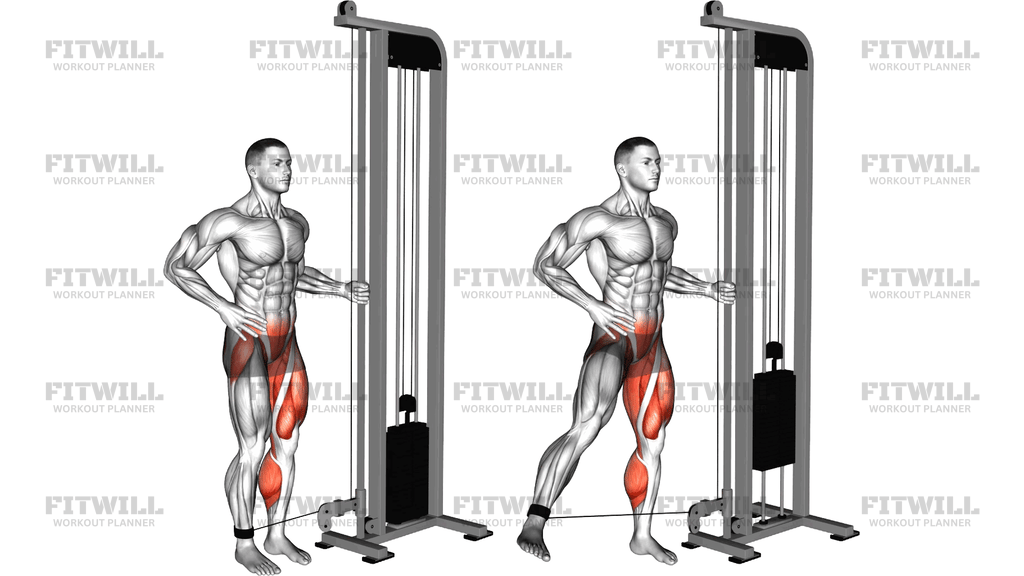
The Cable Squat Side Leg Kick combines two movements into one flowing rep: a bodyweight squat performed while your ankle is cuffed to a low pulley, followed by a controlled side kick with the strapped leg. Because the cable pulls from the side of your body, both the squat and the kick happen against constant lateral tension, which is something no dumbbell or machine squat gives you. The result is a movement that trains the quads and glutes through the squat while challenging the outer hip muscles every time the leg swings away from your midline.
This exercise is a good fit for lifters who want more hip abduction work without standing on one leg doing plain side leg raises, and for anyone programming glute-focused circuits or lower-body finishers. The cable provides smooth resistance through the entire arc of the kick, including the top range where bodyweight versions tend to feel empty. It also doubles as balance and core work, since the anchored leg and trunk have to resist the sideways pull throughout every rep.
Setup matters more here than in most squat variations. The ankle strap sits just above the ankle on the working leg, the cable runs from the lowest pulley, and you stand side-on to the machine with one hand on the tower for balance. Your stance width, your distance from the pulley, and which leg is strapped all determine the direction of pull, so take a moment to get it right before your first rep. Stand far enough that there is tension on the strap while you're standing tall, but not so far that the cable drags you sideways during the squat.
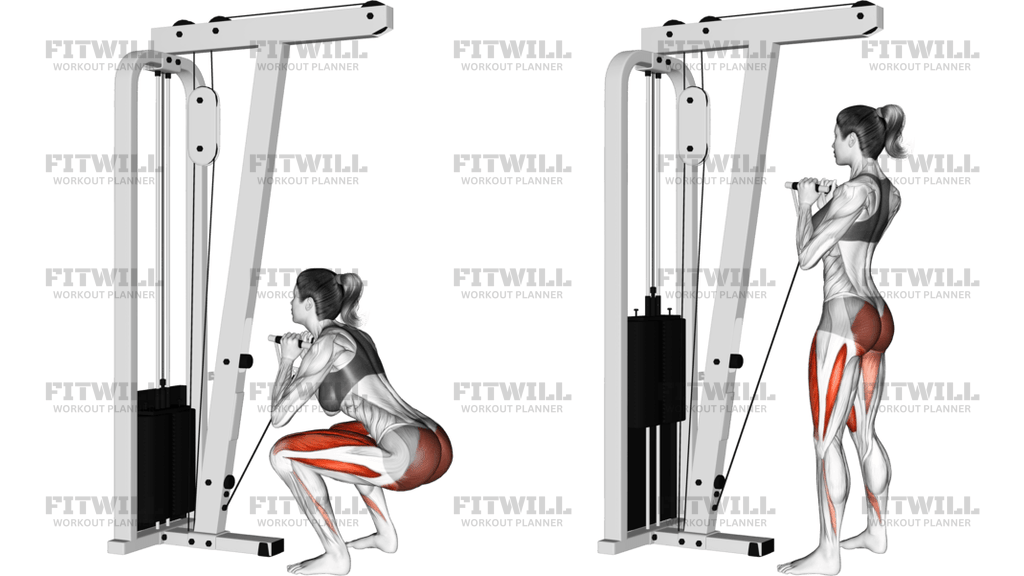
To execute the movement well, drop into a squat with your weight centered over your whole foot, chest tall, knees tracking over your toes. As you drive back up to standing, let that upward momentum flow directly into the kick: swing the strapped leg out to the side in a smooth arc, keeping the knee mostly straight and the torso upright. Pause briefly at the top of the kick, then lower the leg with control instead of letting the cable snap it back down. That lowering phase is where a lot of the outer hip work happens, so don't rush it.
In practice, this exercise shows up in glute and leg days as a higher-rep accessory, in warm-up sequences to wake up the hip abductors before squats or lunges, and in functional training programs that emphasize single-leg control. Because the load stays light to moderate, it suits both beginners learning to own their hips and experienced lifters chasing extra volume without heavy spinal loading.
A few safety points worth respecting. Keep the kick within a comfortable range rather than forcing the leg as high as it will go, and stop if you feel pinching at the front of the hip. Hold the tower firmly during the squat-to-kick transition, since that's where balance is most likely to break down. Start with a light weight until the squat and kick feel like one coordinated action, and always complete your set on one side before switching the strap to the other ankle.
[ Workout Log & Planner ]
Put your next workout in Fitwill
Keep your plan and training log ready when you are.


Instructions
- Attach an ankle strap to your lowest pulley and cuff it around one ankle, with the buckle secure and the cable running cleanly from the machine to your leg.
- Stand side-on to the cable tower with the strapped leg closest to the machine, feet about hip-width apart, and grip the tower with your near hand at roughly waist or chest height.
- Step away from the machine until you feel light tension on the cable while standing tall, then place your free hand on your hip and brace your trunk.
- Inhale and squat down by pushing your hips back and bending both knees, keeping your chest up and your weight spread across your whole foot.
- Drive through the floor to stand up, and as you reach the top, swing the strapped leg out to the side in a smooth arc, keeping the knee nearly straight and the toes pointing forward.
- Kick only as high as your hip allows while your torso stays upright and your shoulders stay level, then pause for a beat at the end of the arc.
- Exhale as you kick, then lower the strapped leg back to the floor slowly, resisting the cable's pull instead of letting it yank your leg down.
- Flow straight into the next rep: squat again while the leg is back in its standing position, then kick on the way up, keeping the rhythm continuous.
- Complete all reps on one side, unclip or carefully step out of the strap, switch it to the other ankle, and repeat with your body turned the opposite way.
Tips & Tricks
- If the cable pulls you sideways during the squat, you're standing too far from the pulley or using too much weight; step closer or drop the stack until the squat feels balanced.
- A common mistake is kicking the leg forward instead of sideways. Point your toes forward and think about sweeping the leg out through the plane of your shoulders, not in front of your body.
- Don't let your torso lean away from the kicking leg to buy extra height. If your shoulders tip or your hips shift, the abductors are no longer doing the work, so shorten the kick instead.
- Keep the standing knee soft at the top of each kick. Locking it out while the cable yanks sideways loads the joint rather than the hip muscles.
- Strap placement matters: a cuff sitting on the calf changes the leverage and makes the kick feel awkward. Position it snug around the ankle, just above the ankle bones.
- If your lower back arches or your pelvis tilts as the leg rises, the kick has gone past your available hip range. Dial back the height and keep your ribs stacked over your pelvis.
- Grip the tower rather than hovering your hand nearby. The support is what lets you load a little more weight without losing balance mid-kick.
- Control the return leg deliberately. Letting the cable snap the leg back is the most common fault in this exercise and it robs you of the eccentric work in the outer hip.
- Warm up the hips with a few unweighted side leg raises first, since cold abductors tend to make the first few reps feel jerky and uncoordinated.
Frequently Asked Questions
What muscles does the Cable Squat Side Leg Kick work?
The squat portion mainly targets the quads and glutes, while the side kick hammers the gluteus medius and other outer hip muscles. Your calves, core, and obliques also work to keep you balanced against the lateral cable pull.
Is the Cable Squat Side Leg Kick suitable for beginners?
Yes, as long as you start with a light weight and use the tower for support. Beginners should master the squat-to-kick timing on the lowest setting before adding resistance.
Why do I hold onto the cable machine during this exercise?
The hand on the tower counterbalances the sideways cable pull, letting you stay upright during the squat and kick higher without losing your balance. It is a support, not a pulling aid, so keep your grip relaxed but secure.
How high should I kick my leg during the Cable Squat Side Leg Kick?
Kick only as high as you can while keeping your torso upright and your shoulders level. If your hips shift or your back arches to gain height, you've gone past your useful range.
Can I do the Cable Squat Side Leg Kick without an ankle strap?
You can hold a cable handle or rope attachment with the working foot near the pulley in some setups, but the ankle strap gives the cleanest path and frees your hands for balance. A resistance band looped around the ankles is a reasonable home substitute.
Should the squat and kick be two separate movements or one fluid action?
Aim for one continuous action: the kick flows out of the upward drive of the squat. Pausing too long between the two phases turns it into two disjointed exercises and loses the natural rhythm.
Why does my standing leg shake or feel unstable during this exercise?
The outer hip muscles of the support leg are working hard to hold you level against the cable pull, which is normal at first. Reduce the weight, keep a firm grip on the tower, and the stability will improve within a few sessions.
How many sets and reps should I do of the Cable Squat Side Leg Kick?
It works well as an accessory or finisher with 2 to 4 sets of 10 to 15 reps per side at a light to moderate load. Prioritize smooth reps over a heavy stack, since form breaks down quickly on this movement.
Is it safe for my knees or hips?
When performed with a controlled range and a light-to-moderate load, it is a joint-friendly movement because there is no heavy axial load. If you feel pinching in the front of the hip or discomfort in the knee, reduce the kick height and squat depth, and stop if it persists.