Sitting Floor Crunch Alternating Knee Raise To To
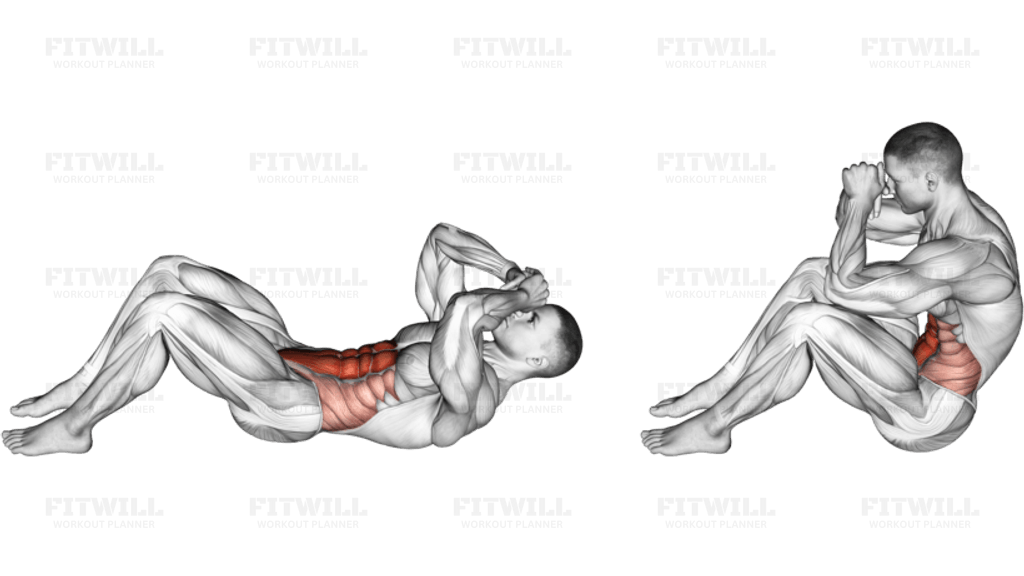
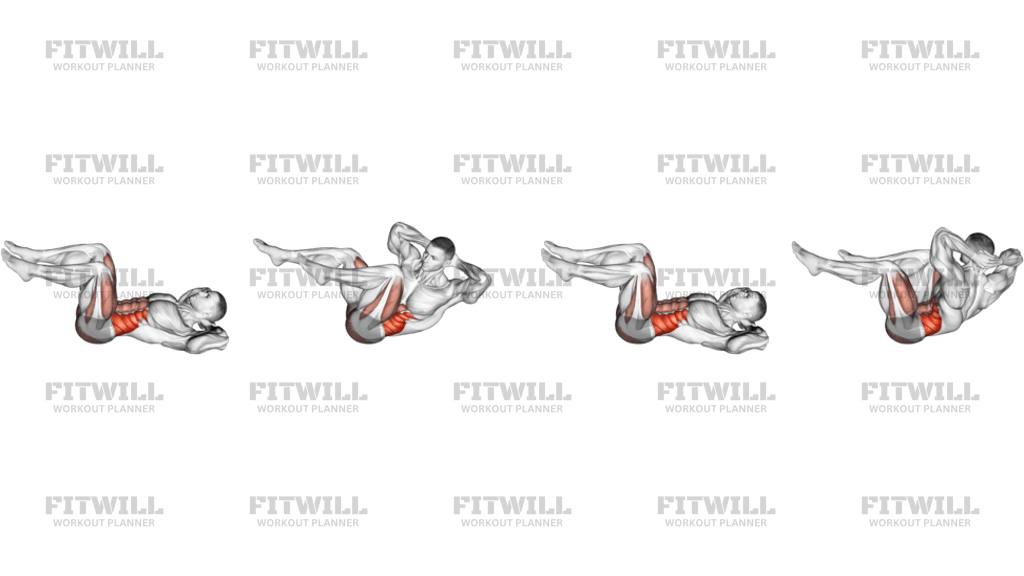
The Sitting Floor Crunch Alternating Knee Raise To Toe is a body weight core exercise that combines a reclined crunch with a single-leg knee raise, finishing with the opposite hand reaching toward the raised foot. You start seated on the floor with your hands lightly cradled behind your head, lean your torso back, then drive one knee up while curling your upper body forward so the elbow on the opposite side travels toward the toe of the lifted leg. You lower both the torso and the leg under control, then repeat on the other side.
This movement is useful for anyone who wants to train the abs and the diagonal trunk lines without any equipment beyond a mat or a patch of carpet. Because the leg lifts while the torso curls, it demands more coordination than a plain crunch and keeps the abdominal muscles under continuous tension. It works well as part of a home ab routine, as a finisher after heavier lifting, or as a progression for people who find lying crunches too easy but are not ready for hanging knee raises.
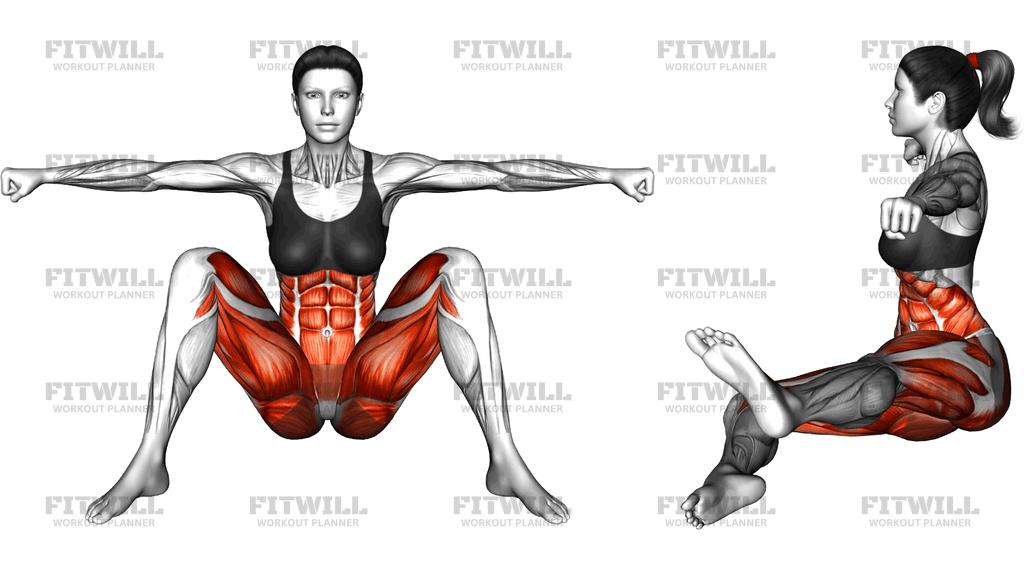
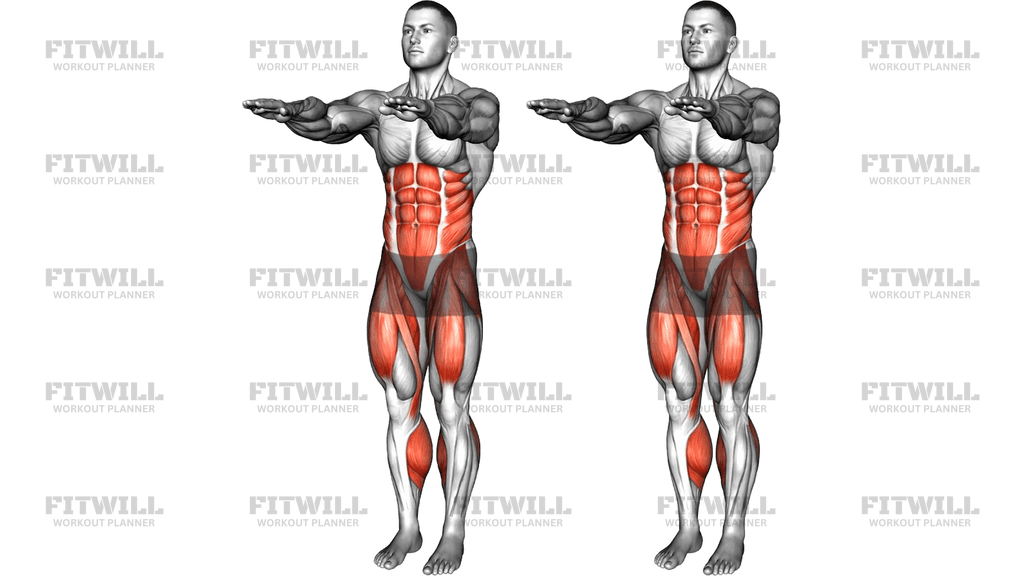
The main muscles at work are the rectus abdominis, which flexes the spine as you curl up, and the hip flexors, which lift the thigh toward the torso. The obliques on the crunching side help rotate and side-flex the trunk as the elbow chases the toe, and the deep core works throughout to keep your lower back from sagging. The quads also help hold the raised leg extended if you keep it straight as the foot rises.
Setup matters more than most people expect. Because there is no bench or anchor, your entire torso position is supported only by your own balance and bracing. Leaning back too far turns the exercise into a hip flexor struggle; staying too upright removes the crunch range. The sweet spot is a reclined torso with the lower back in neutral, so every rep is powered by the abdominal wall rather than momentum.
To execute it well, curl and lift at the same time, think about bringing your ribs toward your hip rather than your elbow toward your knee, and pull the knee up as the opposite hand reaches to meet the toe near the top. Exhale on the crunch, inhale as you lower, and alternate sides rep by rep. Avoid yanking on your neck and avoid dropping the torso back between reps, since the control on the way down is where much of the benefit lives.
Common use cases include home workouts with no equipment, warm-up activation before squats or deadlifts, and higher-rep conditioning circuits. If you feel it mostly in the front of the hips or in your lower back, shorten the range, raise the torso slightly, or bend the non-working knee and rest that foot lightly on the floor for extra support until your control improves.
[ Workout Log & Planner ]
Put your next workout in Fitwill
Keep your plan and training log ready when you are.


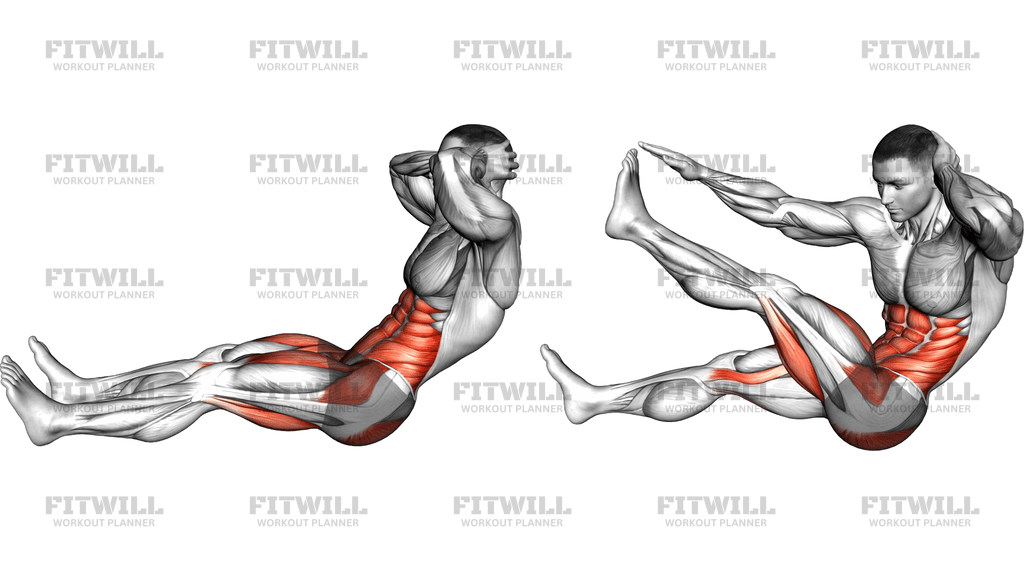
Instructions
- Sit on an exercise mat with your knees bent and feet flat on the floor, and place your hands lightly behind your head with your elbows opened out to the sides.
- Lean your torso back to roughly a 45-degree angle so your weight is supported on your glutes and lower back stays in a neutral position, then lift your feet slightly off the floor.
- Brace your abdominal wall as if preparing for a light push, and keep your chest lifted rather than collapsed.
- Exhale and raise one knee up toward your chest while simultaneously curling your upper body up and across so the opposite elbow travels toward the toe of the lifted foot.
- Pause briefly at the top, where the knee is high, the torso is curled, and the hand is near or pointing toward the raised foot.
- Inhale and lower the leg and torso back to the reclined starting position in one smooth, controlled motion rather than letting either drop.
- Repeat the crunch and knee raise on the other side, reaching the opposite hand toward the other foot.
- Continue alternating sides for your target number of total repetitions, keeping the pace steady so no rep relies on momentum.
- Reset your brace between sets if you feel your lower back take over, and stop the set when the curl quality breaks down.
Tips & Tricks
- The most common mistake is pulling on the back of the head with your hands, which strains the neck. Keep your fingers resting lightly behind your ears and let the abs do the curling.
- If your hips feel it more than your abs, you are probably lifting the leg with the hip flexors alone. Curl the ribs down toward the pelvis first and bring the knee up to meet the crunch.
- Keep the foot of the working leg dorsiflexed and reach your hand toward the toe deliberately. This gives the top position a clear target and stops the movement from becoming a sloppy side bend.
- Do not let your torso collapse all the way back between reps. Hovering slightly off the mat keeps the abs loaded and makes each alternating rep harder without adding equipment.
- Keep both elbows wide rather than flaring them forward. Closed elbows reduce the rotation and shift work away from the obliques.
- Slow the lowering phase to about two seconds. Most people rush the return on this movement and lose the abdominal tension that makes it effective.
- If your balance feels unstable in the reclined position, bend the non-working knee and let that foot rest lightly on the floor for support instead of holding both feet off the ground.
- Breathe out sharply as the elbow moves toward the toe. Holding your breath through the crunch is a common habit that raises tension in the neck and shoulders.
- Stop the set when you can no longer reach toward the toe with a straight torso path. Twisting from the lower back to force contact is a sign of fatigue, not extra effort.
Frequently Asked Questions
Which muscles does the Sitting Floor Crunch Alternating Knee Raise To Toe work the most?
The rectus abdominis drives the crunch, the hip flexors lift the knee, and the obliques assist as the opposite elbow travels toward the toe. The deep core also works to keep your lower back supported throughout the reclined position.
Is the Sitting Floor Crunch Alternating Knee Raise To Toe suitable for beginners?
Yes, with a shortened range. Beginners can keep the non-working foot resting on the floor and reach the hand toward the knee instead of the toe, then progress to the full foot-off version as control improves.
Why does the elbow reach toward the toe instead of the knee in this exercise?
Reaching toward the toe forces a longer curl and a slight rotation, which keeps the rectus abdominis and obliques engaged through the whole top position. It also gives you a precise target so each rep has a consistent end point.
Should I keep my entire lower back pressed to the mat?
No. In this seated-leaning version your torso is reclined rather than flat, so aim for a neutral lower back instead of forcing it flat. Pressing hard can tilt the pelvis and make the hip flexors dominate.
Why do I feel the Sitting Floor Crunch Alternating Knee Raise To Toe in the front of my hips?
The hip flexors raise the thigh, so some hip involvement is normal. If it overwhelms the abs, curl the torso up first and lift the knee only as high as you can while keeping your ribs pulled down.
How is this different from a bicycle crunch?
A bicycle crunch uses continuous pedaling legs with a rotating elbow-to-knee path, while this exercise pairs one full crunch with a single knee raise and a deliberate reach to the toe. The pace is slower and the top position is more controlled.
How many repetitions should I do?
Eight to twelve alternating reps per side works well for strength-focused sets, while fifteen to twenty per side suits conditioning circuits. Choose a range where every rep still shows a clean curl and a controlled reach.
Can I do this exercise without a mat?
Yes, on carpet or a soft surface. On a hard floor a mat is worth using because your lower back and glutes bear your whole body weight in the reclined position.
What should I do if my neck feels strained during the movement?
Check that your hands are cradling, not pulling, the back of your head, and keep your gaze toward your knees rather than up at the ceiling. You can also place one hand behind the head and let the reaching arm work freely on that side.
Is it safe to do the Sitting Floor Crunch Alternating Knee Raise To Toe with lower back discomfort?
If you currently have back pain, get clearance from a qualified professional before adding this movement. In general, reduce the leg height, keep the non-working foot supported, and stop any version that provokes symptoms.