Sitting Floor Alternating Crunch Knee Raise And T
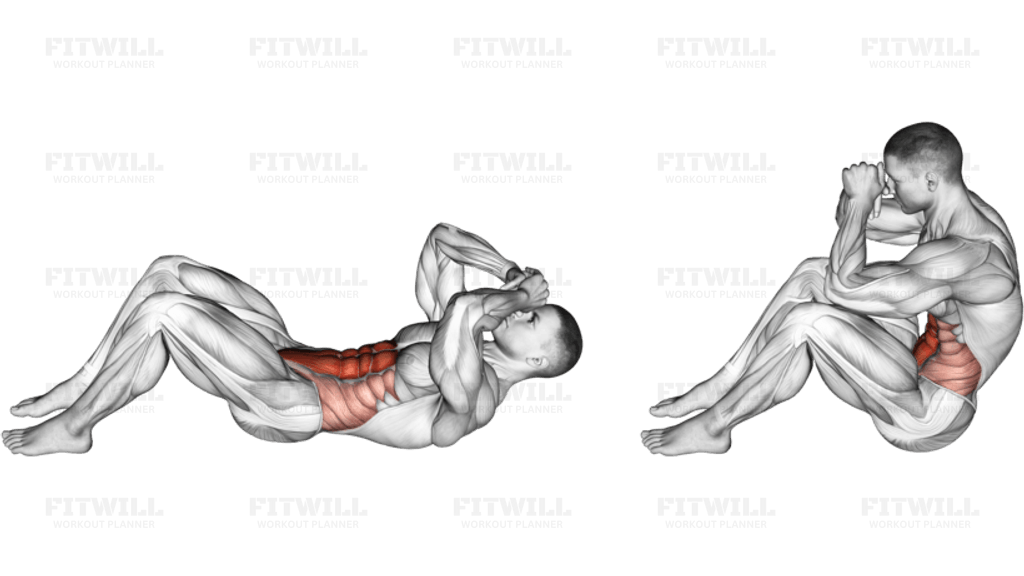
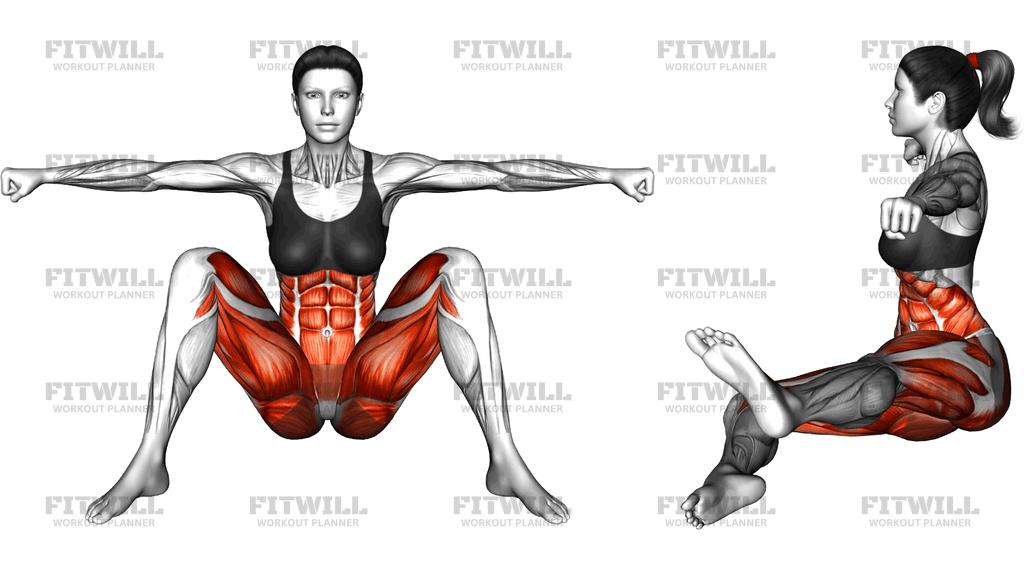
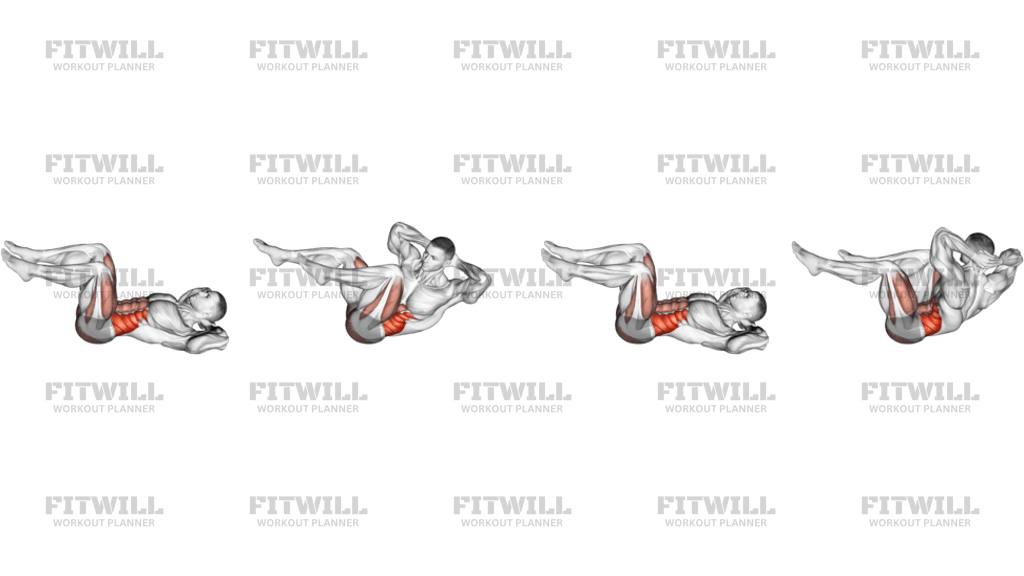
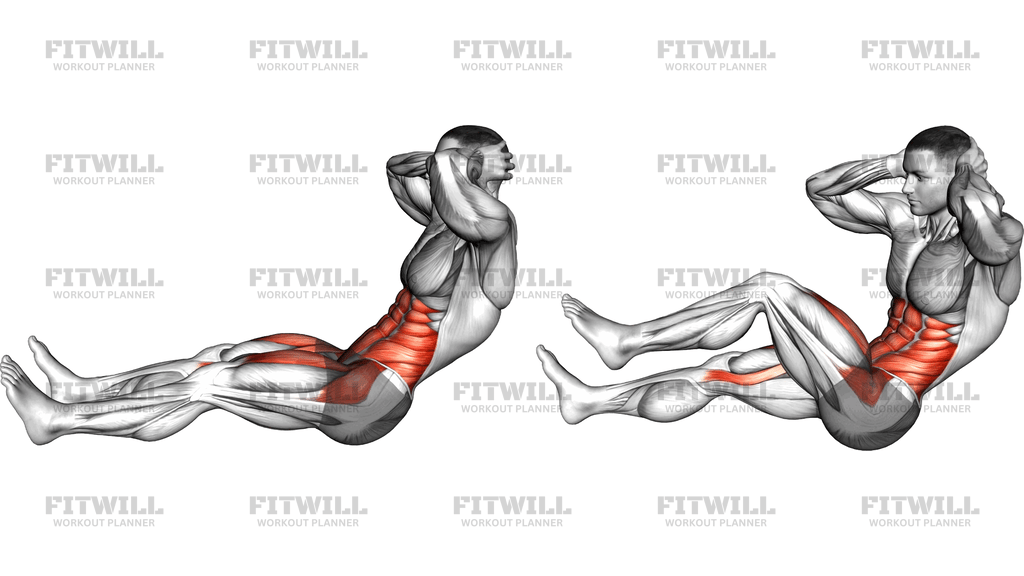
The Sitting Floor Alternating Crunch Knee Raise And T is a body weight abdominal exercise performed on the floor from a reclined seated position. You lean your torso back, place your hands behind your head, keep your legs extended in front of you, and then work one side at a time: pull a knee in toward your chest while crunching your upper body down and slightly across to meet it. The name's "T" refers to the open, spread-out base position, where your torso and extended leg form a long line as you sit propped on the floor.
This movement suits anyone who wants direct abdominal work without a bench, decline setup, or hanging equipment. Because you start from a leaned-back seated position rather than flat on your back, your abs must hold tension the entire time, which makes the exercise feel harder than a standard floor crunch at the same rep count. It is a good fit for home training, travel workouts, and as a finishing movement at the end of a core session.
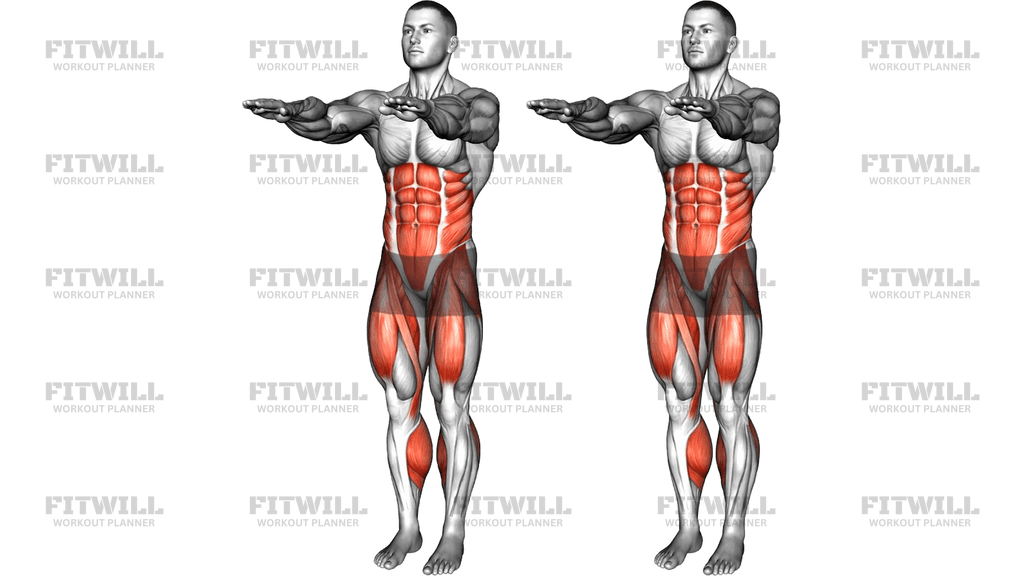
The primary muscles worked are the abs, especially the rectus abdominis, with strong involvement from the hip flexors as each knee travels toward the torso. Because the knee and elbow travel toward each other on the same side rather than opposite sides, the obliques assist with the slight rotation and lateral flexion of the trunk. The quadriceps and hip flexors of the extended leg also work isometrically to keep that leg hovering just above the floor.
Setup matters more here than in most crunch variations. Sit on the floor, lean your torso back to roughly a 45-degree angle, and find the point where your abs are engaged but your lower back is not rounded or strained. Your hands support the back of your head with elbows wide, and your legs stay extended with the working side's knee driving in. If you sit too upright, the exercise turns into a hip flexor pull with little abdominal challenge; if you sit too far back, your lower back takes over and your form collapses.
Execution is about coordination, not speed. Each rep combines two actions: the knee travels in while the ribcage curls down and slightly across toward that knee, then both return to the leaned-back, legs-extended position before the other side works. Keep the motion smooth and avoid jerking your head or yanking your neck with your hands. Exhale as the knee and elbow come together and inhale on the way back out.
The most common faults are pulling on the head, sitting up fully like a sit-up instead of crunching, letting the extended leg flop or rest on the floor, and rushing the alternation so momentum does the work. Move deliberately, keep the non-working leg controlled, and stop the set when your lower back starts arching off its stable position rather than when your reps hit a number.
[ Workout Log & Planner ]
Put your next workout in Fitwill
Keep your plan and training log ready when you are.


Instructions
- Sit on the floor or an exercise mat with your legs extended straight in front of you and your feet together.
- Lean your torso back to about 45 degrees and place your hands lightly behind your head with your elbows flared out wide, forming the open T-style base position.
- Brace your abdominal muscles so your trunk feels solid in the leaned-back position; your extended heels should stay close to the floor.
- Exhale and pull your right knee in toward your chest while simultaneously crunching your upper body down and slightly across toward that knee.
- Let the knee and elbow nearly meet at the top of the rep, squeezing your abs briefly in the shortened position.
- Inhale and lower your torso back to the leaned-back starting angle while extending the right leg back out to meet the left, keeping the foot off or just above the floor.
- Repeat the same combined knee-and-crunch motion on the left side, then continue alternating sides for your target number of total reps.
- Keep your neck neutral throughout, eyes forward, with your hands supporting rather than pulling your head.
- If you lose the leaned-back position or your lower back starts to strain, reset your posture between reps or end the set.
Tips & Tricks
- The most common mistake is turning this into a sit-up. The torso should curl down and slightly across from a leaned-back base, not travel all the way upright.
- Do not lace your fingers behind your head; holding the head lightly with open hands makes it much harder to yank your neck forward.
- If your hip flexors take over and you feel it in the front of your thighs, focus on the ribcage curling first and let the knee follow the crunch.
- Keep the extended leg's heel hovering just above the floor the entire set; letting it rest removes the constant tension that makes this variation effective.
- The slight cross-body reach should come from your ribs rotating, not from swinging your elbow; think of the elbow staying wide while the trunk rotates.
- Slow down the return. Most of the abdominal work in this exercise happens on the way back out to the leaned-back position, not on the pull in.
- If balance is difficult at the 45-degree angle, sit slightly higher or place a rolled towel under your hips to give yourself a more stable base.
- Stop the set when your form breaks, not when you are completely exhausted; a rounded lower back under fatigue is the typical failure point here.
Frequently Asked Questions
What muscles does the Sitting Floor Alternating Crunch Knee Raise And T work?
The abs, particularly the rectus abdominis, are the primary movers, with the hip flexors driving each knee raise. The obliques assist with the slight rotation, and the quadriceps of the extended leg work statically to hold it in place.
Why does the exercise start from a leaned-back seated position instead of lying flat?
The reclined seated angle forces your abs to hold tension continuously through the whole set, since your trunk never gets to rest on the floor. It also lets the knee and elbow travel toward each other from an open position, which standard floor crunches do not allow.
Is the Sitting Floor Alternating Crunch Knee Raise And T suitable for beginners?
Yes, as long as the range is reduced. Beginners can lean back less, bring the knee only partway in, and slow the tempo. If holding the leaned-back position is too hard, start with regular alternating knee raises before adding the crunch.
Should my heel touch the floor between reps?
Aim to keep the extended heel hovering just above the floor so tension stays on your abs and hip flexors. If your form is breaking down, briefly tapping the heel down between reps is an acceptable regression.
How is this different from a bicycle crunch?
In a bicycle crunch you alternate the opposite elbow toward the opposite knee while lying flat. Here you stay propped in a leaned-back seated position and match the elbow with the knee on the same side, with the extended leg held out in front the entire time.
How many reps should I do?
Start with 8 to 12 reps per side for 2 to 3 sets, focusing on the knee and ribcage meeting smoothly each time. Add reps or slow the tempo before adding external load.
My neck hurts when I do this exercise. What should I change?
You are likely pulling on your head. Keep your hands open and resting lightly behind your head, keep your eyes forward, and drive the movement from your ribs and knees rather than your chin.
Can I substitute this exercise if the seated position bothers my lower back?
Yes, standard alternating crunches lying on your back with one knee pulled in use a very similar pattern with more spinal support. A reverse crunch on a mat is another lower-stress option.
Do I need any equipment for the Sitting Floor Alternating Crunch Knee Raise And T?
No, it is a pure body weight movement performed on the floor. An exercise mat is optional but recommended for comfort on the tailbone and hips.