Kneeling Plank Alternating Arm Raise
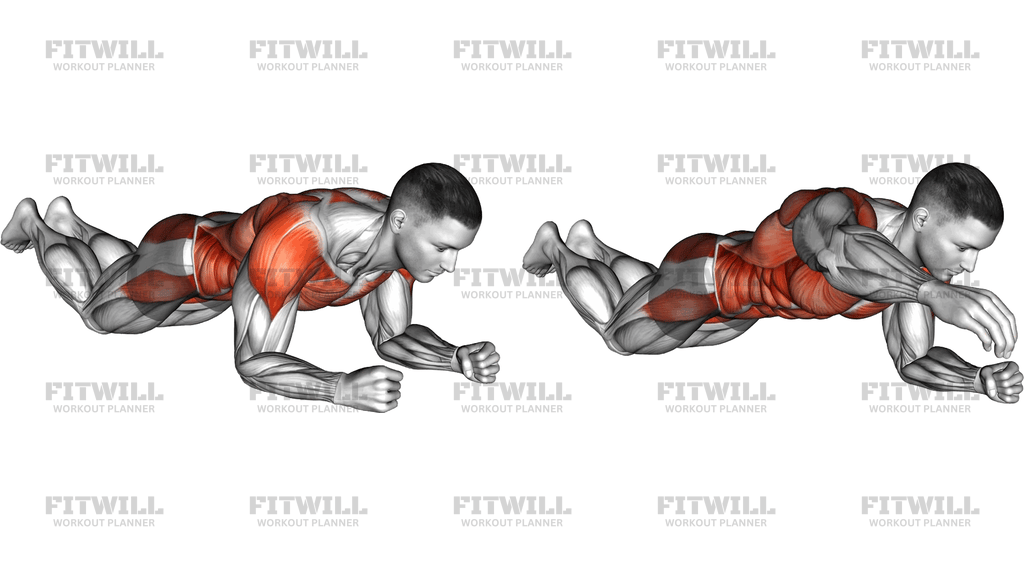
The Kneeling Plank Alternating Arm Raise is an anti-rotation core exercise performed from a forearm plank supported on the knees. From this shortened plank position, you extend one arm forward at a time while keeping your hips and shoulders square to the floor. Because you lose one point of contact with every rep, your trunk has to fight the twist that the moving arm creates, which is exactly what makes this movement valuable.
This is a great progression for people who find a full plank with arm raises too demanding, or for anyone building up core control after time away from training. The kneeling position shortens the lever and reduces the load on the lower back, while the alternating arm raise still challenges the deep core muscles, the shoulders, and the stabilizers around the shoulder blade. It is commonly used in warm-ups, core finishers, and rehab-style programs where controlled, low-load stability work is the priority.
The main demand is on the transverse abdominis and rectus abdominis to hold a rigid trunk, with the obliques working hard to prevent rotation. The front of the supporting shoulder and the muscles that anchor the shoulder blade handle the shift in weight as the opposite arm reaches out, and the glutes help keep the pelvis level. The raised arm should travel straight forward at roughly shoulder height, in line with the torso, not out to the side.
Setup matters more than speed here. Place your elbows directly under your shoulders, knees hip-width apart on a mat, and set your hips so your body forms one line from head to knees before you lift the first arm. If your hips start too high or too low, the reach simply exaggerates that fault. Move slowly, lift one arm to shoulder height, pause briefly, lower it with control, and only then switch sides.
The most common errors are letting the hips sway or drop toward the supporting side, shrugging the lifting shoulder toward the ear, and rushing the reps. Slow the tempo down, think about pressing the supporting forearm into the floor, and keep the hips level like you are balancing a glass of water on your lower back. If you cannot keep your hips square, reduce the reach or hold the top position for less time until your control improves.
[ Workout Log & Planner ]
Put your next workout in Fitwill
Keep your plan and training log ready when you are.


Instructions
- Kneel on an exercise mat and lower your torso so both forearms rest on the floor, elbows stacked directly under your shoulders, hands relaxed or lightly fisted.
- Walk your knees back until your body forms one straight line from head to knees, with your knees set about hip-width apart.
- Squeeze your glutes, brace your abdominal wall as if bracing for a light push, and press your supporting forearm firmly into the floor.
- Keeping your hips and shoulders square to the floor, raise one arm straight forward to about shoulder height, palm facing down.
- Pause at the top for one to two seconds, holding the arm in line with your torso without letting it drift outward.
- Lower the arm back to the starting plank position under control, then repeat on the other side to complete one rep.
- Exhale as you lift the arm and inhale as you lower it, keeping your breathing steady rather than holding your breath.
- Alternate sides for the desired number of reps, rechecking your hip line and elbow position each time you return to the plank.
Tips & Tricks
- Imagine a cup of water balanced on your lower back; if the hips tilt or sway as the arm lifts, your reach is too fast or too high.
- Press the supporting forearm down and slightly back into the floor. This recruits the shoulder stabilizers and keeps the supporting side from collapsing.
- Keep the lifting arm at shoulder height and directly in front of the shoulder. Reaching higher than shoulder level adds strain without extra core benefit.
- If your hips drop toward the mat, your knees have drifted too far back. Reset with the hips slightly higher until you can hold a straight line.
- Avoid shrugging the lifting shoulder up to your ear; think about lengthening the arm forward and keeping space between the ear and shoulder.
- Slower is harder. A two-second lift, one-second hold, and two-second lower will challenge the core far more than quick alternating swings.
- Keep the neck neutral by looking at the floor just ahead of your hands rather than lifting the head to check the arm.
- If one side wobbles more than the other, start each set with your weaker side and match the rep count with the stronger side.
Frequently Asked Questions
What muscles does the Kneeling Plank Alternating Arm Raise work?
The primary work is done by the abs, especially the deep core muscles that resist rotation. The front shoulders, glutes, obliques, and lower back assist by holding the plank line steady while one arm is lifted.
Is the kneeling version good for beginners?
Yes. Supporting on the knees shortens the lever and lowers the load on the lower back, making it a solid starting point before progressing to a full forearm plank arm raise.
How high should I raise my arm during the Kneeling Plank Alternating Arm Raise?
Raise it to about shoulder height, straight in front of your shoulder. Going higher adds little extra core demand and tends to make the hips and shoulder blade shift out of position.
Why do my hips rotate when I lift one arm?
That rotation is the exact challenge the exercise targets. Slow the tempo, press the supporting forearm into the floor, lighten your reach, and re-brace your abs before each lift.
Can I do this exercise without a mat?
You can, but the kneeling position puts direct pressure on the knees and forearms, so a mat or soft surface makes the hold much more comfortable and lets you focus on form.
How many reps should I do?
Start with 6 to 10 controlled reaches per side, focusing on keeping the hips square. Once you can hold each lift for two seconds without wobbling, progress to longer holds or move to a full plank version.
What can I use as a substitute if the Kneeling Plank Alternating Arm Raise is too hard?
Try a plain kneeling forearm plank while simply lifting one hand a few centimeters off the floor, or perform the same reach from an all-fours quadruped position, which is even more stable.
Should my shoulders stay level during the reach?
Yes. Both shoulders should stay at the same height, with the shoulder blade of the lifting arm staying flat against the rib cage rather than winging up toward the ear.
Is it safe for my lower back?
When the hips stay in a straight line from head to knees and you brace before lifting, the load on the lower back stays modest. Stop and reset if you feel your hips sagging or any discomfort in the lower back.