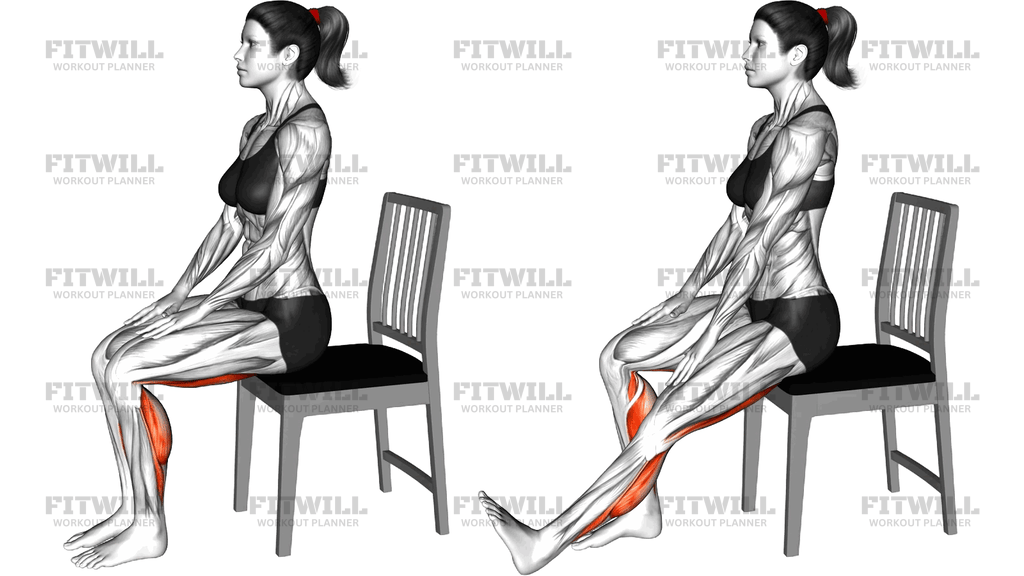
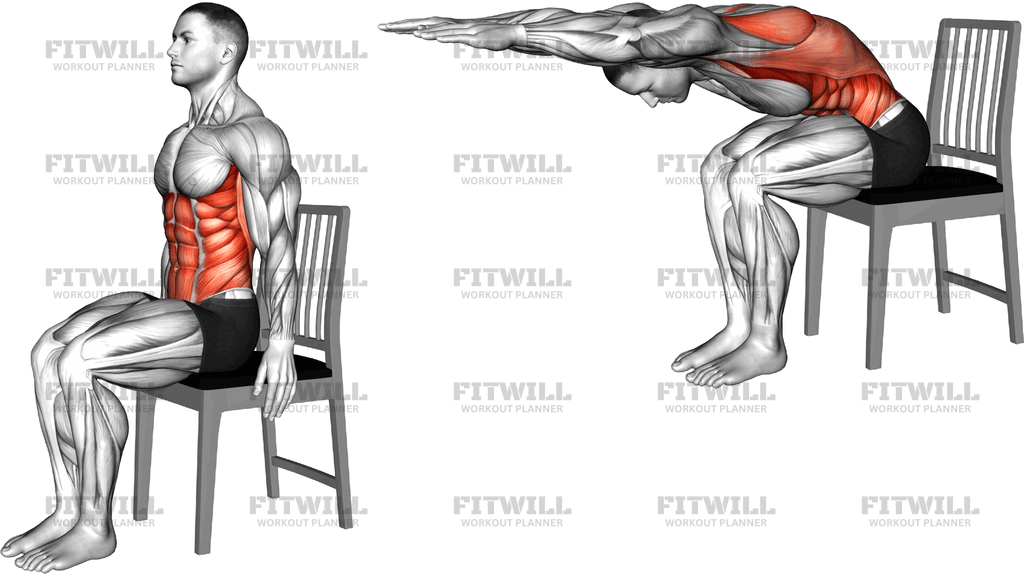
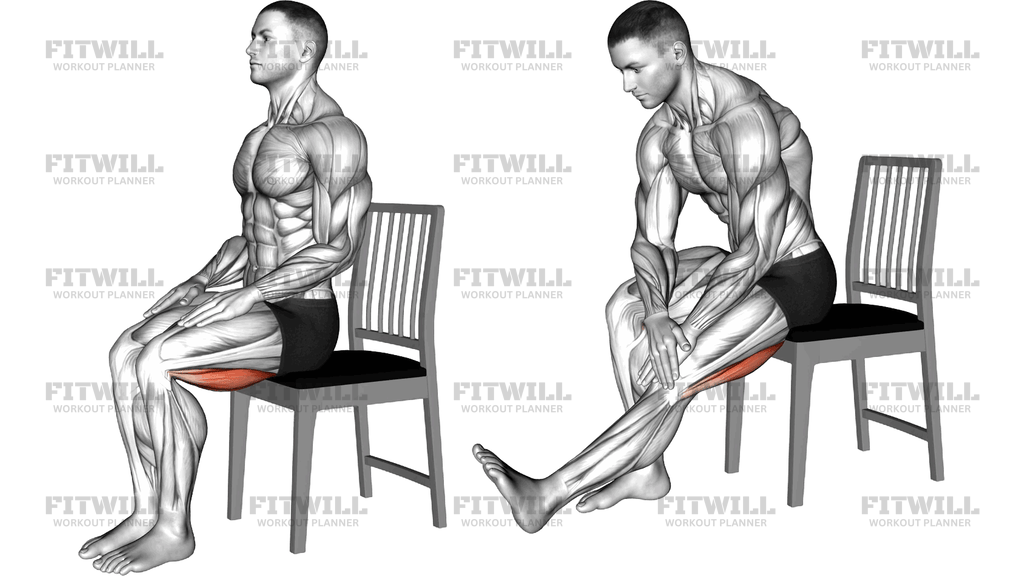
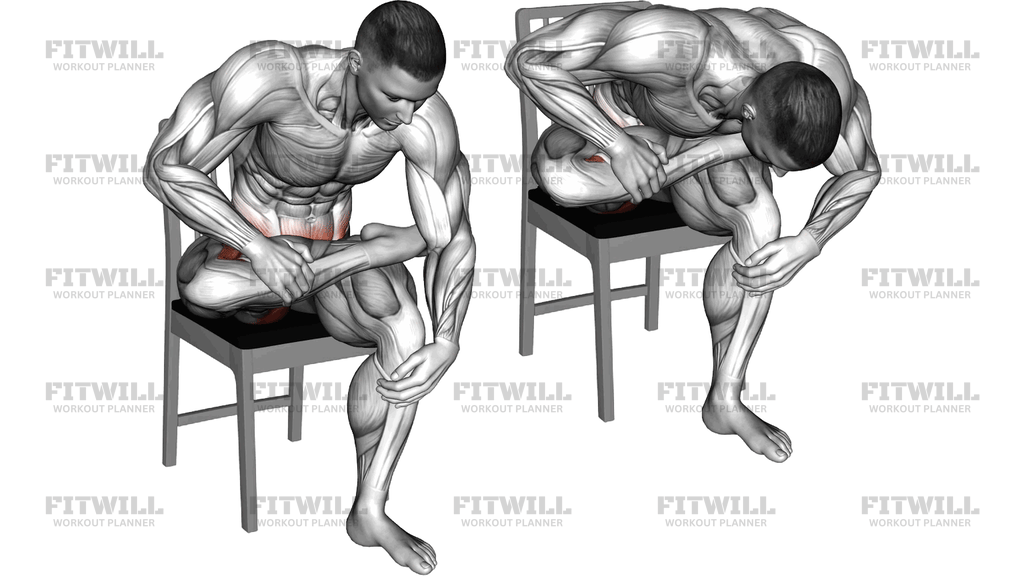
Seated Hamstring Stretch On A Chair (Version 2)
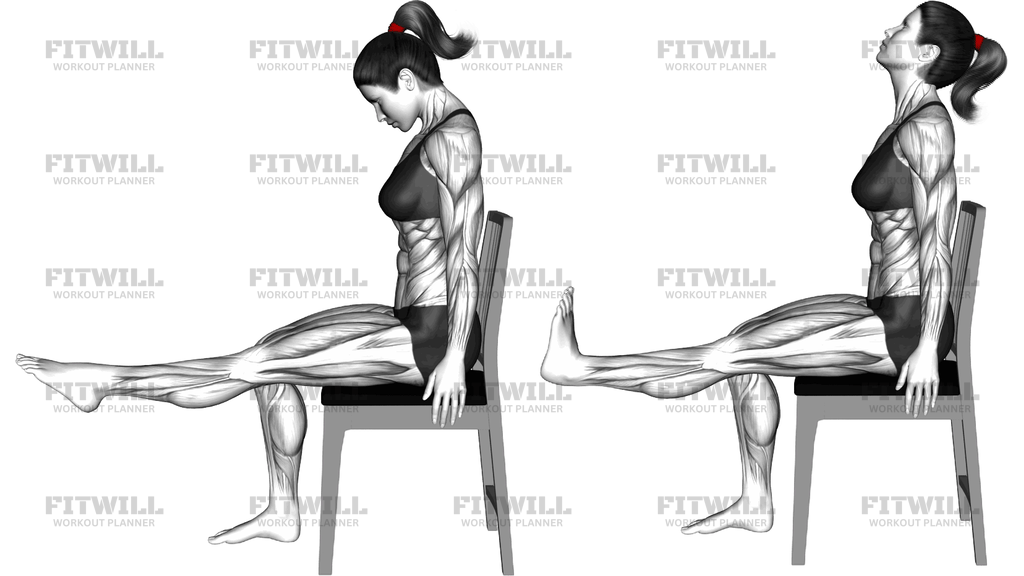
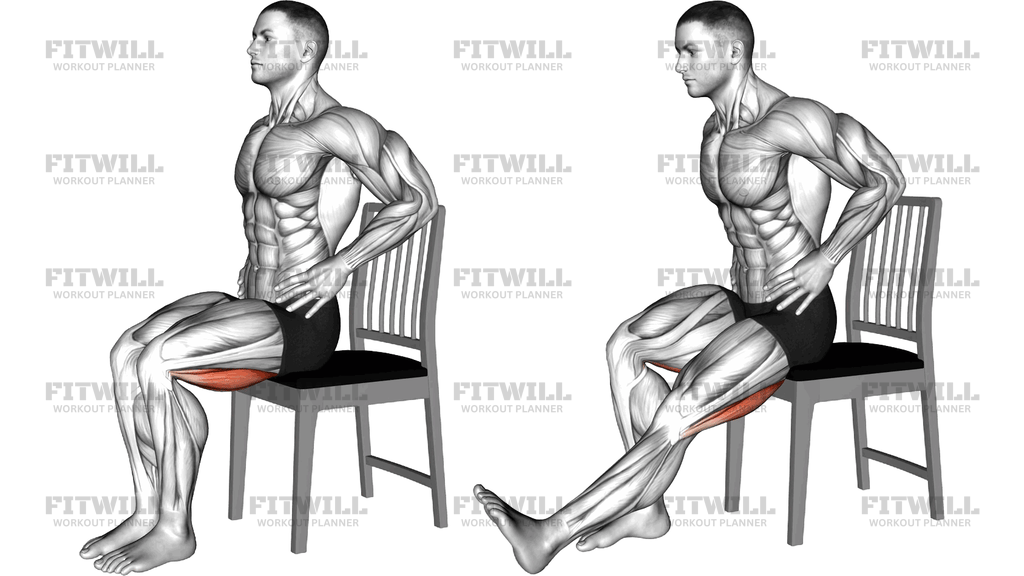
The Seated Hamstring Stretch On A Chair (Version 2) is a low-effort flexibility drill that targets the hamstrings of one leg at a time while you stay seated. You sit on a sturdy chair, extend one leg straight out in front of you with the heel resting on the floor, and then hinge forward from the hips with a long, flat spine until you feel a steady pull along the back of the thigh. Because one leg stays bent with the foot planted, the setup is stable and easy to control, which makes this version friendlier than a standing hamstring stretch for people who struggle with balance.
This stretch suits a wide range of people: office workers with tight hamstrings from long sitting, runners and cyclists who want to restore range after a session, and older adults or beginners who need a supported way to work on the back of the thigh without getting down on the floor. It is also a practical option at a desk or at home since all you need is a chair without wheels.
The main tissue under stretch is the hamstring group on the extended leg, particularly when the knee is fully straight and the torso leans toward the thigh. You will also feel mild lengthening through the calf of the straight leg when the toes pull up, and a gentle release across the lower back as you hinge forward. The bent leg and the chair take care of stability, so your only job is to keep the hips square and the spine long.
Setup matters more than depth here. Sit toward the edge of the chair so your hips can tip forward freely, and point the toes of the extended leg toward the ceiling with the heel grounded. If you round the upper back to chase a deeper stretch, you shift the tension away from the hamstrings and load the lumbar spine instead, which defeats the purpose. Move from the hips, keep the chest open, and let the thigh dictate how far you lean.
To execute the stretch well, brace the hands on your hips or rest them on the bent thigh for support, inhale to lengthen the spine, and exhale as you tip the pelvis forward. Stop at the first strong stretch sensation behind the thigh, hold it while breathing steadily, then return to upright by pushing the floor away with the bent foot. Repeat on the other side so both legs get equal time.
Use this stretch as part of a cool-down, as a midday reset after long periods of sitting, or as a daily maintenance hold if the back of your thighs feels chronically tight. Stay in a comfortable range, never bounce, and keep each hold long enough for the muscle to actually let go, usually thirty to sixty seconds per side.
[ Workout Log & Planner ]
Put your next workout in Fitwill
Keep your plan and training log ready when you are.


Instructions
- Place a sturdy, armless chair on a non-slip surface and sit toward the front edge with your feet flat on the floor.
- Extend your right leg straight out in front of you so the heel rests on the floor and the toes point up toward the ceiling; keep your left knee bent with the left foot planted beside the chair leg.
- Sit tall with your hips level and square to the front, and place your hands on your hips or rest one hand lightly on the bent thigh for support.
- Take a breath in and lengthen through the crown of your head to create a long, neutral spine before moving.
- Exhale and hinge forward from the hips, leading with the chest toward the toes of the extended leg rather than rounding your shoulders down.
- Stop when you feel a firm but tolerable stretch along the back of the right thigh, and hold that position for thirty to sixty seconds while breathing slowly.
- To deepen the hold slightly, flex the foot harder so the toes pull back toward your shin, or hinge a small amount further if the stretch has eased.
- Return to the upright seated position by pushing gently through the bent left foot and letting the hips roll back under you.
- Switch legs, extend the left leg, and repeat the same hold on the other side.
- Complete one to three rounds per leg, resting briefly between holds if the stretch feels intense.
Tips & Tricks
- Rounding into a big curve to reach the toes is the most common fault here; the stretch should come from tipping the pelvis forward, so keep the chest proud and stop at the thigh, not the foot.
- Sitting too far back on the chair locks the pelvis in a tucked position and kills the stretch — slide forward to the edge so your hips can actually rotate.
- Keep the hips facing straight ahead; twisting the torso toward the extended leg sneaks in a hip rotation stretch instead of a clean hamstring stretch.
- If the back of the knee feels pinched rather than stretched, soften the knee by a degree or two; a micro-bend still lengthens the hamstrings without straining the joint.
- If your lower back complains instead of your thigh, reduce the forward lean and focus on tilting the pelvis only a few degrees — the range will improve with time.
- Pointing the toes up increases the pull through the calf and the back of the knee; drop the toes slightly if that area is too talkative.
- Keep the bent-leg foot fully planted; letting that heel float takes away your base and makes the forward hinge wobbly.
- Do not lock and push the extended knee hard — press the heel into the floor gently instead, which engages the thigh and protects the joint.
- Breathe out slowly during the lean; holding your breath tends to stiffen the hamstrings and shorten the hold.
- Because one leg is straight and one is bent, always match sides evenly so a pre-existing left-right difference does not grow.
Frequently Asked Questions
Which muscles does the Seated Hamstring Stretch On A Chair (Version 2) target?
The primary target is the hamstring group on the extended leg, with supporting stretch through the calf when the toes pull up and a mild release in the lower back from the hip hinge.
Why does the straight leg have to keep the heel on the floor?
Grounding the heel anchors the leg so the knee stays safely extended and the stretch stays in the thigh; a floating heel usually means the knee is taking unwanted stress or the hip has drifted.
Is this version suitable for beginners or older adults?
Yes, it is one of the more accessible hamstring stretches because you stay seated, one foot stays planted for balance, and you can control the depth simply by how far you lean.
How long should I hold the Seated Hamstring Stretch On A Chair (Version 2)?
Aim for thirty to sixty seconds per side, and repeat one to three rounds if the muscle still feels tight after the first hold.
My lower back aches during the stretch instead of my hamstring — what is wrong?
You are most likely rounding the spine rather than hinging from the hips; sit up taller, reduce the lean, and focus on tilting the pelvis forward until the pull returns to the back of the thigh.
Can I do this stretch at my desk during the workday?
Yes, as long as your chair is stable and has no wheels, you can perform the stretch at a desk as a short midday break from sitting.
What can I use instead if I do not have a suitable chair?
Any stable seat such as a bench, a sturdy stool, or even the edge of a bed works; just avoid anything with wheels or an unstable base.
Should the knee of the extended leg be completely straight?
Full extension is ideal, but a very small bend is fine if the back of the knee feels pinched; keep the heel pressed into the floor to maintain the stretch.
Should I bounce to get deeper into the stretch?
No, bouncing can trigger a protective tightening in the hamstring; hold a steady position and let slow breathing do the work instead.
When is the best time to use this stretch?
It works well as a cool-down after training, during a break from prolonged sitting, or as a daily maintenance hold when the back of the thighs feels tight.