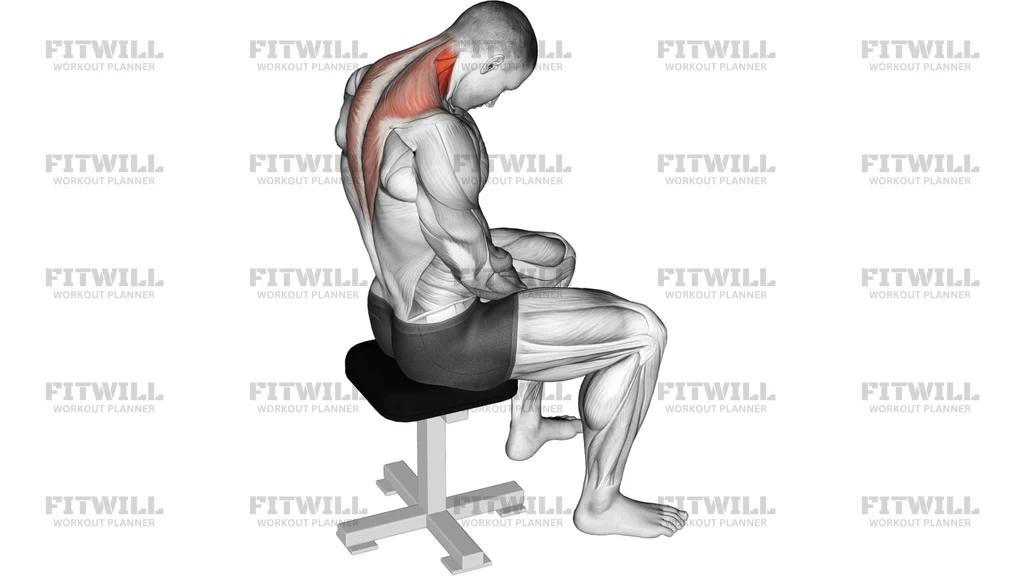
Seated 45 Degrees Neck Stretch On A Chair
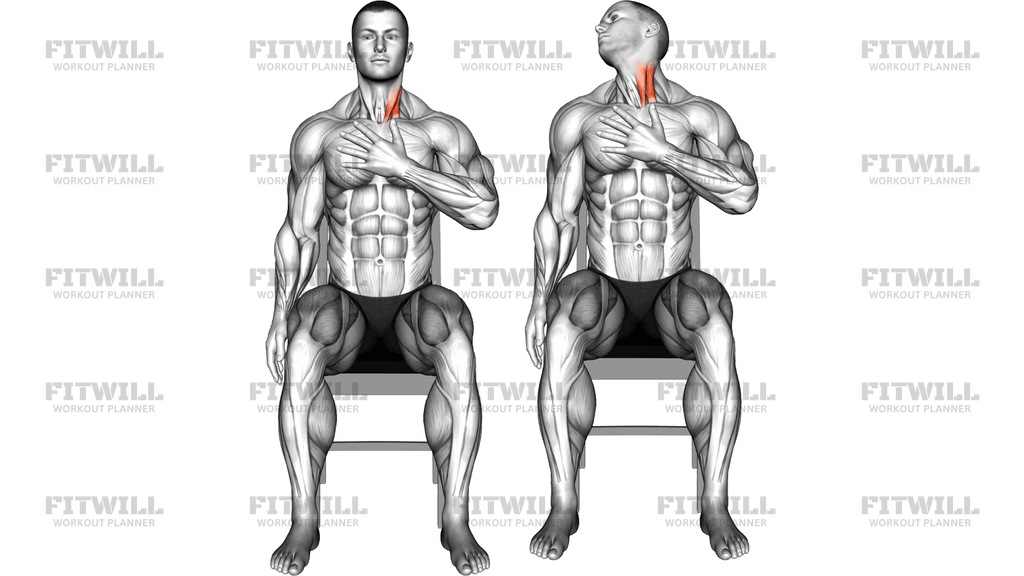
The Seated 45 Degrees Neck Stretch On A Chair is a self-applied stretch that targets the side and back of the neck, with the main emphasis on the upper trapezius and levator scapulae. You sit upright on a chair, tilt your head roughly 45 degrees to one side — combining forward flexion with lateral flexion — and gently deepen the position by drawing the head down with the hand from your raised arm. The opposite arm stays relaxed at your side, which anchors the shoulder down and keeps tension in the muscles being lengthened.
This stretch is especially useful for people who spend long hours at a desk, since the upper traps and levator scapulae tend to accumulate chronic tension from screen work, forward head posture, and elevated shoulders. It is also a common addition to post-workout cooldowns after upper body training days involving pressing, pulling, or carrying, and it can help ease that tight, knotted feeling along the top of the shoulder blade.
The setup matters more than most people expect. Sitting on a chair gives you a stable base so your torso stays still while only the neck moves. If the torso leans or rotates, the stretch angle changes and the intended muscles no longer get a clean pull. The 45-degree angle is the key detail: pulling the head straight sideways mostly targets the upper traps, while adding that forward tilt shifts more of the stretch into the levator scapulae, the muscle that often refers tightness into the angle of the neck and shoulder blade.
To execute it well, keep your shoulders level and your spine tall, then guide your head diagonally forward and across rather than yanking it toward your ear. The pull should come from a relaxed hand resting on the head, not from dragging with the elbow. Hold a mild to moderate stretch — you should feel it along the side and upper corner of the neck opposite the pulling hand — and breathe steadily throughout.
Because the neck is a mobile and sensitive area, all movement here should be slow and voluntary. Never bounce, and never push into pain, tingling, or dizziness. A hold of 20 to 40 seconds per side, repeated once or twice, is enough for most people. Perform the stretch on both sides to keep the neck balanced, even if one side feels noticeably tighter than the other.
[ Workout Log & Planner ]
Put your next workout in Fitwill
Keep your plan and training log ready when you are.


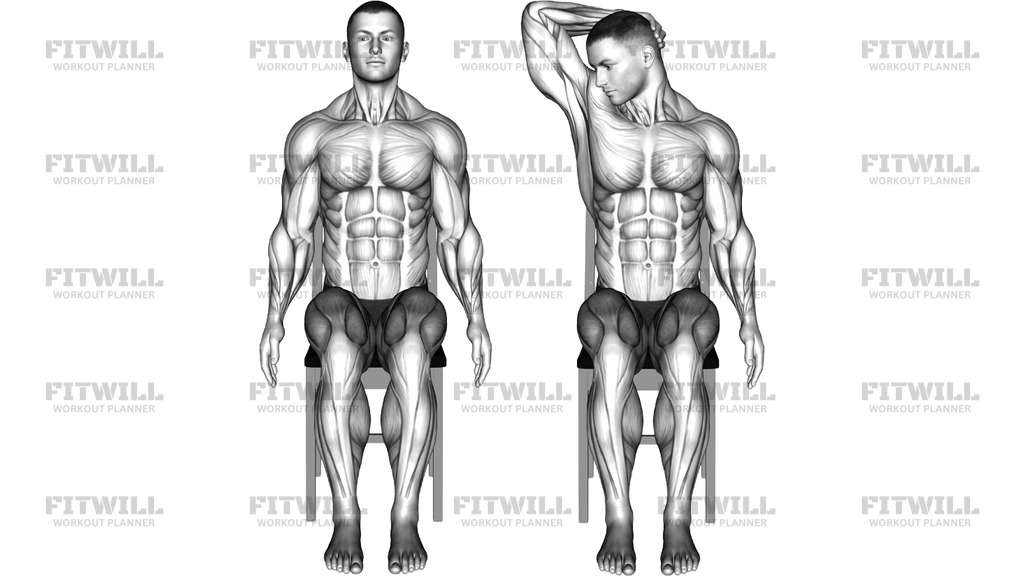
Instructions
- Sit upright on a stable chair with your feet flat on the floor, hip-width apart, and your back straight without leaning against the backrest.
- Let your shoulders drop down and back, and rest your left arm loosely at your side or on your thigh so the left shoulder stays anchored down.
- Raise your right arm, bend the elbow, and place your right hand over the left side and back of your head, near the top rather than on the neck itself.
- Brace lightly through your core and keep your torso square to the front so the stretch comes from the neck, not from twisting the chest.
- On an exhale, gently guide your head diagonally forward and to the right at roughly 45 degrees, bringing the ear toward the right armpit area while the chin angles down and across.
- Let the weight of the arm provide the pressure; add only a light, steady pull with the hand once your neck reaches its natural end range.
- Stop when you feel a clear stretch along the left side and upper rear of the neck, and hold there for 20 to 40 seconds while breathing slowly.
- To release, remove your hand first, then raise your head back to the neutral upright position slowly, without letting it snap back.
- Repeat the same sequence on the opposite side, using your left hand to guide the head to the left, and complete one to two holds per side.
Tips & Tricks
- Place the hand on the upper-back portion of the head, not on the jaw or neck, so the pull goes through the skull and not the cervical joints.
- The most common mistake is shrugging the stretching-side shoulder toward the ear. Keep that arm heavy and relaxed; if you cannot keep it down, rest the hand on your thigh during the hold.
- Do not chase range by cranking the elbow. The elbow only travels as far as the neck allows — pulling it harder just compresses the cervical spine.
- Keep your chin slightly tucked and the head moving diagonally. Pulling the ear straight down to the shoulder changes the angle and mostly loses the levator scapulae component.
- If the stretch feels sharp or radiates into the arm, back off immediately. Reduce the angle and the hand pressure before trying again.
- Sit forward on the chair seat so your torso is unsupported and your posture stays tall; slumping against a backrest rolls the upper back and shortens the stretch.
- Exhale as you guide the head into position and keep breathing through the hold — held breath increases tension in exactly the muscles you are trying to release.
- If one side is much tighter, still spend equal time on both sides rather than overworking the tight one.
- Warm the area first with a few slow neck nods and shoulder rolls if you are stretching first thing in the morning or straight after heavy overhead work.
Frequently Asked Questions
Which muscles does the Seated 45 Degrees Neck Stretch On A Chair target?
It primarily targets the upper trapezius and levator scapulae on the side being lengthened, with some stretch into the scalenes and other lateral neck muscles. The 45-degree forward tilt is what shifts emphasis into the levator scapulae.
Why is the head tilted 45 degrees instead of straight to the side?
Tilting diagonally forward and across lengthens both the upper trapezius and the levator scapulae, which runs from the shoulder blade up to the upper cervical spine. A straight side bend mainly hits the trapezius and misses much of that muscle.
Is this stretch safe for beginners?
Yes, as long as the pressure from the hand stays light and the movement is slow. Beginners often pull too hard, so start by just tilting the head into position without the hand and only add gentle assistance once you know your range.
How long should I hold the stretch on each side?
Twenty to forty seconds per side, repeated once or twice, works well for most people. If you feel the stretch fading partway through, relax, reset, and repeat rather than pushing deeper into the same hold.
Can I do the Seated 45 Degrees Neck Stretch On A Chair without a chair?
You can perform it standing or on a bench, but the chair makes it easier to keep the torso still and the shoulders level. Without a seat, many people compensate by leaning the trunk, which reduces the stretch on the neck.
What should I do if I feel tingling or numbness during the stretch?
Stop the stretch immediately and return your head to neutral. Tingling down the arm means a nerve is being compressed or tensioned, so reduce the angle, use no hand pressure, and consult a qualified professional if it keeps happening.
Should I stretch both sides even if only one feels tight?
Yes. Stretching both sides keeps mobility balanced between the left and right neck muscles. If one side is clearly tighter, you can add an extra gentle hold on that side, but never skip the looser side entirely.
When is the best time to use this stretch?
It works well as a cooldown after upper body training, or as a mid-day reset for desk workers whose shoulders have crept up toward their ears. Avoid doing it aggressively before heavy lifting, since the neck muscles assist in stabilizing under load.
Where exactly should my pulling hand be placed?
Place the hand over the upper-back and side of the head, roughly covering the top portion of the skull opposite the stretch side. Keeping it off the jaw and neck ensures the force lengthens muscle tissue rather than pressing on the cervical joints.