Seated Neck Backward Stretch
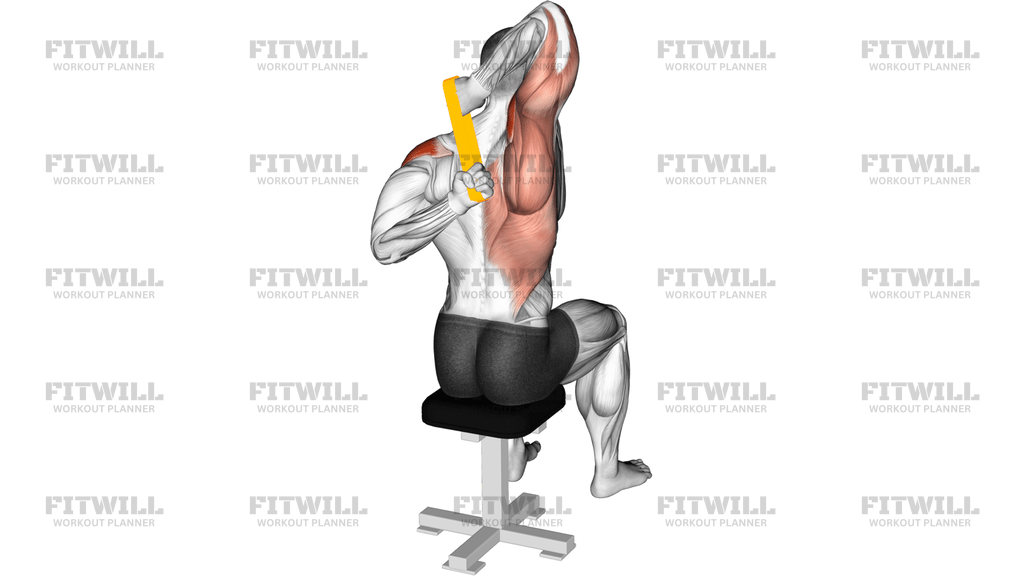
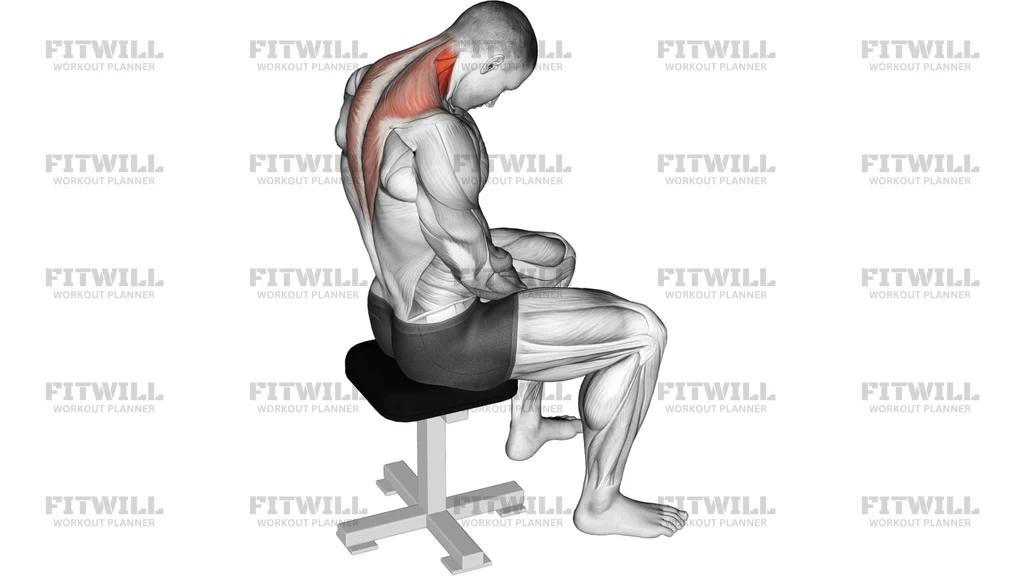
The Seated Neck Backward Stretch is a gentle mobility drill for the front of the neck. You sit upright on a bench or chair, anchor the tissue at your upper chest with one hand, and slowly tip your head back to look up at the ceiling. This lengthens the muscles on the throat side of the neck, most notably the sternocleidomastoid and the scalenes, which rarely get stretched in day-to-day movement.
This stretch is especially useful for people who spend long hours at a desk or looking down at a phone. That forward-head posture keeps the deep neck flexors short and the front-of-neck tissue compressed, and it often comes with tightness across the upper traps and the base of the skull. Relearning comfortable backward extension of the neck helps balance all that forward flexion and can ease that stiff, locked-in feeling at the front and sides of the neck.
The setup matters more than most people expect. Sitting tall with your ribs stacked over your hips gives the neck a stable base to extend from, and pressing your hand firmly into the top of the chest keeps the sternum and collarbone from riding up as your head goes back. Without that hand anchor, the stretch tends to leak into the chest and shoulders, and you lose the specific lengthening sensation in the front of the neck.
To perform it well, keep the movement slow and small. Let your head tilt back as if following the movement with your eyes first, then allow the chin to lift toward the ceiling. You should feel a mild stretch along the front and side of the throat, never sharp pain, tingling, or dizziness. Breathe normally, hold for fifteen to thirty seconds, and bring your head back up with the same control you used going down.
A useful cue is to think of drawing a long, slow arc with the top of your head rather than snapping the chin upward. Because the hand on the chest also limits how much your torso leans back, most of the motion ends up happening exactly where you want it: in the upper cervical segments and the muscles running from behind your ear down to your collarbone.
Do this stretch once or twice a day if you work at a computer, or pair it with neck flexion and side-bending stretches for a complete neck routine. Keep the range conservative on your first few sessions, especially if you are new to neck work, and progress gradually as the tissue tolerates it.
[ Workout Log & Planner ]
Put your next workout in Fitwill
Keep your plan and training log ready when you are.


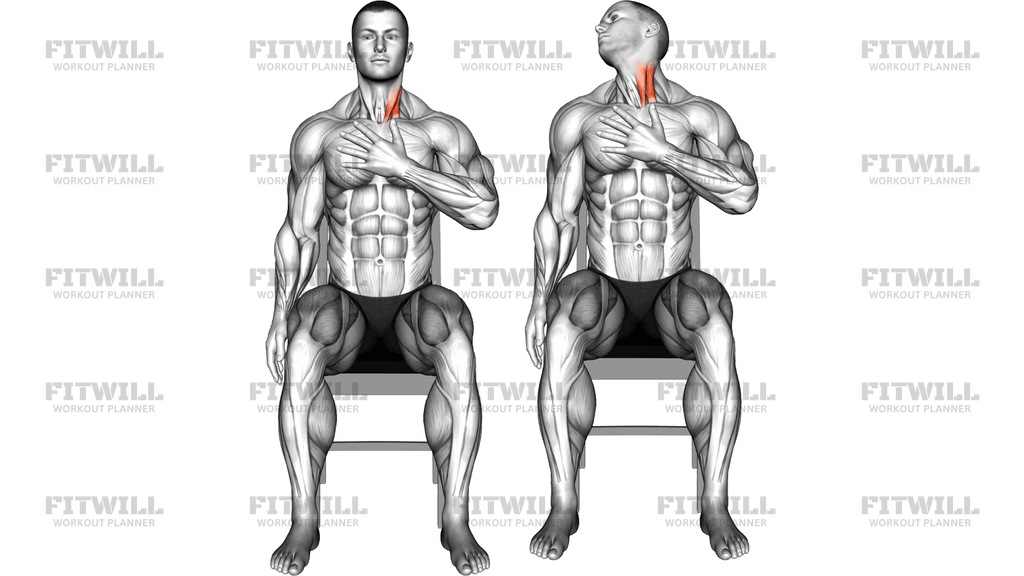
Instructions
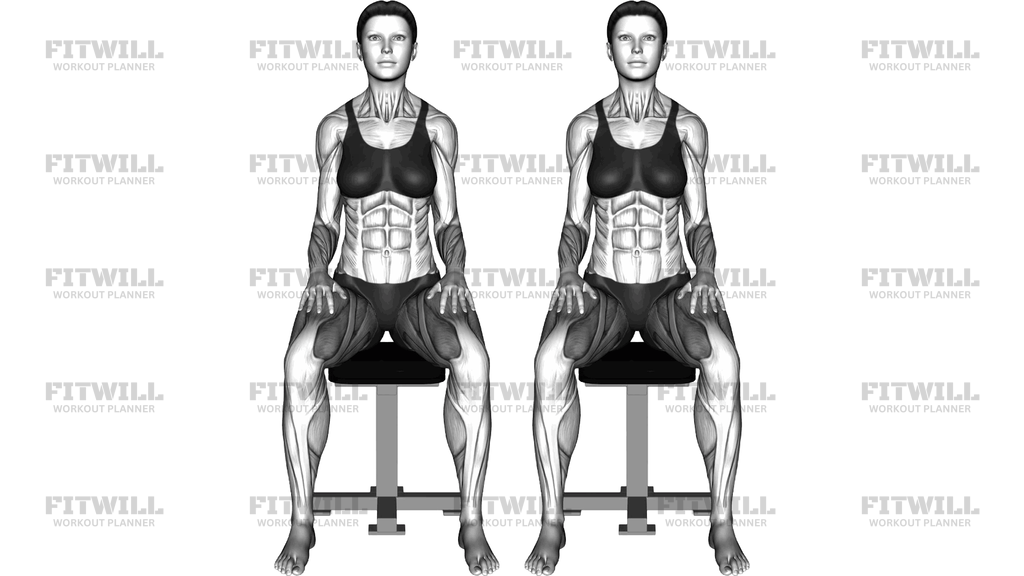
- Sit upright on a sturdy bench or chair with your feet flat on the floor about hip-width apart and your back away from the backrest.
- Rest your left hand flat on your upper chest, fingers spread across the sternum just below your collarbone, and let your other arm relax at your side.
- Lengthen your spine, gently draw your shoulder blades down, and look straight ahead to set a neutral starting position.
- Press your hand firmly into the top of your chest so the sternum and collarbone stay anchored throughout the stretch.
- Slowly tip your head backward, letting your eyes travel up to the ceiling first and allowing your chin to follow toward the sky.
- Stop when you feel a mild, comfortable stretch along the front and side of your neck, and hold that position for 15 to 30 seconds while breathing steadily.
- Keep your torso still as you hold; do not let your ribs flare or your lower back arch to deepen the stretch.
- Exhale and return your head to neutral along the same slow arc, taking about three seconds to come back up.
- Repeat on the other side by switching the anchoring hand to your right hand, or simply repeat the same side if you are addressing one tight area.
- Perform 2 to 3 repetitions per side, keeping each rep slower and smoother than feels necessary.
Tips & Tricks
- If you feel the stretch in your chest or shoulders instead of your neck, press your hand harder into the sternum and re-tall your posture before tipping back again.
- A common mistake is yanking the chin up quickly, which triggers the very muscles you are trying to lengthen; initiate the movement with your eyes instead.
- Keep your jaw relaxed and your mouth closed softly. Clenching your teeth during the hold increases tension in the front-of-neck tissue and blunts the stretch.
- If tilting straight back bothers the backs of your neck vertebrae, reduce the range slightly and focus the sensation at the throat rather than chasing a bigger arc.
- Do not let your lower back arch as your head goes back. Brace your trunk lightly so the extension happens at the neck, not the spine below it.
- A slight turn of the head a few degrees to one side while extended shifts the stretch into that side's sternocleidomastoid, which is handy when one side feels tighter.
- Skip the breath-hold. Many people unconsciously inhale and freeze during neck stretches; keep the air moving to help the muscles release.
- If sitting feels unstable, straddle a bench or place your back against a wall so the torso has something to stay tall against.
- Never use your free hand to pull the head deeper into extension. Gravity and your own controlled motion provide all the force this stretch needs.
Frequently Asked Questions
Which muscles does the Seated Neck Backward Stretch target?
It primarily lengthens the front-of-neck muscles, especially the sternocleidomastoid and the scalenes. The hand anchor on the chest keeps the stretch focused there instead of letting it drift into the shoulders.
Why does one hand press against the chest during this stretch?
Pressing the hand into the upper chest anchors the sternum and collarbone so they do not lift as the head tilts back. This keeps the lengthening where it belongs, in the front of the neck.
Is the Seated Neck Backward Stretch safe for beginners?
Yes, as long as the range is small and pain-free. Beginners should use a shorter hold of 10 to 15 seconds, avoid forcing the chin toward the ceiling, and stop immediately if they feel dizziness, tingling, or sharp pain.
How far back should I tip my head during the Seated Neck Backward Stretch?
Only far enough to feel a mild stretch along the front and side of the throat. Looking up at the ceiling is a rough end point for most people, but a slightly smaller arc is perfectly effective.
Can I do this stretch if I sit at a desk all day?
It is actually one of the best use cases for it. Constant forward-head screen posture shortens the front-of-neck muscles, and one or two gentle sessions a day help restore comfortable backward range.
What is the most common mistake in the Seated Neck Backward Stretch?
Snapping the head back quickly or arching the lower back to deepen the sensation. Both shift tension away from the neck and reduce the benefit, so keep the arc slow and the torso still.
Can I perform this stretch without a bench or chair?
You can, but a seat makes it much easier to stay tall and still. Standing tends to encourage torso lean and hip shifting, which steals range from the neck.
Should I feel the stretch on both sides of my neck at once?
Usually you will feel it slightly stronger on one side, which is normal. If one side is noticeably tighter, add a small head turn toward that side during the hold to bias the stretch there.
When should I avoid the Seated Neck Backward Stretch?
Skip it if you have an acute neck injury, recent whiplash, or feel dizzy, nauseated, or experience tingling when extending your head. Check with a qualified professional before adding it back in.
How does the Seated Neck Backward Stretch complement other neck stretches?
It covers backward extension, which side-bending and chin-tuck stretches do not address. Rotating through extension, flexion, and lateral stretches gives the neck balanced mobility in every direction.