Seated Single Leg Slow Raise On Chair
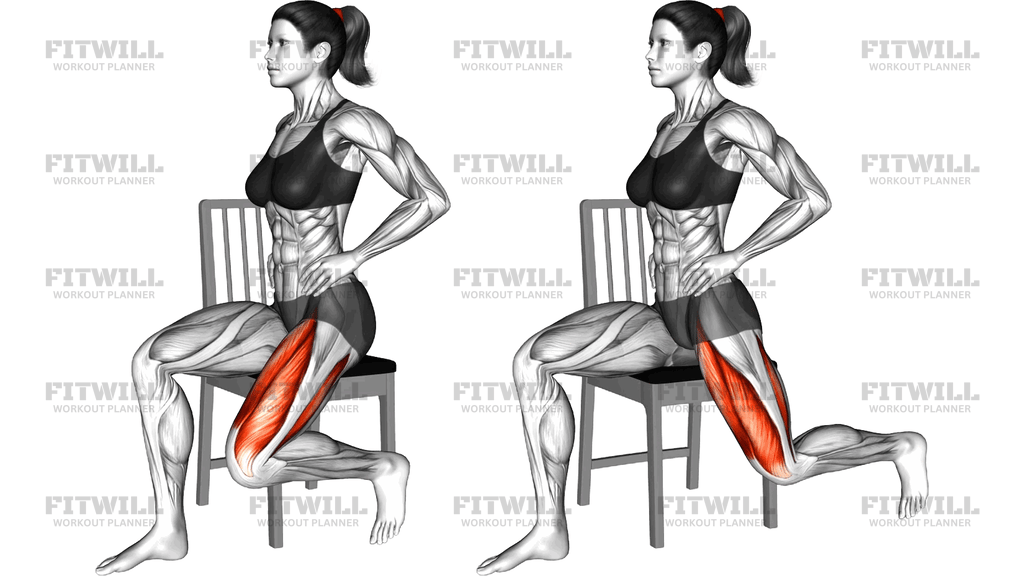
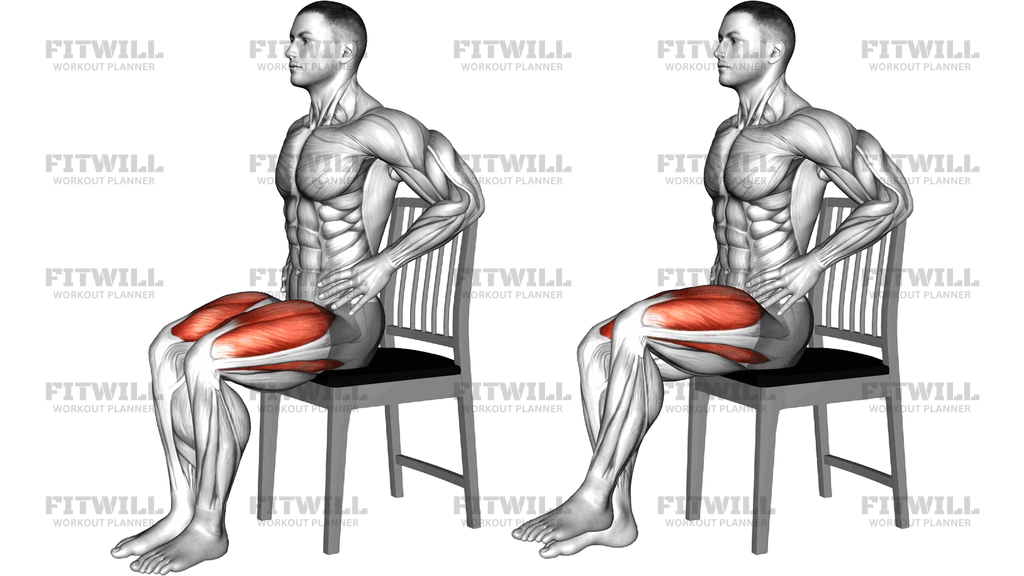
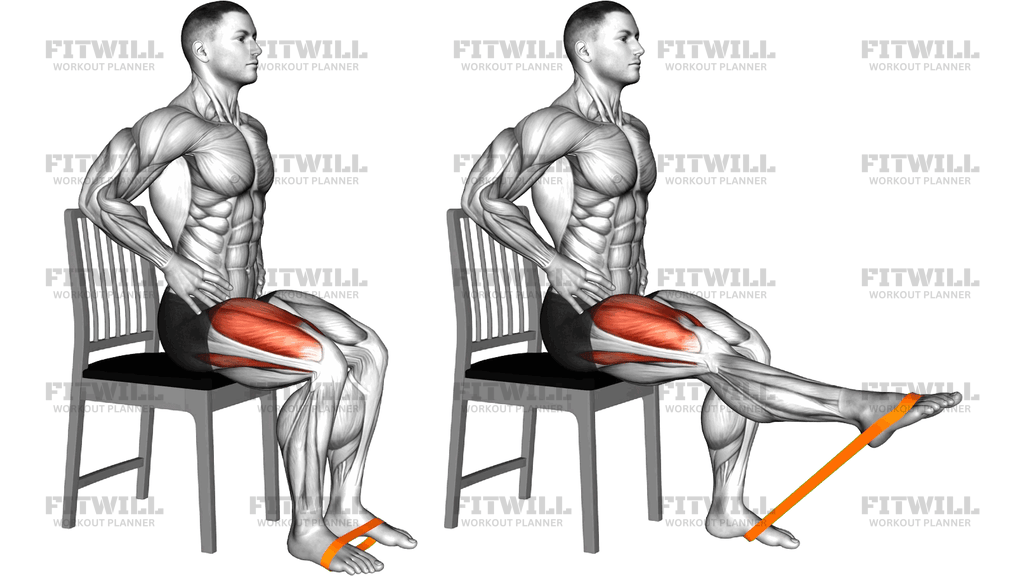
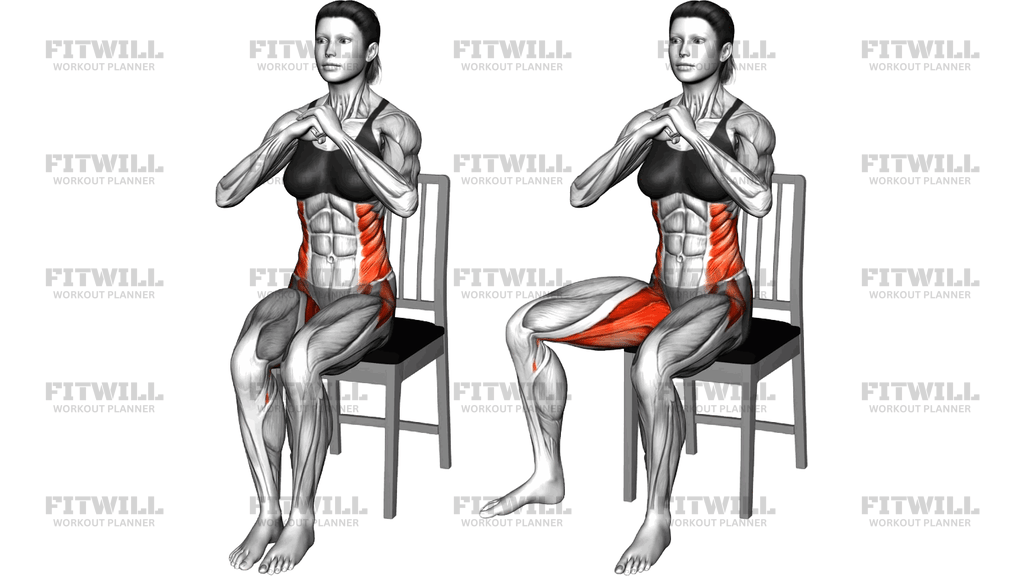
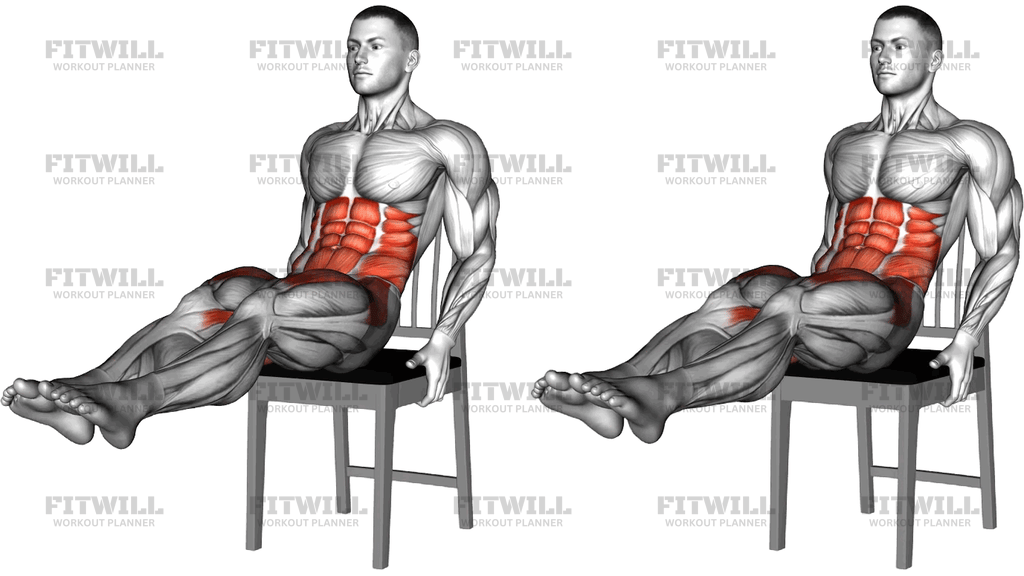
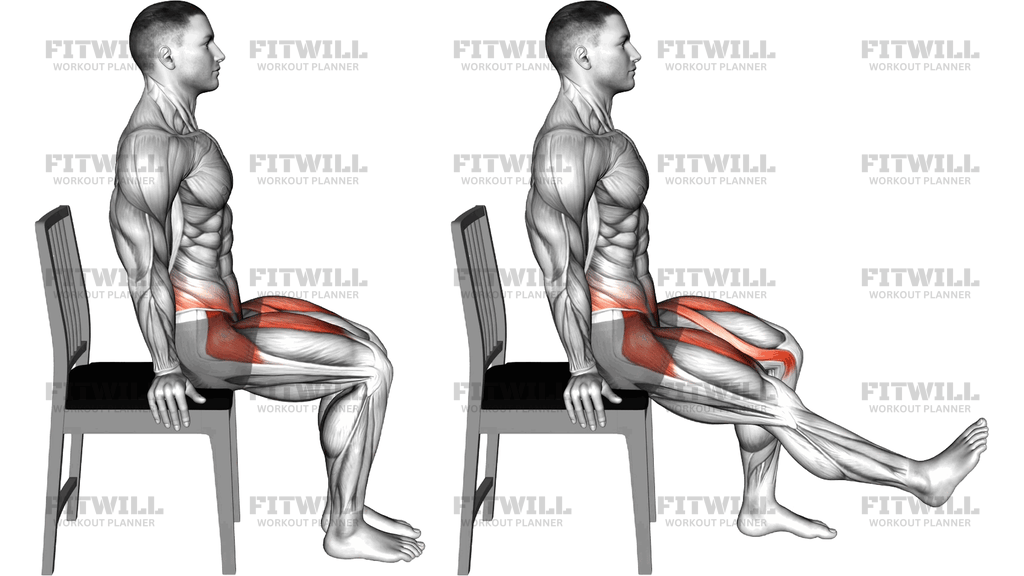
The Seated Single Leg Slow Raise On Chair is a simple hip flexor exercise performed from an upright chair. You sit tall toward the front edge of the seat with your hands resting on the chair beside your hips, extend one leg so the knee is straight, and slowly lift that straight leg upward in front of you before lowering it with the same control. The slow tempo is the entire point of the movement: because there is no external load, time under tension is what makes the working muscles respond.
The primary muscles at work are the hip flexors, especially the iliopsoas, which pulls the thigh upward toward the torso. Keeping the knee straight as you lift also loads the quadriceps, particularly the rectus femoris, which crosses both the hip and the knee. Your lower abdominals work isometrically to keep your pelvis and torso from tipping backward as the leg rises, which is why you will feel this in the front of the hip and deep in the trunk at the same time.
This exercise suits a wide range of people. It is a gentle option for beginners building baseline hip strength, for older adults who want a joint-friendly way to train the muscles used in walking, climbing stairs, and standing up, and for anyone rehabilitating or pre-habilitating the hip flexors after long periods of sitting. Because it requires nothing more than a sturdy chair, it also works well as a desk-break or travel exercise.
Setup matters more than it looks. Sitting too far back on the seat or slouching changes the angle of the hip and lets your lower back do the work instead of your hip flexors. Perching on the front half of the chair with a tall spine gives the thigh room to travel and keeps the pelvis in a neutral position so the lift comes from the hip joint itself.
To execute it well, lift only as high as you can without your torso rolling backward or your lower back arching. For most people the thigh rises a few inches above parallel to the floor at most. The lowering phase should take noticeably longer than the lift; that eccentric control is where much of the strength benefit lives. Breathe steadily throughout rather than holding your breath as the leg rises.
Keep the movement pain-free in the front of the hip. A mild working sensation is expected; pinching or sharp discomfort is not. If the front of the hip nips, reduce the height of the lift slightly, slow down even more, or bend the knee a touch until your tolerance improves.
[ Workout Log & Planner ]
Put your next workout in Fitwill
Keep your plan and training log ready when you are.


Instructions
- Sit on a sturdy chair and slide forward so you are perched on the front half of the seat with both feet flat on the floor.
- Place your hands on the edge of the chair on either side of your hips, keep your chest tall, and set your gaze straight ahead.
- Extend your right knee until the leg is straight in front of you with the heel hovering just off the floor and the foot relaxed.
- Brace your abdominal wall lightly, as if preparing for a light nudge to the stomach, to steady your pelvis before the lift.
- Exhale and slowly raise the straight leg upward in front of you, leading with the thigh, until the foot is roughly knee height or slightly higher.
- Pause at the top for one second with the knee fully straight and the thigh lifted as high as you can control.
- Inhale and lower the leg in the same slow arc, resisting gravity, until the heel returns to just above the floor.
- Complete all repetitions on the right leg, then switch: place the right foot flat, extend the left knee, and repeat on the left side.
- Between sides, reset your posture on the front edge of the seat so your spine and pelvis start every set in the same position.
- Match your breathing to the tempo throughout, never holding your breath as the leg rises or lowers.
Tips & Tricks
- If you feel a pinching sensation at the front crease of the hip, lower the leg a little less high; lifting past your available range is the most common cause of that discomfort in this position.
- Leaning the torso backward as the leg rises is a telltale sign the hip flexors are being bypassed by momentum or by the lower back; keep your chest stacked over your pelvis and reduce the lift height instead.
- Keep the working knee locked straight throughout the lift. Letting the knee bend turns the movement into a seated knee raise and shifts emphasis away from the rectus femoris.
- Make the lowering phase take about twice as long as the lift. Most people rush the descent, which removes the eccentric work that makes this bodyweight exercise worthwhile.
- Your hands can press lightly into the chair edge for balance, but do not push down hard enough to lift your hips; if you need to hoist yourself, the leg is too heavy or you are going too fast.
- Keep the foot and toes relaxed rather than pointed aggressively. Tensing the lower leg adds nothing to the hip flexion and often creates calf cramping.
- If your hamstrings on the moving leg feel tight during the lift, that is a normal stretch sensation from the straight-knee position; shorten the range slightly rather than forcing the leg higher.
- Avoid letting the pelvis tuck under as the thigh rises. Imagine growing taller through the crown of your head while the leg lifts, which keeps the hip joint moving cleanly.
- Start with the weaker or stiffer leg first so both sides get quality work before fatigue sets in, and match the rep count on the second leg exactly.
Frequently Asked Questions
Which muscles does the Seated Single Leg Slow Raise On Chair target?
The hip flexors, led by the iliopsoas, do most of the lifting, while the rectus femoris and quadriceps work to keep the knee straight. The lower abdominals stabilize the pelvis so your torso stays upright as the leg rises.
Why should the knee stay straight during the Seated Single Leg Slow Raise On Chair?
A straight knee keeps the rectus femoris under tension across both the hip and the knee, which increases the demand on the hip flexors. Bending the knee shortens that muscle and turns the exercise into an easier seated knee raise.
How slow should each repetition of the Seated Single Leg Slow Raise On Chair be?
Aim for roughly two seconds to lift, a one-second pause at the top, and three to four seconds to lower. The controlled descent is deliberate, since bodyweight exercises rely on tempo rather than load to create training stimulus.
How high should I lift my leg in the Seated Single Leg Slow Raise On Chair?
Lift only as high as you can keep your torso tall and your pelvis still, which for most people means the foot reaches about knee height or a few inches above. Going higher usually causes the trunk to lean back rather than adding benefit.
Is the Seated Single Leg Slow Raise On Chair suitable for beginners?
Yes, it is one of the most accessible hip flexor exercises because the chair provides support and there is no external load. Beginners should start with two sets of six to eight slow repetitions per leg and prioritize tempo over height.
Why do I feel the Seated Single Leg Slow Raise On Chair in my lower abs?
Your lower abdominals contract isometrically to stop your pelvis from tilting backward while the hip flexors pull the thigh up. That stabilizing role is a normal and useful part of the exercise, not a sign of poor form.
What is the most common mistake in the Seated Single Leg Slow Raise On Chair?
Leaning the torso backward or pushing hard through the hands to help the leg up. Both habits shift work away from the hip flexors; fix them by reducing the lift height and keeping your weight planted through your seat.
What can I use if I do not have a suitable chair for the Seated Single Leg Slow Raise On Chair?
Any stable, knee-height seat works, such as a sturdy bench or the edge of a bed with a firm mattress. Avoid chairs with wheels or soft seats that let your pelvis sink, since they make it hard to keep the torso upright.
My hip clicks or pinches at the top of the Seated Single Leg Slow Raise On Chair. Should I stop?
A painless click is usually harmless, but pinching at the front of the hip means you are lifting beyond a comfortable range. Reduce the height, slow the tempo further, or try a slight knee bend, and skip the exercise if discomfort persists.
How does the Seated Single Leg Slow Raise On Chair carry over to daily activities?
The hip flexors trained here lift your thigh during every step, stair climb, and transition from sitting to standing. Training them slowly and under control also builds the pelvic stability needed to keep those everyday movements smooth.