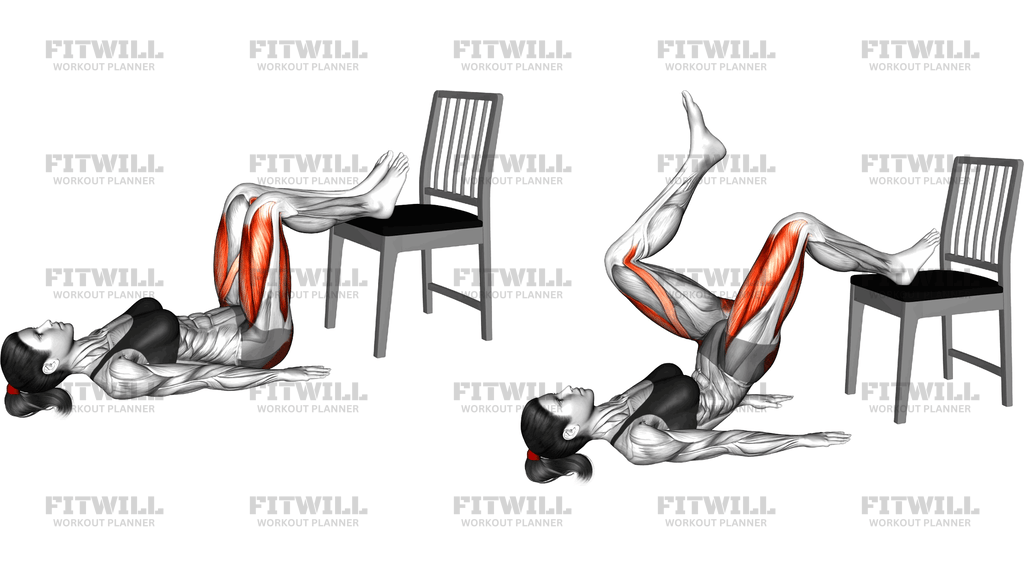
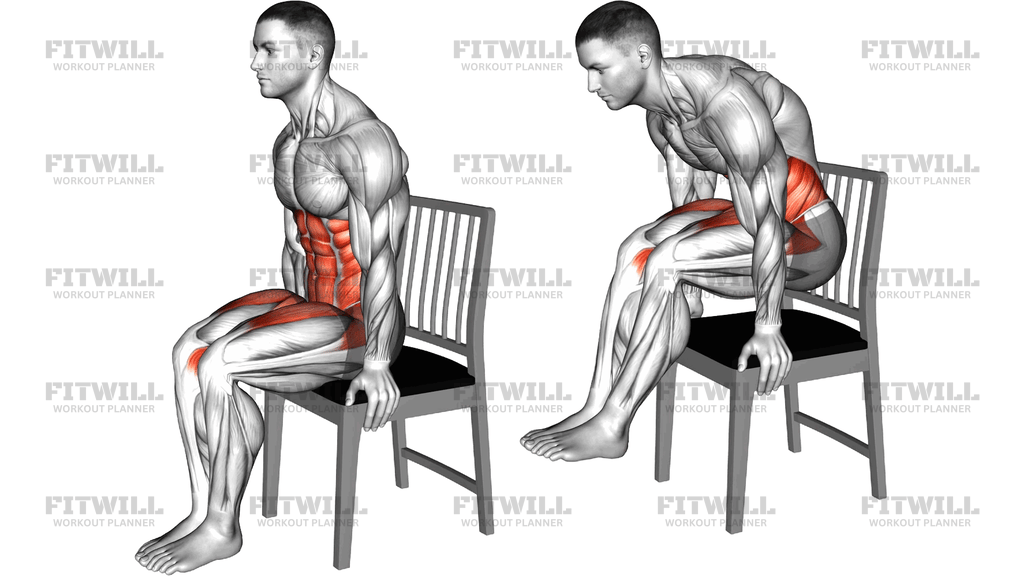
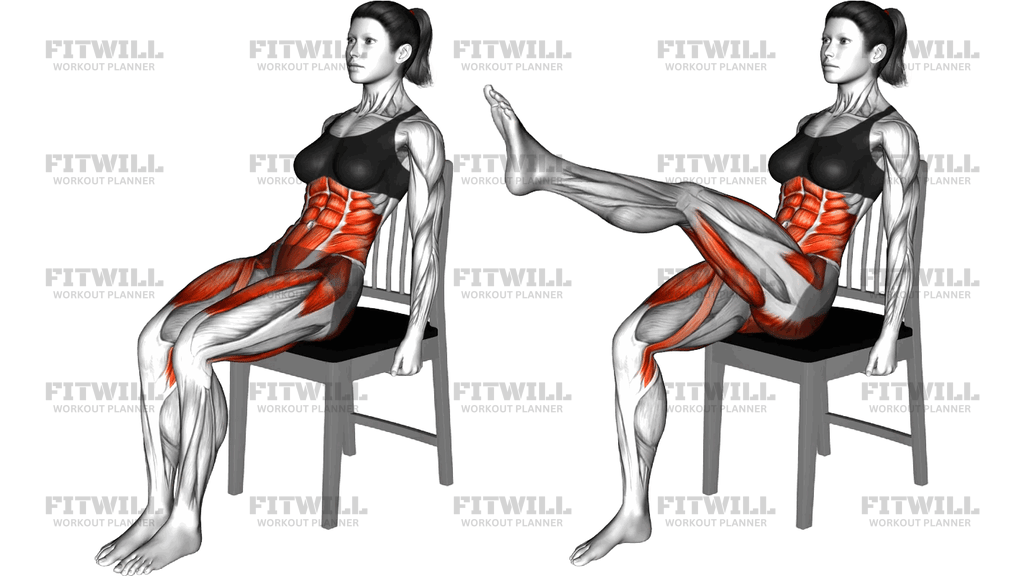
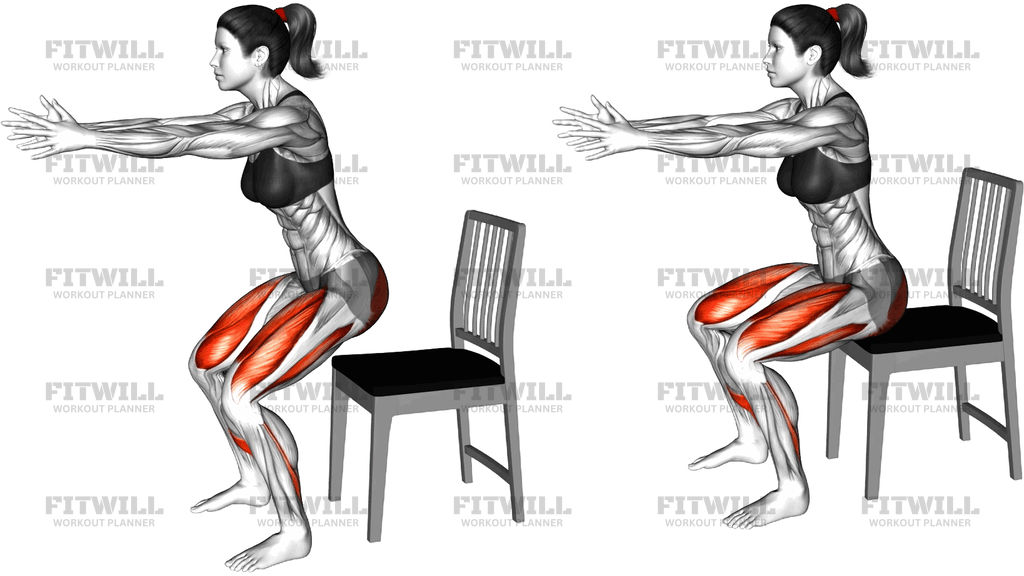
Sitting Quads Stretch On A Chair
The Sitting Quads Stretch On A Chair is a static stretch that targets the quadriceps, the large muscle group at the front of the thigh, by placing one knee on a chair seat and using a half-kneeling lunge position to create the lengthening effect. Instead of standing on one leg or lying on the floor, the chair supports the rear knee, which makes the stretch far more accessible and easier to control.
This setup is especially useful for runners, cyclists, and anyone who sits for long hours, since those activities tend to leave the quads and hip flexors shortened and tight. It is also a good option for people with balance limitations or knee sensitivity, because the chair removes the stability demands of a standing quad stretch and lets you focus entirely on the stretch itself without wobbling or gripping for support.
The equipment setup is simple: a sturdy chair, no backrest in the way, positioned so you can rest one knee on the seat while the other foot stays planted on the floor in front of you. The height of the chair seat determines how much your rear hip flexes, so a standard chair works well for most people. Your torso stays tall and your hand can rest on your hip or on the chair for light support.
Execution is about position, not force. Once your rear knee is on the seat and your front foot is set in a stable lunge stance, squeeze the glute of the stretching leg and tuck your pelvis slightly under. That posterior tilt is what actually lengthens the rectus femoris, the quad muscle that crosses both the hip and knee. You should feel a clear stretch along the front of the thigh and possibly into the front of the hip. Leaning the hips forward gently, without arching the lower back, deepens the effect.
Because the stretch intensity builds gradually, hold each side for 20 to 40 seconds and breathe steadily throughout. Common use cases include pre-workout mobility prep with shorter holds, post-training recovery with longer holds, and daily desk-break stretching. Keep the pressure out of the knee on the chair by placing it toward the middle of the seat with a cushion if needed, and never push into sharp pain in the knee, hip, or lower back. Slow, consistent sessions will improve tolerance far more than aggressive one-off efforts.
Instructions: Place a sturdy chair on a non-slip surface with the seat facing you. Step your right foot forward and place your right knee on the middle of the chair seat so your right shin and foot hang off the back edge. Set your left foot flat on the floor in front of you, roughly a comfortable lunge distance ahead of the chair, with your left knee tracking over or slightly behind your toes. Keep your torso upright and rest one hand on your hip or lightly on the chair back for balance. Brace your core lightly and tuck your pelvis under by squeezing the glute of the leg on the chair. Slowly shift your hips forward and slightly down until you feel a firm stretch along the front of the right thigh and hip. Hold the end position for 20 to 40 seconds, breathing slowly and keeping the glute engaged the whole time. Ease the hips back to release the stretch, then carefully lift the right knee off the seat and switch legs. Repeat the stretch on the left side and complete two to three rounds per leg if time allows.
Tips: If your knee complains on the hard seat, fold a towel or use a thin cushion under it rather than abandoning the stretch. The most common mistake is arching the lower back to fake a deeper stretch; check that your ribs stay down and your glute stays squeezed. If you feel the stretch mostly in the front of your hip instead of the thigh, tuck the pelvis more and shift your weight slightly less far forward. Keep your front foot fully planted; letting the heel lift turns this into a balance exercise and reduces the quad stretch. Do not lock out the front knee, a soft bend keeps the hip in a better position to lengthen the rear thigh. Move into the end range over two or three breaths instead of diving in, since a fast lean often triggers a protective tightness in the quad. If the chair slides, push it against a wall so it cannot travel during the lunge. Exhale as you settle into the deepest part of the hold to help the muscle relax. Skip bouncing or pulsing at end range in this position, the chair setup works best as a quiet, static hold.
FAQ: Which muscles does the Sitting Quads Stretch On A Chair target? It primarily stretches the quadriceps on the front of the thigh, especially the rectus femoris, and secondarily lengthens the hip flexors of the leg resting on the chair. Is this easier than a standing quad stretch? For most people yes, because the chair supports the rear knee and removes the balance challenge, letting you focus on the stretch instead of staying upright. How long should I hold each side? Aim for 20 to 40 seconds per side, and repeat two to three rounds if you are working on mobility after training or long periods of sitting. Should I feel it in my knee? You should feel the stretch along the front of the thigh or hip, not inside or around the kneecap; if the knee hurts, add padding under it or reduce how far you shift your hips forward. Can I do this stretch every day? Yes, quad and hip flexor stretching is generally safe daily for healthy individuals, just keep the intensity moderate. What can I use instead of a chair? A bench, a sturdy low table, or even a couch cushion works the same way, as long as the surface is stable and around knee height. Why does my hip flexor feel it more than my quad? If your pelvis is tipped forward, the front of the hip takes the tension, so squeeze the glute harder and tuck the pelvis under to redirect the stretch into the thigh. Is a longer chair better for this? A standard chair height works for most people, but a lower surface reduces hip flexion demand and suits stiffer hips or sore knees. When should I avoid this stretch? Skip it if you have an acute knee, quad, or hip injury that is still painful with gentle movement, and check with a professional before returning to stretching after an injury.
[ Workout Log & Planner ]
Put your next workout in Fitwill
Keep your plan and training log ready when you are.


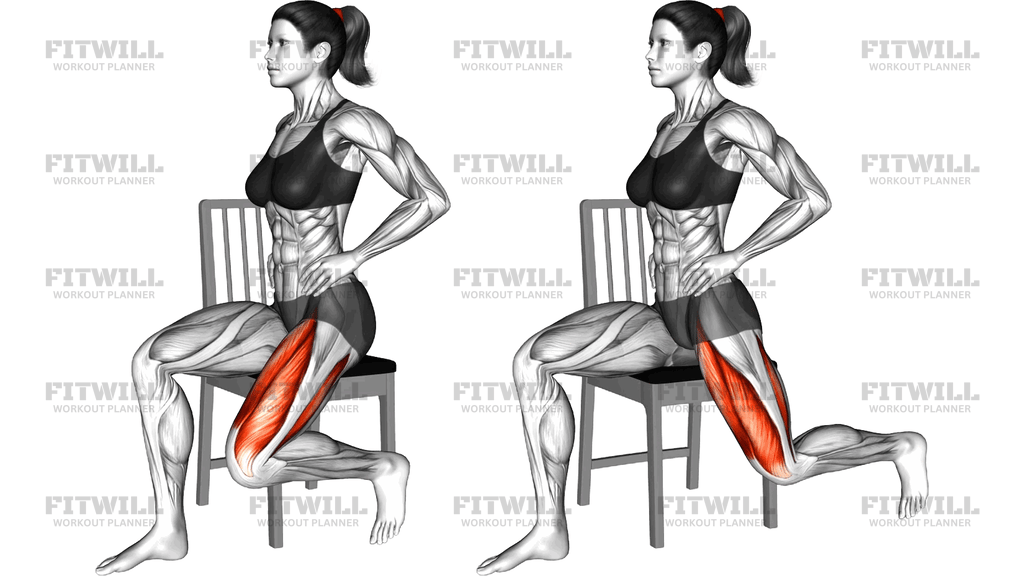
Instructions
- Place a sturdy chair on a non-slip surface, seat facing you, and push it against a wall if it tends to slide.
- Step your right foot forward and place your right knee on the middle of the chair seat, letting your right shin and foot hang off the back edge.
- Set your left foot flat on the floor in front of you in a comfortable lunge stance, knee tracking over or slightly behind your toes.
- Keep your torso tall and rest one hand on your hip or lightly on the chair for balance support.
- Brace your core lightly, squeeze the glute of the leg on the chair, and tuck your pelvis under.
- Slowly shift your hips forward and slightly down until you feel a firm stretch along the front of the right thigh and hip.
- Hold the end position for 20 to 40 seconds while breathing slowly and keeping the glute engaged.
- Ease your hips back to release tension, then carefully lift the right knee off the seat and switch legs.
- Repeat on the left side and complete two to three rounds per leg if time allows.
Tips & Tricks
- If the hard seat bothers your knee, fold a towel or place a thin cushion under the kneeling leg rather than skipping the stretch.
- The most common mistake is arching the lower back to fake a deeper stretch; keep your ribs down and the glute of the stretching leg squeezed.
- If you feel the work mostly in the front of your hip instead of the thigh, tuck the pelvis more and shift forward a little less.
- Keep the front heel fully planted; lifting it turns the stretch into a balance drill and pulls tension away from the quad.
- Keep a soft bend in the front knee instead of locking it out so the hips can settle into a better lengthening position.
- Move into the end range over two or three slow breaths; diving in quickly often makes the quad guard and tighten up.
- Exhale as you settle into the deepest part of the hold to help the muscle release.
- Avoid bouncing or pulsing at end range in this setup; the chair position works best as a quiet, static hold.
- If your front foot is too close to the chair, the stretch feels cramped; step it out until the lunge feels stable and open.
Frequently Asked Questions
Which muscles does the Sitting Quads Stretch On A Chair target?
It primarily stretches the quadriceps on the front of the thigh, especially the rectus femoris, and secondarily lengthens the hip flexors of the leg resting on the chair.
Is the Sitting Quads Stretch On A Chair easier than a standing quad stretch?
For most people, yes. The chair supports the rear knee and removes the balance challenge, so you can focus on the stretch instead of staying upright.
How long should I hold each side?
Aim for 20 to 40 seconds per side, and repeat two to three rounds when working on mobility after training or after long periods of sitting.
Should I feel the Sitting Quads Stretch On A Chair in my knee?
You should feel it along the front of the thigh or hip, not inside or around the kneecap. If the knee complains, add padding under it or reduce how far you shift your hips forward.
Why does my hip flexor feel it more than my quad in this stretch?
If your pelvis tips forward, the front of the hip takes the tension. Squeeze the glute of the chair-side leg harder and tuck the pelvis under to redirect the stretch into the thigh.
What can I use instead of a chair?
A bench, a low sturdy table, or a couch works the same way, as long as the surface is stable and roughly knee height.
How far in front of the chair should my front foot be?
Far enough that the lunge feels stable and open, usually about the distance you would use for a comfortable split stance. Too close and the stretch feels cramped.
Can I do the Sitting Quads Stretch On A Chair every day?
Yes, gentle quad and hip flexor stretching is generally fine daily for healthy individuals. Keep the intensity moderate and never push into sharp pain.
When should I avoid this stretch?
Skip it if you have an acute knee, quad, or hip injury that is still painful with gentle movement, and consult a professional before returning to stretching after an injury.