Dumbbell Seated Bent Over Row And Fly On Chair
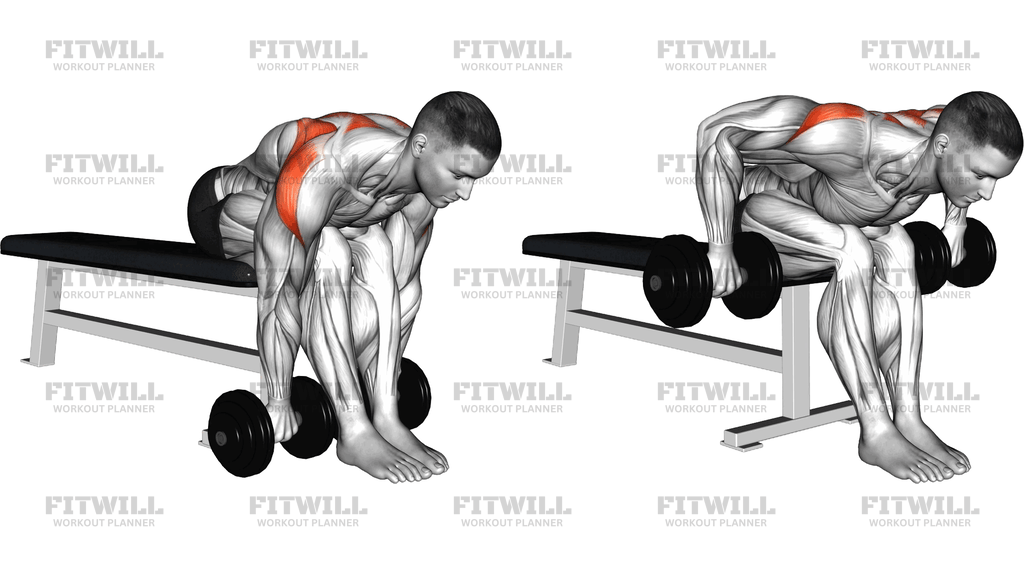
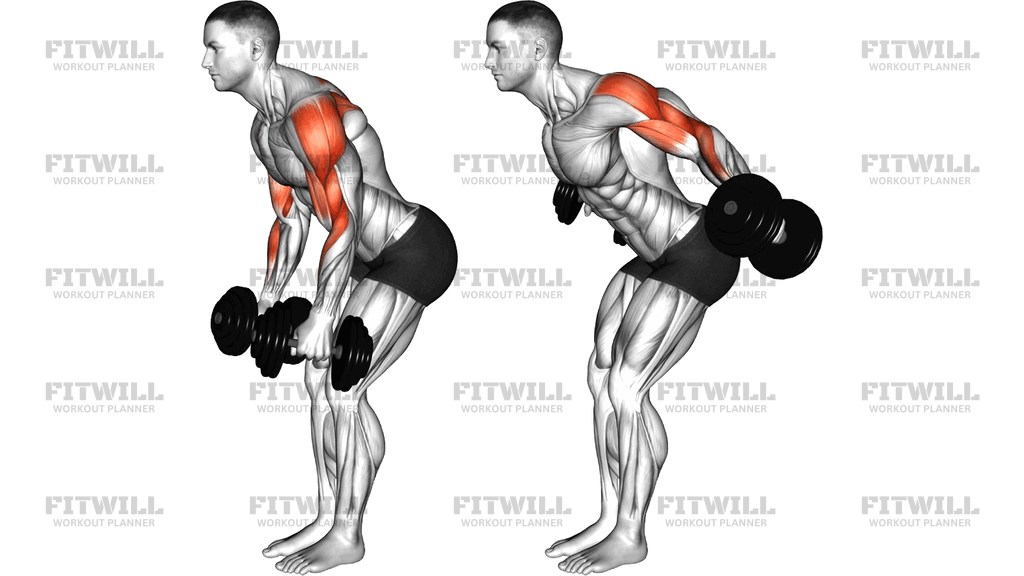
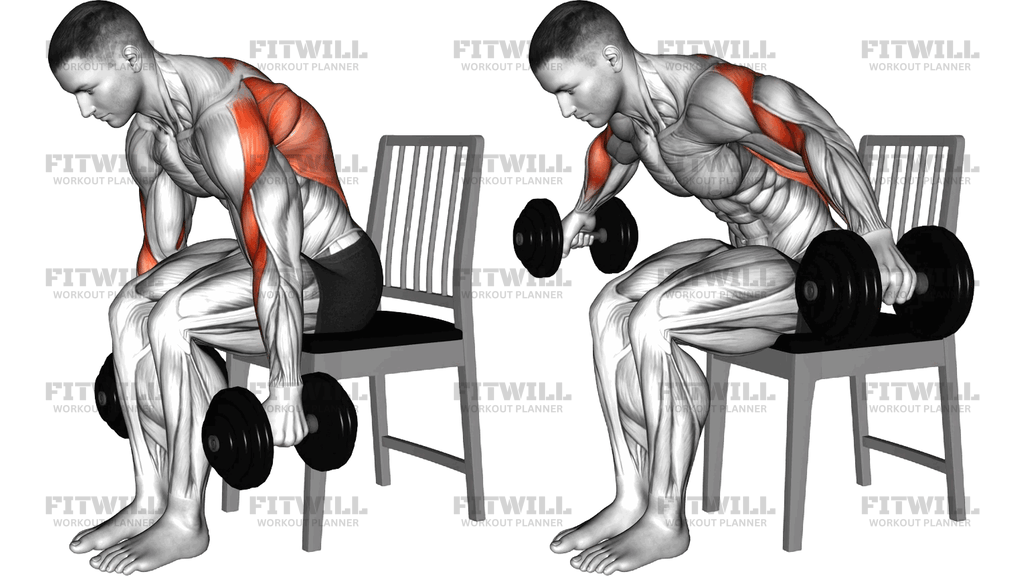
The Dumbbell Seated Bent Over Row And Fly On Chair is a hybrid upper-back movement performed sitting on an ordinary chair with a dumbbell in each hand. You hinge forward over your thighs, and from that folded position you alternate between pulling the dumbbells up toward your hips in a rowing pattern and sweeping them out wide in a reverse fly pattern. Both actions share the same hinge, so one setup lets you hit the rear delts, rhomboids, and mid-traps from two slightly different angles without changing position.
This exercise is especially useful for people who spend long hours sitting at a desk, because the rounded-shoulder posture that comes with typing and driving is exactly what the rear shoulder and upper-back work here helps counterbalance. It is also a practical option for home lifters: all you need is a sturdy chair, a pair of dumbbells, and enough floor space to sit down and lean forward. Because you are seated, your legs and lower back do less stabilizing work than in a standing bent-over version, which makes it easier to focus on the target muscles.
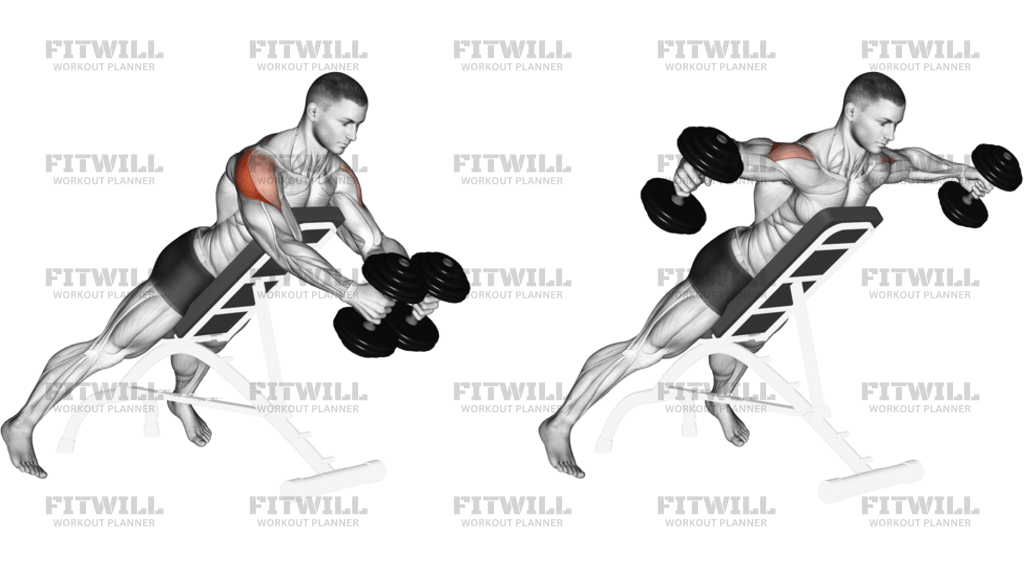
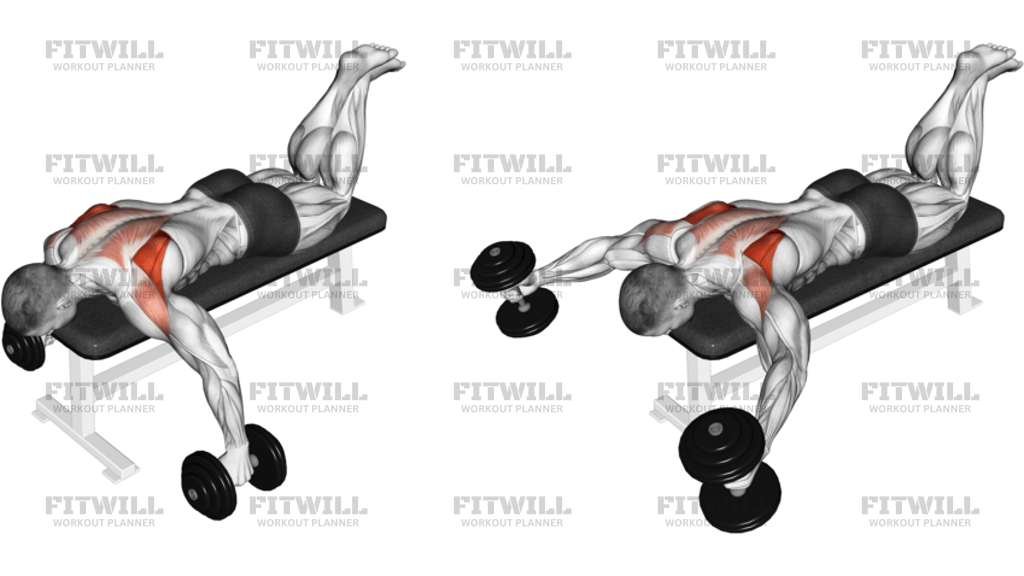
The rowing portion emphasizes the rhomboids, mid-traps, and lats as the dumbbells travel up near your ribcage, while the fly portion shifts the load onto the rear deltoids as the arms open out to the sides with a soft elbow bend. Your grip, forearms, and biceps assist throughout, and the erector spinae work isometrically to hold the forward hinge. Do not expect heavy loads here; the fly variation in particular demands lighter weight than most pulling exercises.
Setup matters more than usual on this movement. Sit at the front edge of the chair with feet flat and roughly hip-width apart, then fold your chest down toward or just inside your knees so the dumbbells hang clear of the floor and the chair legs. If your torso angle is too upright, the row turns into a shrug and the fly loses tension; if your back rounds completely, the position becomes uncomfortable and hard to brace. Aim for a long, reasonably flat spine tilted forward about 45 degrees or a little more.
To execute it well, start each rep by drawing the shoulder blades back and down rather than yanking with the arms. On the row, pull the dumbbells up close to the body until your elbows pass your torso; on the fly, lead with the elbows and raise the arms until they reach roughly shoulder height, keeping the palms facing down or slightly inward. Lower both versions under control over two to three seconds, letting the shoulder blades spread at the bottom before the next rep. A common use case is two to three sets of 12 to 15 reps, either alternating row and fly reps or performing all rows and then all flies within the same set.
Safety-wise, keep the weight modest and stop the set as soon as your torso starts to rise or your lower back rounds to help the arms. If your hamstrings are tight, bending the knees slightly more or resting the chest closer to the thighs can make the hinge easier to hold. Because a standard chair has no back support and can slide on hard floors, place it against a wall or on carpet if possible.
[ Workout Log & Planner ]
Put your next workout in Fitwill
Keep your plan and training log ready when you are.


Instructions
- Place a sturdy chair on a non-slip surface and sit on the front edge with a dumbbell in each hand.
- Set your feet flat on the floor, hip-width apart, and let the dumbbells hang just outside your calves.
- Hinge forward from the hips until your chest is over or just inside your thighs, keeping your spine long rather than rounded.
- Lightly brace your abdominal muscles and draw your shoulder blades back and down to set the shoulder position before moving.
- For the row, pull both dumbbells up close to your sides until your elbows are slightly above torso level, palms facing back toward your hips.
- Lower the dumbbells slowly until your arms hang fully, then for the fly raise both arms out to the sides with a soft elbow bend until they reach about shoulder height.
- Lower the dumbbells from the fly in a slow arc back to the hanging position, feeling the shoulder blades spread apart at the bottom.
- Exhale as you row or raise the arms, and inhale as you lower the weight back down.
- Keep your torso angle fixed throughout; if your chest lifts as you pull, the set is over or the weight is too heavy.
- Finish the set by sitting upright, setting the dumbbells on the floor beside the chair, and standing up carefully with a straight back.
Tips & Tricks
- Choose a lighter pair of dumbbells than you would use for a standing row; the fly portion fails long before the row does, and ego weight usually shows up as torso swing.
- If the chair wobbles or slides forward, push your feet slightly wider and press them into the floor, or back the chair against a wall for stability.
- Watch for the shrug mistake: if your shoulders creep up toward your ears during the row, think about pulling with your elbows instead of your hands.
- On the fly, stop the raise at shoulder height; lifting higher tends to shift work into the traps and irritate the shoulder joint rather than target the rear delts.
- Keep about a 15 to 30 degree bend in the elbows during the fly so the arms act as levers instead of swinging loosely.
- Tight hamstrings often force a rounded back in this position; bend the knees a few extra degrees or place your heels slightly wider than your toes to make room for the hinge.
- Pause for a half second at the top of each row and each fly; the seated position removes momentum, so the pause is where most of the quality tension lives.
- Alternate rep schemes across sets, such as rows only, flies only, then alternating, to keep the rear delts challenged without adding weight.
- If the dumbbells touch the floor at the bottom of the movement, place small plates or a step platform under your feet to raise them and preserve the range.
Frequently Asked Questions
Which muscles does the Dumbbell Seated Bent Over Row And Fly On Chair target?
The row portion primarily works the rhomboids, mid-traps, and lats, while the fly portion targets the rear deltoids. The biceps, forearms, and lower back assist to hold the position and control the dumbbells.
Can beginners do this exercise on a regular chair?
Yes, as long as the chair is stable and the weight is light. Beginners should master the forward hinge with a flat back before adding any meaningful load, starting with very light dumbbells or even no weight for a few sessions.
Why should I do the row and the fly in the same set?
Combining them trains the upper back through two different paths from one position: the row pulls close to the body for the mid-back, and the fly opens wide for the rear delts. This saves time and gives the whole posterior shoulder area balanced work.
How heavy should the dumbbells be for the Dumbbell Seated Bent Over Row And Fly On Chair?
Pick a weight you can fly strictly for 12 to 15 reps, since the fly is the limiting movement. If your chest rises off the hinge or your back rounds during the row, the dumbbells are too heavy.
My lower back fatigues before my shoulders feel anything. What should I change?
Shorten the lever by hinging slightly less or resting your chest closer to your thighs, and reduce the weight. You can also perform the row and fly as separate mini-sets with short rests so the spinal muscles get a break.
What is a good substitute if I do not have dumbbells?
The same row-and-fly pattern can be done with resistance bands anchored under your feet, or with water bottles or light kettlebells. The key is keeping the seated forward hinge and the close pull versus wide raise distinction.
Should my palms face a particular direction during the fly portion?
Keep your palms facing down or turned slightly toward each other as the arms rise. Rotating the thumbs up toward the ceiling shifts emphasis toward the front of the shoulder and away from the rear delts this exercise is meant to train.
How many sets and reps work best for this exercise?
Two to four sets of 12 to 15 reps per pattern is a practical range, keeping the tempo controlled. Because the rear delts recover quickly, training them two to three times per week with this movement is reasonable.
Is it safe to do this exercise with a rounded lower back?
A rounded lower back under load is the main risk in this position. Keep your spine long with a firm brace, bend the knees more if tight hamstrings pull you into rounding, and stop the set when you can no longer hold the hinge.