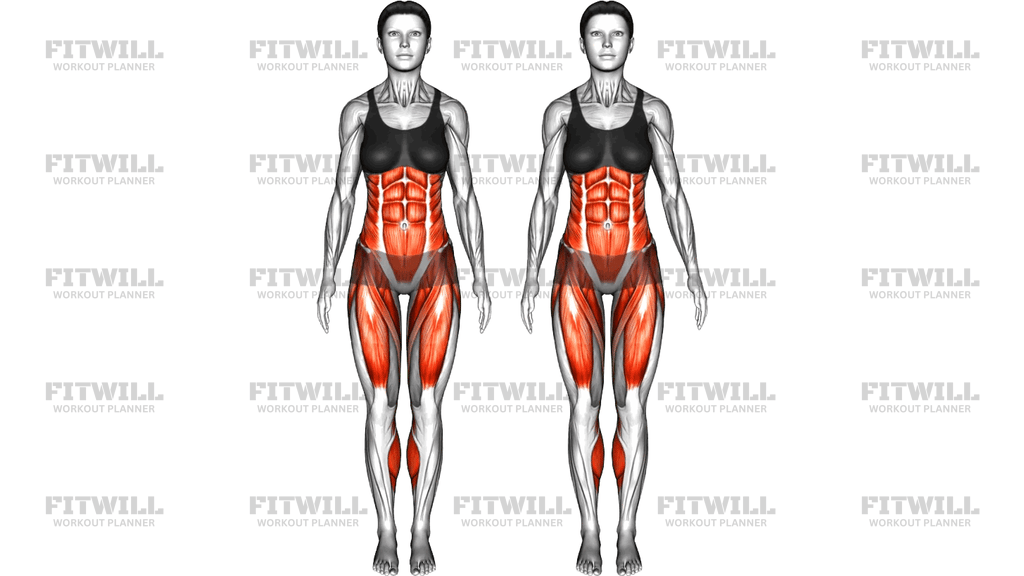
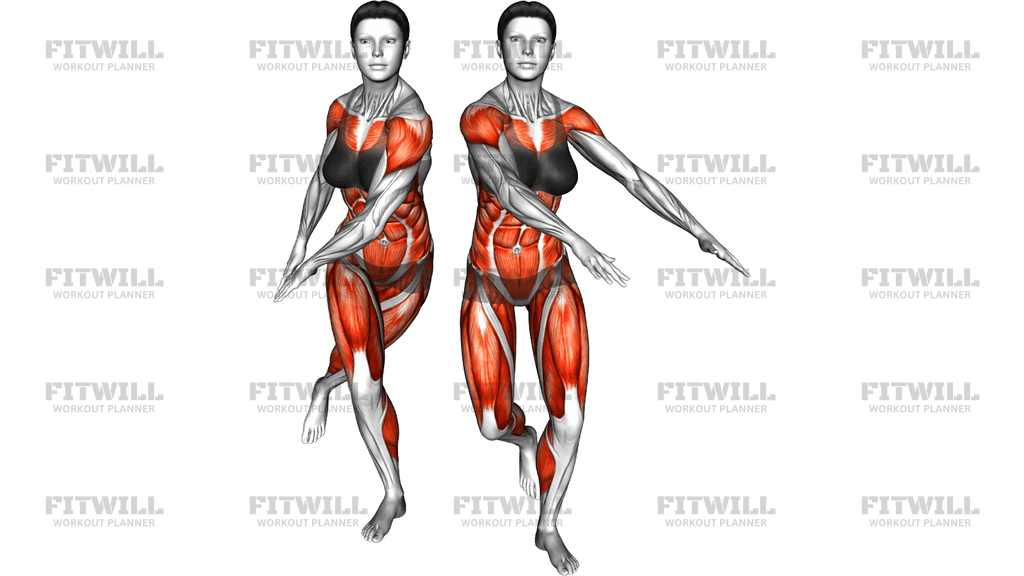
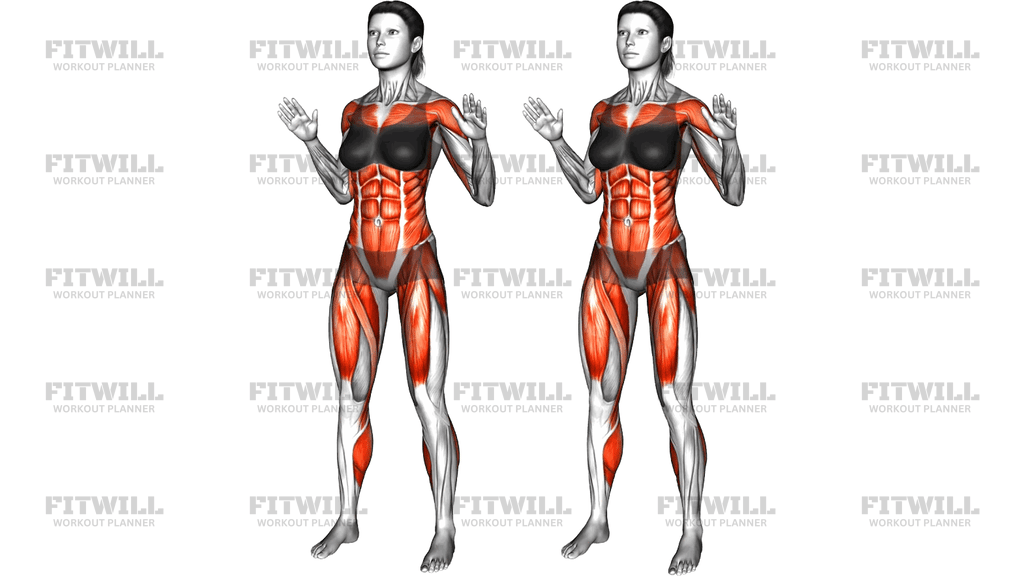
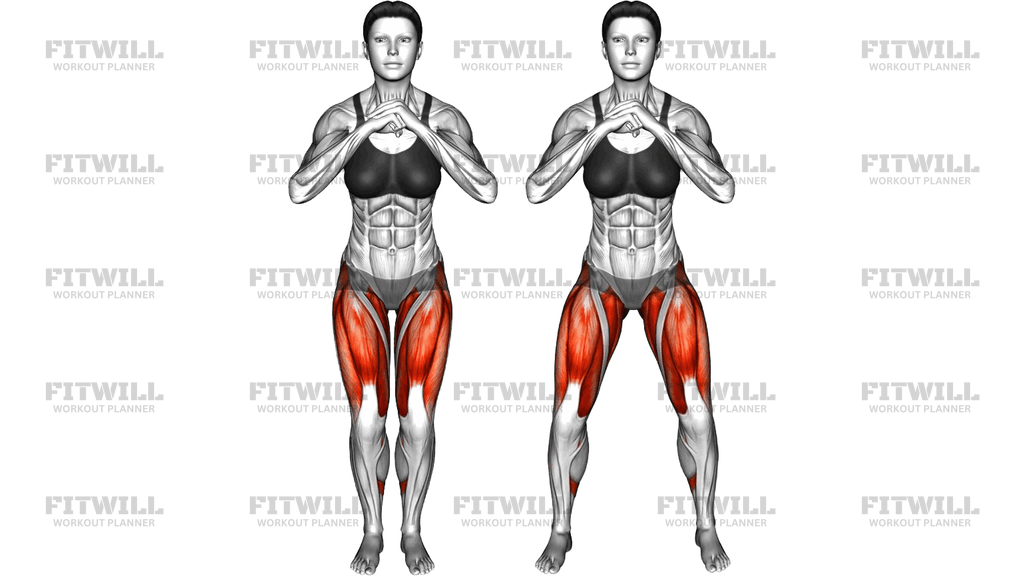
Cross Arms Front Leg Kick
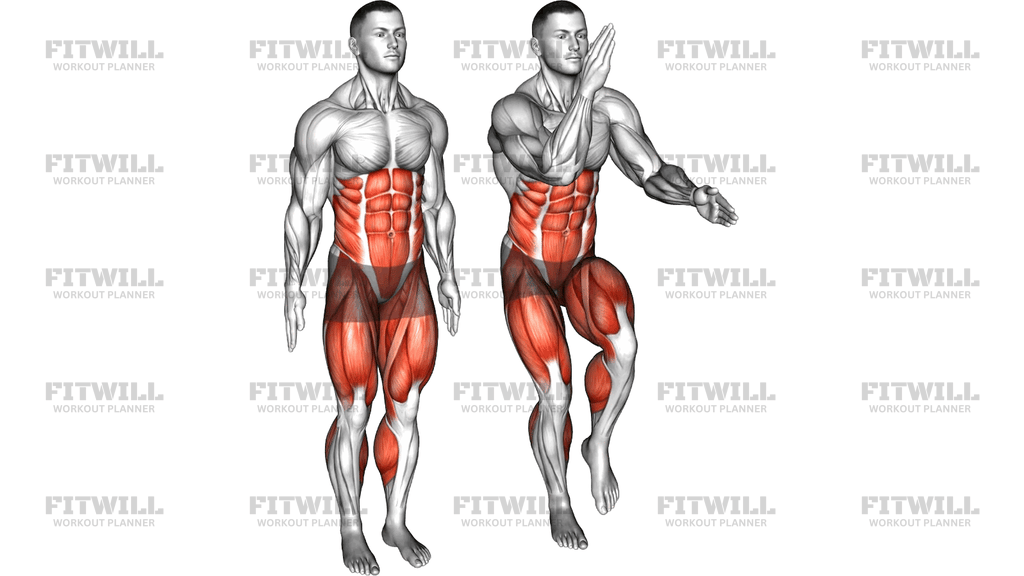
Cross Arms Front Leg Kick is a standing bodyweight movement that combines a controlled front kick with the balance challenge of crossed arms. Because your hands are folded across your chest instead of swinging at your sides, you lose the natural counterbalance most people rely on when kicking. That forces the standing leg, hips, and trunk to do all of the stabilizing work, which is exactly what makes this drill more demanding than it looks.
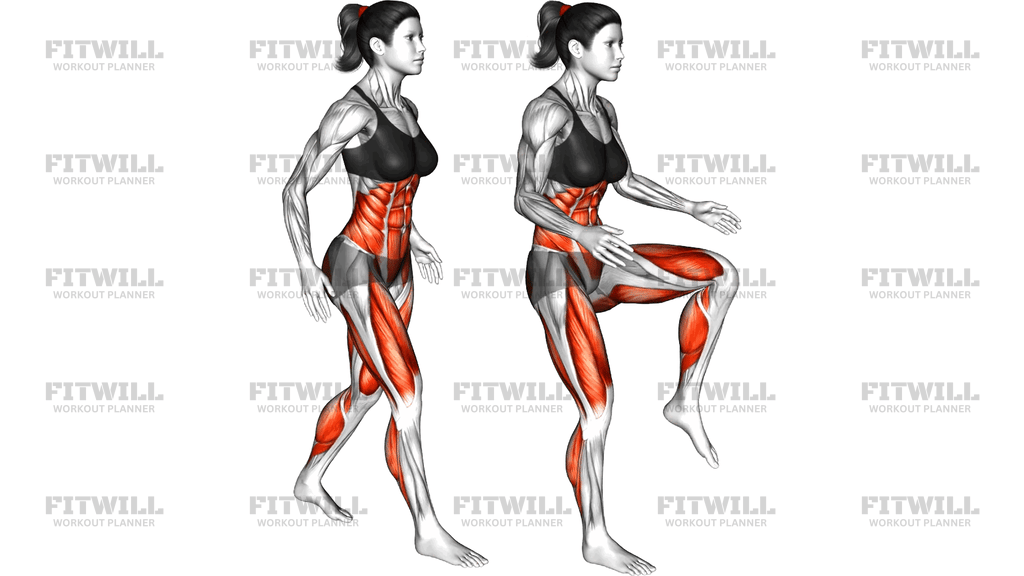
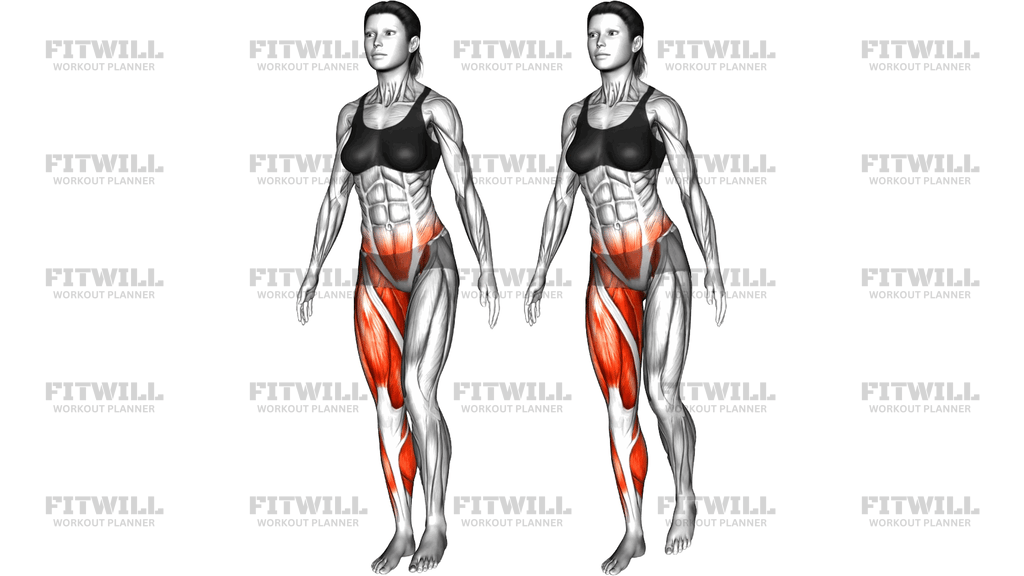
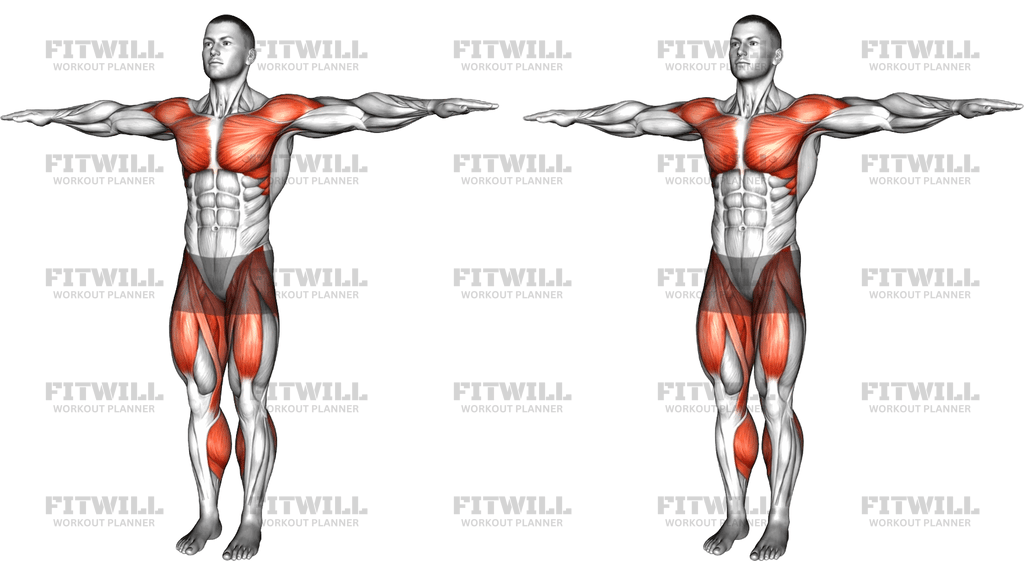
The working leg drives straight forward through hip flexion while the knee extends, so the quadriceps and hip flexors are the prime movers. The rectus femoris is especially busy here because it crosses both the hip and the knee, lengthening and shortening in the same rep. Meanwhile the glutes and outer hip muscles of the support leg hold your pelvis level, the calves keep your ankle steady, and the core and obliques resist the twist that wants to creep in every time one leg leaves the floor.
This movement fits well into a warm-up before squats, lunges, or running, since it takes the hip and knee through a full dynamic range while raising your heart rate slightly. It also works as a standalone balance drill for anyone whose single-leg stability lags behind their two-legged strength. Martial artists and kickboxers use similar drills with locked-down arms to clean up technique, because when the arms cannot compensate, any hip or trunk fault becomes obvious immediately.
Setup matters more here than in most standing kicks. Stand tall with your feet hip-width apart, cross your forearms in front of your chest with each hand resting on the opposite shoulder or upper arm, and keep your ribs stacked over your pelvis. If you start leaned back or shrugged up, the kick will pull you out of position before the foot even reaches hip height. A tall spine and a soft bend in the standing knee give you a stable base to kick from.
To execute well, shift your weight onto one leg, lift the other knee to about hip height, then extend the lower leg forward in a smooth front kick before bending the knee and returning the foot to the floor. Keep the movement deliberate rather than snapping the leg out, and alternate sides with a short pause between reps. If balance wobbles at first, that is normal; reduce the kick height rather than uncrossing your arms, and progress the range as your control improves.
Fitwill
Log Workouts, Track Progress & Build Strength.
Achieve more with Fitwill: explore over 9600 exercises with images and videos, access built-in and custom workouts, perfect for both gym and home sessions, and see real results.
Start your journey. Download today!




Instructions
- Stand tall with your feet hip-width apart, shoulders back, and gaze fixed on a point straight ahead at eye level.
- Cross your forearms in front of your chest so each hand rests on the opposite shoulder or upper arm, and hold them there for the entire set.
- Brace your abdominal wall lightly as if preparing for a light push, and let your ribs stack directly over your pelvis.
- Shift your weight onto your right leg and unlock the right knee slightly so the foot, ankle, and hip share the load.
- Lift your left knee up to roughly hip height, keeping your torso vertical and avoiding any backward lean.
- Extend the left lower leg forward in a controlled front kick, reaching a comfortable height with the toes pulled back and the knee finishing near full extension.
- Pause briefly at the top of the kick, then bend the knee and lower the foot back to the floor under control.
- Exhale as you kick forward and inhale as the leg returns, keeping your breathing steady rather than holding your breath.
- Complete the desired number of reps on the left side, then switch to the right leg, or alternate legs rep by rep.
- Reset your stance and re-cross your arms between sets if your position drifted, so every rep starts from the same tall, stable posture.
Tips & Tricks
- The most common mistake is leaning the torso backward as the leg rises. Fix it by squeezing the standing glute and imagining a string pulling the crown of your head toward the ceiling.
- If you catch yourself uncrossing your arms to balance, your kick height has outrun your control. Lower the foot to knee height and rebuild from there.
- Do not snap the knee into full extension at the top. Kick to about 90-95 percent of lockout so the joint stays protected and the quads stay under tension.
- Watch for the standing foot rolling to the outer edge. Keep your big toe pressing into the floor and the arch active throughout the kick.
- If your hips rock side to side with each rep, slow the tempo down and pause for a full second with the knee lifted before extending.
- Keep the crossed arms relaxed on your chest. Hiking the shoulders toward your ears adds neck tension and makes balance harder, not easier.
- Turning the kicking foot's toes outward changes this from a front kick into something closer to a roundhouse. Keep the toes facing forward or slightly pulled back.
- Train on a firm, level surface first. Adding an unstable surface before you own the movement just hides the hip weakness you are trying to expose.
- A slight bend in the standing knee is not a form error; a locked knee is. Just keep the bend small and consistent so your height does not drop as you fatigue.
Frequently Asked Questions
What muscles does the Cross Arms Front Leg Kick work?
The quadriceps and hip flexors drive the kick, with the rectus femoris doing double duty because it crosses both the hip and knee. The glutes, calves, and core work isometrically to keep you balanced on the standing leg.
Why are the arms crossed instead of swinging at my sides?
Crossing the arms removes the counterbalance that normally hides balance deficits during kicks. With the hands locked on your chest, the standing leg and trunk have to stabilize everything, which makes faults in hip and core control easy to see and correct.
Is the Cross Arms Front Leg Kick suitable for beginners?
Yes, as long as the range is scaled to your control. Beginners should kick to knee height, move slowly, and stand near a wall for a safety hand only if genuinely needed, since touching it too often defeats the balance purpose of the crossed arms.
How high should I kick in this exercise?
Kick only as high as you can while keeping your torso vertical and your arms crossed. Hip height is a good target for most people, and there is no benefit to reaching higher at the cost of leaning back or twisting.
What is the most common mistake with the Cross Arms Front Leg Kick?
Leaning the torso backward as the leg comes up. This shifts the work away from the hip flexors and turns a controlled kick into a momentum swing, so cue yourself to stay tall and lift the knee first before extending.
Can I use this exercise as a warm-up?
Absolutely. It dynamically takes the hip and knee through extension and flexion while lightly elevating your heart rate, which makes it a useful preparation before squats, lunges, sprinting, or any kicking sport training.
What can I substitute if the balance demand is too hard?
Perform the same front kick with your arms out to your sides or one hand on a wall, then progress to the crossed-arm version once you can complete your reps without wobbling. The leg path stays identical, so the strength carries over.
Should my standing knee be locked or bent?
Keep a small, consistent bend in the standing knee. A fully locked knee makes you rigid and harder to balance, while a soft knee lets your ankle and hip absorb small corrections throughout each kick.
Is the Cross Arms Front Leg Kick safe for the knees?
When performed with controlled tempo and without forcing full knee lockout at the top, it is a low-load movement that most healthy trainees tolerate well. If you have a current knee issue, keep the kick at knee height and stop short of full extension.