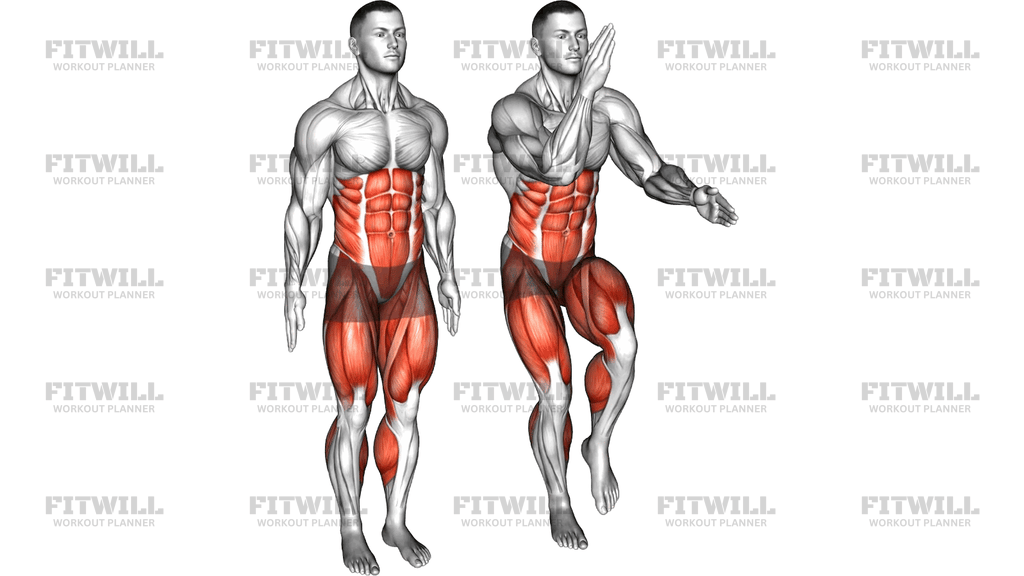
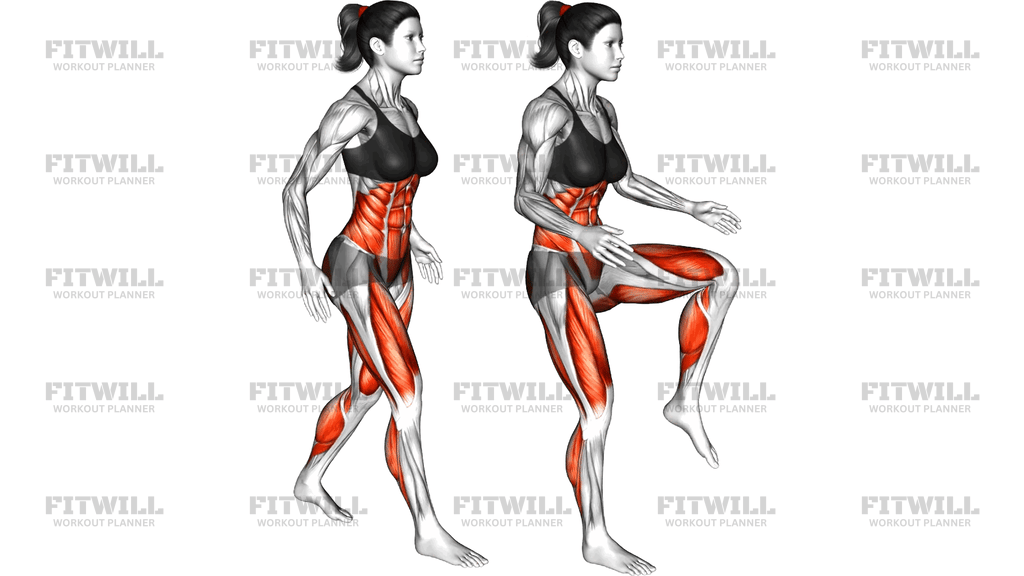
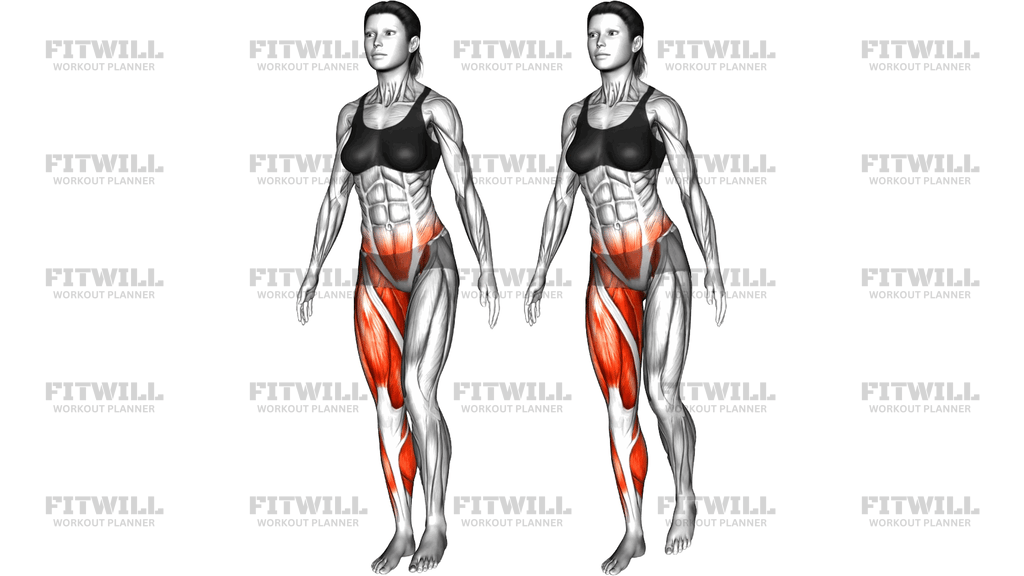
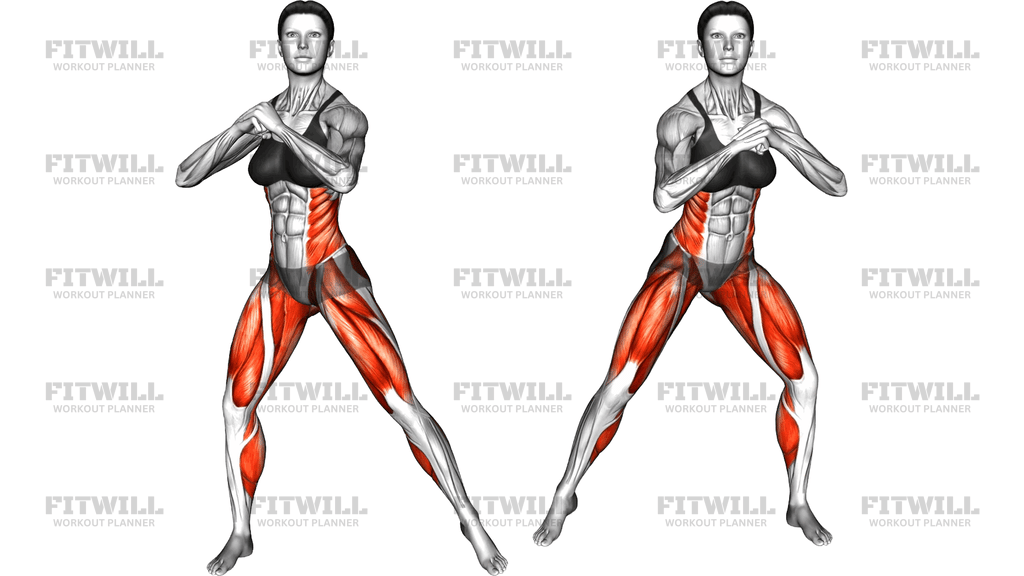
Lunge With Internal Rotation
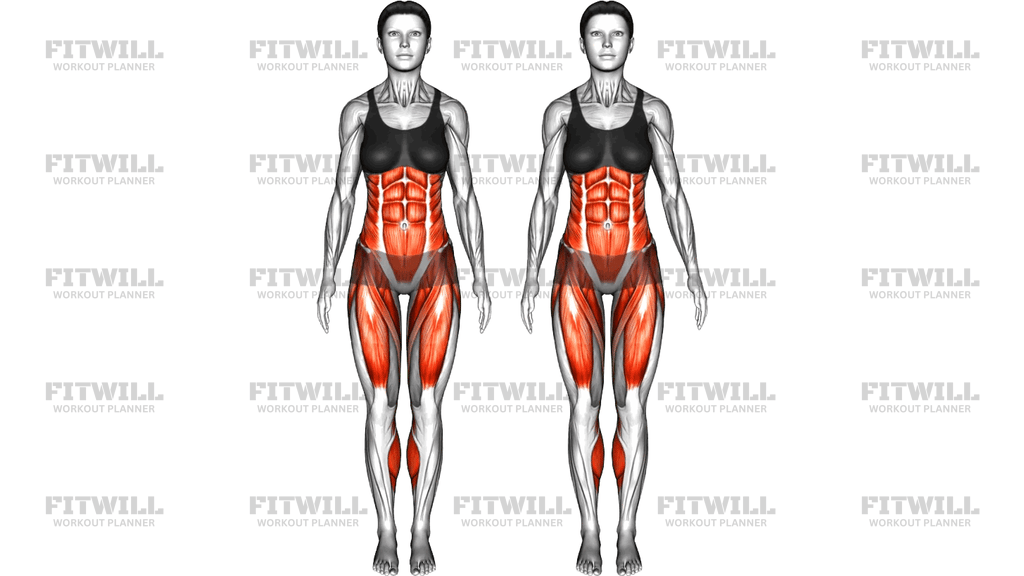
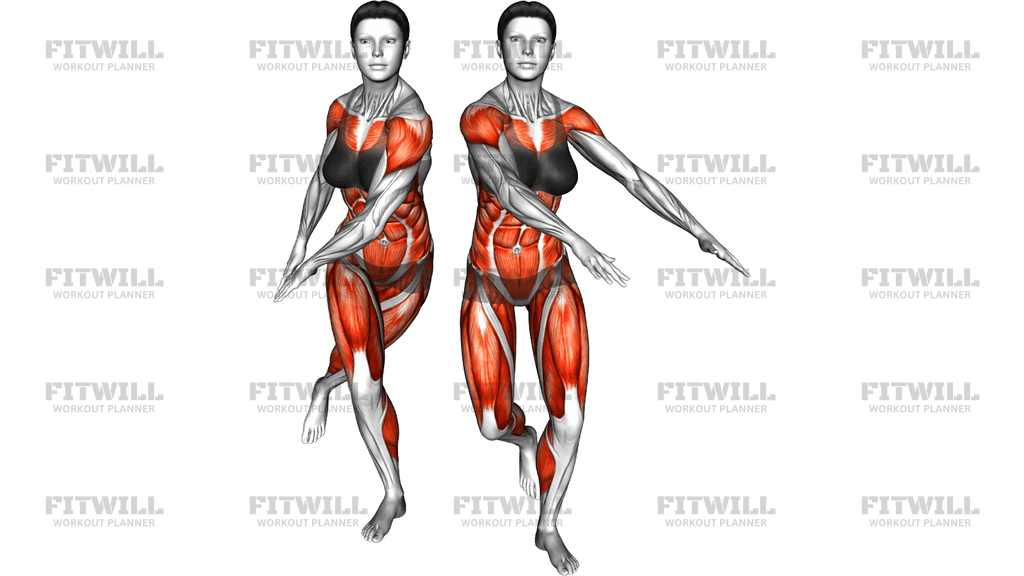
The Lunge With Internal Rotation is a bodyweight lower-body exercise that combines a standard split-stance lunge with an inward rotational reach at the bottom of the rep. You step forward, lower until both knees are bent, and then reach the arm on the same side as your front leg across your body toward the inside of the front knee. That reach turns a straightforward lunge into a drill that challenges the legs, the hips, and the muscles that control rotation through the trunk all at once.
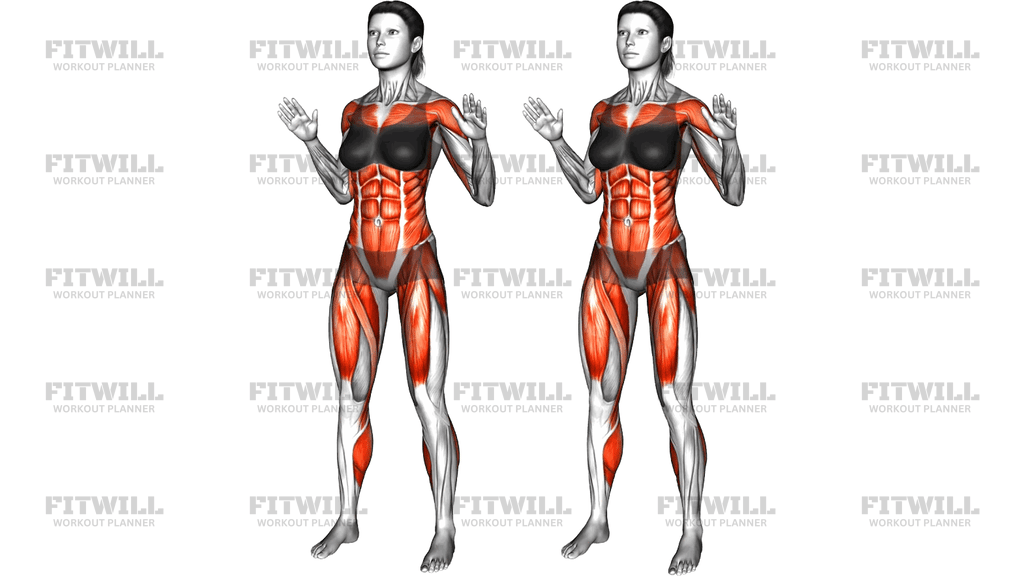
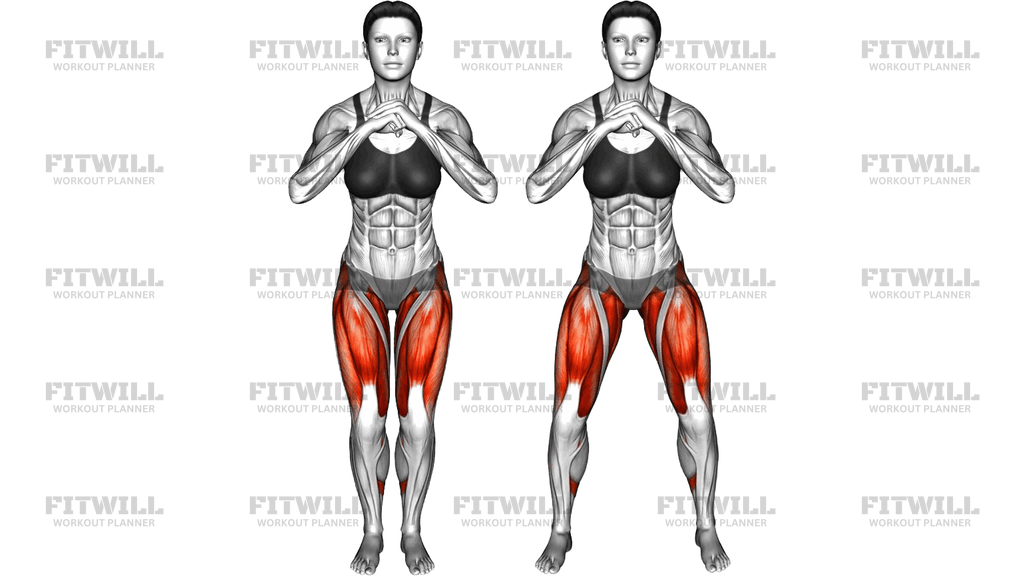
The lunge portion is driven by the quads and glutes, with the hamstrings and calves helping you control the descent and push back up. The internal-rotation reach adds a different layer: the obliques and deep trunk muscles have to hold your ribcage and pelvis aligned while the hip and shoulder rotate through their inner range. For many people, especially runners and anyone who sits for long hours, hip internal rotation is the stiffest and least trained direction of movement, and this drill loads that range while the legs are already working.
This exercise suits intermediate trainees as a warm-up or accessory movement, and it is also approachable for beginners because no equipment is required and the range can be scaled simply by shortening the stride or reducing the reach. It fits well before squats or deadlifts, inside a general strength circuit, or as part of a movement-prep block for field sports where rotation under a split stance happens constantly.
Setup matters more here than in a plain lunge because the reach will expose every weakness in your base. Take a long enough stride that your front shin stays close to vertical and your back knee can travel down toward the floor rather than forward. Keep your torso tall before the reach begins, and plant the ball of the rear foot firmly so it does not twist as you rotate. A stable, wide-feeling base is what allows the rotation to come from the hip and trunk instead of being cheated out of the lower back.
To execute it well, lower with control until your front thigh is roughly parallel to the floor, then pause before reaching. Sweep the same-side arm across your body toward the inside of the front knee, letting the shoulder and trunk rotate as one piece, and extend the opposite arm behind you for balance. Hold the reached position for one calm breath, feel the stretch along the outer hip of the front leg, unwind back to center, and drive up through the front heel.
The main safety points are simple. Keep the front knee tracking over the middle of the foot rather than caving inward, move the reach only as far as you can do with a long spine, and stay with bodyweight until the whole sequence feels smooth. If a rotation or depth causes pinching at the front of the hip or the knee, reduce the range rather than pushing through it.
[ Workout Log & Planner ]
Put your next workout in Fitwill
Keep your plan and training log ready when you are.


Instructions
- Stand tall with your feet hip-width apart, arms relaxed at your sides, and give yourself room for one long stride forward.
- Brace your core by drawing the ribs down slightly and tightening the trunk as if preparing to be tapped on the stomach.
- Step forward with one foot into a deliberately long stride, landing with the front foot flat and the ball of the back foot planted, heel lifted.
- Bend both knees and lower with control until your front thigh is roughly parallel to the floor and your back knee is close to the ground.
- At the bottom, reach the arm on the same side as your front leg across your body toward the inside of the front knee, letting the palm turn down and the shoulder roll inward.
- Extend the opposite arm back behind you at shoulder height to counterbalance the rotation and keep your chest as long as possible.
- Hold the reached position for one breath, feeling the rotation come from the hip and trunk rather than a twist isolated in the lower back.
- Unwind the reach smoothly back to center so both arms are level again before you stand.
- Exhale as you unwind, then drive through the front heel to return to a full stand, keeping the torso upright on the way up.
- Either alternate legs rep by rep or complete all reps on one side, resetting your stance and brace between each lunge.
Tips & Tricks
- If your front knee dives inward as you reach across, shorten the reach first; the knee usually caves because the rotation is being pulled from the leg instead of the trunk.
- A short stride is the most common setup error here — the front knee shoots well past the toes and the reach feels cramped. Step further out so the shin stays close to vertical.
- Do not let the reach turn into a slouch. Hinge slightly from the hips with a straight back if you need more range, but avoid rounding through the mid-back to chase the knee.
- Keep the ball of the rear foot screwed into the floor. If it twists as you rotate, you lose the stable base the reach depends on.
- Rotate the ribs and pelvis together as one block. If you feel the movement happening only in the lower back, slow down and think of turning from the waist and hip as a unit.
- Pause a full breath at the bottom before reaching. Most balance wobbles come from rushing from descent straight into the rotational reach.
- Stay with bodyweight for your first several sessions. Adding a weight in the reaching hand too early usually degrades both the lunge depth and the rotation quality.
- Breathe out on the reach and the press back up. Holding your breath through the rotation makes the trunk rigid in the wrong way and tends to raise the shoulders toward the ears.
- If the outer front hip pinches at the bottom, reduce how far the knee travels or how far the arm sweeps rather than forcing the end range.
Frequently Asked Questions
What muscles does the Lunge With Internal Rotation work?
The quads and glutes handle most of the lunge, supported by the hamstrings and calves. The internal-rotation reach brings in the obliques and the muscles around the hip that control inward rotation.
How is the Lunge With Internal Rotation different from a regular forward lunge?
The base movement is the same split-stance lunge, but the same-side arm reaches across toward the inside of the front knee at the bottom. That addition trains trunk rotation and hip internal rotation while the legs hold a loaded position.
Should the reach go toward the front leg or away from it?
Toward it. Reaching the same-side arm across the body toward the inside of the front knee is what creates the internal rotation at the shoulder and trunk.
Is the Lunge With Internal Rotation useful for stiff hips?
Yes, it works the hip through its internal rotation range while the body is in a split stance, which many people rarely train. Move within a comfortable range and progress the depth gradually rather than forcing the end position.
Can beginners do this exercise?
Absolutely. Start with a shorter stride, skip the pause, and reach only partway across. Holding onto a wall or rack with the non-reaching hand is a fair way to practice balance at first.
Why does my front knee drift inward when I reach?
Usually the rotation is being generated from the leg and pelvis collapsing instead of from the trunk. Slow the reach down, keep light pressure on the outer edge of the front foot, and let the arm sweep only as far as the knee stays stacked over the foot.
Should the back knee touch the floor?
Lower it close to the floor for full range, but control it there rather than tapping down hard. If you cannot lower smoothly, reduce the depth and rebuild it over time.
How many reps should I do?
Six to ten controlled reps per side works well as a warm-up or accessory set. Prioritize a smooth reach and a stable front knee over rep count.
Can I add weight to the Lunge With Internal Rotation?
Once the bodyweight version is stable, a light dumbbell or plate in the reaching hand can deepen the rotation demand. Keep the load modest, because a heavy weight tends to pull you off balance at the bottom of the reach.
Is this exercise safe if my knees are sensitive?
The lunge position loads the front knee directly, so use a shallower depth, a longer stride, and a pain-free range. Stop and reassess your stance or see a professional if sharp knee pain shows up during the rotation.