Side Step Squat Touchdown
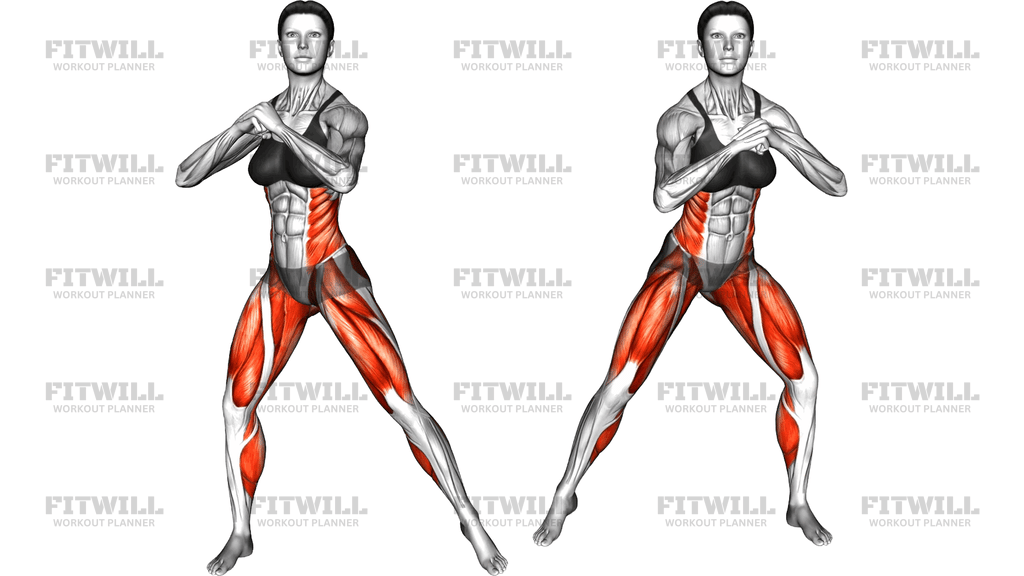
The Side Step Squat Touchdown is a bodyweight lower-body exercise that combines a lateral step with a single-side squat and a reach toward the floor. From a standing position, you step one foot out to the side, sit back into a squat on that working leg while the opposite leg stays extended, and tap the floor near your foot with the opposite hand before driving back up to standing. It looks simple, but the combination of lateral movement, single-leg loading, and the touchdown reach makes it a genuinely demanding movement.
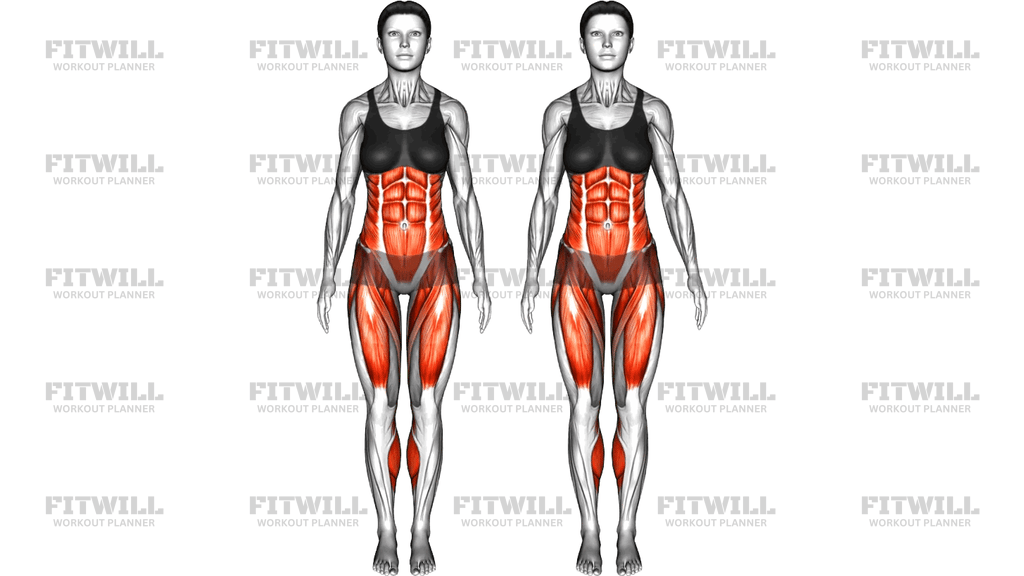
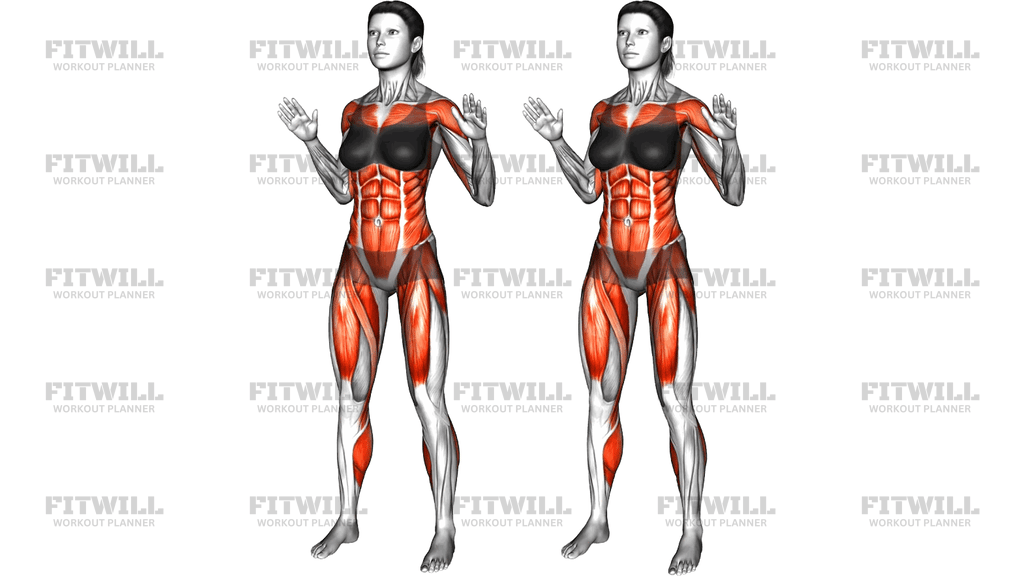
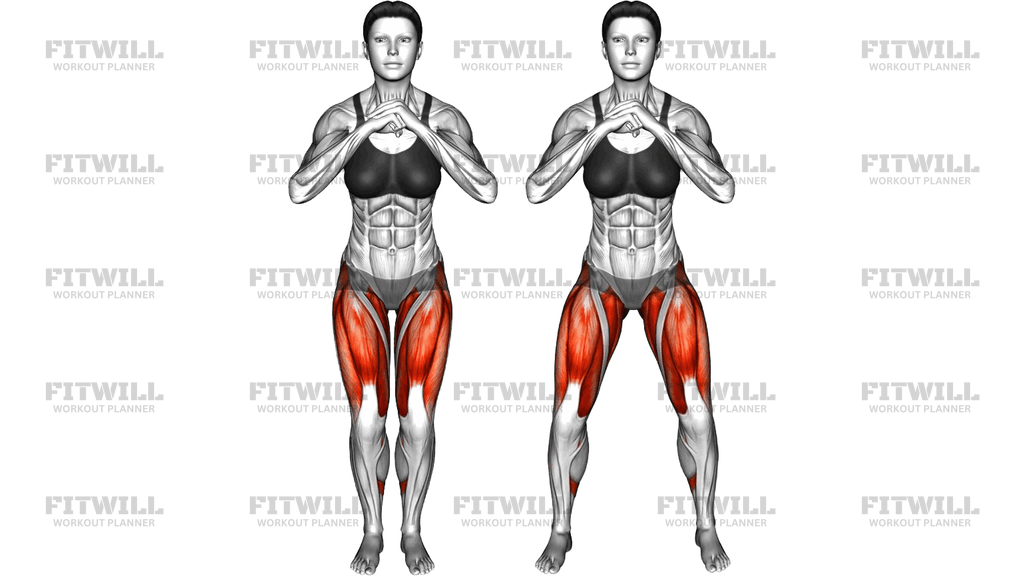
This exercise primarily works the quadriceps and glutes of the stepping leg, with heavy involvement from the inner thighs, which lengthen on the extended leg and help control the width of your stance. Because you are loaded on one side and reaching diagonally toward the floor, your core — especially the obliques — has to work to keep your torso organized. The extended leg also gets a stretch through the adductors and hamstrings on every rep, making this a useful mobility builder as well as a strength move.
The Side Step Squat Touchdown suits a wide range of trainees. Beginners use it to develop the single-leg strength and balance needed for lunges and step-ups. Athletes and recreational lifters use it as a warm-up activation drill or as higher-rep conditioning work that trains the side-to-side movement patterns most squats ignore. Because it needs no equipment and only a few feet of floor space, it fits easily into home workouts, hotel-room sessions, or circuit training.
Setup matters more than it appears to. Your feet should start together, your chest tall, and your weight distributed over your whole foot. As you step out, the width of your step determines how deep you can squat and how much the inner thighs are involved — too narrow and you will pitch forward, too wide and you will struggle to return with control. Keep the working knee tracking over or slightly outside the toes, and let the hips move back rather than letting the knees shoot forward.
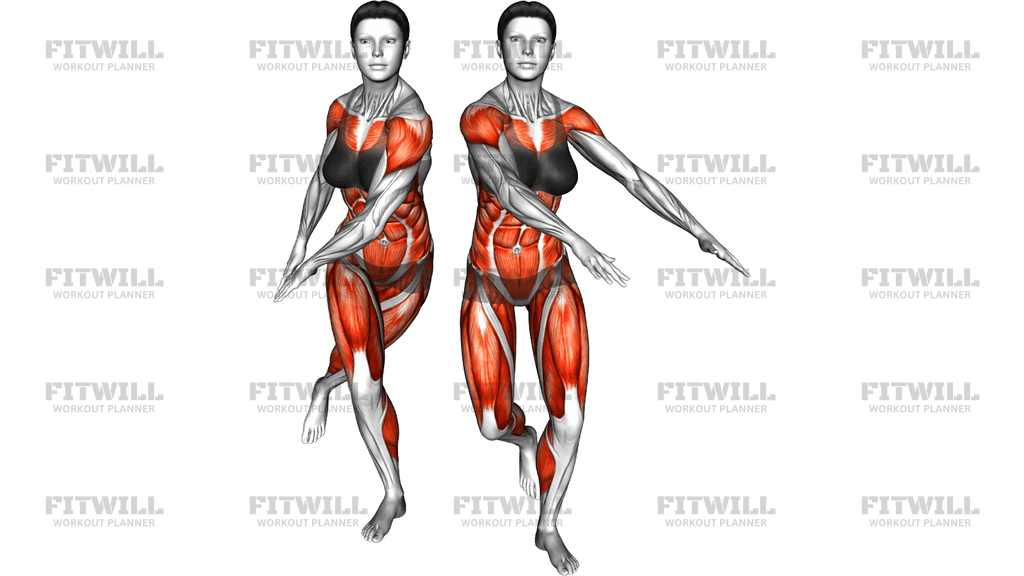
To execute it well, think of the touchdown as a hinge with a reach, not a slumped grab. Hinge slightly at the hips as you descend, keep your back reasonably flat, and touch the floor (or your shin if your flexibility limits you) with the hand opposite the working leg. Push the floor away through the whole foot to stand, bring the stepping leg back to center, and reset your posture before repeating on the other side.
The main safety points are simple: control the descent rather than dropping into the squat, keep the heel of the working leg in contact with the floor, and never force a deeper reach than your hips and hamstrings allow. If you feel the movement in your lower back rather than your legs, you are rounding instead of hinging. Done with control, this is a low-risk, high-value addition to almost any routine.
Fitwill
Log Workouts, Track Progress & Build Strength.
Achieve more with Fitwill: explore over 9600 exercises with images and videos, access built-in and custom workouts, perfect for both gym and home sessions, and see real results.
Start your journey. Download today!




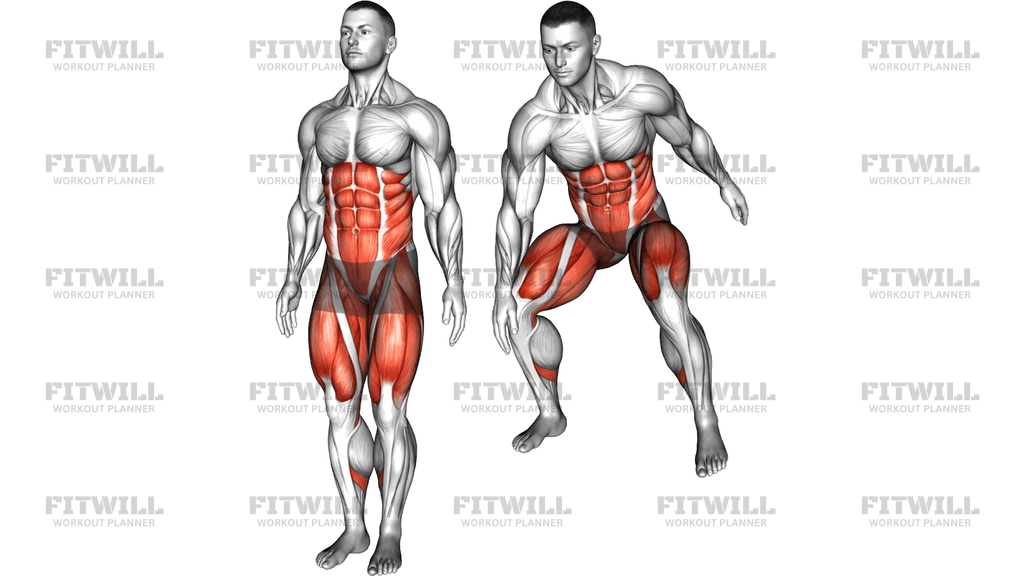
Instructions
- Stand tall with your feet together, arms relaxed at your sides, and your weight balanced evenly across both feet.
- Brace your core lightly and set your chest tall with your gaze forward before you move.
- Take a wide step to the right with your right foot, roughly one and a half to two shoulder-widths apart.
- Push your hips back and bend your right knee, squatting down over the right leg while your left leg stays straight with the foot flat.
- Reach your left hand down and touch the floor beside or just inside your right foot, hinging at the hips and keeping your back long rather than rounded.
- Pause briefly at the bottom, feeling the stretch along the inner thigh of the straight left leg.
- Drive through your right heel and mid-foot to stand, pulling the stepping leg back to the starting position with your feet together.
- Exhale as you stand up out of the squat; inhale as you step out and lower into the next rep.
- Repeat on the left side, stepping left and reaching down with the right hand, and continue alternating for the desired number of reps.
Tips & Tricks
- Keep the heel of your working leg glued to the floor — if it lifts, your step is too wide or your hips are not traveling back far enough.
- Let your chest tilt forward toward the thigh as you reach, but keep the reach coming from the hip hinge, not from curling your upper back.
- If you cannot touch the floor, tap your shin or the top of your thigh instead; forcing the reach usually causes rounding.
- Avoid letting the working knee collapse inward as you descend — think of spreading the floor apart with your foot to keep the knee tracking over the toes.
- The straight leg should actively press its foot into the floor; letting it go slack turns the stretch into a collapsed side bend.
- Keep the repetition tempo moderate — dropping quickly into the squat robs you of the balance and strength benefits and stresses the knee.
- Bring your feet fully back together between reps so each side starts from the same balanced position rather than drifting into a staggered stance.
- If your balance wobbles, slow the step out, extend your free arm opposite your reaching hand like a counterweight, and fix your eyes on one spot ahead of you.
- Warm up your hips with a few bodyweight squats or leg swings first; cold adductors often complain during the wide-stance portion of this movement.
Frequently Asked Questions
What muscles does the Side Step Squat Touchdown work?
The quadriceps and glutes of the stepping leg do most of the work, while the inner thighs control the wide stance and the straight leg gets a strong adductor stretch. Your obliques and core stabilize the torso as you reach diagonally toward the floor.
Is the Side Step Squat Touchdown good for beginners?
Yes, it is an excellent beginner exercise because it builds single-leg strength and balance without any equipment. Beginners can shorten the step, reduce the squat depth, and touch the shin instead of the floor until mobility improves.
Why does the Side Step Squat Touchdown require touching the floor?
The touchdown reach adds a hip hinge to the squat, which deepens glute and hamstring involvement and challenges your core to control the bent-over position. It also gives you a clear target so every rep reaches a consistent depth.
Why can't I keep my heel down when I step out to squat?
This usually means your step is too wide for your current hip mobility or your knees are drifting forward instead of your hips sitting back. Narrow the step slightly and exaggerate pushing your hips rearward as you descend.
Should my extended leg stay flat on the floor during the Side Step Squat Touchdown?
Ideally yes, with the foot flat and the leg straight so the inner thigh gets a controlled stretch. If your adductors are tight, a slight knee bend is acceptable, but work toward a straighter leg over time.
How many reps of the Side Step Squat Touchdown should I do?
For strength and balance, aim for 8 to 12 reps per side with slow, controlled reps. For conditioning or warm-up activation, higher volumes of 15 to 20 per side work well as long as your form holds.
Can I use weights with the Side Step Squat Touchdown?
You can hold a light dumbbell or kettlebell at your chest or in the reaching hand to add load, but master the bodyweight version first. The balance and mobility demands of the movement are significant on their own.
What can I substitute if the Side Step Squat Touchdown hurts my knees?
Try a narrower step with a shallower squat, or switch to a lateral lunge with a partial range. If discomfort persists at shallow depths, have a professional assess your knee before continuing with loaded single-leg work.
Is the Side Step Squat Touchdown a cardio or strength exercise?
It is primarily a strength and mobility exercise, though performing it continuously at higher reps raises your heart rate enough to serve light conditioning work in a circuit.