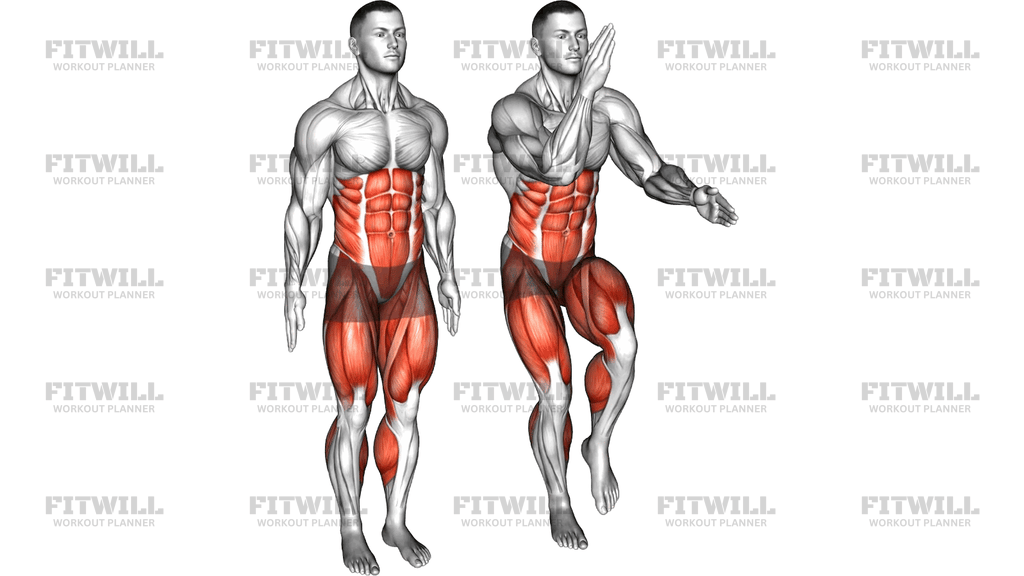
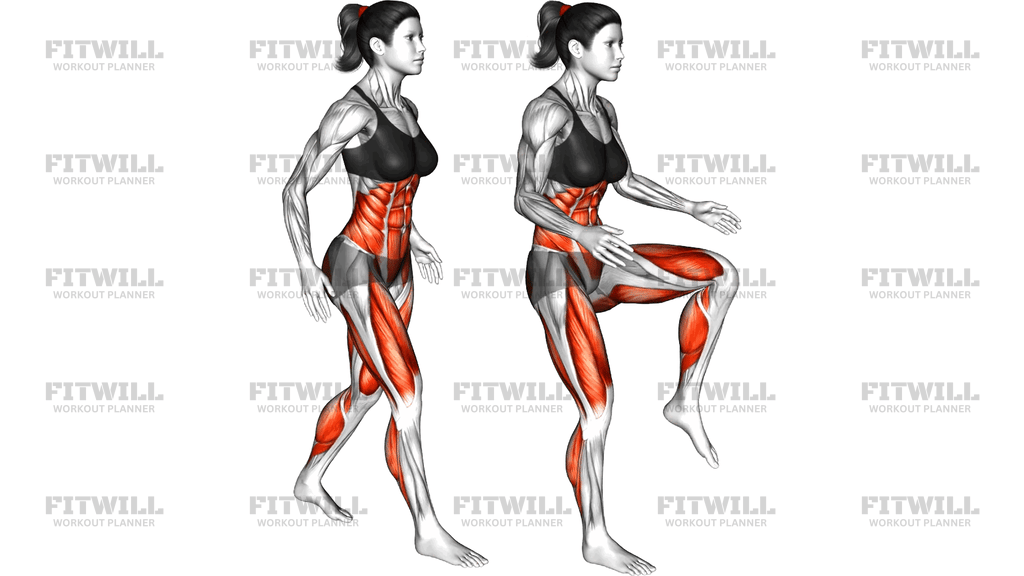
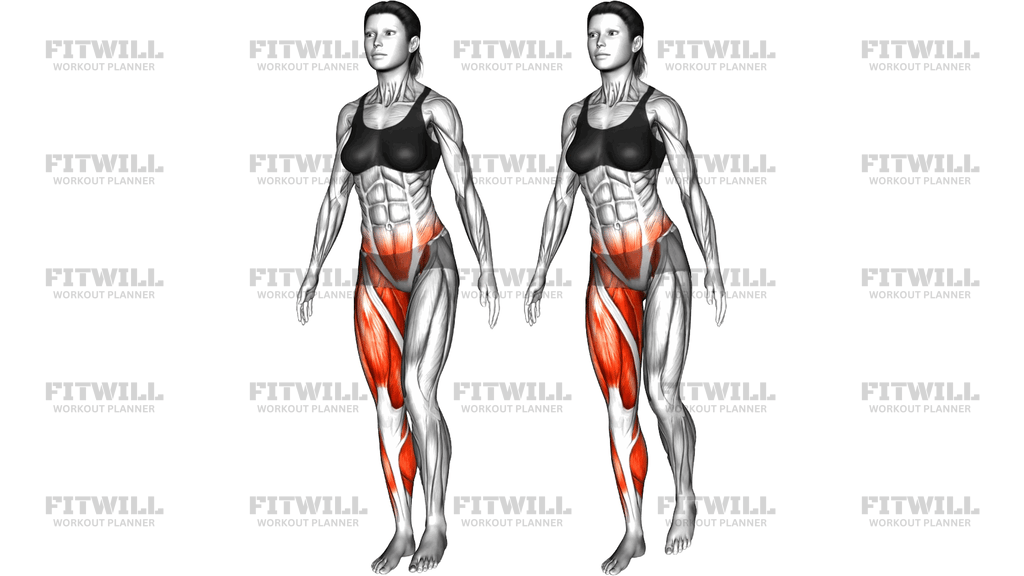
Shuffle Step With Squat And Jump
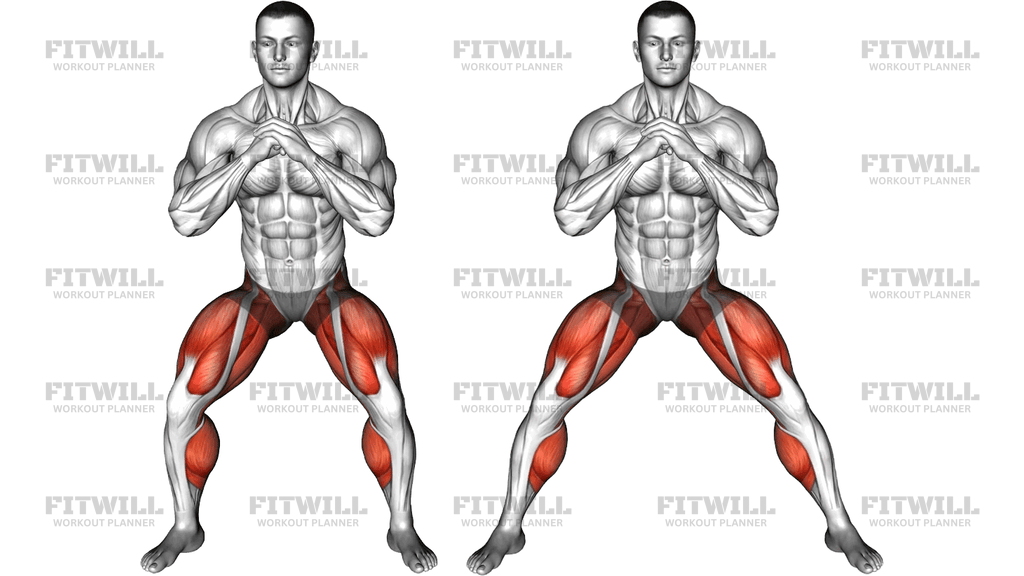
Shuffle Step With Squat And Jump is a bodyweight conditioning drill that combines a lateral shuffle, a deep wide-stance squat, and an explosive vertical jump into one continuous pattern. You stay low in a partial squat as you sidestep across the floor, drop into a full squat at the end of the range, then drive up through the floor into a jump before shuffling back the other way. Because the movement never lets you fully stand and reset, it doubles as strength work for the legs and a demanding cardiovascular challenge.
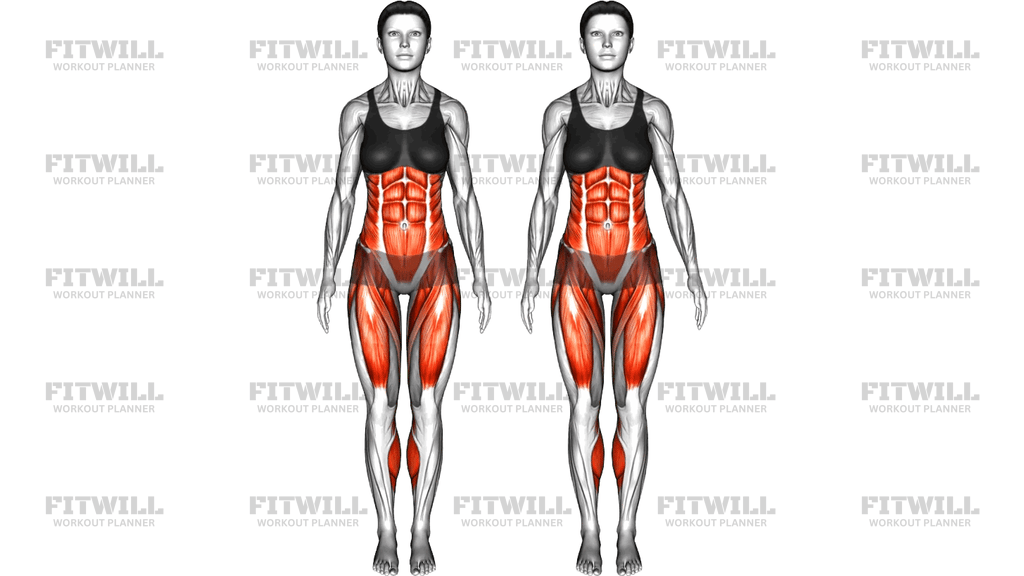
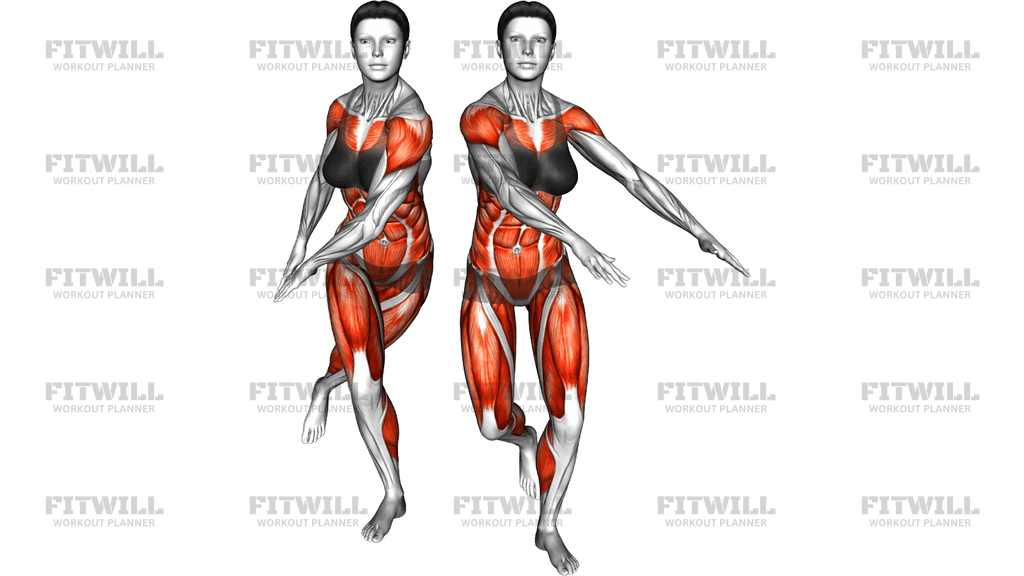
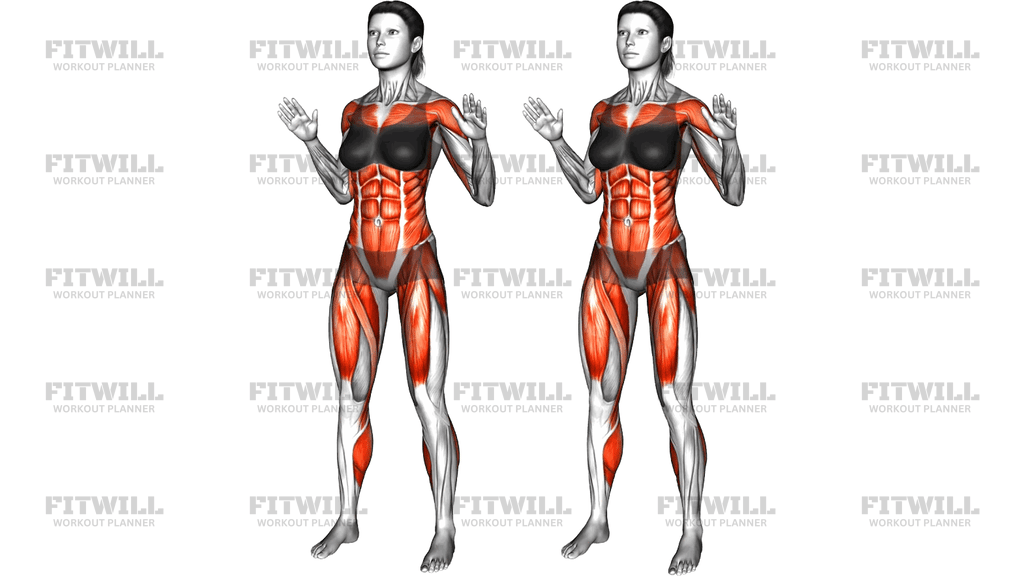
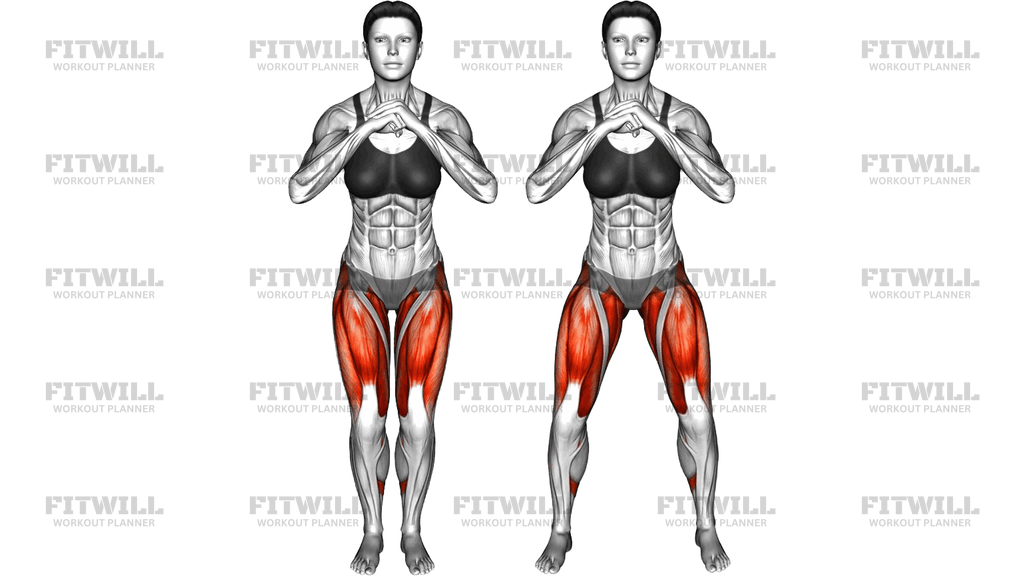
The main work comes from the quads and glutes, which control the squat and power the jump, while the inner thighs hold your wide stance together and the calves finish each jump. Holding the low shuffle position also keeps constant tension on the hip abductors and forces the core to brace so your torso stays upright while your legs move underneath you.
This drill suits anyone with a few months of squatting experience who wants to build leg endurance, explosiveness, and conditioning without equipment. It shows up in athletic preparation for sports that demand quick lateral movement and repeated jumping, and it works well as a finisher or as one station in a circuit. Because it needs only a few meters of open floor, it fits easily into home or outdoor sessions.
The setup matters because everything happens in a half-squat position. If your stance is too narrow, your knees will cave inward during the shuffle and the jump; if your chest drops forward, your lower back takes over work that belongs to your hips and legs. Feet angled slightly outward, knees tracked over the toes, and weight spread across the whole foot give you a stable base for both the shuffle steps and the takeoff.
To execute it well, sink into the low shuffle and move sideways with quick, light steps, keeping your hips at the same height the whole way. At the end of your shuffle range, sit down into a full squat with your thighs at or below parallel, then explode straight up through the balls of your feet. Land softly with bent knees back into a wide squat, absorb the landing quietly, and immediately resume shuffling in the opposite direction.
Treat this as a quality-over-quantity movement. Five or six crisp repetitions per side with quiet landings beat fifteen sloppy ones with stiff legs and a rounded back. If your landings get loud or your knees start drifting inward, stop the set, rest, and reset rather than pushing through fatigue.
[ Workout Log & Planner ]
Put your next workout in Fitwill
Keep your plan and training log ready when you are.


Instructions
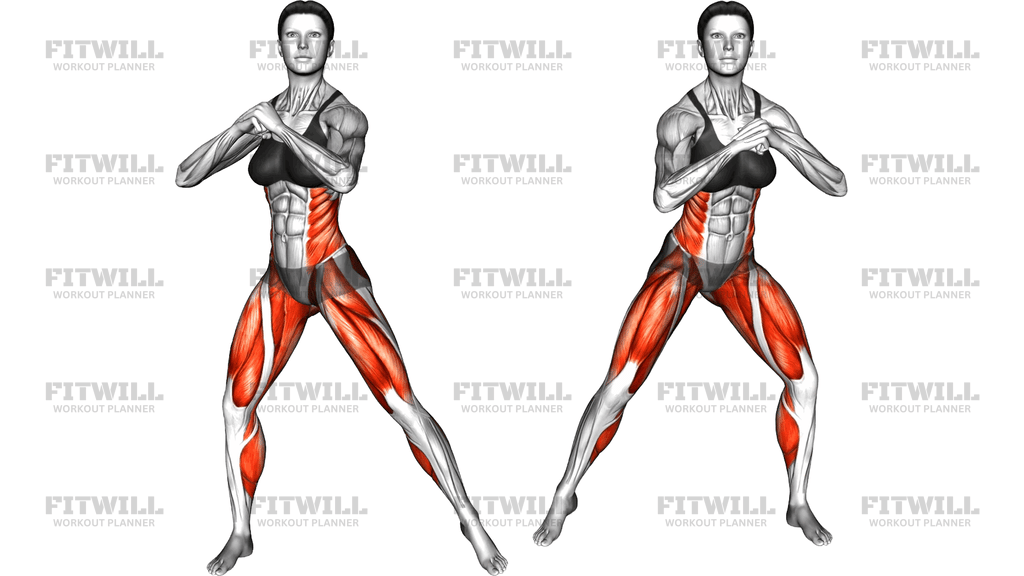
- Stand with your feet roughly twice shoulder-width apart, toes turned out slightly, and clasp your hands together in front of your chest.
- Sink your hips back and down into a half squat until your thighs feel engaged, keeping your chest tall and your weight spread across your whole foot.
- Brace your core and hold this low position, making sure your knees stay pushed out over your toes rather than collapsing inward.
- Shuffle sideways with quick, small steps, leading with the near leg and following with the trail leg, keeping your hips at a constant low height.
- Take two to four shuffle steps to one side, then settle your feet into a stable wide stance and lower into a full squat.
- Without pausing at the bottom, drive forcefully through your heels and the balls of your feet to jump straight up, extending your hips, knees, and ankles.
- Land back into a wide squat with soft knees, absorbing the impact by sitting your hips down and keeping your torso upright.
- Rise halfway back into the shuffle position and repeat the side steps in the opposite direction, alternating sides each repetition.
- Exhale sharply as you jump, inhale as you absorb the landing and sink into the squat.
- Finish the set by standing all the way up, shaking out your legs, and resetting your stance before the next round.
Tips & Tricks
- Keep your hips at one height during the shuffle steps; bobbing up and down between steps wastes energy and throws off your rhythm.
- If your knees cave inward when you land, consciously think about spreading the floor with your feet and pressing your knees out over your pinky toes.
- Land toe-ball-heel and let your hips drop with the landing instead of catching it stiff-legged; loud, slapping landings are the clearest sign you are fatigued.
- Do not let your hands drop during the jump — keeping them clasped at your chest helps you stay balanced and stops your arms from swinging to compensate.
- Shorten the shuffle distance if you find yourself standing up out of the low position to reach the next step; the shuffle should fit inside your squat stance.
- Push your hips back on the pre-jump squat rather than dropping straight down onto your knees, so the glutes and quads load properly for the takeoff.
- Keep your eyes forward and your neck neutral; looking down at your feet rounds your upper back and shifts your weight onto your toes.
- Start with shallow jumps until your landing mechanics are consistent, then add height once you can land silently every time.
- Place this drill early in a workout when your legs are fresh if the goal is power, or late as a finisher if the goal is conditioning.
Frequently Asked Questions
Which muscles does Shuffle Step With Squat And Jump work the hardest?
The quads and glutes do most of the work during the squat and jump, while the calves drive the takeoff and the inner thighs stabilize the wide stance. The core stays active throughout to keep your torso upright while your legs move.
Is Shuffle Step With Squat And Jump suitable for beginners?
Beginners should first be comfortable with bodyweight squats and lateral shuffles separately. Once both feel solid, start with a small hop or no jump at all and add the explosive jump once landings feel controlled and quiet.
How wide should my stance be during the shuffle portion?
Aim for roughly twice shoulder-width with toes angled slightly out. The stance should be wide enough that you stay in a half squat, but not so wide that you have to stand up between shuffle steps.
Why do my knees cave inward when I land from the jump?
This usually means the glutes and outer hip muscles are fatigued or underused relative to the quads. Slow the drill down, reduce the jump height, and actively press your knees out over your toes during both the squat and the landing.
Can I do Shuffle Step With Squat And Jump without the jump?
Yes. Replacing the jump with a controlled pause at the bottom of the squat keeps the strength and mobility benefit while removing most of the impact, which makes it friendlier for sore knees or hard floors.
What surface is best for this exercise?
A firm but slightly forgiving surface such as a gym floor, rubber mat, or grass absorbs landing impact better than bare concrete. Avoid slippery or uneven ground, since the shuffle steps demand quick grip changes.
How many repetitions should I perform per set?
Start with 3 to 5 shuffles and one jump per side for 2 to 3 total rounds. As your landing quality holds up, build to longer shuffle distances and more jumps rather than adding speed first.
Should I swing my arms during the jump?
Keep your hands clasped at your chest as shown in the standard setup. Arm drive can add height later, but only once you can land consistently with your torso upright and knees tracked correctly.
What can I use instead if I have no space to shuffle sideways?
You can perform the shuffle in a small side-to-side range of just one or two steps per side, or substitute alternating wide-stance squats with a jump, which keeps the same squat-and-jump demand in a fixed footprint.
How do I know when to end a set?
Stop when your hips start rising during the shuffle, your landings become loud, or your knees drift inward. These are signs that the position is breaking down and further repetitions would train poor mechanics.