Seated Single Leg Knee Flexion
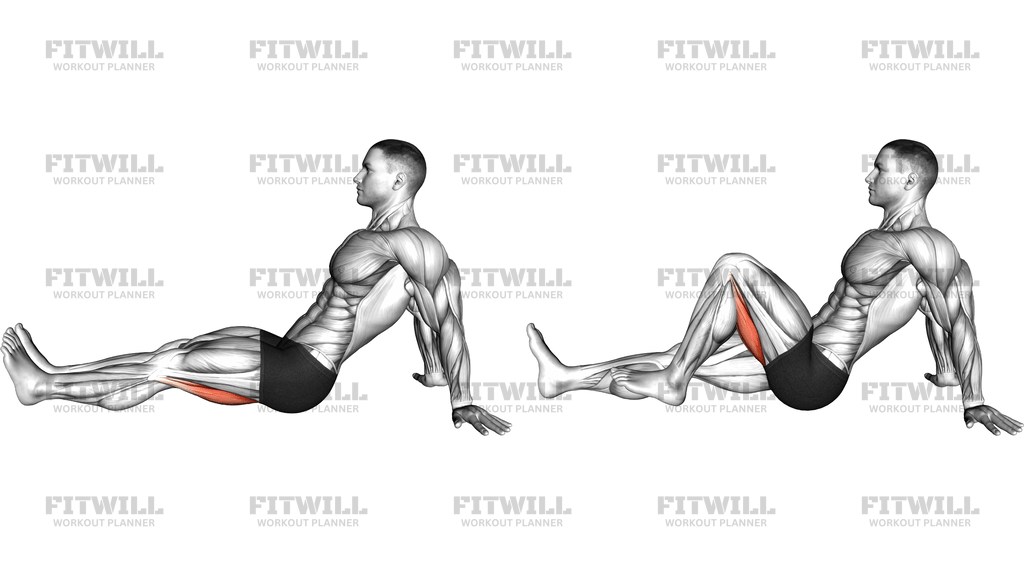
Seated Single Leg Knee Flexion is a simple floor-based movement where you sit upright with your legs extended, support yourself on your hands behind you, and draw one heel in toward your buttocks by bending the knee. The heel stays in contact with the floor as it slides, so the working leg controls the entire motion against friction and gravity. It looks unremarkable, but it isolates the knee-bending function of the hamstrings in a way most hamstring exercises never touch.
Most hamstring training focuses on the hip extension role, through deadlifts, good mornings, and bridges. This exercise works the other half of the job: flexing the knee. That makes it valuable for anyone rehabilitating a knee injury, rebuilding strength after immobilization, or addressing a strength imbalance between legs, since each side is trained on its own and the stronger leg cannot compensate.
The seated setup matters more than it seems. Supporting your weight on your hands behind you unloads the hip and lets the thigh stay relaxed, while the extended opposite leg anchors your position and stops your pelvis from twisting as you work. Keep the torso tall and the shoulders down away from the ears so you are not shrugging or sinking through the chest as the leg moves.
To perform it well, sit on the floor with both legs straight in front of you, palms flat on the floor beside your hips. Bend one knee and slide that heel along the floor toward your glutes, letting the knee point up toward the ceiling as it bends. Pause briefly when the heel is as close to your body as it will comfortably go, then slide the heel back out until the leg returns to fully extended. The heel should never lift off the floor during the slide.
Because the resistance comes only from body weight and floor friction, this is a low-load, high-control exercise rather than a muscle builder. It is commonly used in warm-ups, knee prehab routines, post-injury return programs, and as a teaching tool to help people feel the hamstrings shorten across the knee joint. Progression comes from slowing the tempo, adding a towel under the heel to increase drag, or pausing longer at the fully bent position.
Move within a pain-free range and keep the movement smooth rather than jerking the heel in. If bending the knee causes pinching or discomfort, reduce the range or consult a qualified professional before continuing. As strength returns, this movement pairs naturally with loaded hamstring work such as leg curls and Nordic-style exercises.
[ Workout Log & Planner ]
Put your next workout in Fitwill
Keep your plan and training log ready when you are.


Instructions
- Sit on the floor with both legs extended straight in front of you and your toes pointing up.
- Place your palms flat on the floor just behind your hips, fingers pointing forward or slightly out, and take some of your weight into your arms so your hips are not jammed into the floor.
- Sit tall through the spine and let your shoulders drop away from your ears; your head stays in line with your torso rather than jutting forward.
- Lightly brace your trunk to keep your pelvis steady, and keep the opposite leg relaxed but straight on the floor as an anchor.
- Bend one knee and slide that heel along the floor toward your buttocks, letting the knee rise toward the ceiling as it folds; keep the heel in contact with the floor the whole way.
- Pause for a beat at the fully bent position, with the heel as close to your body as your knee comfortably allows.
- Slowly extend the knee and slide the heel back out along the floor until the leg is straight again, resisting the temptation to let it shoot back.
- Exhale as you draw the heel in and inhale as you extend it back out, keeping the breath steady throughout.
- Complete all repetitions on one leg, then switch sides so both legs do the same amount of work.
- Between reps, reset your posture: sit tall, settle the shoulders, and confirm the pelvis has not rotated before starting the next slide.
Tips & Tricks
- If the heel drags too easily or slides too freely, add or remove a smooth towel under the heel; more friction makes the hamstring work harder on both the way in and the way out.
- A common fault is letting the knee fall outward or inward as it bends. Keep the kneecap tracking straight up toward the ceiling so the hamstring pulls through its natural line.
- Watch that the hips do not lift or rotate toward the working side; the straight supporting leg and an even seat on the floor keep the pelvis square.
- Avoid leaning further back and turning this into a heel-tuck using hip flexion, where the whole thigh lifts. The thigh should stay down while only the knee bends.
- If your hamstrings feel cramped at the fully bent position, that is usually short-range weakness, not injury. Ease back to a slightly shorter range and build up the end range over weeks.
- Keep the supporting leg genuinely straight. Letting it bend quietly turns the move into a two-leg motion and hides which side is weaker.
- Tempo is your only real load here, so count the return: a two- to three-second slide out makes the eccentric phase noticeably harder.
- If your wrists or lower back complain from supporting yourself on the floor, sit with your back near a wall or place your hands on a low bench behind you instead.
Frequently Asked Questions
What muscles does Seated Single Leg Knee Flexion work?
The hamstrings are the primary movers, working through their knee-flexion function, with the calf muscles and gracilis assisting as secondary knee flexors. The supporting leg and arms mainly stabilize your seated position.
Is Seated Single Leg Knee Flexion good for beginners?
Yes. The load is light, the floor provides clear feedback, and the range is easy to self-regulate, which makes it a good first hamstring exercise for people rebuilding knee strength or learning to feel the muscle work.
Why does my heel need to stay on the floor during Seated Single Leg Knee Flexion?
Keeping the heel grounded means the hamstring has to work against floor friction through the whole range instead of letting gravity swing the shin. It also prevents the movement from turning into an uncontrolled hip-and-knee tuck.
How many repetitions should I do of Seated Single Leg Knee Flexion?
Because the resistance is low, sets typically run 10 to 20 slow, controlled repetitions per leg. Focus on smooth tempo and even work between sides rather than chasing a high number.
My knee pinches when I pull the heel all the way in during Seated Single Leg Knee Flexion. What should I do?
Shorten the range so the heel stops well before the buttocks and only progress deeper as it becomes comfortable. Persistent pinching, swelling, or pain that lingers afterwards should be checked by a healthcare professional.
Can I do Seated Single Leg Knee Flexion if I have no equipment at home?
Yes, it requires nothing but floor space. A small towel under the heel is optional and is only used to adjust how much the heel drags along the floor.
How is Seated Single Leg Knee Flexion different from a lying leg curl?
A lying leg curl loads the hamstrings externally against a machine or band, while this exercise uses only body weight and floor friction in a seated, self-supported position. The seated version suits warm-ups, rehab, and motor control work; the curl suits progressive strength training.
Why does one side feel weaker or less coordinated when I do Seated Single Leg Knee Flexion?
Training one leg at a time exposes side-to-side differences that bilateral exercises hide, so this is common and useful information. Work each leg with the same tempo and reps, and let the weaker side dictate the volume rather than matching your stronger leg.
Should I feel Seated Single Leg Knee Flexion in my lower back or arms?
Some fatigue in the arms is normal since they support your torso, but you should not feel strain in the lower back. If your back works hard, sit taller, shift more weight into your hands, or support your hands on a low bench instead of the floor.