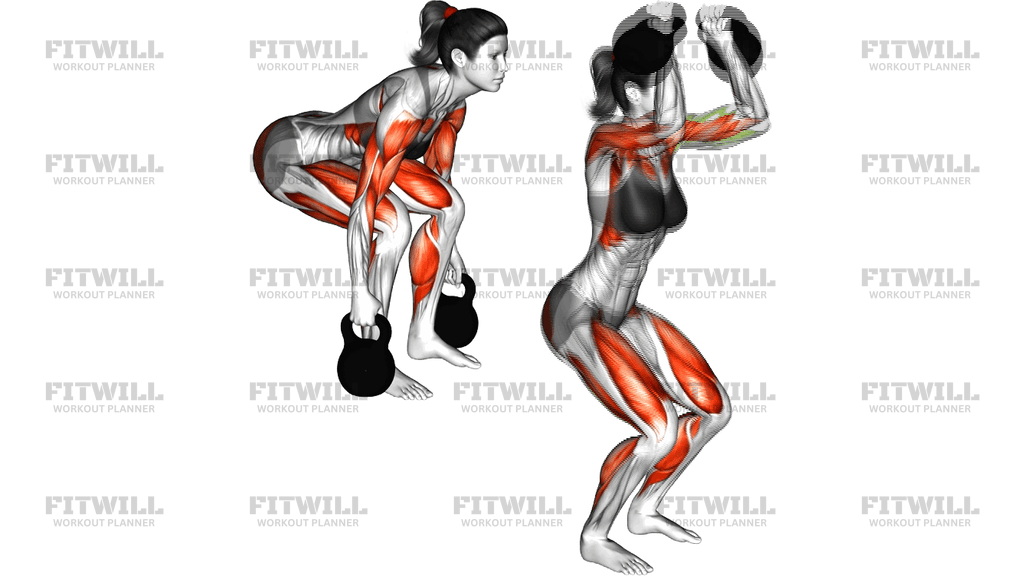
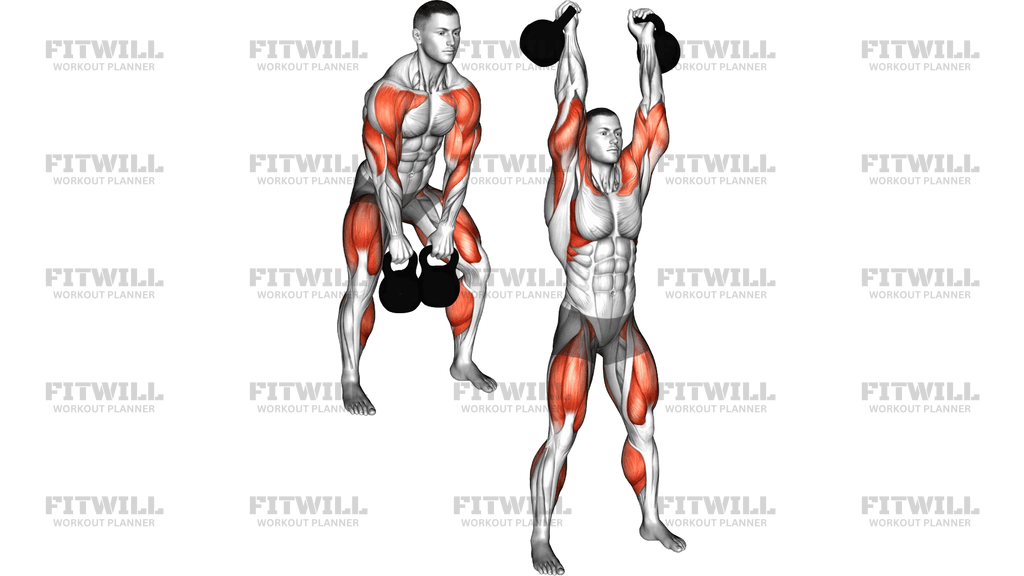
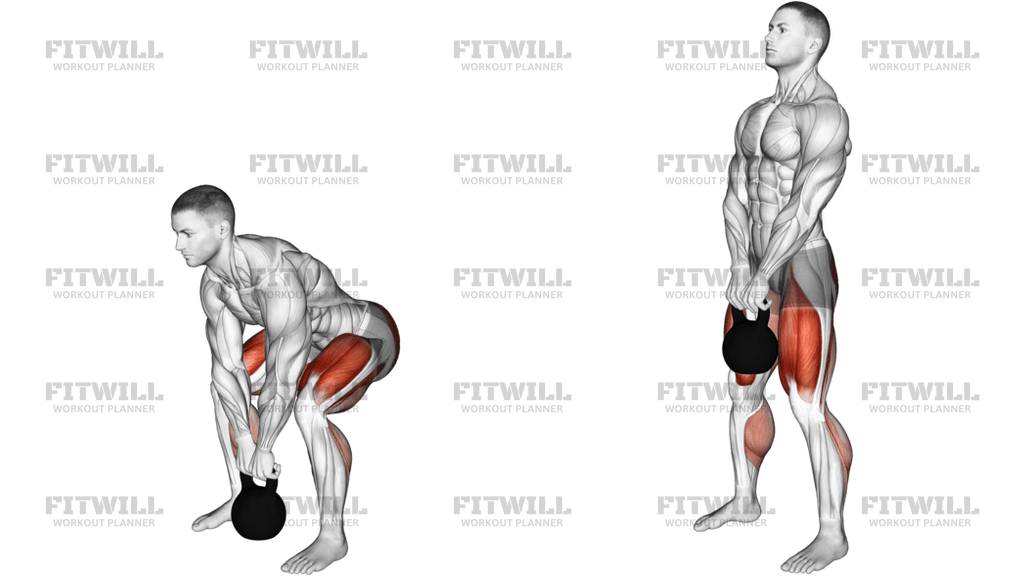
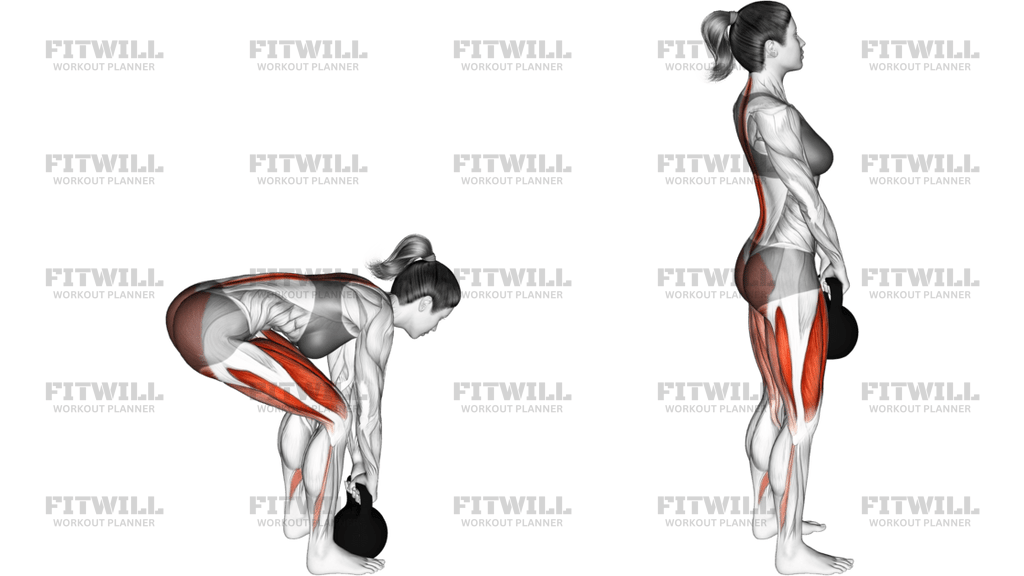
Kettlebell Single Leg Deadlift Pass
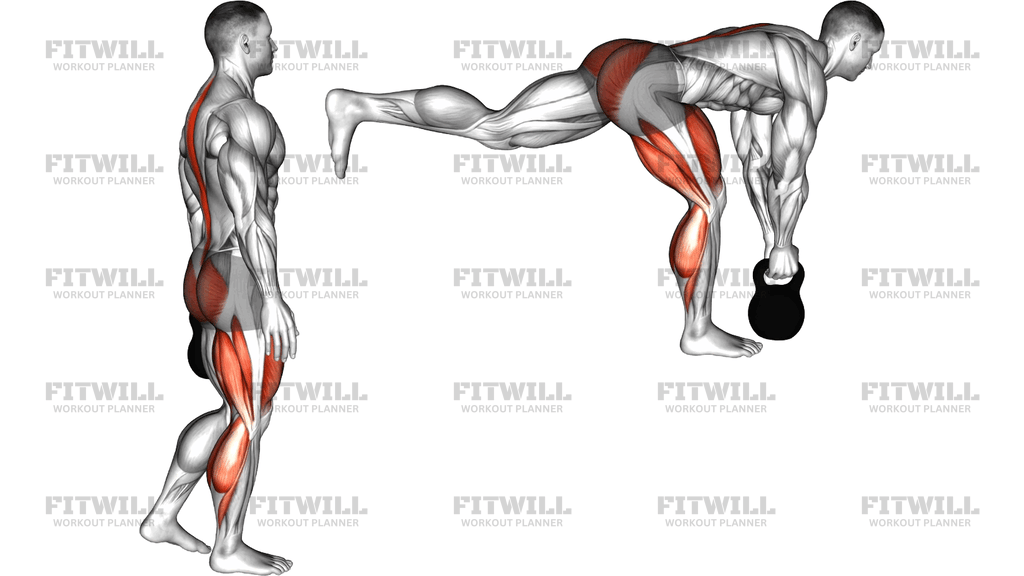
The Kettlebell Single Leg Deadlift Pass is a balance-driven hinge where you stand on one leg, fold forward over the standing hip, and transfer the kettlebell from one hand to the other at the bottom of the rep before returning upright. That mid-rep pass is what separates it from a standard single-leg deadlift: because the weight changes hands, you naturally alternate which side of the body is loaded and which leg is working from rep to rep, without putting the bell down or resetting your stance. It is a raw, honest movement — one foot on the floor, one kettlebell, and nothing to hide behind.
The exercise targets the back of the body. The standing leg's hamstrings and glutes do the hinge and drive you back up, the lower back works hard to keep the spine long under a slight forward lean, and the calf and ankle of the support leg fire continuously just to keep you from tipping over. The free leg extends behind you as a counterweight, and the core ties the whole chain together. Because the load shifts hands at the bottom, the obliques and deep trunk muscles also get genuine anti-rotation and anti-lateral-flexion work that a two-handed hinge cannot replicate.
This movement suits lifters who already own a competent two-legged kettlebell deadlift or hip hinge and want to develop single-leg strength, hip stability, and balance in one shot. It is popular with runners and field-sport athletes because running is essentially a series of single-leg hinges, and with anyone rehabbing or prehabbing the hips and hamstrings under light load. It is also a time-efficient choice: one set trains both legs and both sides of the torso.
Setup quality decides everything here. Your standing foot should be planted firmly, weight spread across the whole foot, with a soft but not deeply bent knee. The torso must hinge at the hip rather than round at the waist, and the back leg should extend as one relatively straight line with the spine — think of your body as a seesaw pivoting on the standing hip. If you rush the fold, the free leg flies up or the torso twists, and the pass becomes sloppy. Slower is better, especially while learning the hand switch.
A few practical safety points: keep the kettlebell close to the midline of the body so it does not drag your shoulder forward, keep the pass low and controlled near the shin rather than swinging the bell across the body, and choose a weight you could confidently manage on one leg before adding the transfer. Start beside a wall or rack for a balance reference, stop the set when your standing leg starts wobbling rather than when your muscles fail, and expect your balance to give out before your strength does in the early weeks — that is normal and improves quickly with practice.
[ Workout Log & Planner ]
Put your next workout in Fitwill
Keep your plan and training log ready when you are.


Instructions
- Stand tall on your right leg with the kettlebell held in your left hand in front of your thigh; your left foot can hover just behind your right ankle as you find your balance.
- Soften your right knee to about a quarter bend, shift your weight into the middle of the right foot, and grip the floor with your toes for a stable base.
- Brace your core as if bracing for a light push, pull your shoulders back and down, and set your eyes on a fixed spot on the floor a few feet ahead.
- Hinge forward at the right hip, letting your torso lower while your left leg swings back and extends behind you so your head, spine, and rear leg form one long line.
- Lower the kettlebell in a straight line toward the floor just inside or alongside your right foot, keeping the bell close to your shin rather than drifting forward.
- At the bottom of the hinge, with your back flat and torso roughly parallel to the floor, grip the handle with your right hand and release it from your left, keeping the transfer low and controlled.
- Drive your right heel into the floor and squeeze the right glute to stand back up, bringing the rear leg through until you are upright with the bell now in your right hand.
- Exhale as you hinge down and transfer, inhale at the bottom, and exhale again as you drive up; keep the breath steady rather than holding it through the whole rep.
- On the next rep, hinge on your left leg and pass the kettlebell back to your left hand, alternating the working leg and receiving hand each rep.
- Finish each rep standing fully upright with hips extended and shoulders stacked over hips, then reset your balance before starting the next repetition.
Tips & Tricks
- If you keep losing balance backward, your weight is probably sitting in your heel — shift it into the midfoot and let the rear leg act as the counterweight it is meant to be.
- A common mistake is letting the hips rotate open as the kettlebell changes hands; square both hip points toward the floor the whole way down to keep the pass clean.
- Do not let the bell swing away from the body during the transfer — a wide arc multiplies the load on your lower back and makes the pass much harder to control.
- Touch the free leg's toes lightly to the floor behind you if your balance fails on every rep, then progress to a hover once you can hold the hinge for two seconds without wobbling.
- If your back rounds as you reach the bottom, you have gone deeper than your hamstrings allow — stop the descent where your spine stays long instead of chasing the floor.
- The standing knee should bend a little but not collapse inward; think of pressing the knee slightly out over the little toe as you load the hip.
- Master the movement without the pass first — do two reps holding with the same hand, then add the transfer once the hinge itself feels automatic.
- Use a lighter kettlebell than your regular single-leg deadlift weight; the one-handed transfer at the bottom is the limiting factor, not your hip strength.
- Place the next rep's foot down completely and re-grip your balance between reps rather than cycling quickly — this is a control exercise, not a cardio pace.
Frequently Asked Questions
Which muscles does the Kettlebell Single Leg Deadlift Pass work the most?
The hamstrings and glutes of the standing leg do the main hinge work, supported by the lower back muscles that hold your spine long. The calf, ankle stabilizers, and core work continuously to keep you balanced, and the pass adds extra demand on the obliques.
Why pass the kettlebell between hands instead of just doing a normal single-leg deadlift?
The pass alternates which side of the body carries the load from rep to rep and forces your trunk to resist the weight shifting across your midline. It trains balance and anti-rotation that a same-hand-every-rep version does not challenge as much.
Is the Kettlebell Single Leg Deadlift Pass suitable for beginners?
Beginners should first be comfortable with a two-legged kettlebell deadlift and a basic bodyweight single-leg hinge. Once those are solid, start with a very light bell or no bell at all, and keep the free leg's toes near the floor for balance support.
Should I hold the kettlebell in the hand on the same side as my standing leg or the opposite hand?
Since the pass alternates hands each rep, you will experience both loading patterns within the same set. In general, the opposite-hand position keeps the load closer to your midline and is easier to control, so treat it as the default and let the pass handle the switching.
How low should I hinge during the Kettlebell Single Leg Deadlift Pass?
Lower the kettlebell to roughly shin height or just below the standing knee, whatever depth lets you keep your back flat and your hips square. Reaching the floor is not the goal — a long, neutral spine is.
My balance breaks down immediately — what should I change?
Slow the descent down, fix your eyes on one spot on the floor, and shift your weight into the midfoot rather than the heel. If that is not enough, lightly rest the rear toes on the floor or keep one hand near a wall for support while you build stability.
Can I use a dumbbell instead of a kettlebell?
Yes, a dumbbell works, though the handle position makes the transfer slightly less smooth than a kettlebell's handle. Choose a shape you can grip securely with one hand at the bottom of the hinge.
How many reps and sets should I do?
Because this is a control exercise, moderate ranges work best — around 6 to 10 passes per side for 2 to 4 sets. Stop the set when your balance or hip position degrades, not when your muscles are fully exhausted.
Is it safe for the lower back?
It is generally safe when the hinge comes from the hips, the spine stays long, and the kettlebell stays close to the body. If you feel the work shifting into your lower back rather than your hamstrings and glutes, reduce the weight and shallow out the range before continuing.