Seated Single Leg Tibialis Press
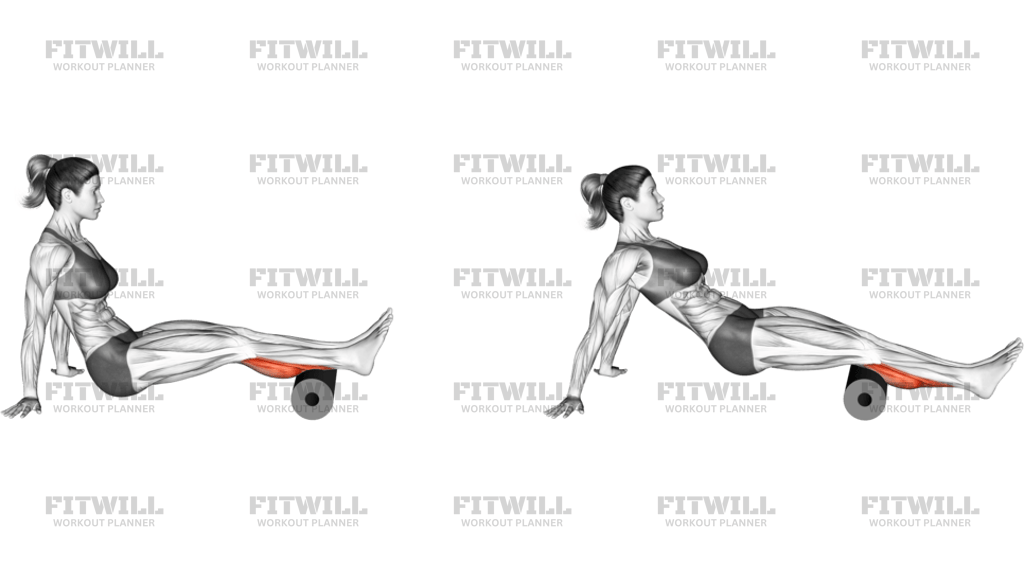
The Seated Single Leg Tibialis Press is a bodyweight movement that targets the tibialis anterior, the muscle running along the front of your shin. You perform it sitting on the floor with your legs extended in front of you, stacking one heel over the top of the opposite foot. The bottom foot then pulls its toes up toward the shin while the top foot presses down, creating self-generated resistance with no equipment at all.
This is one of the few accessible exercises for the front of the lower leg, an area most people never train directly. Runners, hikers, and court-sport athletes often develop shin soreness or fatigue in this region because the tibialis anterior works hard to control the foot during every stride and landing. Strengthening it through dorsiflexion can improve ankle control, support cleaner foot mechanics, and build tolerance in the shin for higher training volumes.
The setup matters more than it looks. Because you create the resistance yourself, the amount of downward pressure from the top foot determines how hard the bottom foot has to work. Sit tall with your hands planted behind your hips for support, keep the working leg straight and relaxed at the thigh, and let the ankle do the moving. If the top foot drifts or loses contact, the resistance disappears and the rep stops counting.
To execute the rep well, think of pulling your toes and the top of your foot back toward your knee as far as you can, holding the top position for a beat, then lowering under control as the top foot keeps a steady downward press. The range is small, but the muscle burn along the outside of the shin tells you it is working. Slow, deliberate reps beat fast, sloppy ones here.
Use this movement as a warm-up before lower-body training, as a standalone strengthening block after runs or walks, or as a low-load option during rehab-style training phases when heavier shin work is not appropriate. Because it requires no equipment and puts minimal load on the knee or hip, it fits easily into almost any routine, and you can train each side independently to address left-right differences in ankle strength.
[ Workout Log & Planner ]
Put your next workout in Fitwill
Keep your plan and training log ready when you are.


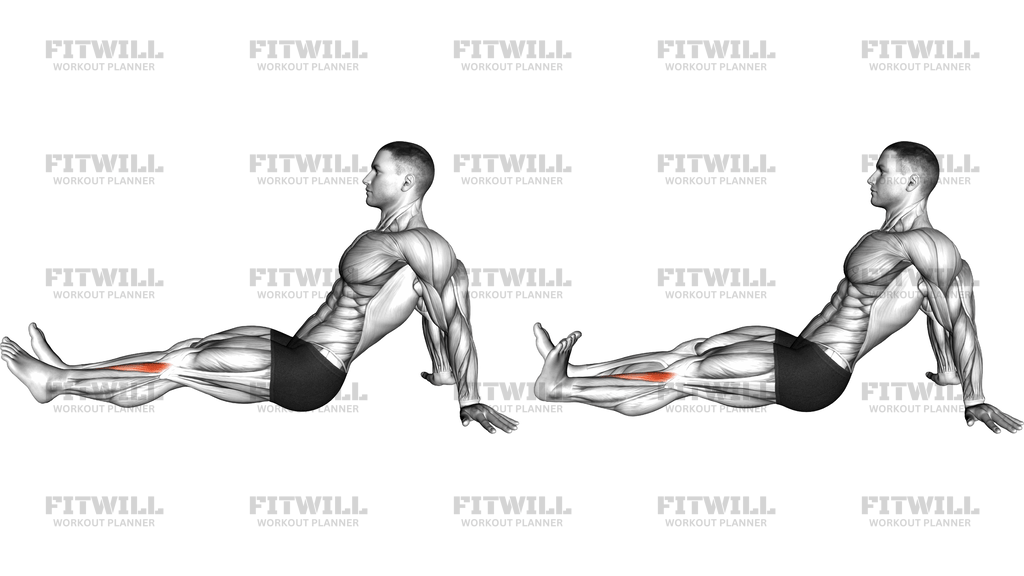
Instructions
- Sit on the floor with your legs extended straight in front of you and your palms flat on the floor behind your hips to support your torso.
- Cross your non-working leg over the top so its heel rests firmly on the lower shin or top of the foot of your working leg.
- Sit up tall, engage your core lightly, and keep the working knee straight but not locked.
- Press the top heel down to create steady resistance against the working foot.
- Pull the toes of your working foot up toward your shin as far as the top foot's pressure allows.
- Hold the raised position for one to two seconds, feeling the contraction along the front of your shin.
- Lower your toes back down slowly while keeping the top heel pressing down the entire time.
- Breathe steadily, exhaling as you lift the foot and inhaling as you lower it.
- Complete all reps on one side, then switch legs so the opposite foot works against the top heel.
- Reset your seated posture between sets so your hands and torso stay in a stable support position.
Tips & Tricks
- A common mistake is letting the top foot go slack mid-rep, which removes all resistance; keep constant downward pressure from the heel so every rep is earned.
- If you feel the work in your thigh instead of your shin, your hip is lifting the leg; relax the working leg and think only about the ankle moving.
- Do not rush the lowering phase. The tibialis anterior responds well to slow eccentrics, so take two to three seconds to lower the toes each rep.
- If sitting on the floor bothers your lower back or hips, prop yourself up on a low bench or place a folded mat under your hips so your torso stays tall.
- Keep the working knee pointing straight up at the ceiling; letting it roll inward or outward changes the ankle path and shifts stress away from the tibialis anterior.
- The range of motion is short by design. If you find yourself snapping the foot up and down quickly, slow down and exaggerate the pull of the toes toward the knee.
- If one shin is noticeably weaker, start your sessions with the weaker side and match the reps with the stronger side to balance them out over time.
- Mild burning along the front of the shin is expected; sharp pain, especially at the inner edge of the shinbone, is a signal to reduce pressure or stop.
Frequently Asked Questions
What muscles does the Seated Single Leg Tibialis Press work?
The primary muscle is the tibialis anterior on the front of the shin, which lifts the foot into dorsiflexion. Smaller muscles around the ankle joint assist with stabilizing the foot throughout the rep.
Why does the Seated Single Leg Tibialis Press use the top heel for resistance instead of a band or weight?
Pressing the top heel down lets you create exactly the resistance you need with no equipment, and you can adjust it instantly by pressing harder or lighter. It also makes the exercise easy to do anywhere, including at home or after a run.
Is the Seated Single Leg Tibialis Press good for beginners?
Yes, it is very beginner-friendly because the load is self-regulated and the setup is simple. Beginners should start with gentle pressure from the top heel and focus on feeling the front of the shin working.
How many reps should I do of the Seated Single Leg Tibialis Press?
Fifteen to twenty-five controlled reps per side works well, since the muscle is small and used to high volumes from daily walking. Two to three sets per leg is a solid starting dose.
Why do I feel the Seated Single Leg Tibialis Press higher up my leg than expected?
That usually means your hip flexors or quadriceps are lifting the whole leg instead of the ankle doing the work. Relax the thigh, keep the leg resting on the floor, and isolate the movement to the ankle.
Can the Seated Single Leg Tibialis Press help with shin discomfort from running?
Strengthening the tibialis anterior is a common strategy for building tolerance in the shin area, and this exercise is a low-load way to do it. If you have persistent or sharp shin pain, get it assessed before pushing through it.
What can I use instead of the Seated Single Leg Tibialis Press if I cannot sit on the floor?
You can perform the same toe raise against a partner's hand resistance or a band while seated in a chair with the leg extended. Seated or standing tibialis raises against a wall also train the same muscle.
Should I hold the top position during the Seated Single Leg Tibialis Press?
A one to two second hold at the top is worthwhile because the range of motion is short and the pause increases time under tension for the tibialis anterior. Keep the hold strong rather than letting the top heel's pressure fade.
How do I know if I am doing the Seated Single Leg Tibialis Press correctly?
You should feel a targeted contraction and mild burn along the outside front of your lower leg, with the top heel maintaining steady pressure the whole time. If nothing fatigues or the top foot slips off, adjust the pressure and slow the reps down.