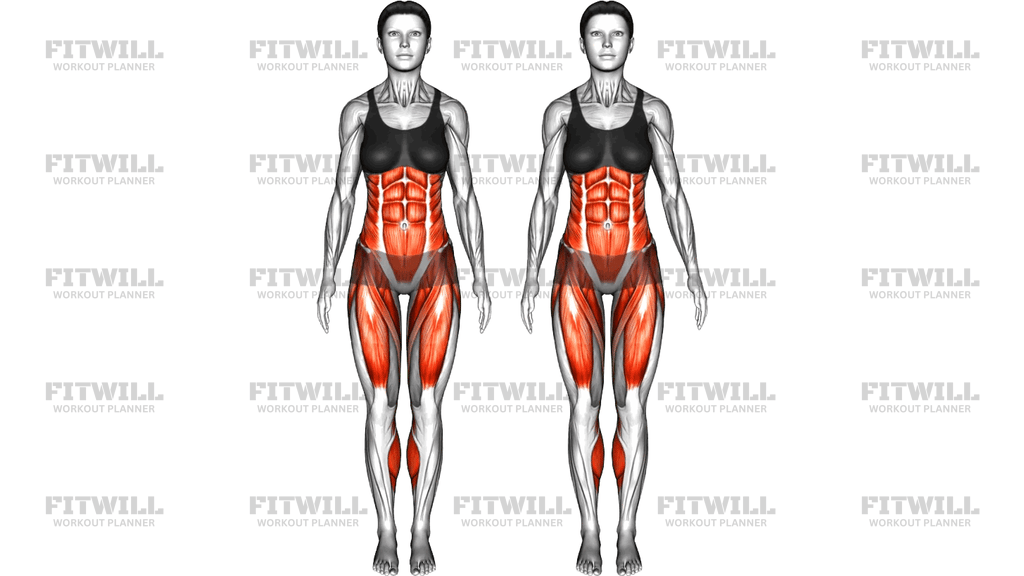
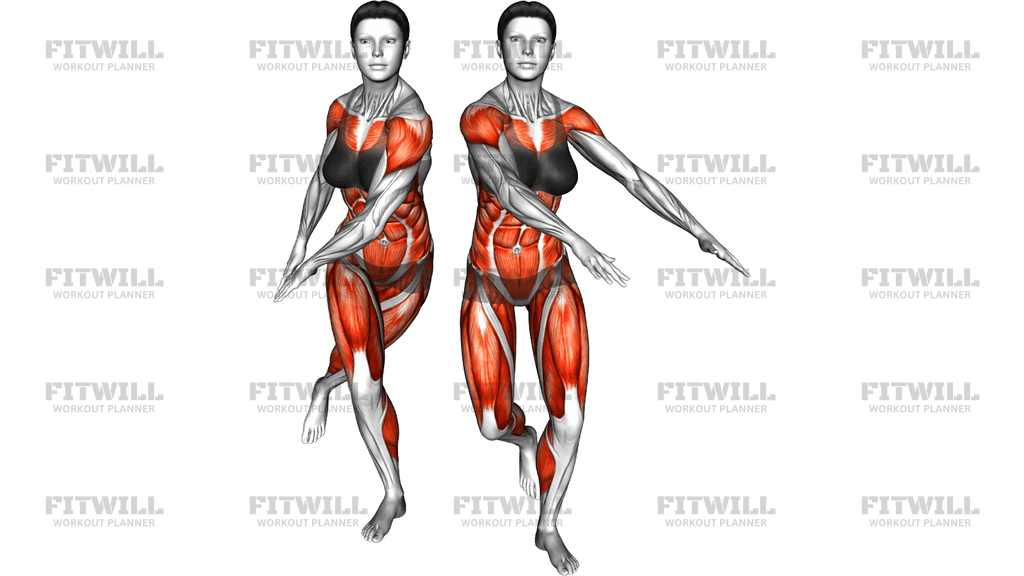
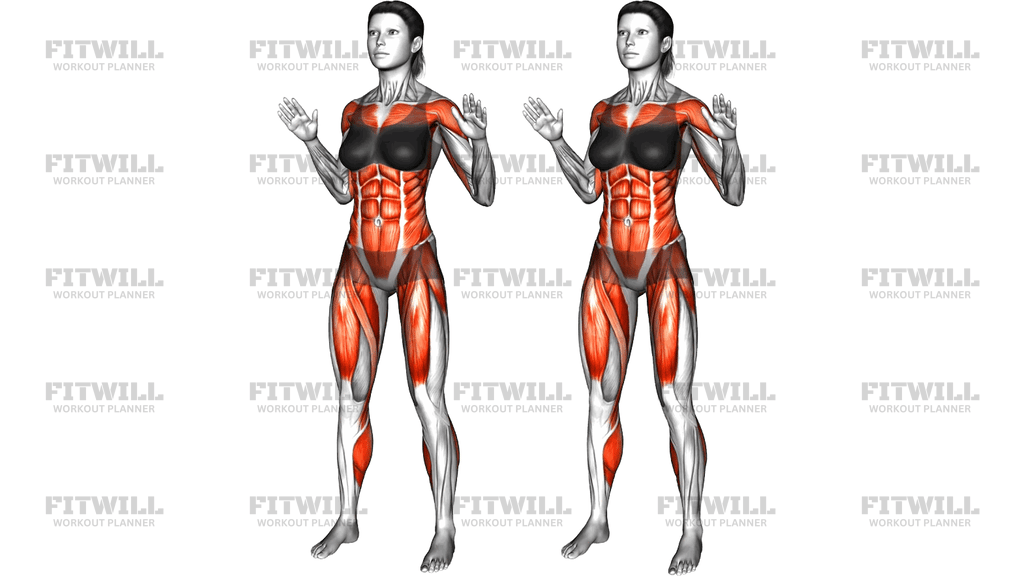
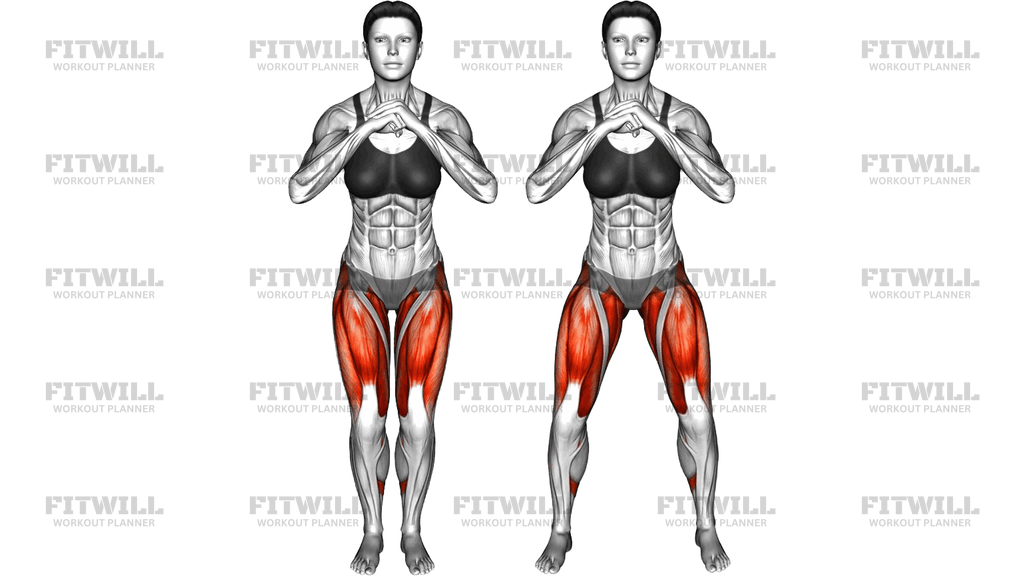
Seated Single Leg Knee Extension (Version 2)
The Seated Single Leg Knee Extension (Version 2) is a floor-based, bodyweight exercise that trains the quadriceps through full knee extension, one leg at a time. You sit on the floor with your hands planted behind you for support, both legs stretched out in front, and the heel of your working foot resting on a low block or step. From there, you straighten the knee completely, pressing the back of the knee down and pulling the kneecap up as the thigh tightens, then release in a controlled way. The highlighted working muscle is the rectus femoris, the long quad muscle that runs down the front of the thigh and crosses both the hip and the knee.
Because the seated position keeps the hip flexed and the leg horizontal, the rectus femoris is placed on stretch while it works. That makes this version particularly useful for people whose knees feel fine on machines but stiff when the hip and knee are extended together, such as runners, cyclists, and anyone returning from time off. Working one leg at a time also exposes left-to-right differences in extension strength and control, which is easy to hide when both legs push together on a leg press or leg extension machine.
The setup matters more than it looks. Sitting tall with the hands behind you lets you keep the spine neutral instead of slumping, and placing the heel on a low block gives the heel a stable reference so the focus stays on the knee rather than on balancing the leg in mid-air. If your low back rounds or your shoulders creep up toward your ears, the position is fighting you, so adjust your hand placement or use a slightly lower block before adding repetitions.
To execute the movement well, think of the knee as the only joint that moves. Straighten it fully until the thigh muscles visibly tighten and the heel presses firmly into the block, pause for a beat at complete extension, then bend the knee a controlled few degrees and repeat. Avoid kicking the leg straight with momentum, and avoid shrugging or pushing your hips around to help, since neither contributes anything to the quad contraction.
This exercise fits well as a warm-up before leg training, as a low-load strength builder during knee rehab, or as a finisher to ingrain full knee extension when heavier quad work has already been done. It requires only floor space and a small block or step, so it travels easily and can be done almost anywhere.
Keep the effort honest and pain-free. A firm quad contraction with full straightening is the goal; if you feel pinching, grinding, or sharp pain in the knee joint itself, reduce the range or pause the exercise and get the knee assessed before continuing.
[ Workout Log & Planner ]
Put your next workout in Fitwill
Keep your plan and training log ready when you are.


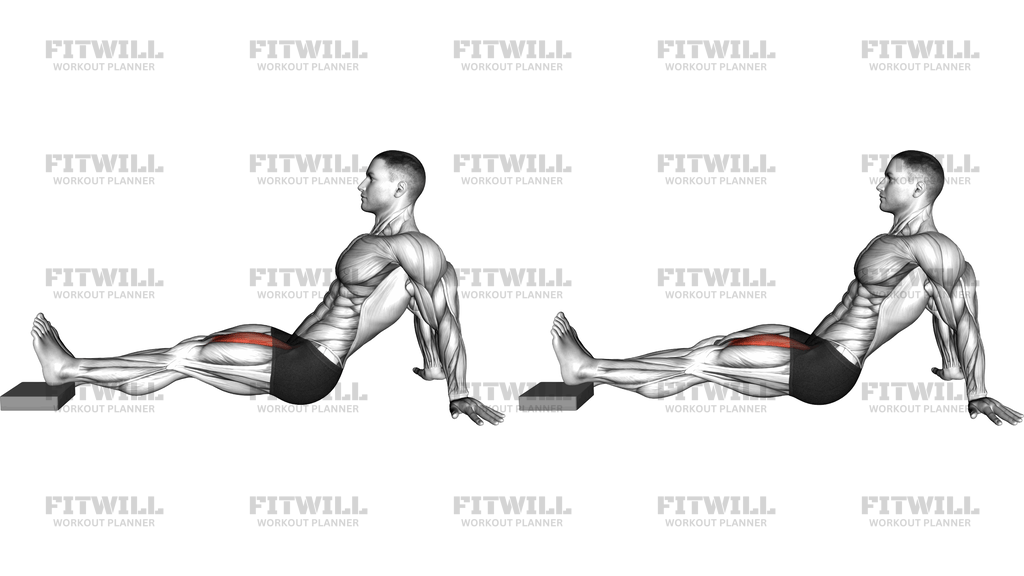
Instructions
- Sit on the floor with both legs extended straight in front of you and place the heel of your working foot on a low block or step so the foot is slightly elevated.
- Plant your palms on the floor just behind your hips, fingers pointing forward, and sit up tall through the crown of your head with your shoulders relaxed down.
- Brace your abdomen lightly and keep your torso still; your arms are there for support, not to do the work.
- Bend your working knee a few degrees so the kneecap settles and the leg is no longer fully locked out.
- Straighten the knee by squeezing the front of the thigh, pressing the back of the knee toward the floor and pulling the kneecap upward.
- Hold the fully extended position for one to two seconds, feeling the quad, especially the long muscle down the front of the thigh, stay tight.
- Bend the knee slowly back to the slightly bent starting point over two to three seconds, keeping the heel in contact with the block the whole time.
- Exhale as you extend the knee and inhale as you return to the start.
- Complete all repetitions on one leg, then switch the opposite heel onto the block and repeat, matching the rep count on both sides.
Tips & Tricks
- If the back of your knee feels pinched at the top, lower the block slightly or reduce how far you straighten; full extension should feel like a strong squeeze, not a pinch.
- A common mistake is lifting the heel off the block to make the leg feel straighter. Keep the heel planted so the knee does the extending, not the hip.
- Watch that your kneecap tracks straight up rather than pulling outward; if the thigh wants to rotate, turn the toes slightly toward the ceiling.
- Do not let your torso collapse backward as the leg works. If your arms tire before your quad, move your hands a little closer to your hips.
- The rectus femoris works hardest here because the hip is flexed while the knee extends, so a lazy, partial squeeze defeats the purpose of this version. Chase a visible tightening of the whole front thigh.
- Keep the non-working leg relaxed and straight rather than propping it up; tensing both legs hides differences between sides.
- Pause at full extension instead of pumping reps quickly. The held squeeze is where this exercise earns its place in a program.
- If your hamstrings feel like they are doing most of the pulling, you may be hiking the hip on the working side. Level your hips before each rep.
Frequently Asked Questions
Which muscles does the Seated Single Leg Knee Extension (Version 2) target?
It primarily targets the quadriceps, with particular emphasis on the rectus femoris because the hip stays flexed while the knee extends. Light involvement from hip stabilizers helps keep the leg aligned.
Why does this version place the heel on a low block?
The block gives the heel a stable resting point so you can focus purely on straightening the knee without balancing the leg. It also creates a clear target for pressing the knee toward full extension.
Is the Seated Single Leg Knee Extension (Version 2) suitable for beginners?
Yes. The load is your own leg weight and the movement is small and controlled, so most beginners can learn it quickly. Start with slow reps and a one-second hold at full extension.
What is the most common mistake in this exercise?
Swinging the leg straight with momentum or lifting the heel off the block to fake a bigger range. Both remove tension from the quad; keep the heel planted and move slowly.
How is this different from a leg extension machine?
There is no external load, so the resistance is limited to your own leg, but the seated angle with the heel supported puts a similar extension demand on the quad. It works well as a warm-up or low-load alternative when no machine is available.
How many sets and reps should I do?
Two to three sets of ten to fifteen controlled reps per leg is a sensible starting point. If your goal is endurance or rehab-style work, add a longer two to three second hold at the top instead of adding many extra reps.
Can I do the Seated Single Leg Knee Extension (Version 2) if my knee clicks?
Painless clicking is common and usually not a problem, but sharp pain, pinching at the back of the knee, or swelling afterward are signs to stop. Reduce the range first, and consult a professional if the symptoms persist.
What can I use if I do not have a block or step?
Any low, stable object of similar height works, such as a thick book, a folded mat, or a small plate. The heel just needs a firm surface a few centimeters off the floor.
Should my back stay upright the whole time?
Yes, sitting tall keeps the position honest and stops you from tilting your hips to help the leg. If sitting upright is hard on your low back, rest your hands a little further behind you or sit on a folded mat to raise your hips.