Incline Jack Plank
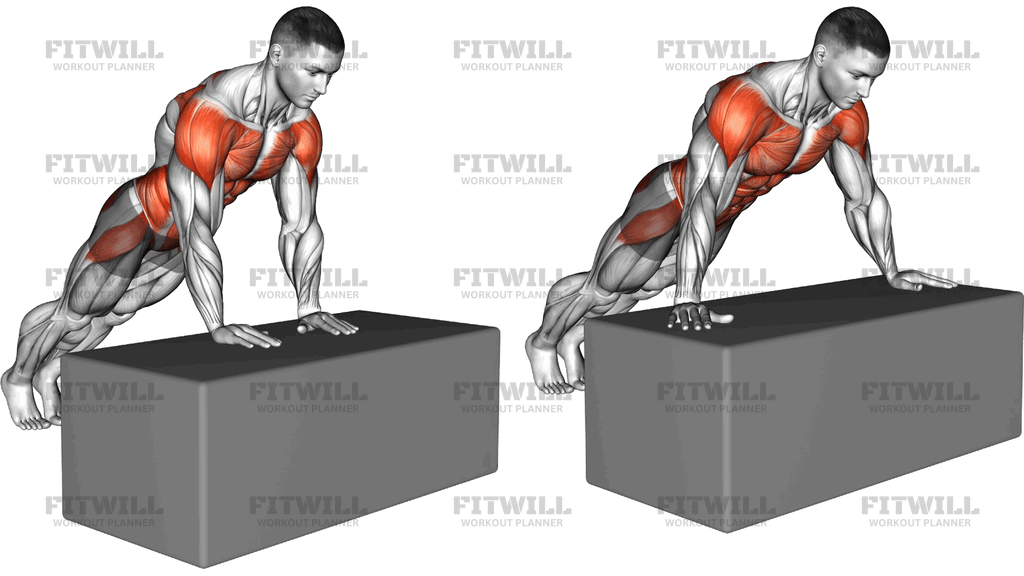
The Incline Jack Plank is a hybrid core conditioner that combines a high plank hold with a jumping jack pattern for the legs. Instead of setting your hands on the floor, you place them on an elevated surface such as a bench, box, or step, then repeatedly jump your feet out wide and back together while keeping your torso locked in a rigid plank line. The elevation is what makes this movement accessible: by raising the hands, you shift a meaningful portion of your body weight off the shoulders and trunk, so you can focus on the jumping leg action without your hips sagging or your low back taking the brunt of the load.
This exercise earns its place in a training program because it trains two qualities at once. First, the anti-extension demand: every time your feet land wide, your abs and deep core have to brace harder to stop your hips from dropping and your lumbar spine from arching. Second, the dynamic leg drive: the hip flexors and quads power the jump out and pull the feet back in, while the shoulders, chest, and triceps stay active stabilizing the upper body on the elevated surface. The result is a movement that raises your heart rate and builds trunk endurance at the same time.
The Incline Jack Plank is especially useful for intermediate lifters and general fitness trainees who find floor-level plank jacks too demanding on the shoulders or too hard to hold with clean form. It also works well as a conditioning station in a circuit, as a warm-up finisher, or as a regression ladder step — as you get stronger, you simply move your hands to a lower surface until you reach the floor. Because the pace can be quick or deliberate, it scales well for both fat-loss circuits and core-strength focus.
Setup matters more than speed here. Your hands should be roughly shoulder-width on a stable, non-slip surface with your wrists stacked under your shoulders, and your body should form a straight diagonal line from head to heels before the first jump. If the surface wobbles or your hands drift forward, the shoulders and wrists absorb stress they were never meant to handle. Keep the jumps modest and controlled rather than sprawling the legs as wide as possible — a crisp, repeatable hop with a quiet landing does far more for your core than a sloppy, wide slam.
A few practical safety points: choose a surface that cannot tip or slide, keep your neck neutral by looking at a spot just ahead of your hands, and stop the set as soon as your hips start to sag or your lower back starts to ache. The Incline Jack Plank rewards rhythm and tension, not exhaustion. Two to four sets of twenty to forty seconds, or a set number of reps like fifteen to twenty-five jumps, covers most training goals without pushing your form off a cliff.
[ Workout Log & Planner ]
Put your next workout in Fitwill
Keep your plan and training log ready when you are.


Instructions
- Place both hands on a stable bench, box, or step, slightly wider than shoulder-width, with your fingers pointing forward and your wrists roughly under your shoulders.
- Walk your feet back until your body forms a straight diagonal line from head to heels, arms fully extended, and your weight balanced between hands and toes.
- Brace your abs and squeeze your glutes so your pelvis tucks slightly under and your lower back stays flat.
- Keep a soft bend in your knees to prepare for the jump, and look at a spot on the floor just in front of the bench to keep your neck neutral.
- Hop both feet out to the sides at the same time, landing on the balls of your feet about shoulder-width to slightly wider apart.
- Pause for a beat in the wide position and confirm your hips have not dropped toward the floor.
- Jump your feet back together to the starting plank width, absorbing the landing softly through your ankles and knees.
- Exhale sharply on each jump out, inhale as your feet return, and keep the breathing rhythm steady.
- Continue at a controlled pace for your target reps or time, then step your feet in and rest before the next set.
Tips & Tricks
- If your hips drop every time your feet land wide, your jumps are too big — cut the width in half until you can hold the plank line throughout.
- Wrist discomfort usually means your hands have drifted forward of the bench edge; recenter your palms fully on the surface before each set.
- A common mistake is bouncing the hips up and down like a pike jack — imagine a glass of water balanced on your lower back that you cannot spill.
- Keep your shoulders packed down away from your ears; shrugging during the jumps fatigues the upper traps and wastes shoulder stability.
- Land on the balls of your feet with bent knees, not flat-footed, to keep the jumps quiet and protect your ankles.
- Slow the tempo down before you quit the set entirely — a two-second out, two-second back rhythm often lets you keep going with better form.
- If the bench slides on the floor, brace it against a wall or set it on a rubber mat before you start jumping.
- Progress by lowering the hand height over weeks, not by adding speed first; the floor version is the long-term target.
- Your elbows should stay straight but not locked hard — a soft lock keeps tension in the chest and shoulders instead of stressing the elbow joints.
Frequently Asked Questions
What muscles does the Incline Jack Plank work?
The abs and deep core do most of the stabilizing work, while the hip flexors and quads drive the jumping action. The shoulders, chest, and triceps hold your upper body steady on the elevated surface.
Why do the hands go on a bench instead of the floor?
Elevating the hands shifts body weight away from the shoulders and trunk, making the plank position easier to hold while you jump the legs. It is the main regression that lets you learn the pattern cleanly before trying floor-level plank jacks.
Is the Incline Jack Plank suitable for beginners?
Yes, if the surface is high enough. Start with a taller box or a railing-height surface, keep the jumps narrow, and only progress to lower surfaces once you can hold a straight plank line for the whole set.
How wide should my feet jump out?
About shoulder-width to slightly wider is plenty. Jumping as wide as possible makes it much harder to stop your hips from sagging and usually degrades the plank position.
Should my lower back feel this exercise?
You should feel it in your abs, not as an aching in your lower back. If your lumbar area strains, your hips are dropping when the feet land wide — tuck your pelvis, squeeze your glutes, and reduce the jump width.
How many reps and sets should I do?
Two to four sets of fifteen to twenty-five jumps, or twenty to forty seconds of continuous work, works for most goals. Rest forty-five to ninety seconds between sets, or pair it with an upper-body station in a circuit.
Can I do the Incline Jack Plank without a bench?
Any stable, non-slip elevated surface works, such as a sturdy step, low box, or smith machine bar set at hip height. Avoid anything that can tip or slide when you push into it.
Is this a cardio or a strength exercise?
It sits between the two — the plank hold builds core strength endurance while the repeated jumps elevate your heart rate. Slower tempo skews it toward strength, faster continuous sets skew it toward conditioning.
What should I do if my wrists hurt during the exercise?
Make sure your palms are flat on the surface with fingers spread and wrists stacked directly under your shoulders. If discomfort persists, use a surface with a slight forward angle or hold onto dumbbells set on the bench to keep your wrists neutral.