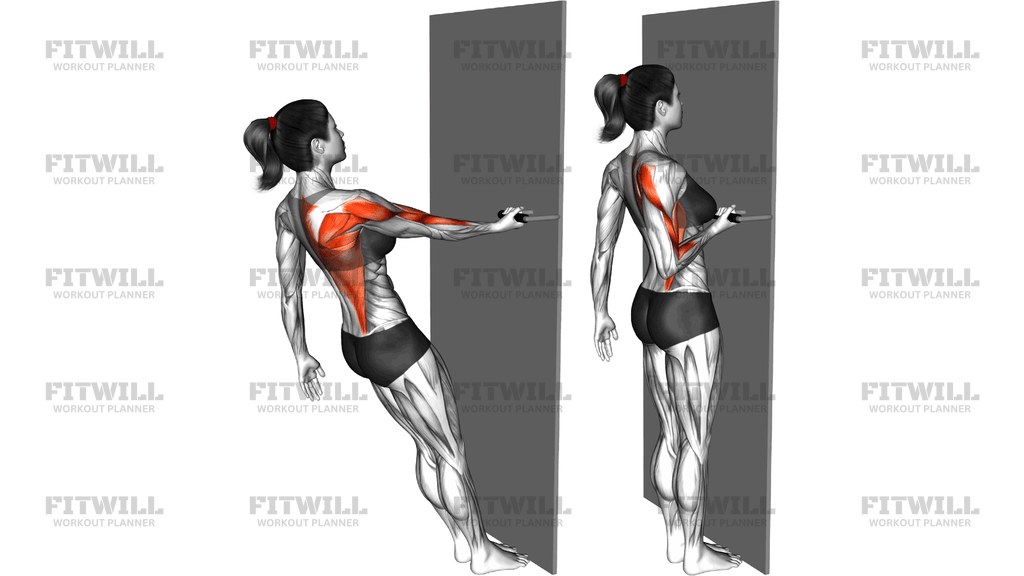
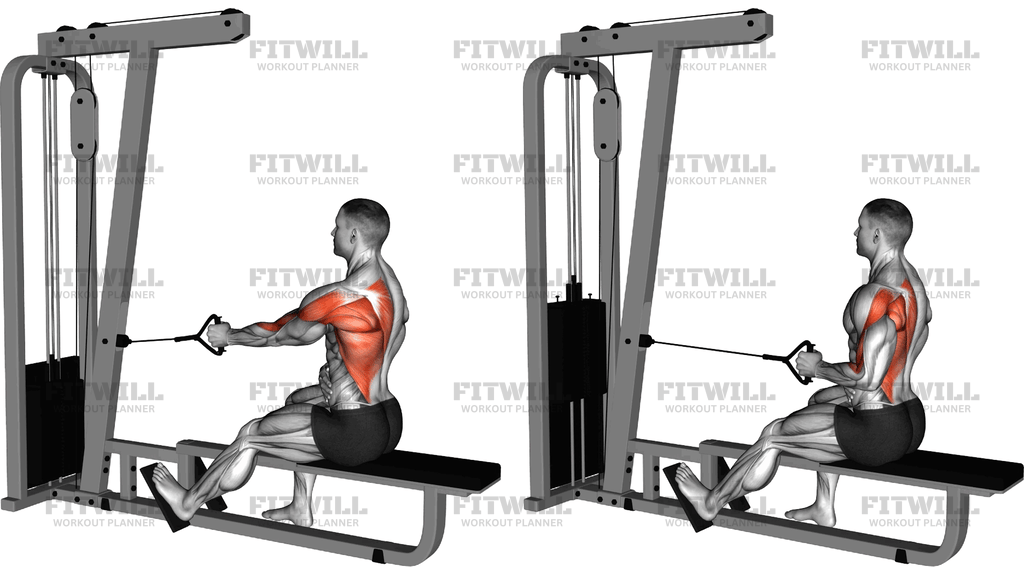
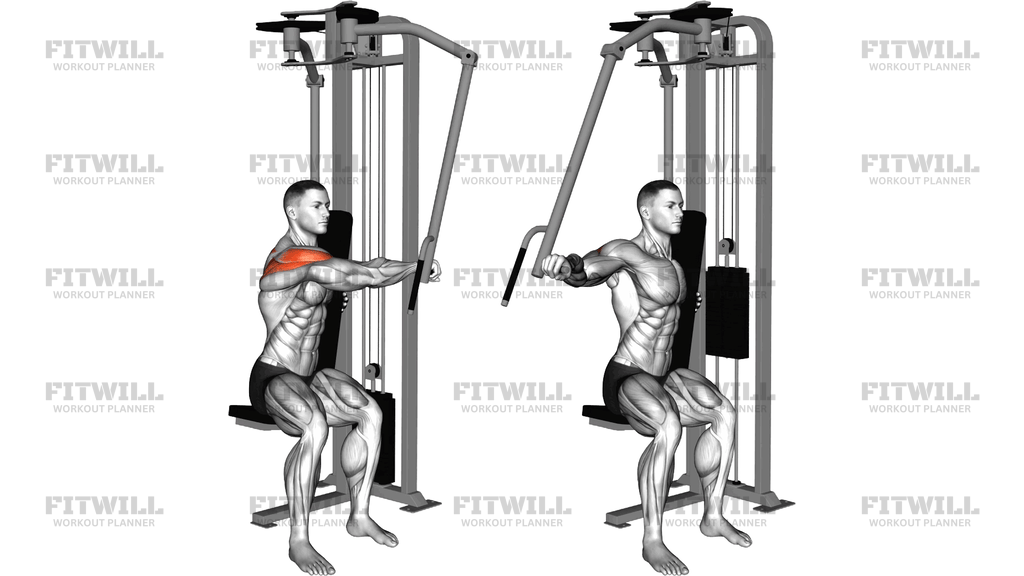
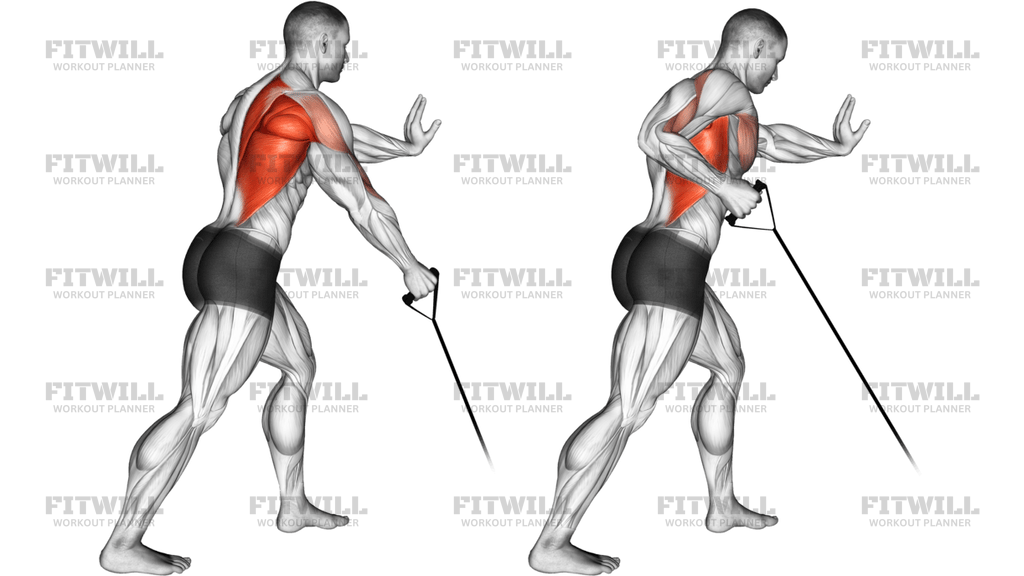
Cable One Arm Neutral Grip Lat Pulldown
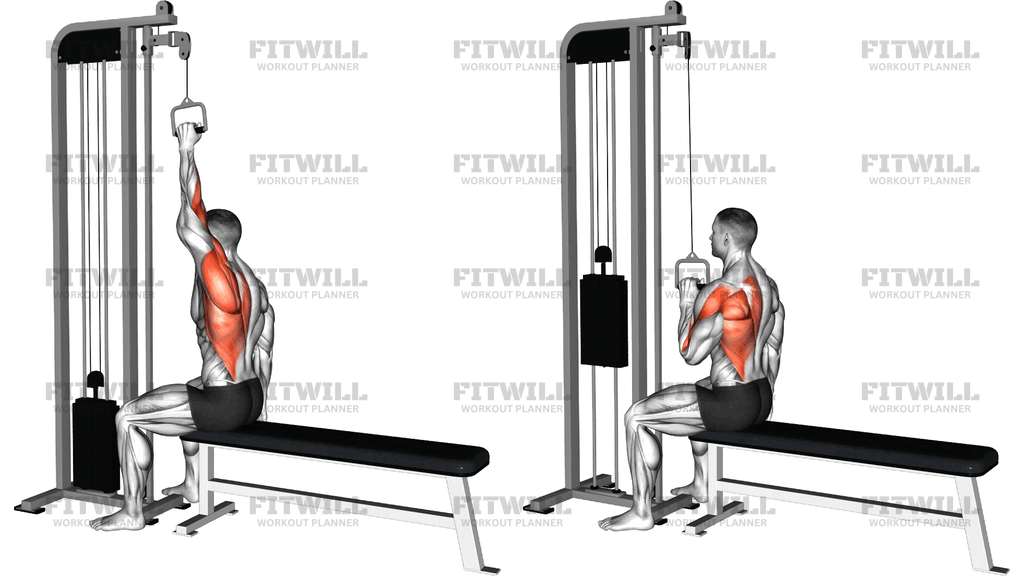
The Cable One Arm Neutral Grip Lat Pulldown is a unilateral cable exercise that trains the lat on one side of your body at a time. You sit on a bench positioned sideways to a high cable pulley, hold a single handle with your palm facing inward, and pull your elbow down and back until your hand is roughly at shoulder height. The neutral grip, where the palm faces your body rather than forward, tends to feel more natural at the shoulder and lets the elbow travel close to your side, which many lifters find easier on the shoulder joint than a wide pronated bar.
The main target is the latissimus dorsi of the working arm, with strong support from the teres major, lower and middle traps, and rhomboids as the shoulder blade pulls down and in. The biceps and forearm flexors assist through the elbow bend, and your grip works the whole time to control the handle. Because you train one side at a time, each lat gets its own uninterrupted set, which helps expose and correct left-to-right strength differences that often hide behind two-handed pulldowns.
Setup matters more here than in a machine pulldown. Sit on a flat bench placed perpendicular to the cable tower, far enough away that the cable pulls upward in a clean vertical line when your arm is overhead, but close enough that the stack stays loaded. Keep your torso upright with only a slight backward lean, and let the cable pull directly out in front of your shoulder rather than dragging you sideways toward the machine. If you are leaning hard toward the stack or twisting your spine, the weight is too heavy or the bench is misplaced.
Execution is simple but easy to rush. Start with the working arm fully extended overhead and take a moment to feel the lat stretch. Initiate the pull by driving the elbow down toward your hip, keeping the palm facing inward the entire way. Let the hand simply follow the elbow rather than leading with it, and pause briefly near the bottom where the lat is fully shortened. Control the return all the way back up until the arm is extended again, resisting the stack's pull instead of letting it snap your arm up.
This exercise fits well as a secondary back movement after rows or heavier two-arm pulldowns, or as a focused finishing set to chase the mind-muscle connection in a stubborn lat. It is also a practical choice for lifters rehabbing around shoulder discomfort, since the neutral grip and single-arm path allow you to adjust the elbow position to a range that feels comfortable. Keep the load moderate; the unilateral cable setup rewards controlled reps and punishes swinging, twisting, or shrugging under heavy weight.
[ Workout Log & Planner ]
Put your next workout in Fitwill
Keep your plan and training log ready when you are.


Instructions
- Position a flat bench sideways in front of a cable machine with a high pulley, and clip a single handle to the pulley.
- Sit facing the tower at an angle with your feet flat on the floor, far enough back that the cable pulls straight up when your working arm is extended overhead.
- Grip the handle with one hand in a neutral position, palm facing your body, and extend that arm fully overhead with a slight lean back of your torso.
- Brace your core and set your shoulder blade down before starting, so you are not starting each rep from a shrugged position.
- Pull the handle down by driving your elbow toward your hip and your hand toward shoulder height, keeping the palm facing inward throughout.
- At the bottom, your upper arm should be close to your side and your elbow bent, with the handle near or just below shoulder level; squeeze the lat briefly.
- Reverse the motion under control, letting the arm rise all the way back to full extension without letting the stack yank your shoulder upward.
- Exhale as you pull down and inhale as you return the handle overhead.
- Complete all reps on one arm, then switch the handle or move to the other side of the bench and repeat with the other arm.
- Reset your posture between heavy sets rather than carrying torso twist or lean from rep to rep.
Tips & Tricks
- The most common mistake is turning this into a side bend or torso twist toward the machine. Anchor your sit bones to the bench and keep your chest facing forward so the lat, not momentum, moves the handle.
- Do not start each rep from a shrugged shoulder. If the stack is lifting your shoulder blade up at the top, drop the weight and own the stretch position.
- Think elbow to hip, not hand to chest. Pulling the hand toward your chin turns the movement into a biceps curl, while driving the elbow down keeps the lat doing the work.
- Keep the wrist fairly straight under the handle. A bent-back wrist changes the pull angle and usually means the load is too heavy for the grip.
- Stop the return just short of letting the stack plates slam together. The tension you keep at the top is where the stretched lat gets most of its stimulus.
- Choose a weight you can control for a slow two-second lower. The eccentric on a single-arm cable pull gets away from people fast because only one arm is resisting.
- Check your distance from the tower. If the cable rubs against the machine or pulls you forward, slide the bench until the cable runs vertical over your working shoulder.
- Match reps and load exactly between sides, starting with your weaker arm so the strong side does not set an unfair pace.
Frequently Asked Questions
Which muscles does the Cable One Arm Neutral Grip Lat Pulldown work?
The latissimus dorsi of the working arm is the primary muscle, supported by the teres major, middle and lower traps, and rhomboids. The biceps and forearm flexors assist as the elbow bends, and your grip stays active to hold the handle.
Why use a neutral grip instead of a regular pulldown bar?
With the palm facing inward, the shoulder sits in a more neutral rotation and the elbow can travel close to your ribs, which many lifters find smoother and more comfortable than a wide pronated grip. It also allows a natural single-arm path that a fixed bar does not permit.
Is the Cable One Arm Neutral Grip Lat Pulldown suitable for beginners?
Yes, provided you start light. The single-arm setup makes torso twisting and shrugging easy, so beginners should master a still torso and a full overhead stretch with a modest load before adding weight.
How should I position the bench relative to the cable machine?
Set the bench sideways so you face the tower at roughly a right angle, and adjust the distance until the cable runs straight up from your hand with your arm extended overhead. Too close and the stack loses tension at the top; too far and the cable drags you toward the machine.
How far should I pull the handle down?
Pull until your elbow is near your side and the handle is around shoulder height, then squeeze the lat briefly. There is no benefit to yanking the handle toward your chest if it causes your torso to twist or your shoulder to roll forward.
Why do I feel this more in my biceps than my lats?
That usually means your hand is leading the pull. Concentrate on driving the elbow down and back toward your hip, keep the wrist neutral, and use a lighter weight so the arm muscles do not have to dominate the movement.
Can I substitute another exercise if my gym has no single handle?
A single-arm dumbbell row or a one-arm cable pulldown using a different handle attachment trains the same pattern. The key elements are the unilateral arm action and letting the elbow travel down close to your side.
Should I do both arms in the same set or alternate reps?
Finish all repetitions on one arm, then switch and match the number with the other arm. Alternating mid-set makes it easy to let the stronger side dictate the pace and depth of every rep.
Is it safe for my shoulders?
The neutral grip and adjustable cable path are generally shoulder-friendly because you can set the pull angle where the joint moves smoothly. Keep the load controlled, avoid shrugging at the top, and stop any rep that produces sharp pain rather than muscular effort.