Pilates Machine Lying Knee Extension On Toes
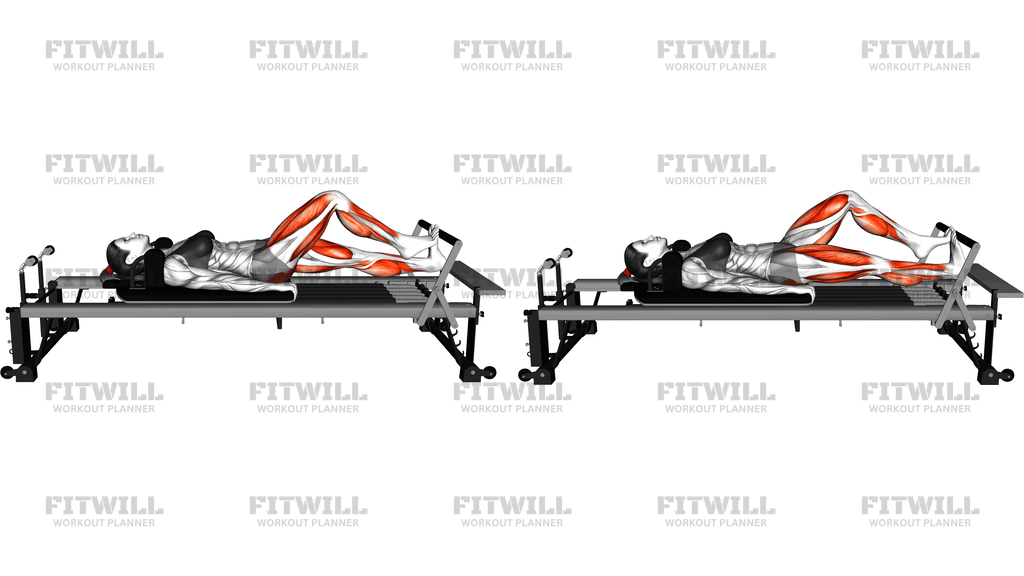
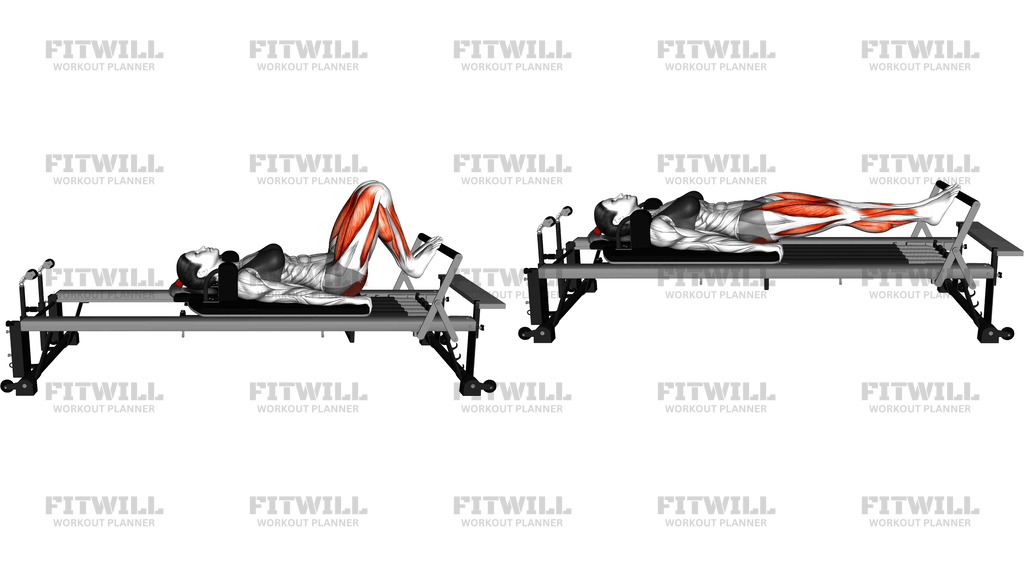
Pilates Machine Lying Knee Extension On Toes is a reformer exercise performed lying supine on the carriage with the balls of the feet placed on the footbar and the knees drawn in toward the chest. From that deeply folded starting shape, you press the carriage away by straightening the knees until the legs are long and the body forms one extended line, then bend the knees again to glide the carriage back in. Unlike a classic reformer leg press, the starting position tucks the knees very close to the torso, which puts the hips into deep flexion and challenges the thighs and core through a long range of motion.
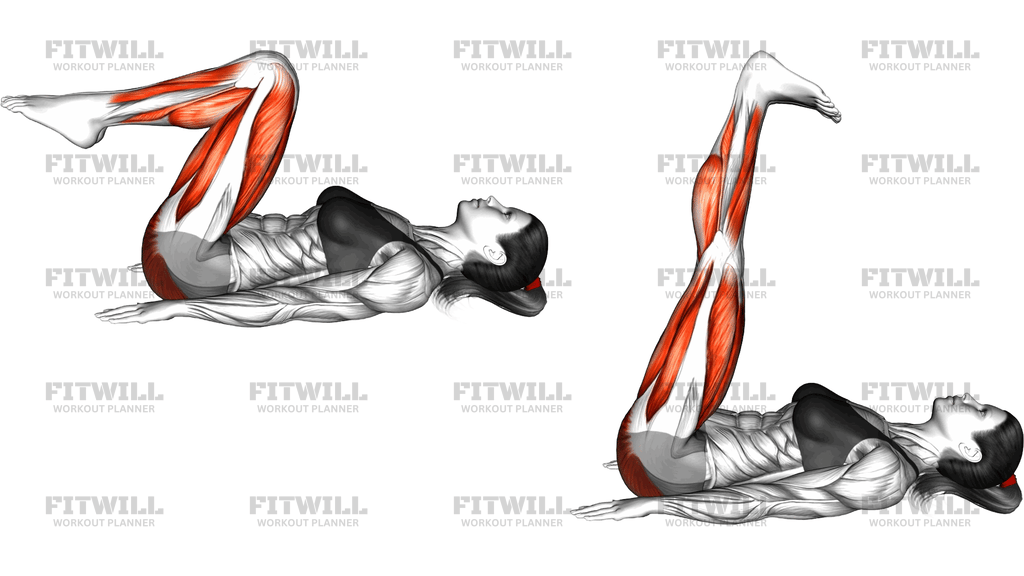
The main work comes from the quadriceps extending the knees, with the glutes and hamstrings helping to control the hips as the carriage moves, and the calves stabilizing the ankles on the bar. Because the feet stay planted on the toes and the spine rests on the moving carriage, the deep core stays quietly engaged the whole time to keep the pelvis and low back from tipping. The highlighted musculature in the movement sits squarely across the front of the thighs and around the hip, which is exactly where you should feel it.
This is a useful exercise for anyone rebuilding knee extension strength in a supported, low-load environment, as well as for Pilates students working on carriage control and hip organization. The springs do much of the bodyweight work, so the resistance can be tuned precisely, making the movement approachable for beginners while still demanding for experienced practitioners who use lighter springs and slower tempo. Dancers and people who spend long hours sitting often appreciate how the deep knee tuck takes the hip and knee through a range that everyday life rarely touches.
Setup matters more than it looks. Head resting on the headrest, arms relaxed alongside the body on the carriage, and the balls of the feet evenly placed on the footbar determine whether the press travels straight or drifts. If the pelvis tucks or the low back peels off the carriage as the knees come in, the range is too deep for the current hip mobility, and the footbar height or spring load should be adjusted before adding repetitions.
To execute well, move the carriage with the legs rather than letting momentum fling it. Press out to a long, almost straight knee without snapping the joint into a lock, and return slowly enough that you could stop at any point in the path. Keep the heels lifted and quiet on the bar, ribs soft, and breathing steady: exhale as the legs extend, inhale as the knees bend back in. Work in the 8 to 12 repetition range per set, and treat smooth carriage glides as the marker of quality rather than heavy springs.
[ Workout Log & Planner ]
Put your next workout in Fitwill
Keep your plan and training log ready when you are.


Instructions
- Lie back on the Pilates reformer carriage with your head supported on the headrest, arms resting alongside your torso, palms down on the carriage.
- Place the balls of your feet on the footbar about hip-width apart, heels lifted, and bend your knees fully so they come in toward your chest.
- Settle your pelvis into a neutral position with the low back in gentle contact with the carriage, and lightly engage the deep core to hold it there.
- Exhale and press the carriage away by extending the knees, letting the legs lengthen until they are nearly straight.
- At the end of the press, keep the toes connected to the footbar, knees soft rather than jammed into a hard lock, and the torso still on the carriage.
- Inhale and bend the knees with control, letting the carriage glide back until the knees return to the deeply bent starting position near the chest.
- Keep the feet quiet on the bar throughout so the carriage path stays straight and even on both rails.
- Breathe in a steady rhythm: exhale on the press out, inhale on the return, without holding your breath at any point in the movement.
- Complete your repetitions, then bend the knees fully and let the carriage come to rest before stepping one foot at a time off the footbar.
Tips & Tricks
- If your low back rounds off the carriage when the knees come in toward the chest, reduce the depth of the tuck slightly rather than forcing the fold; hip flexibility, not effort, is usually the limit.
- A common mistake is snapping the knees straight at the end of the press. Stop just short of a full lock and think of lengthening the leg instead of shoving it open.
- Watch that both legs extend evenly. One side pushing harder tilts the pelvis on the carriage and pulls the carriage off a straight glide.
- Keep the heels lifted and still. Dropping the heels toward the bar changes the exercise toward a calf and hip press and shifts work away from the knee extension this drill targets.
- Lighter springs make this harder to control on the return, not easier. If the carriage slams home as the knees bend, slow the inward phase or add spring tension.
- Do not let the ribs flare or the chin lift as you press. The torso should stay relaxed and heavy on the carriage while only the legs move.
- If your toes grip or curl on the footbar, relax the feet; the balls of the feet should rest on the bar so the ankles can stay mobile and quiet.
- Start with a moderate spring setting for your first few sessions. The deep knee tuck position can feel unfamiliar, and it is easier to learn the path with more assistance.
Frequently Asked Questions
Which muscles does Pilates Machine Lying Knee Extension On Toes work?
The quadriceps on the front of the thighs do the primary work of straightening the knees. The glutes, hamstrings, and calves assist and stabilize, while the deep core holds the pelvis steady on the moving carriage.
How is this different from a regular reformer leg press?
In Pilates Machine Lying Knee Extension On Toes the knees start deeply bent near the chest, so the legs travel through a much longer range. The feet also stay on the toes on the footbar rather than the whole foot, and the emphasis stays on knee extension rather than a full-body press.
Is this exercise suitable for beginners?
Yes, as long as the spring load is set moderately and the range of motion respects the person's hip and knee mobility. Beginners should prioritize a smooth carriage glide and a still pelvis over pressing hard.
Why do my hips lift or my lower back round when the knees come in?
That usually means the deep knee tuck exceeds your current hip flexion range, so the pelvis starts to tilt to find more room. Reduce the tuck slightly, check the footbar height, and keep the low back in contact with the carriage throughout.
Should my heels be up or down on the footbar?
Heels stay lifted with the balls of the feet on the bar, as the name On Toes indicates. Lowering the heels turns it into a different foot and hip position and shifts work away from the knee extension focus.
What spring setting should I use?
Start with a moderate setting that lets you control the carriage on the way back in, not just push it out. If the carriage slams home as your knees bend, add a spring or slow the return.
How many repetitions should I do?
Eight to twelve controlled repetitions per set works well for most people. Because the springs provide assistance, quality of the glide matters more than pushing a heavy load.
Can I substitute this if I don't have access to a reformer?
A guided leg press machine or lying knee extension on a lever machine covers the knee extension pattern, though neither offers the carriage glide or the deep knee tuck. Band-resisted knee extensions on a mat are a rougher home option.
Is it safe to straighten the knees fully at the end of the press?
Extending to a long leg is fine, but avoid snapping the knee into a hard lock, especially with heavier springs. Finish the press with a soft knee and think of reaching the leg long instead of jamming it straight.