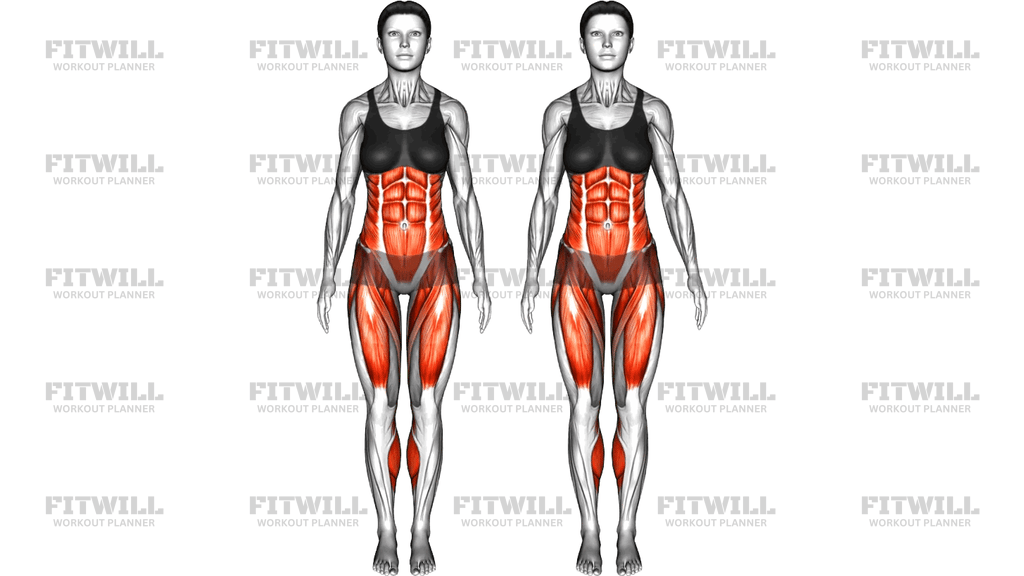
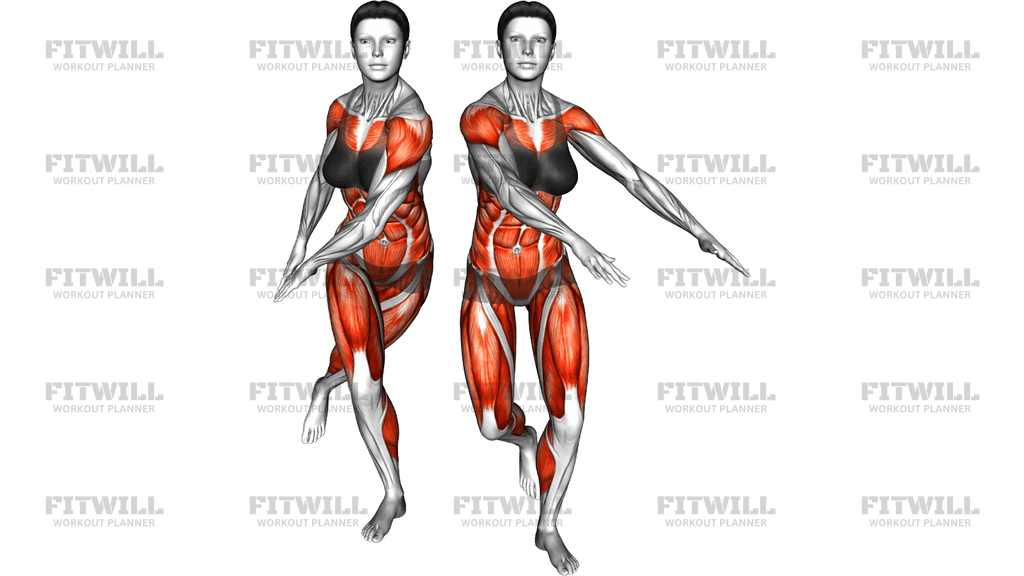
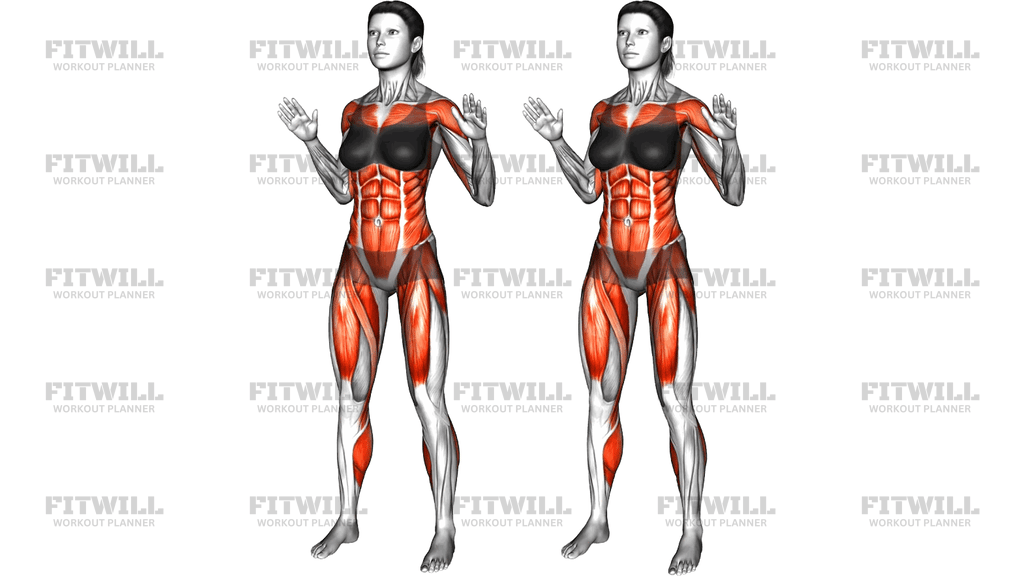
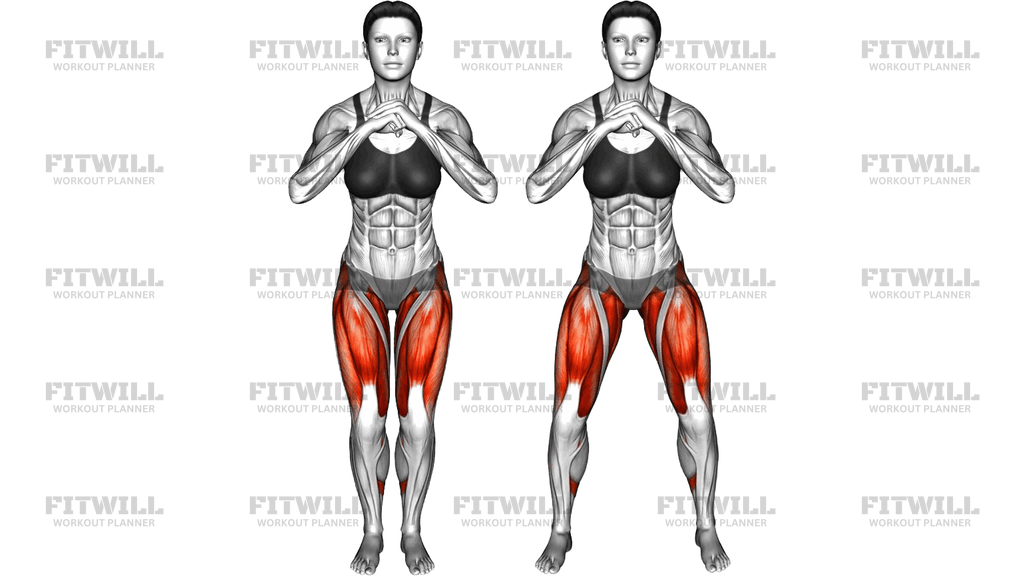
Lying Legs Extension Toes Flexion
Lying Legs Extension Toes Flexion is a bodyweight floor exercise that combines a knee extension with active foot work. You lie on your back with your knees drawn in over your hips, then straighten your legs upward toward the ceiling while holding your toes pulled back toward your shins. It looks simple, but the combination of extending the knees against gravity and controlling the ankle makes it a sharp drill for the front of the thighs, the hip flexors, and the muscles along the shin.
The main work comes from the quadriceps as they straighten the knees, with the hip flexors holding the thighs vertical once the legs leave the tucked position. The lower abs work isometrically to keep your pelvis and lower back settled against the floor. Pulling the toes back into flexion engages the tibialis anterior at the front of the shin, an area most people never train directly, which is why the ankle position in the name is not just decoration.
This movement suits beginners building baseline leg and core control, people rehabbing or prehabbing around the knee with a low-load extension drill, and anyone whose ankles and shins get neglected by typical lower body work. It also fits well into Pilates-style routines and warm-ups before squats or lunges, because it wakes up the knee-extensor and hip-flexor pattern without any equipment.
Setup matters more than it seems. Because you are lying supine with your legs moving overhead and back down, your lower back is the anchor point for everything. If your pelvis tilts and your lumbar spine lifts off the floor, the drill stops training the legs and starts straining the spine. Keep the starting tuck of the knees directly over your hips, press the arms and palms into the floor for support, and let the legs travel within a range where your tailbone stays heavy.
To execute it well, extend the legs smoothly toward the ceiling rather than kicking them up, pause at the top with the knees fully but not forcefully straight and the toes actively flexed, then bend the knees back to the starting tuck with the same control. Two or three sets of ten to fifteen slow repetitions is plenty for most people. The tempo should feel almost slow-motion; if you cannot stop the movement at any point, you are using momentum.
The main safety point is the lower back. If you feel your lumbar region arching or lifting as the legs extend, shorten the range or keep one knee tucked while the other leg works. Stop if you feel pinching at the front of the hip or the knee, and remember that the emphasis is on controlled extension and ankle flexion, not on how high or fast the legs move.
[ Workout Log & Planner ]
Put your next workout in Fitwill
Keep your plan and training log ready when you are.


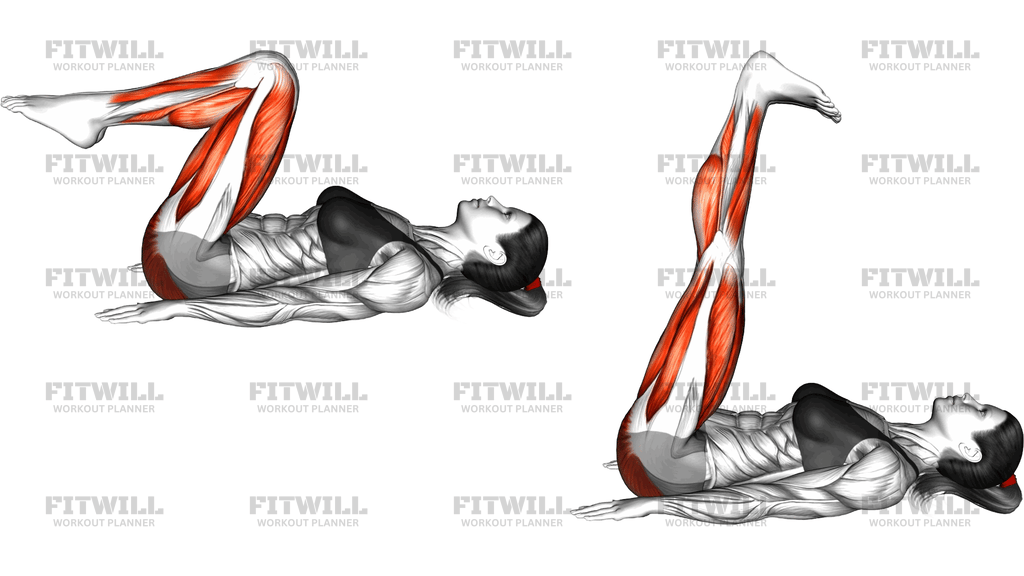
Instructions
- Lie on your back on a mat or firm floor with your arms alongside your body and your palms pressed down against the floor for support.
- Draw both knees in over your hips so your thighs are roughly vertical and your shins hang relaxed, feet off the floor.
- Brace your abdominals gently and press your lower back into the floor so your pelvis stays level before the legs move.
- Flex your toes back toward your shins and hold that ankle position throughout the set.
- Slowly straighten both knees, extending your legs upward toward the ceiling until they are nearly vertical and the knees are fully but comfortably straight.
- Pause for one or two seconds at the top with the legs extended and the toes actively pulled back.
- Bend your knees and lower your shins back down until they return to the starting tuck over your hips, keeping the descent controlled rather than letting the legs drop.
- Exhale as you extend the legs upward and inhale as you return to the tucked position.
- Complete your repetitions, then rest by lowering both feet to the floor and letting the hips and shins settle before the next set.
Tips & Tricks
- If your heels drift past your head as you extend, you are rotating the pelvis; keep the tailbone heavy so the legs travel straight up instead of rolling the hips.
- Do not let the toes slacken at the top. The ankle flexion is half the exercise, and losing it turns the drill into a plain leg extension.
- Avoid snapping the knees straight at the end of the extension. Straighten them all the way, but let the quadriceps do the last portion of the range rather than momentum.
- If your lower back lifts as the legs rise, bend the knees slightly at the top or work one leg at a time with the other foot resting on the floor.
- Keep your neck relaxed and your gaze straight up. Craning the chin to watch your feet is a common habit in this supine position and adds neck tension for no benefit.
- Moving too fast is the most frequent error here. Count two seconds up, pause, two seconds down, and stop the set when you can no longer hold that tempo.
- Press your palms firmly into the floor for the whole set. This widens your base and makes it much easier to keep the pelvis neutral.
- If the front of your hip pinches when the thighs go vertical, lower the starting tuck slightly so the knees sit a little closer to your chest before each extension.
Frequently Asked Questions
Which muscles does Lying Legs Extension Toes Flexion work?
The quadriceps extend the knees, the hip flexors hold the thighs vertical, and the lower abs stabilize the pelvis. Pulling the toes back also works the tibialis anterior along the front of the shin.
Why are the toes flexed during Lying Legs Extension Toes Flexion instead of pointed?
Flexing the toes back toward the shins keeps the tibialis anterior active through the whole movement and trains an ankle position most lower body exercises ignore. Pointed toes would shift the emphasis away from the shin and make it easier to swing the legs with momentum.
Is Lying Legs Extension Toes Flexion suitable for beginners?
Yes, it is a low-load bodyweight drill, which makes it a good starting point. Beginners should use a shorter range and fewer repetitions until they can keep the lower back pressed to the floor for the entire set.
How many repetitions of Lying Legs Extension Toes Flexion should I do?
Two to three sets of ten to fifteen slow repetitions works well for most people. Because the value comes from control, stop the set when the tempo or the ankle flexion breaks down.
My lower back arches when my legs extend. How do I fix it?
Slow the tempo, do not extend the knees all the way at the top, or work one leg at a time with the other foot on the floor. The pelvis should stay level and the lumbar spine should remain in contact with the mat throughout.
What can I use instead of Lying Legs Extension Toes Flexion?
Lying leg raises or supine knee tucks train a similar hip flexor and lower ab pattern, while seated or lying ankle dorsiflexion drills cover the shin work. Combining those two approximates the full movement if the coordination feels awkward at first.
Can Lying Legs Extension Toes Flexion help with knee rehab?
The controlled, load-free knee extension can be a gentle way to work the quadriceps through a full range. If you are recovering from a knee injury, clear the movement with your physical therapist or doctor before adding it to your routine.
Should my legs end up perfectly vertical at the top of Lying Legs Extension Toes Flexion?
Nearly vertical is the target, but a slight bend in the knees is fine if full straightening costs you pelvic control. Aim for the highest position where your tailbone stays heavy and your toes stay flexed.
Why do I feel this in my shins during Lying Legs Extension Toes Flexion?
That is the tibialis anterior working to hold the toes flexed, which is an intended part of the exercise. A mild working fatigue is normal; sharp or lingering pain along the shin is a signal to ease off and shorten the sets.