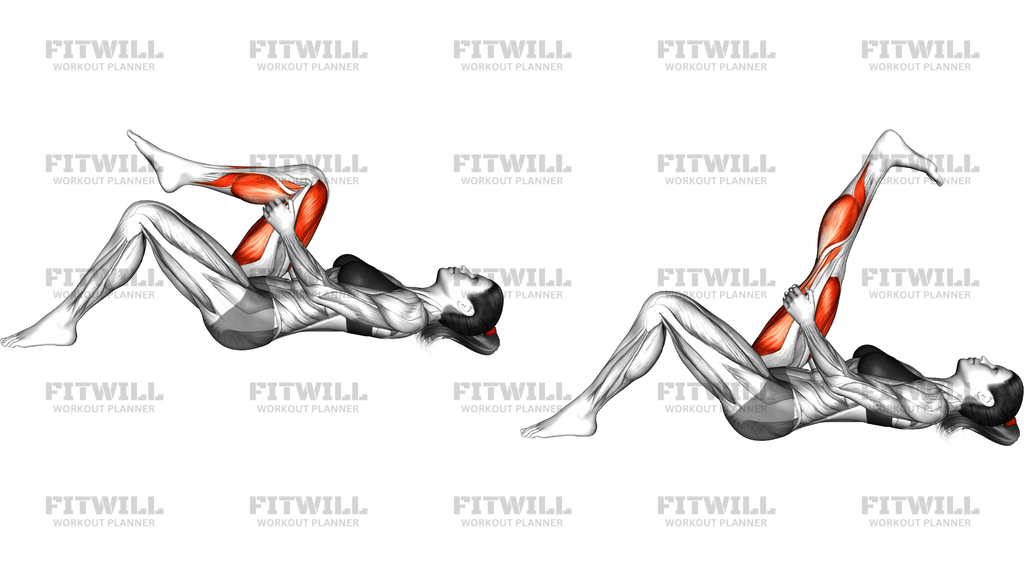
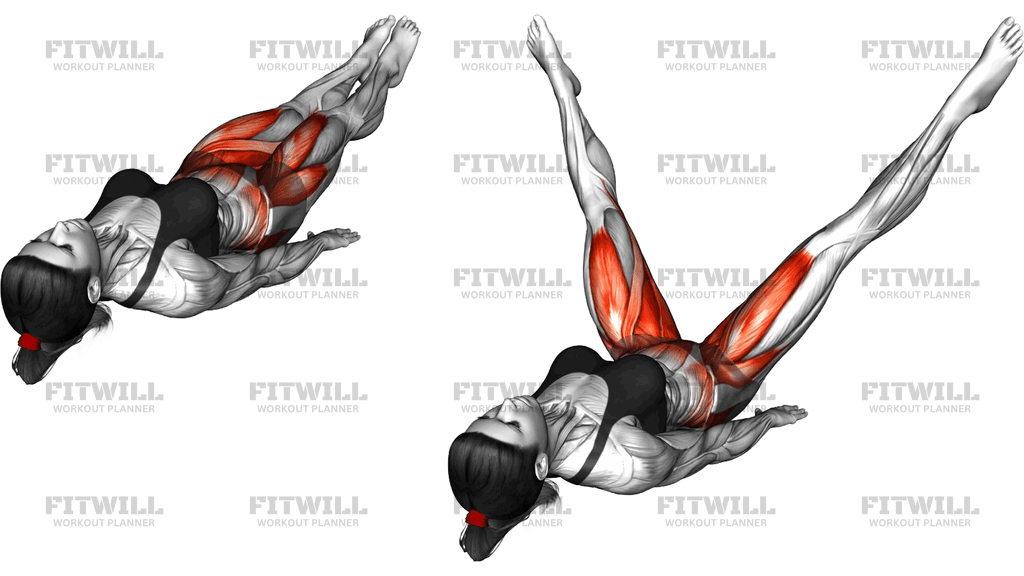
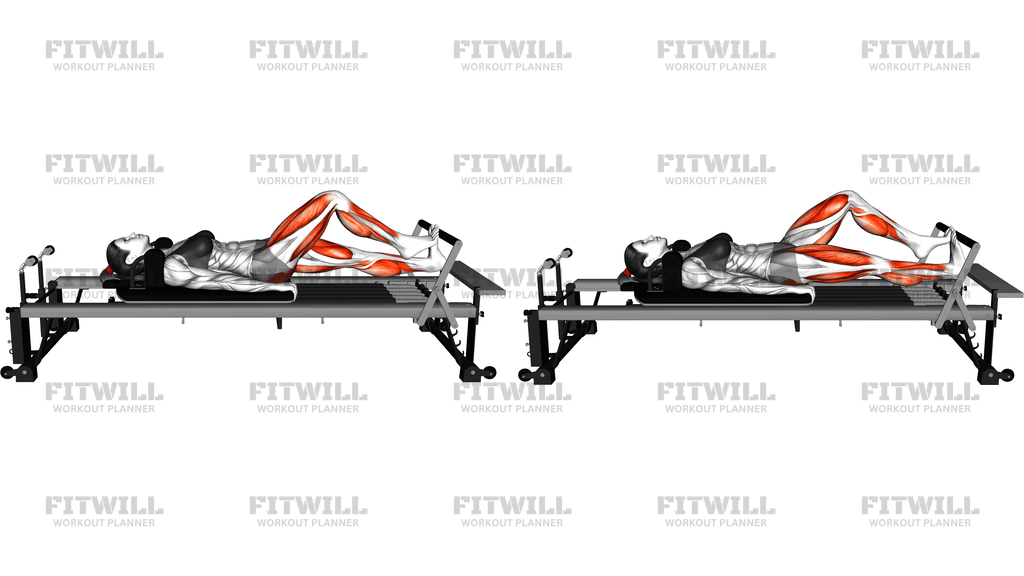
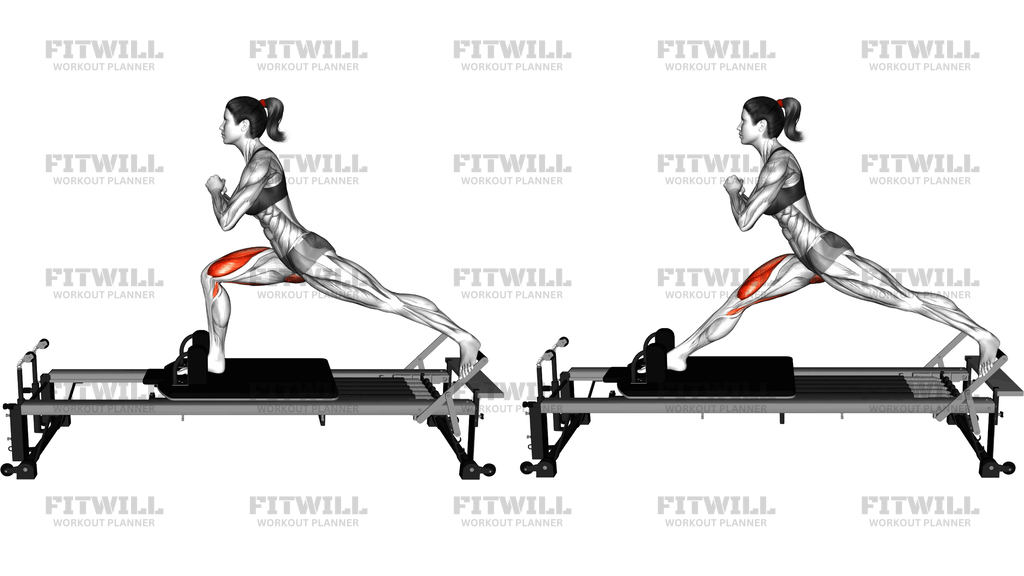
Pilates Machine Lying Knee Extension
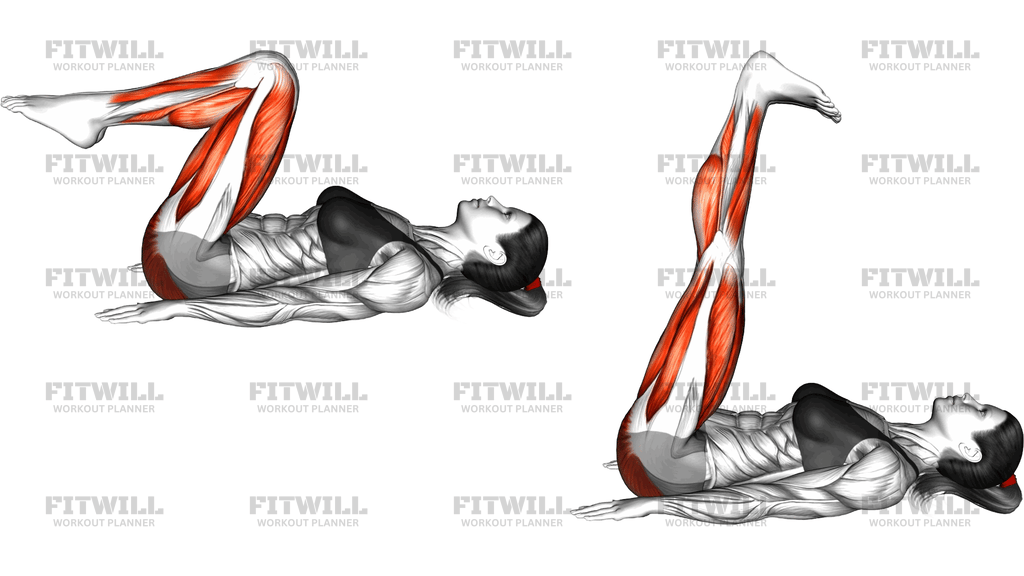
The Pilates Machine Lying Knee Extension is a reformer exercise performed lying on your back on the moving carriage, with the knees drawn in toward the chest and the feet placed against the footbar. From this tucked starting position, you press through the feet to straighten the knees, letting the carriage glide away from the home frame, then bend the knees again to draw the carriage back in with control. Because the springs supply resistance in both directions, the muscles have to work to extend the legs and to bring them back without letting the carriage yank them inward.
The main work comes from the quadriceps, particularly the rectus femoris, which crosses both the hip and the knee and is heavily involved when the hips are flexed and the knees extend. The hip flexors and deep core stabilize the pelvis and lower back while the legs move, and the hamstrings and glutes help control the return as the knees fold back in. The supine position with the spine fully supported makes this one of the most accessible ways to load knee extension on the reformer.
This movement suits a wide range of people. Beginners use it to learn how to keep the pelvis neutral while the legs move, and rehab clients often use it in early knee strengthening because the spring load can be set very light and the back stays supported. More experienced practitioners use heavier springs or slower tempos to build quad strength and improve control of the carriage. It also pairs naturally with footwork variations, since the setup is nearly identical.
Setup matters more than most people expect. Your head should rest on the headrest, your shoulders relaxed and heavy on the carriage, and your whole back in contact with the mat so the lumbar spine does not arch when the legs press out. Placing the feet squarely on the footbar at about hip width keeps the knees tracking over the ankles, and holding the carriage handles or resting the hands by your sides gives you a stable anchor. If your hips are tight, the deeply tucked starting position may pull your pelvis into a tilt, so adjust the spring load or reduce the range until you can keep the back flat.
To execute it well, move the carriage deliberately rather than explosively. Straighten the knees fully but without snapping the joints into lockout, pause briefly at the long position, then bend the knees slowly, resisting the springs as the carriage returns. Exhale as the legs extend and inhale as they come back in. The most common faults are pushing the low back into an arch, letting the knees collapse inward, and slamming the carriage home on the return, all of which are easy to fix by lowering the spring tension and slowing the tempo.
[ Workout Log & Planner ]
Put your next workout in Fitwill
Keep your plan and training log ready when you are.


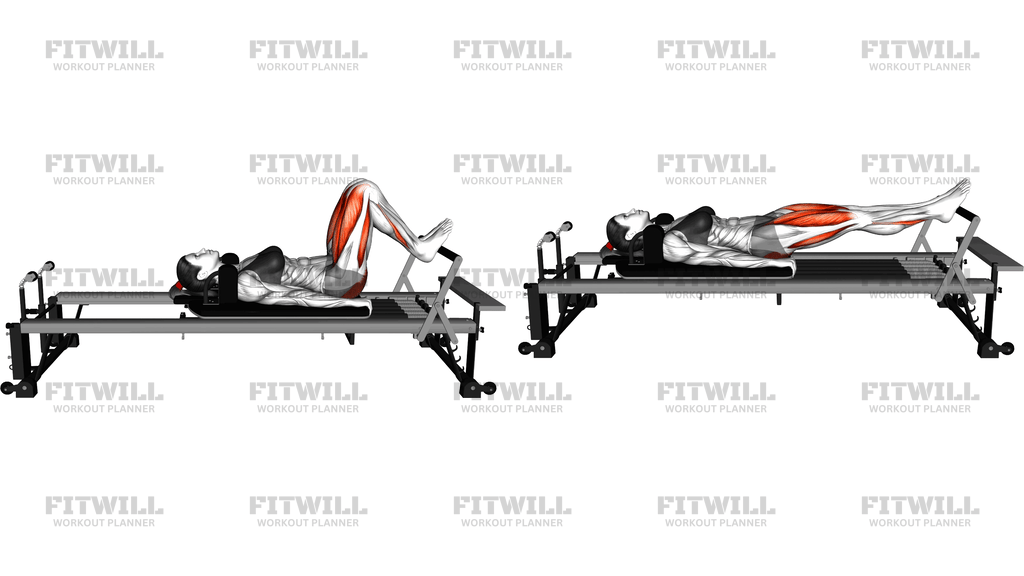
Instructions
- Lie supine on the Pilates reformer carriage with your head on the headrest, your entire back and pelvis in contact with the mat, and your arms resting by your sides or holding the carriage handles.
- Bend both knees in toward your chest and place your feet flat on the footbar at roughly hip width, toes pointing forward.
- Check that your pelvis is level and your lower back is resting on the carriage; adjust your tucked position until the back feels flat, not arched.
- Brace your deep abdominal muscles gently, as if cinching the waist, before the carriage starts to move.
- Press evenly through both feet to straighten your knees, letting the carriage slide away from the frame while the legs reach long in front of you.
- Extend the knees fully but softly, stopping just short of a hard locked-out position, and hold the long position for a moment.
- Exhale as the legs extend; keep the spine still and the pelvis neutral the whole way out.
- Inhale as you bend the knees and draw the carriage back in, resisting the springs instead of letting them pull your legs home.
- Return until the knees are folded in near the chest without letting your lower back lift off the carriage, then begin the next repetition.
- Complete your set, then bend the knees fully, lift the feet off the footbar one at a time, and step off the carriage once it is safely stopped.
Tips & Tricks
- If your lower back arches as the legs press out, the hips are likely too tight to hold the tucked start position; reduce the range or lighten the springs rather than forcing the full reach.
- A clicking or jamming sound as the carriage returns means you are letting the springs do the work; decelerate the last third of the return so the carriage settles quietly.
- Keep even pressure across both feet. Rolling toward the outer edges of the feet usually means the knees are drifting outward as the quads fatigue.
- The deeply bent starting position is where the pelvis tends to tuck and the low back flattens too much; reset the pelvis to neutral between reps instead of holding a rounded spine.
- Press through the whole foot, not just the toes. Driving off the toes shifts effort away from the quads and adds tension to the ankles.
- Start with a lighter spring setting than you think you need. This exercise is easy to over-spring because the legs are strong, but the pelvis and trunk are the limiting link.
- If one knee tracks toward the midline while the other stays out, slow the movement down and watch your kneecaps; they should point straight up throughout the extension.
- Keep the shoulders heavy on the carriage. Shrugging or tensing the neck is a common sign that the core is bracing too hard or that the spring load is too high.
- Pause for a full second with the legs long before bending the knees. This turns the exercise from a leg press into a controlled strength and stability drill.
Frequently Asked Questions
Which muscles does the Pilates Machine Lying Knee Extension work?
The quadriceps are the primary movers, especially the rectus femoris, since the exercise combines a flexed hip with knee extension. The hip flexors and deep core stabilize the pelvis, and the hamstrings and glutes control the carriage on the way back in.
Is the Pilates Machine Lying Knee Extension suitable for beginners?
Yes, it is one of the more beginner-friendly reformer exercises because the back is fully supported and the spring load can be set very light. Beginners should focus on keeping the pelvis still and the back flat before adding resistance or repetitions.
How should my feet be placed on the footbar for this exercise?
Place the feet flat on the footbar at about hip width with the toes pointing forward and the whole foot in contact, from heel to toes. This position keeps the knees aligned over the ankles as the legs extend.
Why does my lower back lift or arch when I press the carriage out?
That usually means the hip flexors are tight or the spring load is too heavy, so the pelvis tilts as the legs reach. Shorten the range of extension, lighten the springs, and keep a gentle abdominal brace to hold the back against the carriage.
Should I fully straighten my knees at the end of the movement?
Extend the knees to a long, open position but stop just short of snapping into a hard lockout. Full, soft extension trains the quadriceps through their complete range without loading the joint abruptly.
How many springs should I use on the reformer for this exercise?
Start with one light spring or the equivalent low setting and build from there. If the carriage slams back in or your back arches, the load is too high for your current control.
What is the most common mistake in the Pilates Machine Lying Knee Extension?
Letting the springs pull the knees back in instead of controlling the return. The bending phase should be slow and resisted, with the carriage arriving at the frame quietly rather than slamming home.
How is this different from standard reformer footwork?
Standard footwork uses a roughly right-angle knee bend with feet flat on the bar, while the Lying Knee Extension starts with the knees folded deeply toward the chest. The tucked start increases hip flexor involvement and demands more pelvic control.
Can I substitute another exercise if I do not have access to a reformer?
Lying leg extensions against a light resistance band around the feet offer a similar knee-extension pattern on the floor, though without the spring-loaded return. A leg press with a deep starting knee bend also trains the same quadriceps action with back support.
Is the Pilates Machine Lying Knee Extension safe for sensitive knees?
The supported supine position and adjustable springs make it a controlled way to load the knees, but if you have a knee issue, use a light load, avoid forcing full extension, and stop if you feel pinching or pain rather than muscular effort.