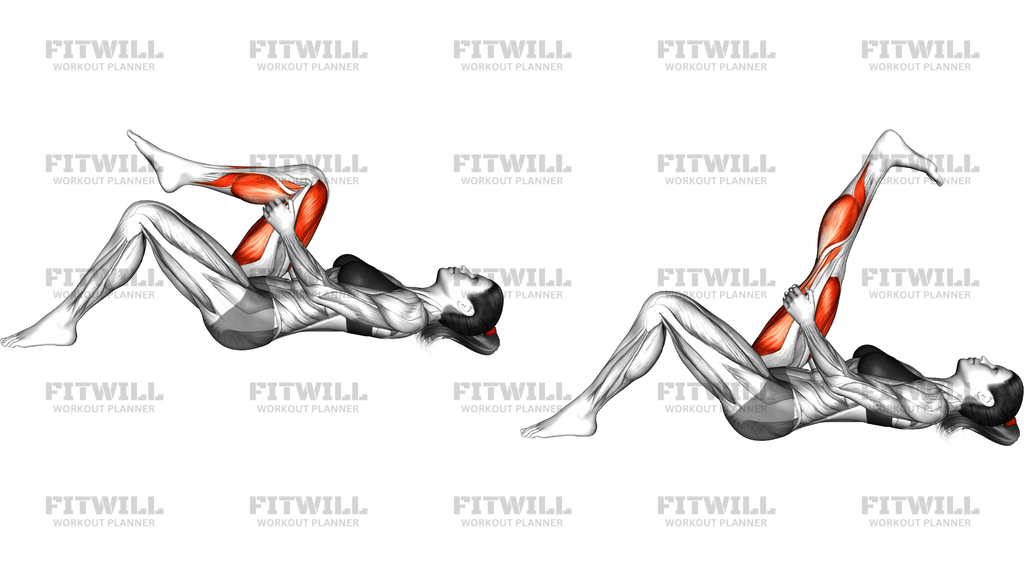
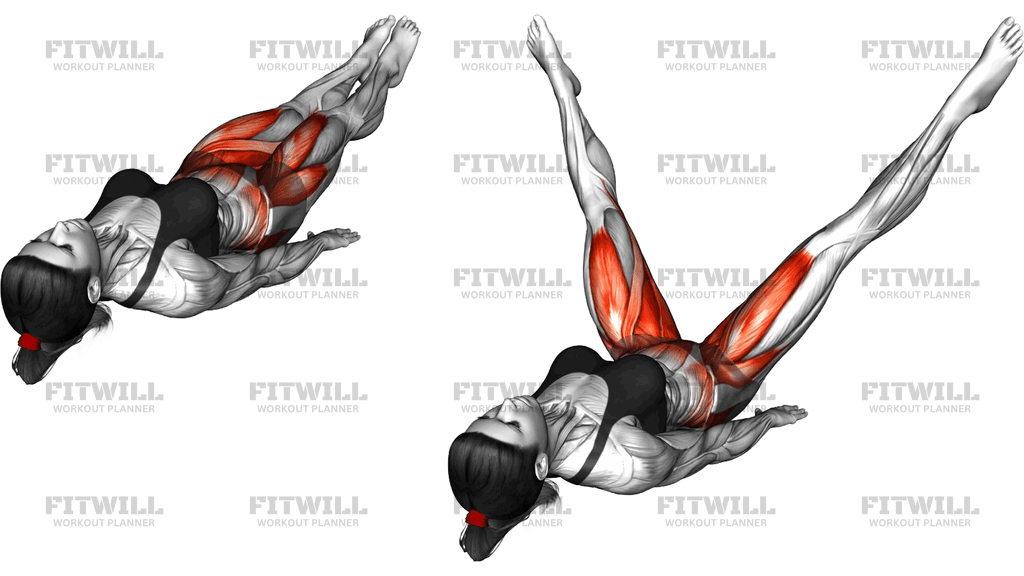
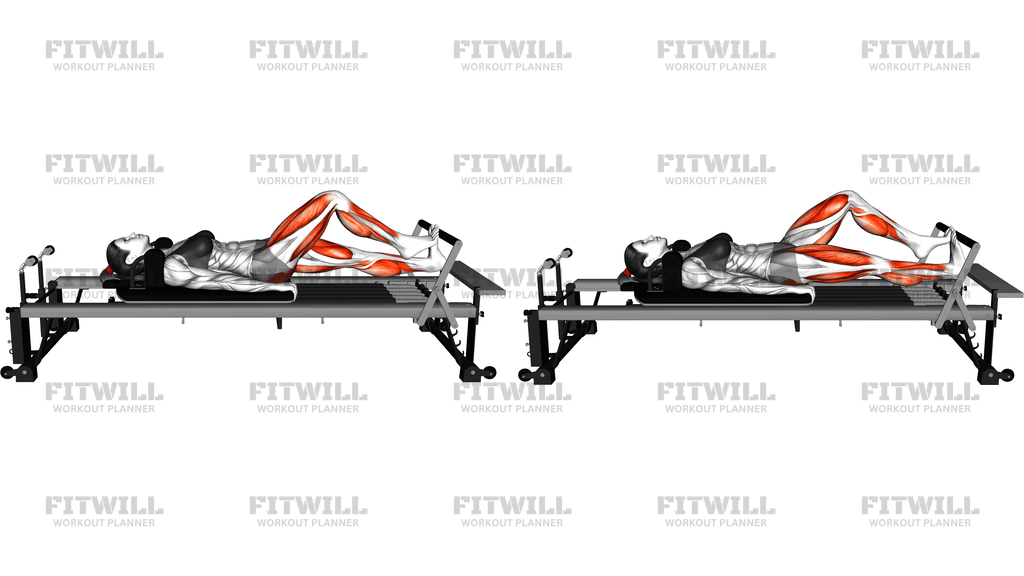
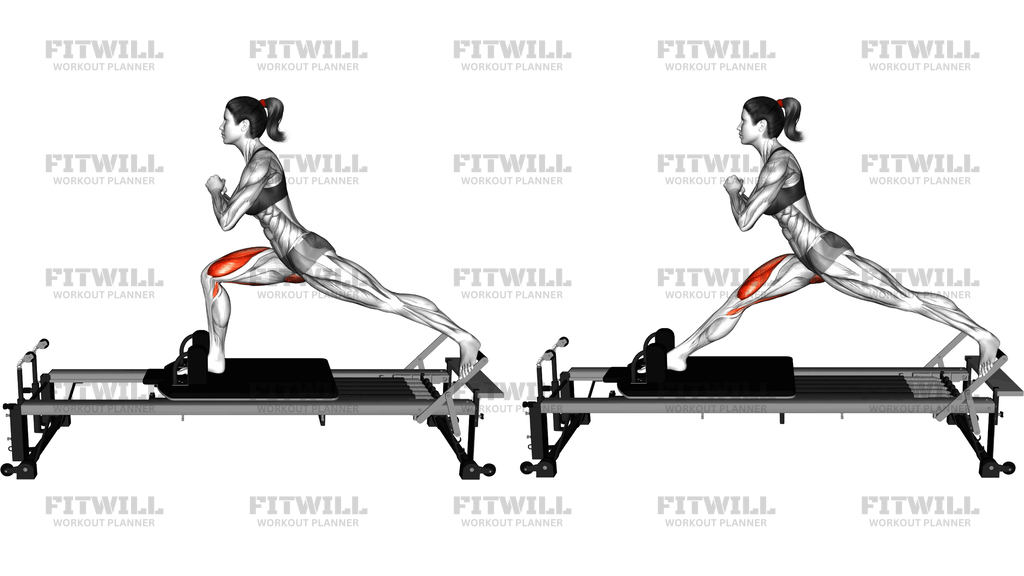
Pilates Machine Lying Knee Extension On Heels
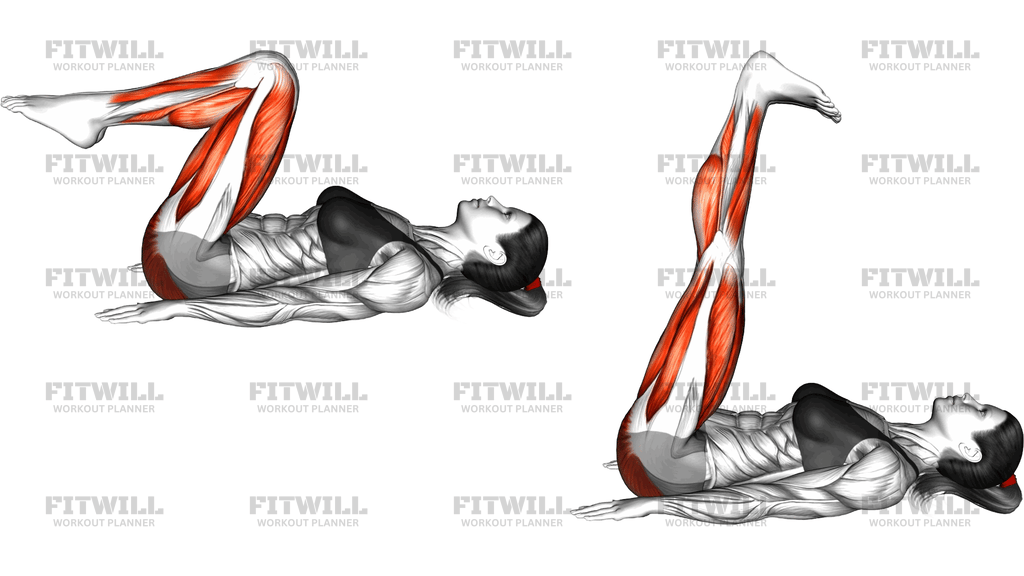
Pilates Machine Lying Knee Extension On Heels is a reformer exercise performed lying on your back on the carriage with your heels placed on the footbar. From a deeply folded starting position with the knees bent toward the chest, you press the carriage away by straightening the knees until the legs are long, then control the return. The name tells you exactly what to watch for: the heels stay planted on the bar as the knees extend, so the workload stays in the thigh rather than drifting into the toes or ankles.
This movement is a classic piece of reformer footwork repatterned for knee-dominant control. The quadriceps do the main work of straightening the knees against spring resistance, while the glutes and hamstrings help stabilize the pelvis on the carriage and the calves settle the heel position on the bar. Because you are lying down with the head supported on the headrest, the spine is neutral and unloaded, which lets you focus entirely on what the knees, hips, and pelvis are doing.
The setup matters more than it looks. Lying supine with the heels on the footbar and knees folded in creates a long lever arm between your hips and the bar, so any cheating shows up immediately: the pelvis tilts, the low back arches, or the heels lift. Keeping the arms resting alongside the body on the carriage gives you a stable base, and the shoulder pads or headrest give you a reference point so the carriage glides under you rather than your body sliding on it.
To execute it well, exhale as you lengthen the legs and press the carriage out, straightening the knees fully but not snapping them into a locked position. At the long end, the legs should form one continuous line from hip to heel, with the pelvis still heavy on the carriage. Inhale on the way back, bending the knees with control and letting the carriage return underneath you rather than collapsing in fast. The folding position at the start asks the hips and knees to close deeply, so people with very tight hips may need a lighter spring setting and a slightly smaller range at first.
This exercise suits Pilates practitioners working on leg strength and knee control, people rebuilding confidence after long layoffs who need supported leg pressing, and anyone who wants thigh work without loading the spine the way a standing squat does. Go lighter than you think on the springs at first; the deep knee fold at the return is where form breaks, and the value of the exercise lives in that controlled closing, not in how far you can shove the carriage out.
[ Workout Log & Planner ]
Put your next workout in Fitwill
Keep your plan and training log ready when you are.


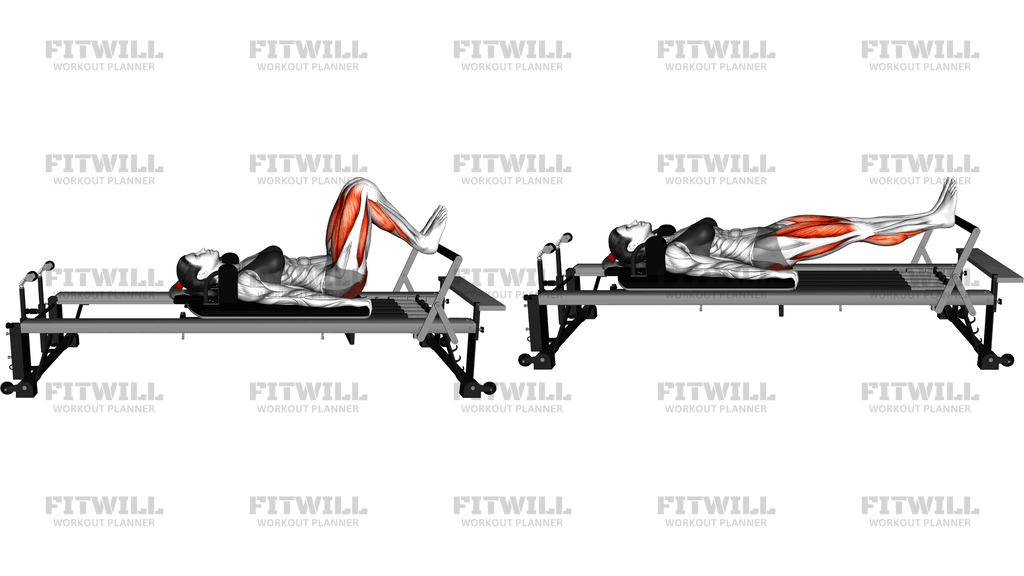
Instructions
- Lie supine on the reformer carriage with your head resting on the headrest and your arms relaxed alongside your body, hands resting on the carriage near your hips.
- Place both heels on the footbar at about hip width, with the knees bent fully and drawn in toward the chest so the carriage is closed toward the machine.
- Settle your pelvis flat on the carriage and feel even contact from the back of the ribcage to the tailbone before you move.
- Brace the deep core gently, as if lightly drawing the navel in, so the low back stays long against the carriage.
- Exhale and press the heels into the footbar, straightening the knees to slide the carriage away from the machine.
- Finish with the legs long and the knees softly extended rather than jammed into a hard lock, keeping the heels in the same spot on the bar.
- Inhale and bend the knees with control, folding the legs back in toward the chest and letting the carriage return fully underneath you.
- Keep the heels pressed into the bar and the pelvis still throughout, so the movement stays in the knees and hips instead of the low back.
- Reset your pelvic position and core brace at the folded end of each repetition, then repeat for your set of smooth, even reps.
Tips & Tricks
- If your heels pop off the footbar as the knees fold in, you are closing too deeply for your current hip range; stop the return a few degrees earlier and rebuild from there.
- When the low back arches at the long end of the press, the pelvis is tipping forward. Pull the front ribs down slightly and shorten the range until the tailbone stays heavy on the carriage.
- Pressing through the toes instead of the heels shifts work toward the calves and quads in a way this exercise is not designed for; keep the heel pressure constant from start to finish.
- Gripping the carriage edges with the hands usually means the legs are pushing more than the core can stabilize. Let the arms stay soft and lower the spring resistance instead.
- Do not let the knees splay outward as they extend; track them in line with the hips and second toes so the knee joint travels in one plane.
- Snapping the knees straight at the end of the press is a common fault. Decelerate the last few degrees so the extension finishes with muscle control, not momentum.
- If the carriage bangs in on the return, you are letting the springs do the closing. Slow the inward phase to about twice the speed of the press.
- Start with lighter springs than standing leg work would suggest. The folded knee position at the return is harder to control than the press itself.
Frequently Asked Questions
Which muscles does Pilates Machine Lying Knee Extension On Heels work?
The quadriceps are the primary movers, extending the knees against spring resistance. The glutes and hamstrings stabilize the pelvis on the carriage, and the calves help hold the heel position on the footbar.
Why do the heels stay on the footbar during this exercise?
Keeping the heels planted pins the foot in place so the knees do the extending. If the heels lift or the pressure rolls to the toes, the work shifts toward the calves and the knee path becomes harder to control.
Is Pilates Machine Lying Knee Extension On Heels suitable for beginners?
Yes, because the supine position supports the head and spine, making it one of the more accessible ways to load the legs on a reformer. Beginners should use light springs and a shallower knee fold until the return phase feels controlled.
How is this different from standard reformer footwork?
Standard footwork starts with the knees at roughly right angles, while this variation begins from a much deeper fold with the knees drawn toward the chest. That deeper closing challenges hip and knee control on the return and puts the quads through a larger range.
Why does my lower back arch when I press the legs out?
As the hips extend and the legs lengthen, a tight hip front or weak deep core lets the pelvis tip forward and the low back arch. Lighten the springs, draw the ribs down, and shorten the range until the tailbone stays settled on the carriage.
How many repetitions should I do?
Eight to twelve slow, controlled repetitions work well for most people, focusing on even tempo in both directions. Because the closing phase is demanding, quality matters more than volume here.
What can I use if I do not have access to a reformer?
A supine leg press machine or a band looped around the feet while lying on your back can approximate the knee extension pattern, though neither replicates the moving carriage and spring feel of the reformer.
Should I lock my knees straight at the end of the press?
Extend the knees fully but keep them soft rather than jamming into a hard lock. A complete but controlled extension trains the quads through the full range without unnecessary stress on the joint.
Is this exercise safe for the knees?
When performed with heels anchored, knees tracking over the feet, and a spring load you can control through the deep fold, it is generally well tolerated. If you have a current knee concern, keep the fold shallower and check with a qualified professional before adding load.