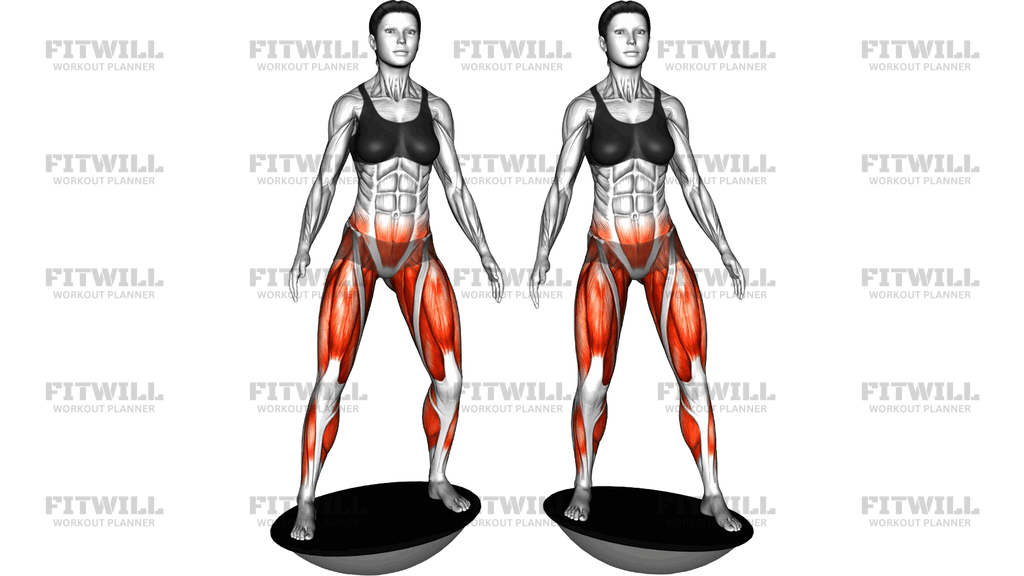
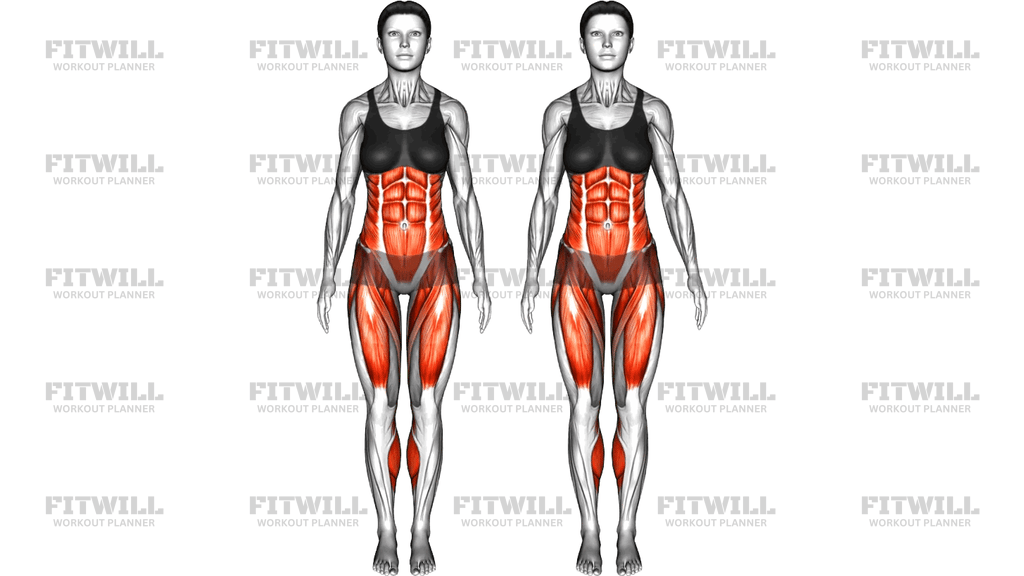
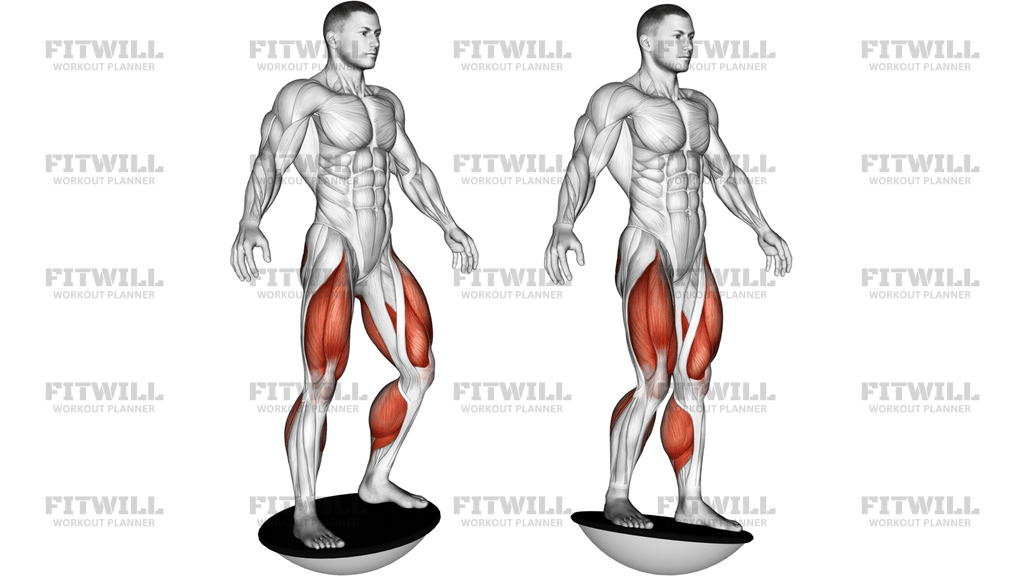
Heel To Toe Walk
The Heel To Toe Walk is a simple bodyweight drill where you walk forward by placing one foot directly in front of the other, rolling from the heel of the front foot onto the toes of the back foot with every step. It looks almost too easy, but keeping a tall, steady posture while your base of support narrows to a single line demands real control from your calves, ankles, and feet. It is a staple in balance and lower-leg training because it combines a walking pattern with the stability challenge of a tightrope-style path.
This movement is especially useful for older adults working on fall prevention, beginners rebuilding confidence on their feet, and anyone recovering general ankle control after a period of inactivity. It also fits well into warm-ups for running, hiking, or lower-body strength sessions, since it wakes up the calf complex and the small muscles around the ankle before heavier work. Dancers, hikers, and athletes in sports that require single-leg balance get a lot of carryover from it too.
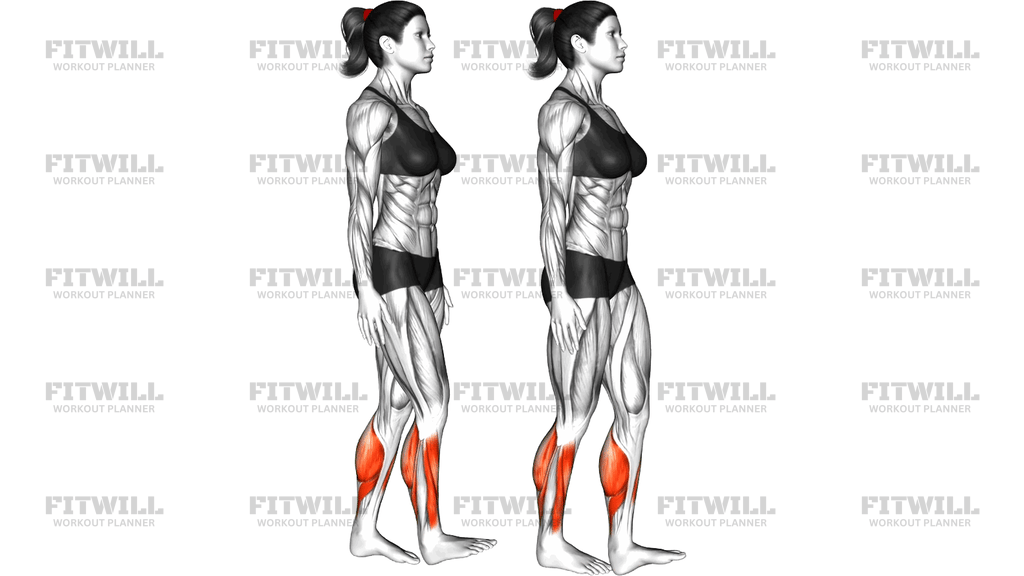
The main work happens in the lower legs. As you roll from heel to toe, the calf muscles and soleus handle the push-off, while the muscles along the front of the shin and the stabilizers around the ankle keep your foot level and your body from tipping side to side. Because each step places your feet heel to toe in a straight line, your base of support is only a few inches wide, so those stabilizing muscles have to stay continuously active to keep you upright.
Setup matters more than it appears. A flat, uncluttered walking path is essential, since a narrow base leaves little room to recover from a stumble. Stand tall with your eyes on a fixed point ahead rather than staring down at your feet, and keep your arms relaxed at your sides or held slightly out for balance. Rushing the steps is the fastest way to lose form; the exercise works best when each transition from heel to toe is slow and deliberate.
To perform it well, step forward and place the heel of your front foot directly against the toes of your back foot, then shift your weight smoothly over that front foot as you roll through it. Pause briefly if you wobble, reset your posture, and continue with the next step. Aim for controlled steps along a straight line, such as a floor seam or taped line on the ground, for roughly ten to twenty steps per set.
Safety-wise, stay near a wall, counter, or sturdy chair until you are confident with the pattern, and wear flat shoes or perform it barefoot on a non-slip surface. If you feel sharp pain in your ankle, foot, or shin, stop rather than pushing through it. The Heel To Toe Walk rewards consistency: a couple of sets a few times per week will improve your steadiness and lower-leg endurance more than one long, sloppy session ever will.
[ Workout Log & Planner ]
Put your next workout in Fitwill
Keep your plan and training log ready when you are.


Instructions
- Find a clear, flat walking path of at least ten feet, ideally along a straight line such as a floor seam, and keep a wall or sturdy chair within arm's reach in case you need support.
- Stand tall at one end of the path with your feet together, weight evenly distributed, and your arms relaxed at your sides or held slightly out from your body.
- Pick a fixed point straight ahead at eye level and keep your gaze there rather than looking down at your feet.
- Brace your core lightly and draw your shoulder blades back so your torso stays upright throughout the walk.
- Step forward and place the heel of your front foot directly in front of and touching the toes of your back foot, forming a straight line.
- Shift your weight onto the front heel, then roll smoothly through the foot toward the toes as your body travels over it.
- As the front foot flattens, rise onto the toes of the back foot, letting that push-off carry you into the next heel-to-toe placement.
- Continue placing each heel directly against the opposite toes, keeping your hips level and minimizing side-to-side sway.
- Breathe steadily and evenly throughout, exhaling as you shift your weight onto each new front foot.
- Walk ten to twenty steps to the end of the path, turn carefully or step off the line, and reset your posture before walking back.
Tips & Tricks
- If you wobble, stop in place and hold still for two seconds before your next step instead of hurrying to catch up; stopping and stabilizing is where the ankle work actually happens.
- The most common mistake is a wide, shuffling gait where the feet no longer form a straight line. Imagine walking on a tightrope and let each heel physically touch the opposite toes.
- Staring down at your feet throws your balance off. Fix your eyes on a spot at eye level across the room and trust the pattern.
- Keep the roll through the foot deliberate: heel, midfoot, then toes. Skipping straight from heel to toe-off flattens the movement and removes much of the calf and soleus work.
- If your hips sway noticeably, shorten your steps. A narrow, shorter stride is easier to control than a long one on a two-inch base.
- Try it barefoot or in flat, flexible shoes once you are steady. Thick, cushioned sneakers blunt the foot's feel for the ground and make clean heel-to-toe contact harder.
- Hold fingertips lightly against a wall for the first few sessions if needed, but aim to reduce that contact over the following weeks rather than leaning on it.
- If your shins tire quickly, you are likely over-pulling your toes upward during the roll. Lift just enough to clear the foot, and let the front-of-shin muscles work without forcing them.
- Use a visible straight line on the floor for at least your first few weeks. Without a line, the path drifts sideways and you lose the tightrope effect that makes this drill effective.
Frequently Asked Questions
What muscles does the Heel To Toe Walk work?
It mainly targets the calves and the smaller stabilizing muscles of the ankles and feet, with the soleus and front-of-shin muscles controlling the heel-to-toe roll. Your core also contributes to keeping your torso upright on a narrow base.
Is the Heel To Toe Walk good for beginners?
Yes, it is one of the most beginner-friendly balance exercises because it requires no equipment and can be scaled easily. Beginners should start near a wall and use shorter sets of five to ten steps.
Why do my feet have to touch heel to toe in the Heel To Toe Walk?
Touching heel to toe narrows your base of support to a single line, which is what forces the ankle stabilizers to work. A wider gap between your feet turns the drill into ordinary walking with little balance demand.
Should I look at my feet while walking?
No, keep your eyes on a fixed point at eye level ahead of you. Looking down shifts your head forward and makes side-to-side wobbling much more likely.
How far and how many steps should I walk per set?
A practical starting point is ten to twenty steps along a straight line, walking back for one or two total passes. Focus on clean, stable steps rather than covering more distance.
Can the Heel To Toe Walk replace calf raises?
No, it complements rather than replaces them. Calf raises build strength through a full range under load, while the Heel To Toe Walk trains coordination, balance, and endurance in the same muscles through a walking pattern.
What should I do if I keep losing my balance?
Slow your steps down, shorten your stride, and walk with light fingertip contact on a wall or counter. As your steadiness improves, gradually reduce how much you touch the support.
Is it safe to do the Heel To Toe Walk on stairs or an uneven surface?
No, stick to flat, level, non-slip flooring with a clear path. Uneven ground or stairs add a fall risk that the narrow heel-to-toe stance cannot safely handle.
Can I use the Heel To Toe Walk as a warm-up?
Yes, one or two easy passes along a line is an effective warm-up before running, hiking, or lower-body training. It primes the calves and ankles in the same foot pattern those activities use.