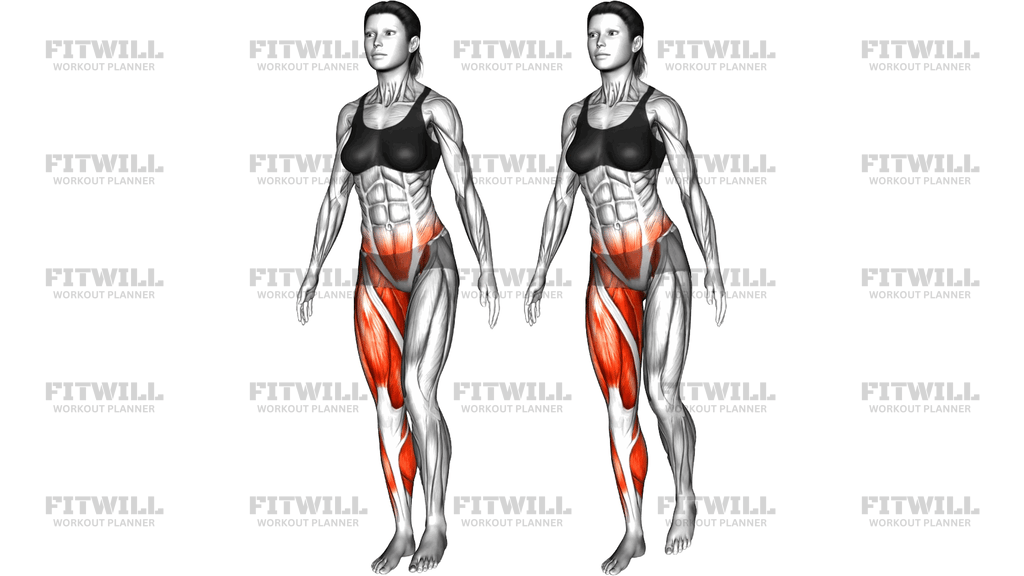
Balance Pad Single Leg Balance
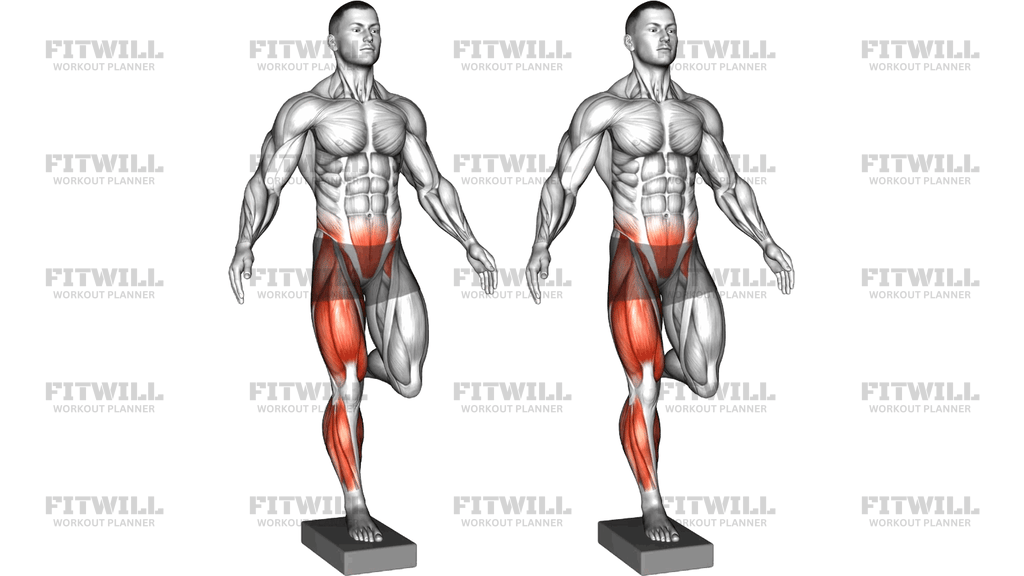
Balance Pad Single Leg Balance is a standing stability drill performed on a soft foam pad. You place one foot in the center of the pad, lift the opposite foot off the ground, and hold an upright single-leg stance while the unstable surface constantly shifts under you. The arms stay relaxed at the sides, the free leg is bent behind the body, and the goal is simply to stand still and controlled for time.
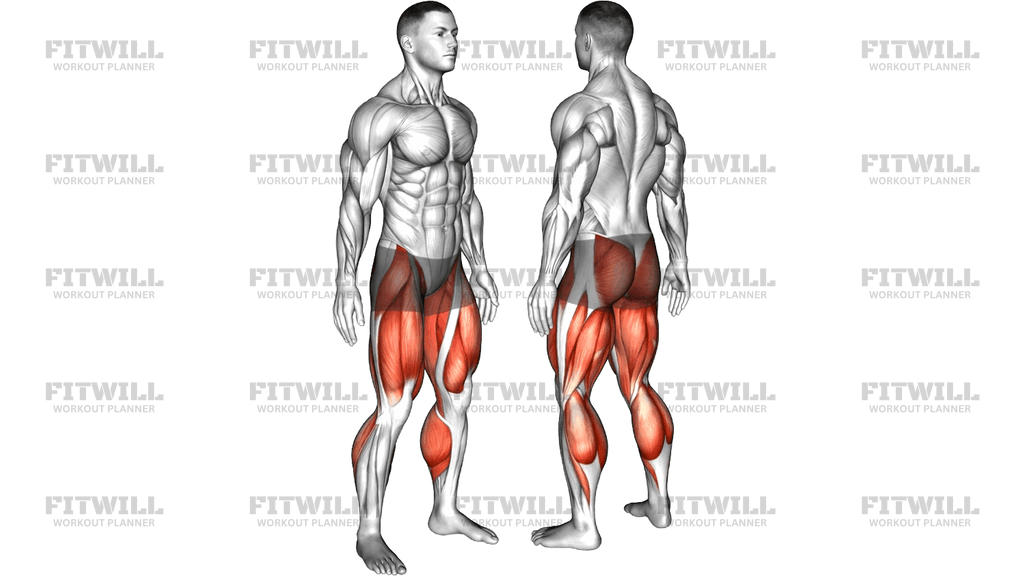
This movement trains the smaller stabilizing muscles of the ankle and foot, along with the calves, quads, and hip stabilizers such as the gluteus medius. Because the pad compresses and wobbles, your nervous system has to make rapid, continuous corrections that a firm floor never demands. That is what makes it noticeably harder than a regular single-leg stand, even though no load is involved.
It is a useful drill for runners and field-sport athletes who need resilient ankles, older adults working on fall prevention, and lifters who want better single-leg control before squats, lunges, or step-ups. It is also a common rehab progression for people returning from ankle sprains, though in that case it should follow guidance from a qualified professional.
Setup matters more than it looks. A pad placed on an uneven or slippery floor, a foot parked off-center, or a gaze bouncing around the room will all make the hold far more difficult and less consistent. Keep the pad flat, put your full foot on top of it, and find a fixed point at eye level to anchor your vision before you lift the trailing foot.
Execution should be quiet and minimal. Stand tall, brace the trunk lightly, shift your weight onto one leg, and peel the other foot away so the knee bends behind you. If you wobble, correct with small adjustments at the ankle and hip rather than flailing the arms or hopping. Step the free foot down when you lose balance, reset, and try again rather than grinding through sloppy reps.
For safety, position yourself near a wall, rack, or sturdy chair so you have something to touch if you genuinely lose your footing. The fall risk is low compared with dynamic balance drills, but a soft pad can still roll an ankle if you step off it carelessly, so always step down slowly and deliberately at the end of a hold.
[ Workout Log & Planner ]
Put your next workout in Fitwill
Keep your plan and training log ready when you are.


Instructions
- Place a balance pad flat on a level, non-slip floor, leaving clear space around it.
- Step onto the pad with both feet first, then position one foot so it sits centered on the pad with your weight spread across the whole foot.
- Stand tall with your arms relaxed at your sides, pull your ribs down, and lightly brace your core.
- Pick a fixed point at eye level in front of you and keep your eyes on it for the entire hold.
- Shift your weight fully onto the standing leg and lift the opposite foot off the pad, bending that knee so the foot trails behind your body.
- Hold the single-leg position with your hips level and squared forward, making small corrections through the ankle and hip as the pad shifts.
- Breathe steadily and quietly through your nose and mouth throughout the hold instead of holding your breath.
- If balance breaks down, step the free foot back onto the pad with control instead of hopping or lunging to catch yourself.
- Finish the hold by placing the free foot down, stepping off the pad, and resetting before switching legs.
- Match the hold time on each leg before moving on.
Tips & Tricks
- A common mistake is gripping the pad hard with the toes. Keep the toes long and relaxed and let the arch do the stabilizing, or your forefoot will cramp before your balance is challenged.
- If you lean your trunk sideways over the standing leg, your hip stabilizers are fatiguing. Picture your shoulders stacked directly over your hip and ankle, and shorten the hold if needed.
- Looking down at your feet makes the drill dramatically harder. Fix your gaze on a spot on the wall at eye level for the whole set.
- Do not let the free leg swing forward or drift out to the side. Keeping the knee bent behind you locks in a consistent stance and makes left-to-right comparisons honest.
- If the pad slides on a smooth floor, set it on a rubber mat or exercise mat so it stays planted under your foot.
- Start with shorter holds of 15 to 20 seconds per side and add time gradually; quality corrections beat long, sloppy stands.
- Use a fingertip on a wall or rack for support only when you actually need it, not as a constant crutch, or the ankle stabilizers will never be challenged.
- Train the weaker or less stable leg first, then match that time on the other side rather than chasing a bigger number on your better leg.
- If one ankle is stiff from a previous injury, spend extra time warming it up with slow ankle circles before stepping on the pad.
Frequently Asked Questions
Which muscles does the Balance Pad Single Leg Balance work?
The main work comes from the calves and the small stabilizing muscles around the ankle, with strong support from the quads, gluteus medius on the standing hip, and the core muscles that keep your trunk upright.
Why is balancing on a balance pad harder than on the floor?
The foam compresses and shifts under your weight, so the surface under your foot is constantly changing and your ankles, hips, and nervous system must make rapid corrections to keep you still.
Is the Balance Pad Single Leg Balance suitable for beginners?
Yes, it is actually a beginner-friendly entry point into unstable-surface training because there is no load and no fast movement. Start near a wall so you can touch it if you lose your balance, and build up hold time gradually.
How long should I hold each rep?
Aim for 15 to 30 seconds per leg at first, then progress toward 45 to 60 seconds as your control improves. Stop the hold as soon as you need a large correction or a step to recover.
Should my free leg be straight or bent during the Balance Pad Single Leg Balance?
Keep the free knee bent with the foot trailing behind you, as this keeps your hips squared and stops the swinging leg from helping you cheat the position.
What is the most common mistake in this exercise?
The most common errors are staring down at the feet, letting the hips shift sideways over the standing leg, and hopping or stepping rapidly to chase balance instead of making small, slow corrections at the ankle.
What can I use if I do not have a balance pad?
A folded exercise mat or a thick cushion can work as a substitute, though the firmness will differ. If no soft surface is available, a plain single-leg stand on the floor is the logical regression.
Can this exercise help after an ankle sprain?
Unstable-surface single-leg stands are often used in ankle rehab, but if you are recovering from an injury you should clear the exercise and its progressions with your physical therapist or doctor before adding it to your routine.
How close to a workout should I do the Balance Pad Single Leg Balance?
It works well as part of a warm-up to wake up the feet and hips before lower-body training, or as a standalone block at the end of a session when precise balance work will not be fatigued by heavy lifting.
Is it safe to do this exercise without anything to hold onto?
Most people can do it safely on a clear floor, but if you are new to balance training, older, or returning from injury, stand near a wall or sturdy support and use a light fingertip touch only when needed.