Resistance Band Seated Knee Raise
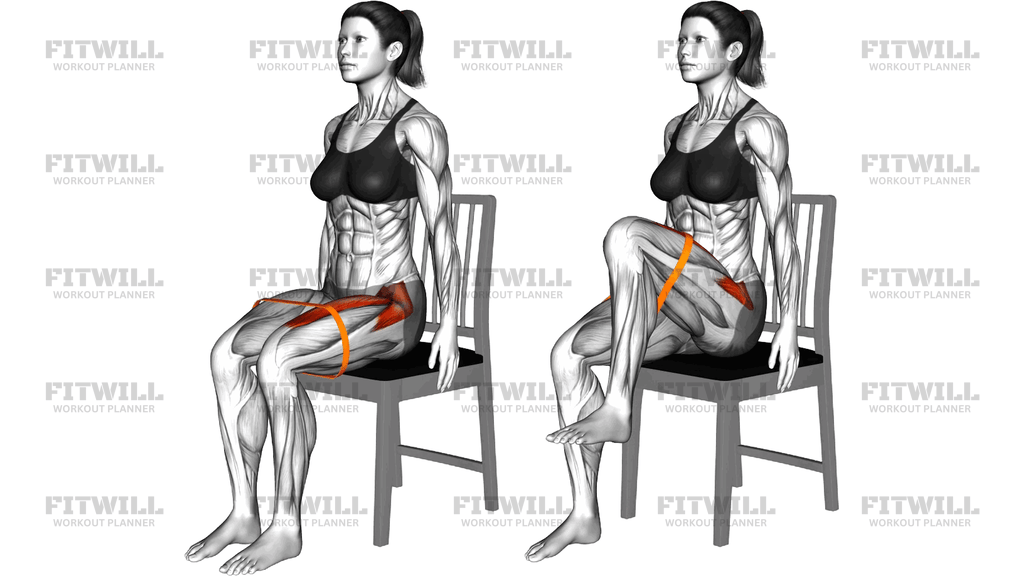
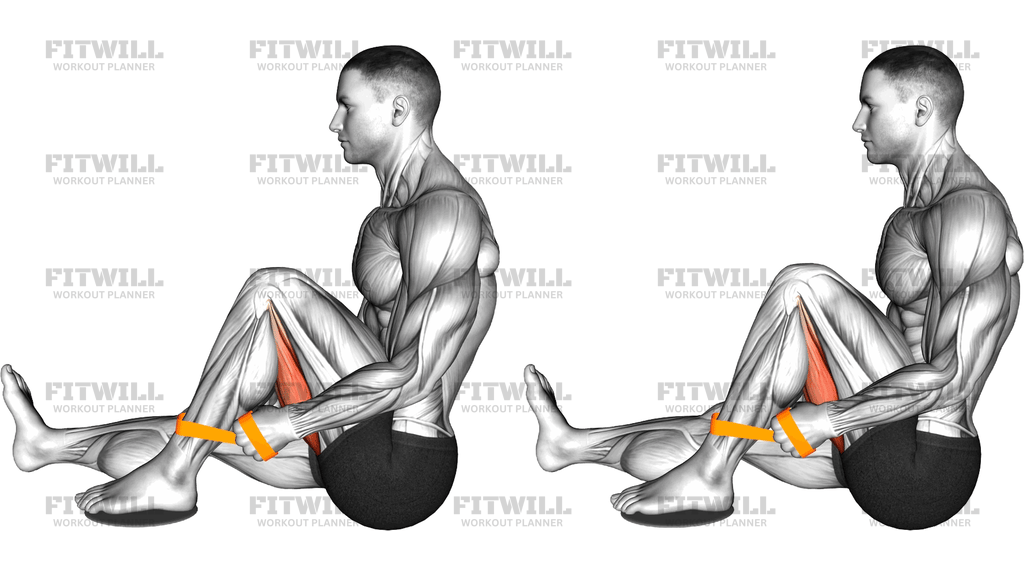
The Resistance Band Seated Knee Raise is a simple but targeted drill for the hip flexors. You sit on the edge of a flat bench with a resistance band looped around both feet, plant one foot on the floor, and pull the opposite knee up toward your chest against the band's tension. Because the band anchors across your working foot, the resistance increases as your knee climbs, which is the opposite of what happens with free weights in most hip flexion drills.
This movement is especially useful for runners, cyclists, and anyone who wants to drive the knee up with more authority during sprints, stairs, or hiking. It is also a common choice in rehab and return-to-training settings, since the seated position removes balance demands and lets you isolate hip flexion without loading the spine or standing knee.
Although the hip flexors do the main work, the setup challenges more than one area. Your lower abs brace to keep the pelvis from tipping backward as the knee rises, the quad on the working leg helps lift the thigh, and the planted leg and hands on the bench keep you stable throughout.
The setup matters more than it looks. The band has to stay secure around both feet, the torso needs to stay tall, and the working knee should travel straight up rather than swinging out to the side. If you lean back or let the band slip toward your toes, the exercise loses its focus and the tension path changes.
To execute it well, sit upright near the front edge of the bench, grip the sides for support, and raise the knee until your thigh approaches your torso or the band reaches strong tension. Pause briefly at the top, then lower the foot back to the floor under control so the band stretches smoothly rather than snapping the leg down.
Use this exercise as a warm-up activation before lower-body training, as a higher-rep accessory on leg days, or as a low-impact option when standing knee drives are not appropriate. Keep the reps deliberate; this is a small muscle group that responds to controlled tempo, not momentum.
[ Workout Log & Planner ]
Put your next workout in Fitwill
Keep your plan and training log ready when you are.


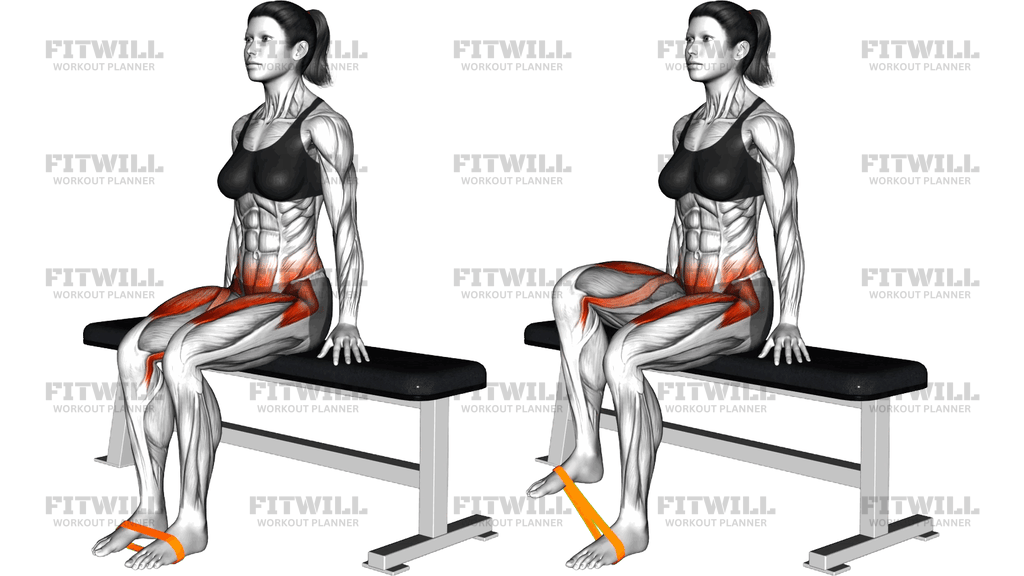
Instructions
- Sit on the front edge of a flat bench with your torso upright and your feet together on the floor in front of you.
- Loop a resistance band around both feet so it sits snugly across the middle of each foot, creating tension between the two feet.
- Place your hands on the bench on either side of your hips with your arms nearly straight to support your upper body.
- Brace your abs lightly and keep your chest lifted so your lower back does not round as you move.
- Keeping one foot pressed into the floor, drive your other knee up toward your chest, letting the band stretch across the planted foot.
- Stop when your thigh is close to your torso or when the band reaches strong tension without your lower back tucking under.
- Pause for a moment at the top, feeling the front of your hip working.
- Lower the knee slowly back to the floor, resisting the band's pull instead of letting the foot drop.
- Breathe out as you raise the knee and in as you lower it.
- Complete all reps on one side, check that the band is still seated on both feet, then switch legs.
Tips & Tricks
- If the band slides toward your toes during the raise, loop it a little higher on the foot and shorten it a notch so it stays put at the top.
- Watch for the knee drifting outward as it rises; that usually means the band tension is too heavy or the hip is compensating. Use a lighter band and pull the knee straight up in line with your shoulder.
- Do not let your torso fall backward to help the leg up. If you catch yourself leaning away from the knee, move your hands closer to your hips on the bench and reduce the band tension.
- Keep the working foot relaxed and let the thigh do the lifting; pointing the toes hard to grip the band shifts work away from the hip flexors.
- The planted heel should stay flat on the floor. If it lifts, widen your foot position slightly for a more stable base.
- Stop the rep before your lower back tucks and your tailbone rolls under the bench. Shorten the range slightly rather than letting the pelvis tilt.
- A slow three-second lower makes this drill noticeably harder; most people rush the descent because the band pulls the leg down for them.
- If you feel pinching at the front of the hip at the top, reduce the range a few degrees and avoid pulling the thigh all the way to the chest under full tension.
Frequently Asked Questions
What muscles does the Resistance Band Seated Knee Raise work?
The primary movers are the hip flexors at the front of the hip, mainly the iliopsoas, with help from the rectus femoris in the thigh. The lower abs also work to keep your pelvis steady as the knee rises.
Is the Resistance Band Seated Knee Raise good for beginners?
Yes. The seated position removes balance demands, and you can start with a light band and a short range. It is one of the easiest ways to load hip flexion in a controlled way.
Why does the band go around both feet instead of just the working foot?
Looping the band across both feet anchors it to the planted leg, so the working knee pulls directly against the band's stretch. This keeps the resistance consistent and frees your hands to support you on the bench.
How high should I raise my knee in the Resistance Band Seated Knee Raise?
Raise it until your thigh approaches your torso or until you feel strong, comfortable tension in the front of the hip. If your lower back starts to tuck or you feel a pinch at the hip, stop a few degrees earlier.
My band keeps slipping off my foot during the raise. What should I change?
Position the band across the midfoot rather than the toes and make sure it is snug before you start. A wider, flatter loop band generally stays in place better than a narrow one.
Can I do the Resistance Band Seated Knee Raise without a bench?
Yes, any sturdy chair or box with a firm edge works, as long as it lets you sit tall with your hands beside your hips for support. Avoid soft couches, which make it hard to keep an upright torso.
How many reps and sets should I use for this exercise?
For activation or warm-up, two sets of 10 to 15 controlled reps per side works well. For strength, use a heavier band and stay closer to 8 to 12 reps with a slow lowering phase.
What is a good substitute if I do not have a resistance band?
A seated knee raise with just your body weight, adding a light ankle weight or a manual push on the knee from your hand, covers the same pattern. An assisted knee raise station also trains the hip flexors through a similar range.
Is it safe for my lower back?
For most people it is a low-load, spine-friendly movement because you are supported by the bench. Keep your torso upright, avoid pulling the knee so high that your pelvis tucks, and stay within a range that feels comfortable at the front of the hip.
Should I do both legs in the same set or finish one side first?
Finishing all reps on one side before switching keeps the tension and tempo consistent for each leg. Either approach is fine, but one side at a time makes it easier to notice differences between legs.