Resistance Band Calf Raise
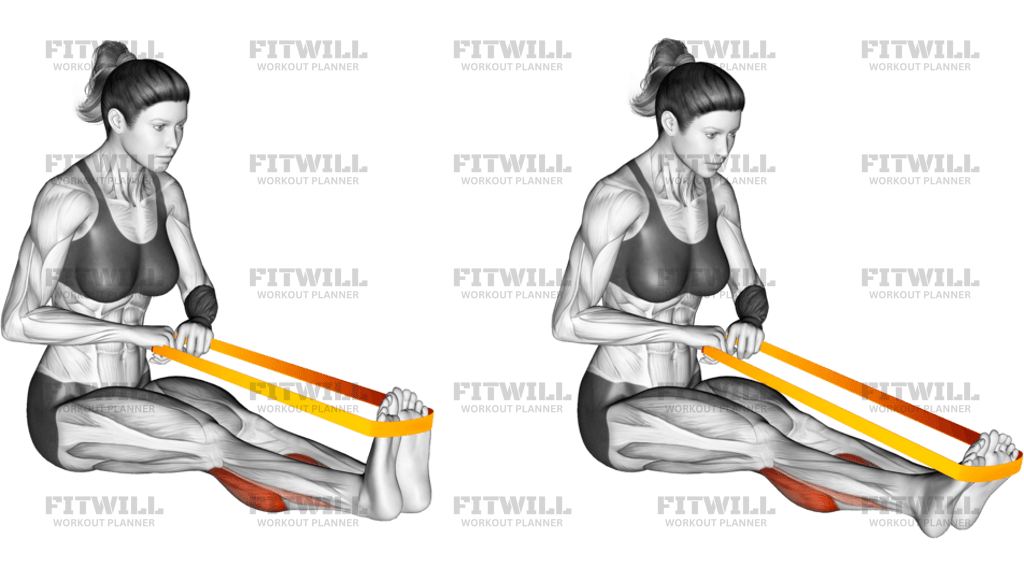
Resistance Band Calf Raise is a seated lower-leg exercise that loads ankle plantarflexion against a band. It is most useful when you want to train the calves directly with a setup that is easy to repeat, easy to control, and less dependent on balance than standing calf work. The long-sit position also makes it easier to feel the ankle moving through a clean arc instead of turning the rep into a hip or knee drive.
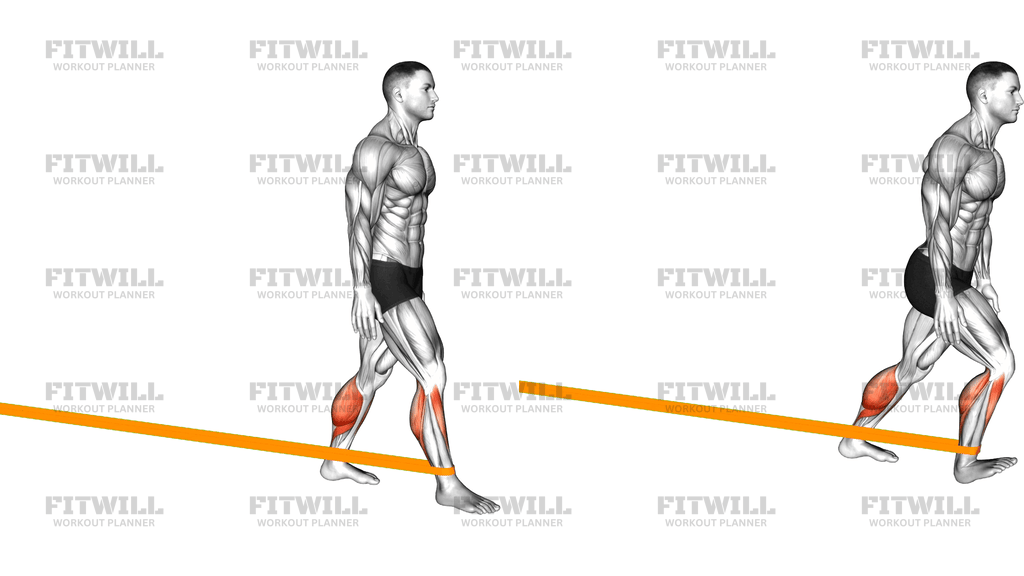
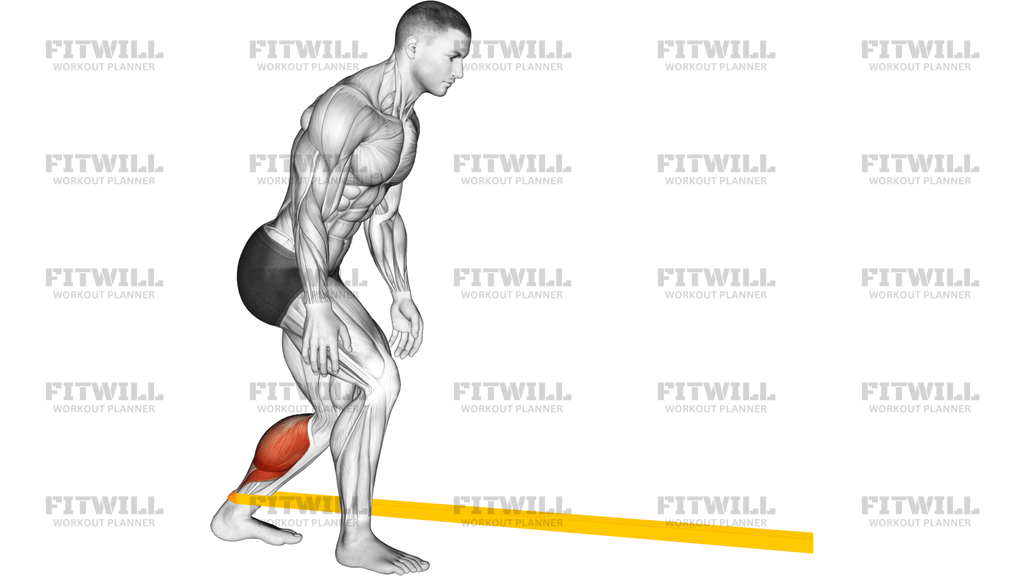
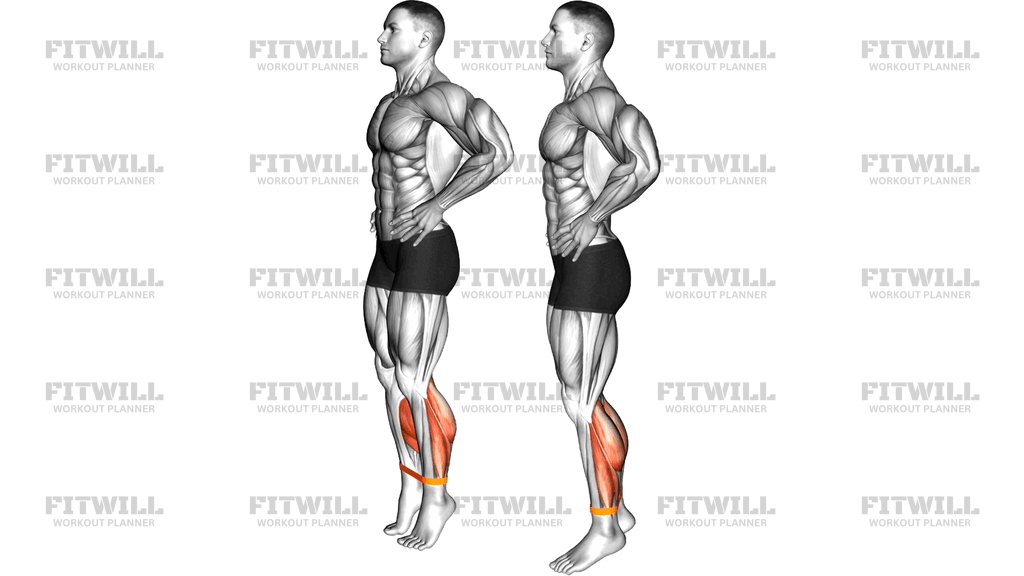
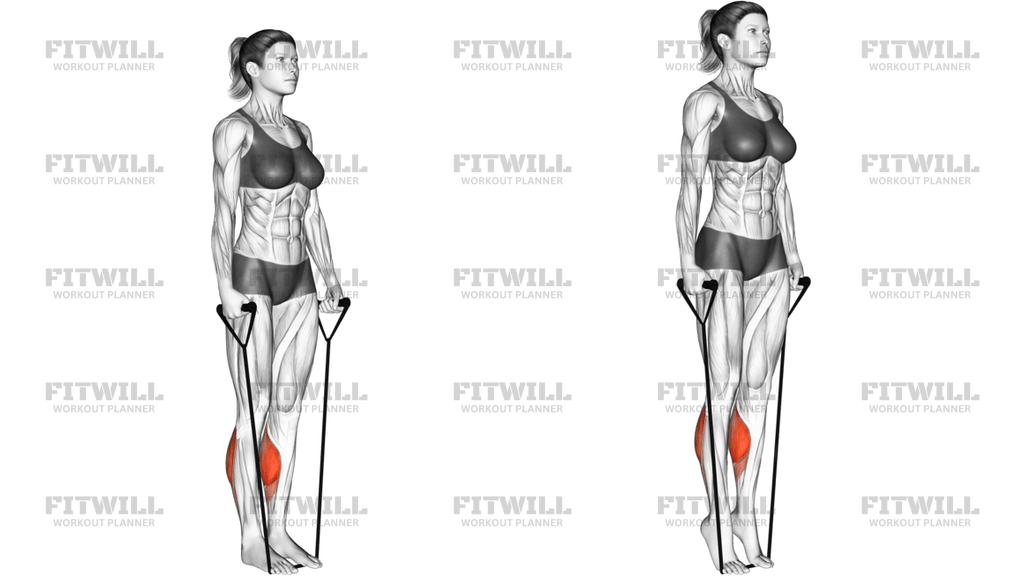
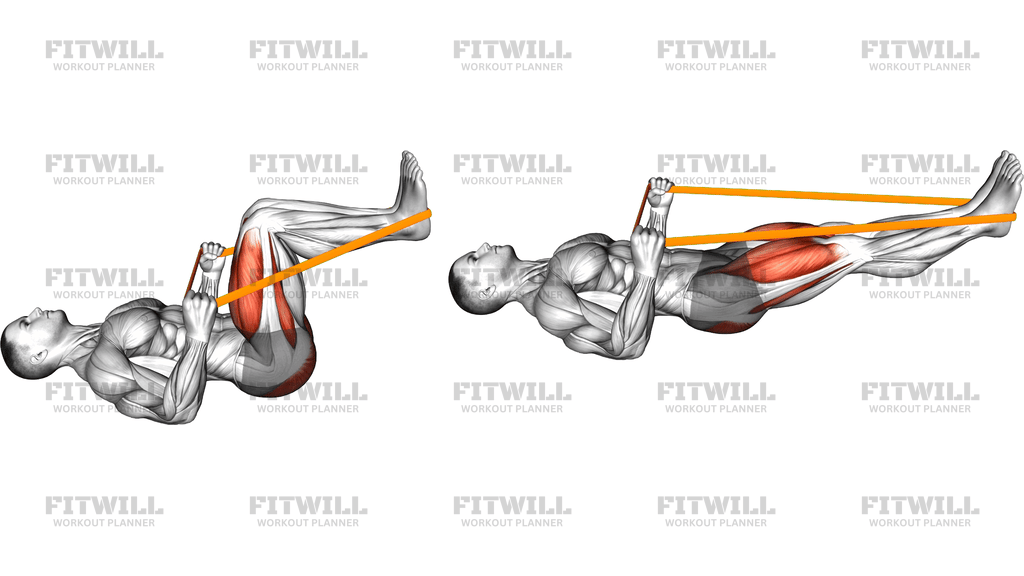
The image shows a floor-seated setup with the legs extended in front, the band running over the forefoot, and the hands holding the band ends to keep constant tension. That arrangement matters because the line of pull should stay centered through the balls of the feet. If the band drifts onto the toes, the foot slips, or the hands get too close and remove tension, the calf work becomes less precise and the exercise turns into a grip or posture drill instead.
A good repetition begins from a slightly flexed ankle position, then the forefoot presses away until the ankles are fully pointed and the calves are hard at the top. Pause briefly in that shortened position, then lower slowly until the calves and Achilles tendon feel a controlled stretch. The torso should stay tall and quiet, the knees should not start bending to help the rep, and the feet should move together rather than one side taking over.
This exercise is a practical choice for calf hypertrophy, ankle conditioning, warm-up work before lower-body training, or accessory work when standing calf raises are not a good fit. It can also be useful for people who want to isolate the lower leg without the loading demands of a machine or dumbbells. The goal is not to bounce through a large range, but to make each rep look and feel deliberate, with clear tension on the calves from start to finish.
Keep the range pain-free and the tempo honest. If the feet cramp, the band snaps the ankles around, or the heels and knees start moving to help the rep, the setup is too aggressive. Use just enough resistance to finish the full set with a clean top squeeze, a controlled return, and the same foot position on every rep. When performed well, this is a simple but effective calf builder that rewards precision more than speed.
[ Workout Log & Planner ]
Put your next workout in Fitwill
Keep your plan and training log ready when you are.


Instructions
- Sit on the floor with both legs extended, loop the band around the balls of your feet, and hold the free ends in your hands so the band stays under tension.
- Sit tall with your chest lifted, shoulders relaxed, and your heels and knees pointing straight ahead.
- Start with your toes pulled slightly toward your shins so the calves begin on a controlled stretch.
- Press the forefoot away from you by driving through the big toe and second toe, not by jerking the legs.
- Finish the rep when the ankles are fully pointed and both calves are tightly contracted.
- Hold the top position for a brief squeeze without letting the knees bend or the torso lean back.
- Lower slowly until you return to the starting stretch and keep the band tension smooth on the way down.
- Breathe out as you press away and breathe in as you come back to the start.
- Reset the feet and hand position if the band slips or the tension changes from side to side.
Tips & Tricks
- Keep the band centered over the balls of the feet so the load stays on the ankles instead of the toes.
- Use enough distance between your hands and feet to keep tension through the whole rep; if the band goes slack at the top, scoot farther away.
- Let the heels travel only through the ankle joint; do not rock the whole body forward to fake a bigger calf contraction.
- Keep both feet moving together so one ankle does not finish the rep early while the other lags behind.
- A slower lowering phase usually gives better calf and Achilles tendon loading than a quick drop.
- If your toes cramp, reduce the band tension and keep the pressure spread through the big toe mound and second toe.
- Do not turn the rep into a knee exercise; the knees can stay softly extended, but they should not be pumping the movement.
- Stop the set if the band starts pulling the foot inward, the arches collapse, or the ankles lose a straight line.
- Choose a band that lets you reach a clear top squeeze without losing control of the return.
Frequently Asked Questions
What muscles does Resistance Band Calf Raise work?
It primarily trains the calves through ankle plantarflexion, with the ankle and foot muscles helping keep the line of force stable.
Is this a seated calf raise?
Yes. The image shows a floor-seated long-sit setup, which makes the calf work more isolated and easier to control than standing work.
Where should the band sit on my foot?
Place it across the balls of the feet, not the tips of the toes. That keeps the resistance on the ankle instead of letting the band slide.
Should my knees stay straight?
Keep them mostly extended with only a soft, natural bend if needed for comfort. The repetition should still come from the ankles, not from bending the knees.
Why do I feel this in my toes or shins?
Usually the band is too far forward, the resistance is too high, or the feet are trying to help by curling. Re-center the band and lighten the load.
How do I keep the band from slipping?
Hold the band with steady hand tension, keep the feet aligned, and avoid letting the toes claw at the band during the top squeeze.
Can beginners do this exercise?
Yes. A light band and a controlled tempo make it a good option for learning calf isolation and ankle control.
What is the biggest mistake with this movement?
The most common problem is rushing the rep and letting the body or knees help. The ankles should be the only part that visibly moves.
How can I make it harder without changing exercises?
Use a stronger band, sit a little farther from the anchor point or your hands, or slow the lowering phase while keeping the same foot path.