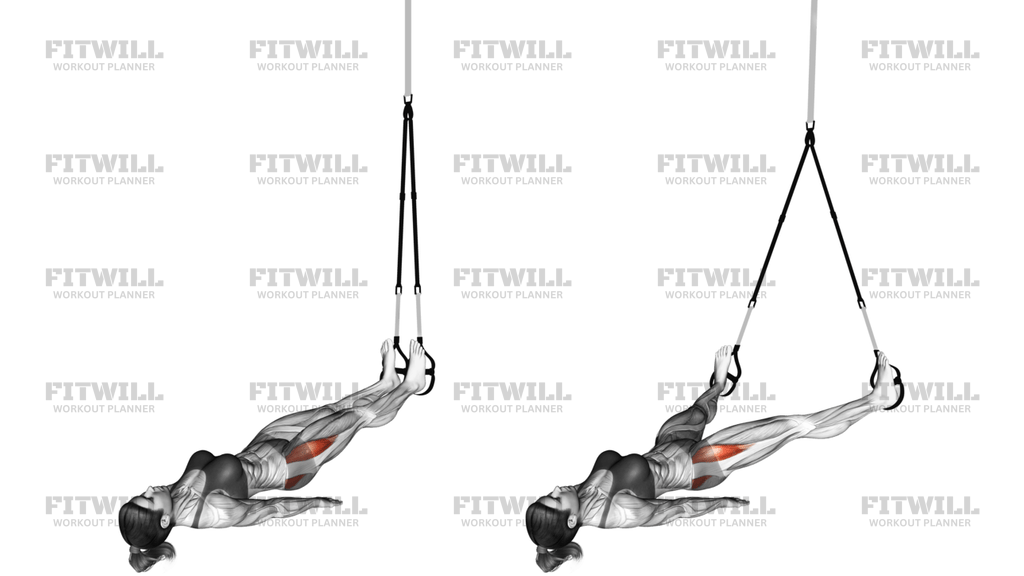
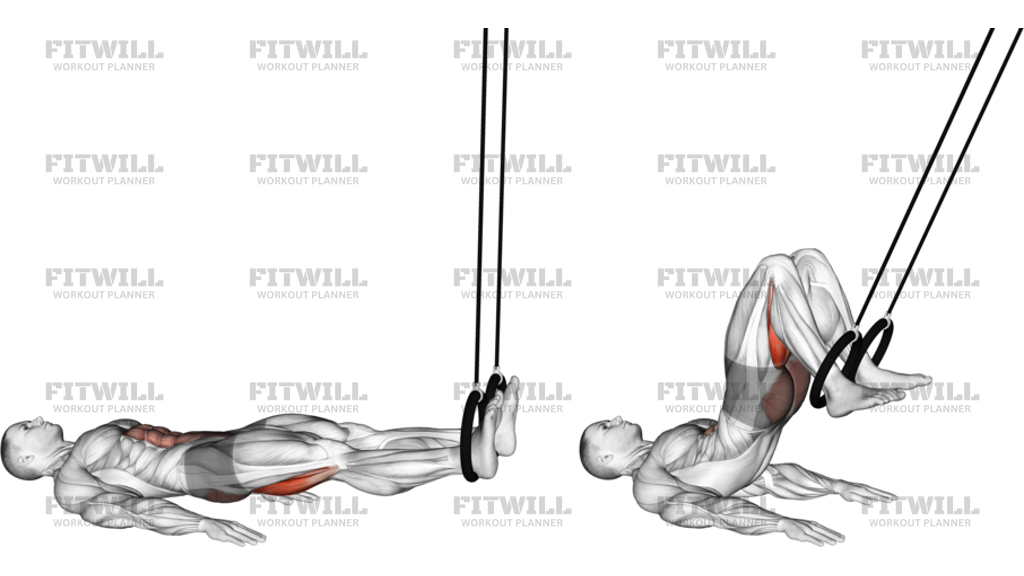
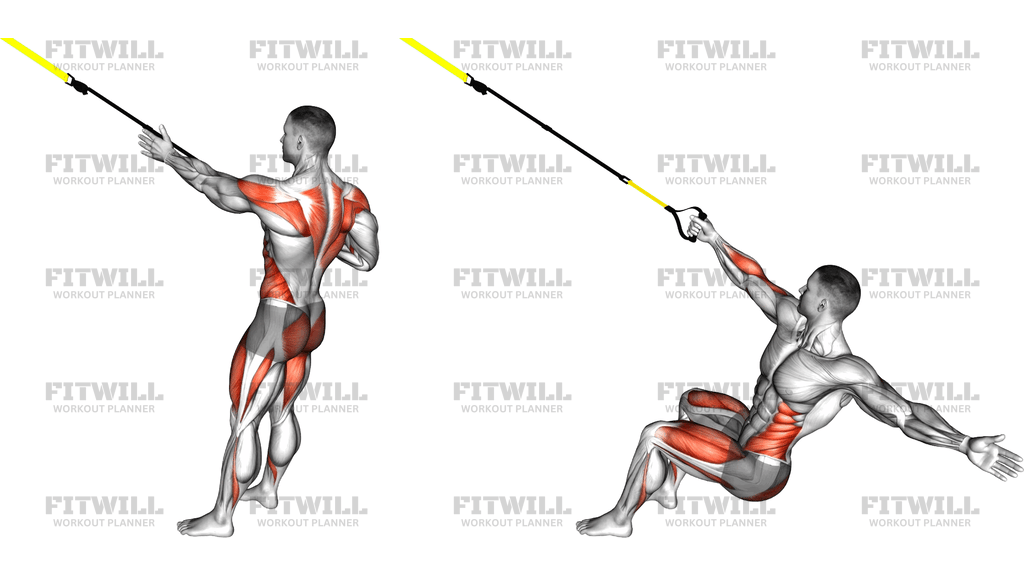
Suspension Hip Bridge
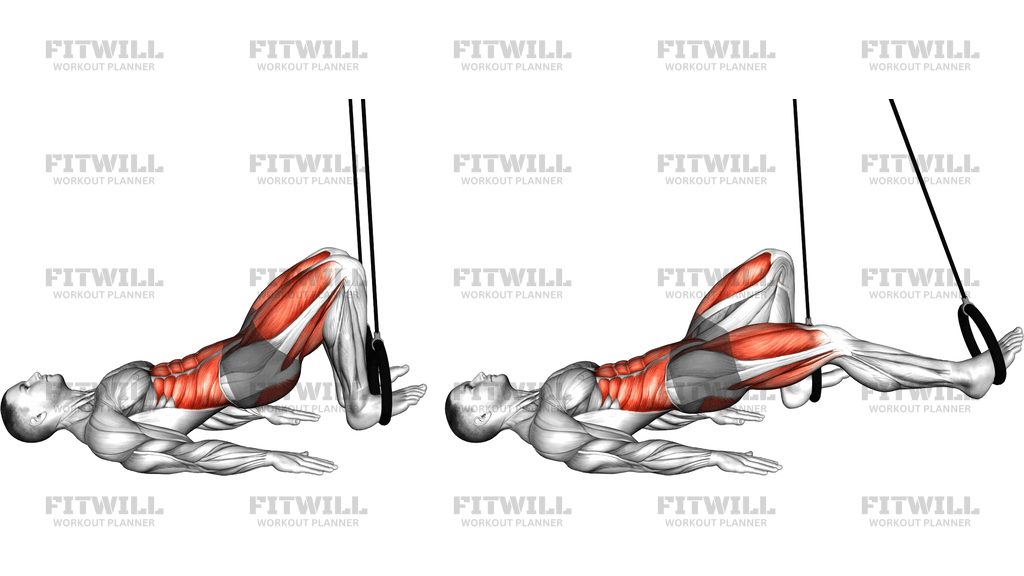
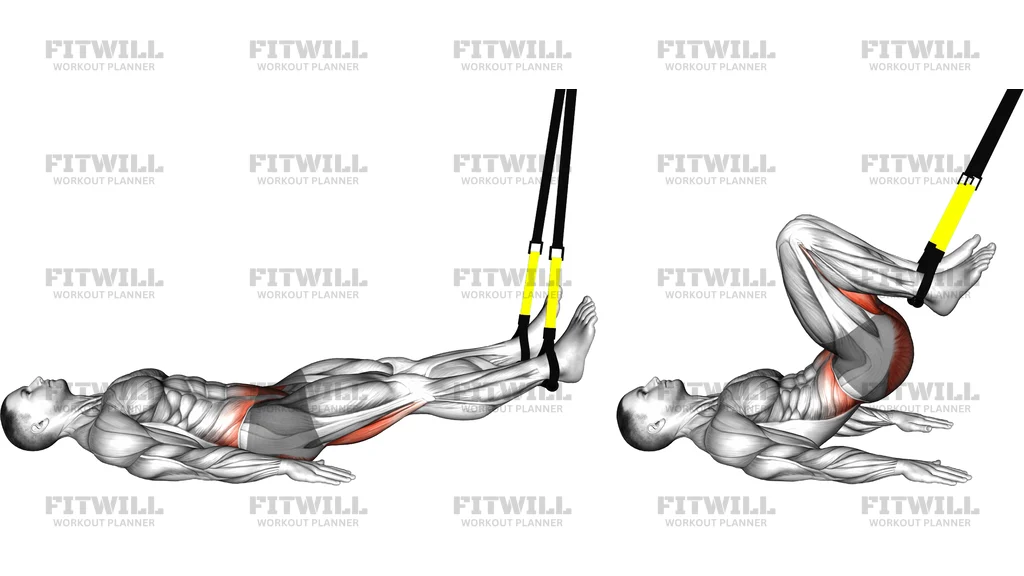
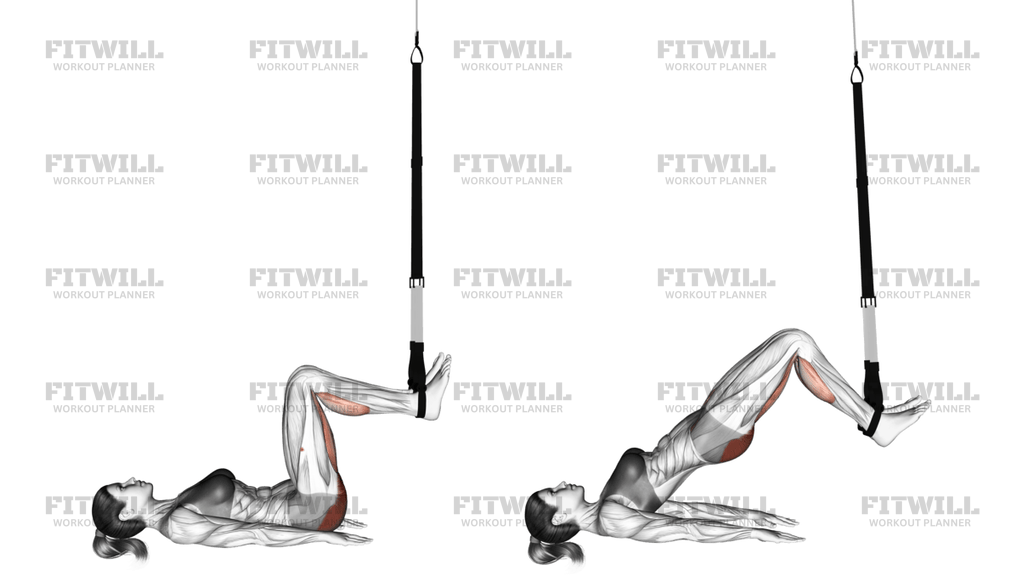
Suspension Hip Bridge is a supine glute bridge performed with both feet supported in suspension straps. It trains hip extension, glute strength, hamstring support, and trunk control while the straps add instability that forces you to keep the pelvis, ribs, and feet organized through the whole rep.
The exercise is most effective when the setup is precise. The feet should sit evenly in the straps, the knees should start bent, and the pelvis should stay level before you lift. If one strap is longer, the hips will drift and the set turns into a balancing drill instead of a clean bridge. A good repetition starts with the heels pressing down into the cradles, the core braced, and the lower back kept out of the movement.
At the top of the bridge, the goal is a straight line from shoulders through hips to knees without over-arching the spine. Think about driving the feet down and slightly forward while squeezing the glutes to finish the hip extension. The return should be slow and controlled so the straps do not swing and the hamstrings stay under tension instead of letting the body drop.
This movement is useful for glute-focused accessory work, posterior-chain conditioning, or warm-up volume before heavier lower-body training. It can also help lifters who want more hamstring and glute recruitment without loading the spine heavily. The instability from the suspension straps means quality matters more than range, so a smaller but cleaner bridge is better than chasing height with the ribs flared and the hips twisting.
Use it when you want a bodyweight lower-body exercise that challenges coordination as much as strength. Beginners can start with a short range and a brief pause at the top, while more advanced lifters can slow the lowering phase or move to single-leg variations once the two-leg bridge stays steady.
Fitwill
Log Workouts, Track Progress & Build Strength.
Achieve more with Fitwill: explore over 9600 exercises with images and videos, access built-in and custom workouts, perfect for both gym and home sessions, and see real results.
Start your journey. Download today!




Instructions
- Set the suspension straps to the same length and lie on your back beneath the anchor with both heels in the cradles, knees bent, and arms resting by your sides.
- Place your feet hip-width apart in the straps and let the knees stack over the ankles before you start the first rep.
- Press the heels gently into the cradles, tuck the ribs down, and brace the abdomen so the pelvis stays level.
- Exhale and drive through the heels to lift the hips until the shoulders, hips, and knees form a straight line.
- Keep the straps quiet as you rise; do not let the feet drift inward, outward, or higher than the knees.
- Squeeze the glutes at the top without arching the lower back or pushing the ribs up.
- Lower the hips slowly until they hover just above the floor while keeping tension in the straps.
- Reset your breath at the bottom and repeat for the planned number of reps.
Tips & Tricks
- If the straps are not even, fix the setup before you bridge; unequal strap length will twist the hips immediately.
- Keep the heels heavy in the cradles and the toes relaxed so the hamstrings and glutes do the work instead of the feet gripping.
- Stop the ascent when the torso is straight; going higher usually turns the rep into lumbar extension.
- Keep the ribs down at the top so the bridge stays in the hips instead of spilling into the low back.
- A slow three-second lowering phase makes the straps more useful and reduces swinging between reps.
- If your hamstrings cramp, bring the feet slightly closer and shorten the range before adding volume.
- Do not let the knees flare or collapse; keep them tracking in line with the hips and feet.
- A brief pause at the top is better than extra height because it removes momentum from the straps.
- If the shoulders slide or the neck tenses, reset the upper back and keep the head relaxed on the floor.
Frequently Asked Questions
What does Suspension Hip Bridge work most?
The main emphasis is on the glutes, with the hamstrings and core helping stabilize the bridge.
Where should my feet sit in the suspension straps?
Each heel should sit securely in a cradle or loop with both straps set to the same length.
How high should I lift my hips?
Lift until the shoulders, hips, and knees make a straight line, then stop before your lower back starts to arch.
Why do my hamstrings cramp during this bridge?
The feet may be too far away or the range may be too large. Bring the heels a little closer and shorten the rep.
Can beginners do this exercise safely?
Yes, but they should start with a small range of motion and focus on keeping the straps steady.
What is the biggest form mistake on Suspension Hip Bridge?
The most common error is arching the lower back and lifting too high instead of finishing with the glutes.
How can I make the movement harder?
Use a slower lowering phase, add a top pause, or progress to a single-leg version once the two-leg bridge is stable.
Should the straps swing during the rep?
No. The straps should stay quiet; if they swing a lot, reduce the pace and tighten the setup.