Lying Neck Extension
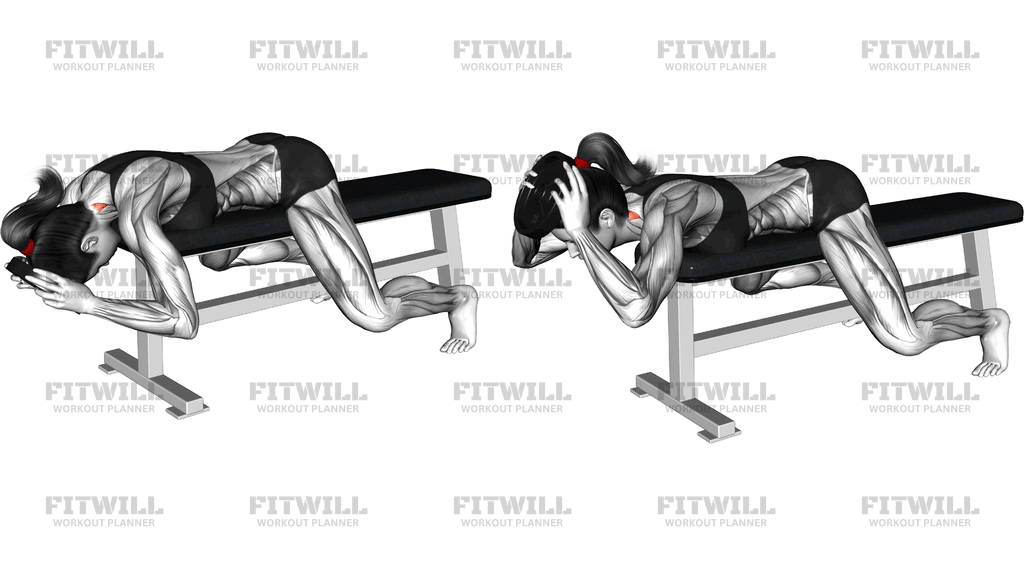
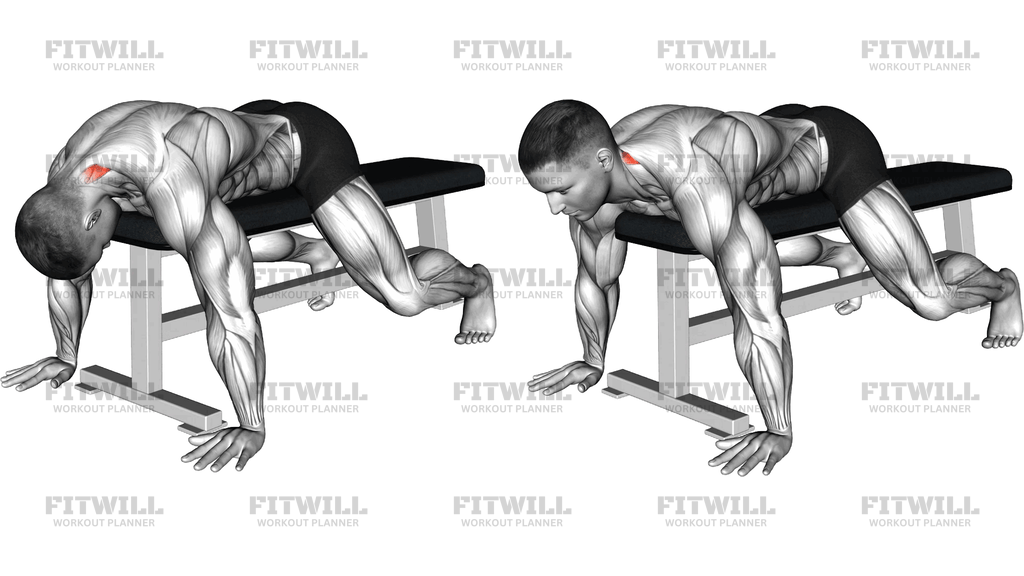
The Lying Neck Extension is a bodyweight exercise performed face down on a flat bench, with your head and shoulders hanging off the end so your neck can move freely through its full range. From that hanging position, you lift your head up until your neck reaches a straight, slightly extended line with your spine, then lower it back down under control. Because only the weight of your own head provides resistance, it is one of the safest and most accessible ways to train the muscles that extend the neck.
The main work is done by the neck extensors at the back of the cervical spine, with the upper trapezius and levator scapulae assisting as the head lifts. Strengthening these muscles matters for more than appearance. They support your head through hours of desk work, help hold your posture during pressing and pulling exercises, and play a role in contact sports and driving, where neck strength and control are genuinely useful.
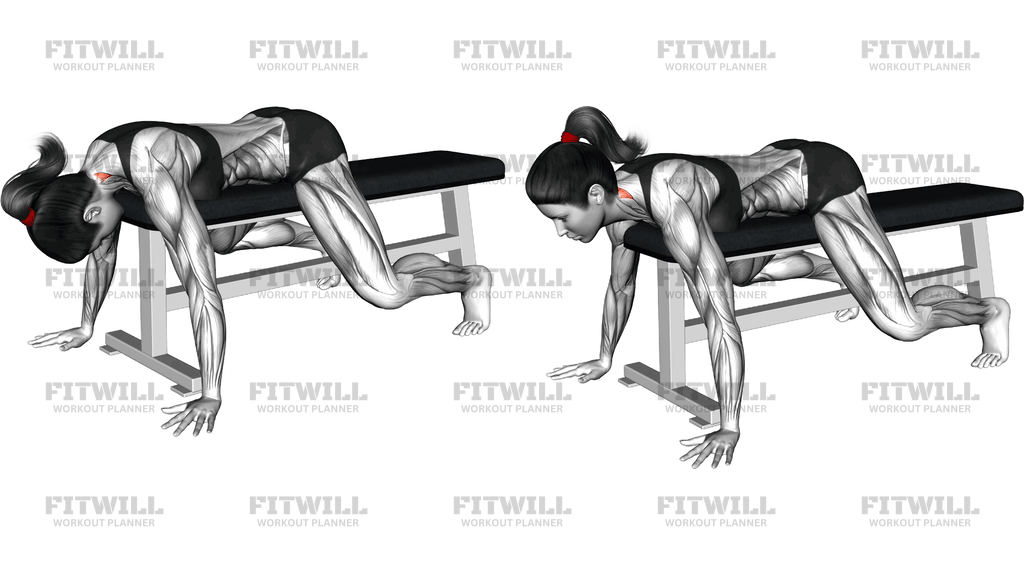
Setup is what makes this exercise safe. Your chest, torso, and hips should be fully supported on the bench, with your arms reaching down to the floor on either side for balance and your knees bent with feet resting on or near the ground. If your shoulders slide off the pad or your position feels unstable, the movement turns into a balancing act instead of a focused neck exercise. Take a moment to settle into the bench before your first rep.
Execution should feel slow and deliberate. Let your head hang toward the floor to start, then nod slightly and lift until the back of your neck is working hard and your head is roughly level with your body. Avoid throwing the chin up or snapping into the top position, and never force extra range at the end. The lift up takes effort; the way down deserves just as much attention, since lowering slowly is where much of the strength benefit lives.
This exercise suits office workers with stiff, weak necks, lifters who train everything except the muscles that hold their head up, and athletes in sports where neck resilience is valuable. Beginners can start with a single set of ten to twelve reps, while more experienced trainees can add sets or hold the top position briefly. As a general guideline, keep the movement smooth, breathe steadily, and stop short of any position that causes pinching, dizziness, or sharp discomfort.
[ Workout Log & Planner ]
Put your next workout in Fitwill
Keep your plan and training log ready when you are.


Instructions
- Lie face down along a flat bench with your chest and torso fully supported and your head and shoulders extending past the end of the pad.
- Bend your knees and let one lower leg rest against the bench or floor for stability, then reach your arms down to the floor on either side with palms flat for balance.
- Relax your neck and let your head hang toward the floor so the back of your neck feels a mild, comfortable stretch.
- Lightly brace your upper back and shoulders so your torso stays quiet on the bench throughout the set.
- Begin the lift by gently nodding your chin, then raise your head until your neck forms a straight, slightly extended line with your spine, keeping the movement smooth rather than jerky.
- Pause for a moment at the top with the back of your neck clearly working, without tilting the chin further toward the ceiling.
- Lower your head back down slowly, resisting the drop so the descent takes two to three seconds rather than falling freely.
- Exhale as you lift your head and inhale as you lower it, keeping your breathing relaxed and continuous.
- Complete your target reps, then carefully lift your torso back to a seated position instead of twisting your neck off the bench.
- Rest briefly between sets and shake out your shoulders so tension does not build in the upper back as the set continues.
Tips & Tricks
- Keep your chest glued to the pad. If your torso rocks to help lift the head, the neck muscles stop doing the work, so lighten the effort and move slower.
- Most people lift too far. Stop when your neck reaches a straight line with your spine; cranking the chin toward the ceiling adds strain without extra benefit.
- If the back of your neck feels tight rather than weak, spend a few sessions using a smaller range before chasing full reps.
- Do not interlace your fingers behind your head. Pulling on the skull turns a precise neck exercise into an uncontrolled crank.
- Place the bench so your forehead clears the pad completely. Brushing the bench on the way down shortens the range and breaks the rhythm.
- If your shoulders creep toward your ears as you lift, consciously press your arms toward the floor first, then start the rep.
- Lightheadedness means you are holding your breath or moving too fast. Reset, breathe continuously, and use a smaller range.
- Progress with reps or a brief hold at the top before adding any external weight; the head is enough load for most people for a long time.
- Warm the area up with a few gentle chin tucks and slow head circles before your first set to make the first rep feel smooth.
Frequently Asked Questions
What muscles does the Lying Neck Extension work?
It primarily targets the neck extensors along the back of the cervical spine, with the upper trapezius and levator scapulae assisting as the head lifts. The muscles of the upper back work mainly to keep your torso still on the bench.
Is the Lying Neck Extension safe for beginners?
Yes, because your head weight is the only resistance and the bench fully supports your body. Beginners should use a modest range and ten to twelve controlled reps, stopping well before any sharp or pinching sensation.
Why do I lie face down on a bench instead of doing this seated?
Lying prone removes gravity assistance from your torso and isolates the neck movement, so you cannot cheat by leaning back. The bench also supports your chest and hips, leaving only the head and neck free to work.
How far should I lift my head during the Lying Neck Extension?
Lift until your neck reaches a straight, slightly extended line with your spine and the back of your neck is clearly working. Going further toward the ceiling adds strain to the joint without training the muscles better.
My shoulders lift toward my ears during the set. What should I fix?
That is the upper trapezius taking over and shrugging instead of extending the neck. Press your palms lightly into the floor and keep your shoulders heavy on the pad before starting each rep.
Can I add weight to the Lying Neck Extension?
You can hold a light plate on the back of your head once bodyweight reps feel easy, but master the unweighted version first. The neck responds better to higher reps and smooth control than to heavy loading.
What can I use if I do not have a bench?
You can perform the same movement lying face down on the edge of a bed or a sturdy padded surface that allows your head to hang free. A mat on the floor does not work well because your chin and forehead restrict the range.
How often should I train the Lying Neck Extension?
Two to three sessions per week with at least a day between them is enough for most people. The neck muscles recover quickly, but they do not need daily work to get stronger.
Should I feel discomfort in my neck during this exercise?
Muscular effort at the back of the neck is expected, but pinching, sharp pain, tingling, or dizziness are signals to stop. Reduce the range first, and if those sensations continue, check with a qualified professional before continuing.
How does the Lying Neck Extension differ from a neck flexion exercise?
Flexion works the muscles at the front of the neck as you lower and lift the head the opposite way. The two complement each other, and training both keeps the muscles around the cervical spine balanced.