Lying Neck Extension
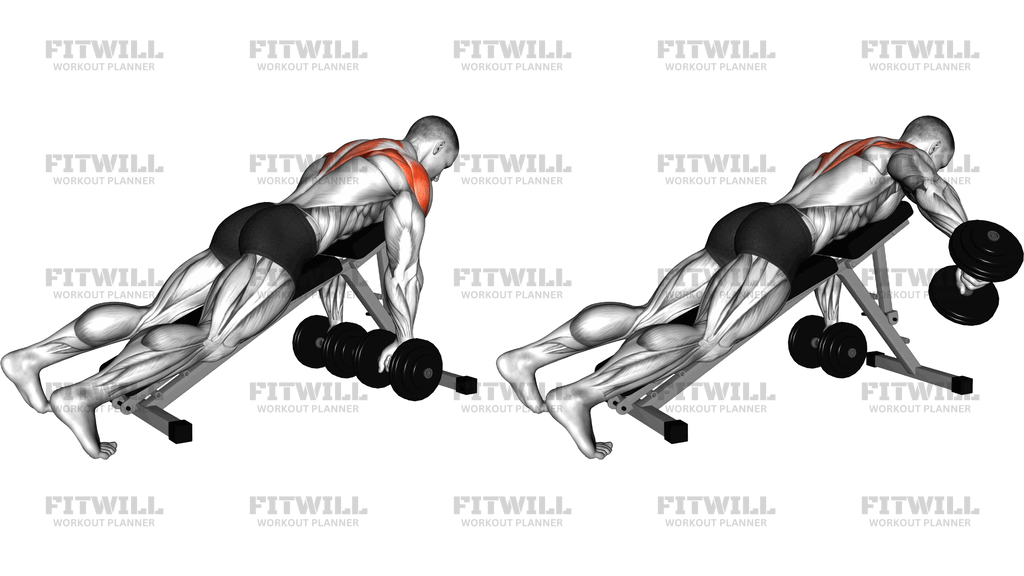
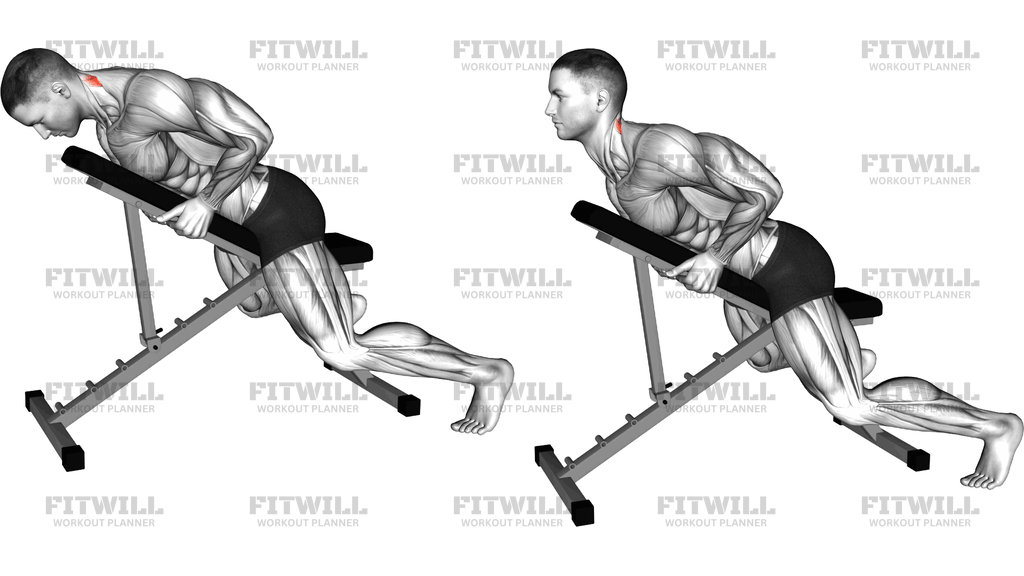
Lying Neck Extension is a bodyweight neck exercise performed face down on an incline bench, with your torso supported and your head free to move past the top edge of the pad. From this position you slowly lower your head toward the floor and then lift it back up by extending the neck, working against gravity the entire time. The highlighted working area in this movement sits at the base of the skull and upper neck, where the extensor muscles that pull the head backward do most of the work.
This exercise primarily trains the neck extensors, including the muscles of the upper neck and the upper trapezius, with support from the deeper spinal muscles of the cervical region. Because the bench angle tilts your torso forward, gravity pulls your head down into flexion at the start of each rep, so every lift back to neutral is a true concentric effort. It is the counterpart to lying neck flexion, which trains the front of the neck from the same bench setup.
The incline bench setup is what makes this movement practical and safe. Supporting your chest and torso on the pad removes the need to hold your body upright, so all of your attention can go to controlled head movement rather than posture. Gripping the sides or underside of the bench anchors your shoulders and stops them from shrugging or rocking, which keeps the work isolated to the neck.
This movement suits people building general neck strength and resilience, contact sport athletes who absorb impacts, lifters who want the neck to keep pace with the rest of their physique, and anyone dealing with a weak or undertrained upper back and neck area from long hours at a desk. Start with bodyweight only; the head is a surprisingly heavy lever, and even unweighted reps are demanding when performed slowly and through a full, controlled arc.
Execution quality comes down to tempo and range. Lower your head under control until you feel a mild stretch at the back of the neck, then lift until your neck reaches neutral or slight extension in line with your spine, without craning or shrugging your shoulders. Keep your jaw relaxed and breathe steadily throughout. Because the cervical spine is mobile and the loads are close to the head, treat this like a precision exercise: modest range, deliberate tempo, and no jerking or bouncing at any point in the rep.
[ Workout Log & Planner ]
Put your next workout in Fitwill
Keep your plan and training log ready when you are.


Instructions
- Set an incline bench to a moderate angle and lie face down on it with your chest and torso fully supported on the pad.
- Position yourself so your head extends past the top edge of the bench and your neck is free to move without the pad pressing into your chin or throat.
- Grip the sides or underside of the bench firmly with both hands to anchor your shoulders and stabilize your torso.
- Extend your legs behind you with knees on or near the floor, or brace your feet against the bench frame or floor for stability.
- Start with your neck in line with your spine, then slowly lower your head down toward the floor until you feel a light stretch at the back of the neck.
- Exhale as you lift your head back up by extending the neck, raising it until your head is level with or slightly above your spine.
- Squeeze briefly at the top without shrugging your shoulders toward your ears.
- Inhale as you lower your head back down under control, resisting gravity rather than letting it drop.
- Complete your reps, then carefully lift your head to neutral and slide back off the bench to dismount.
Tips & Tricks
- Keep the rep tempo slow, around two to three seconds down and one to two seconds up; fast reps let momentum do the work and put sudden stress on the cervical spine.
- Do not lift your head so far back that your face points at the ceiling; extending slightly past neutral is enough, and forcing more range mostly loads the joints rather than the muscles.
- If your shoulders creep up toward your ears during the lift, reset your grip on the bench and consciously press your shoulder blades down before starting the next rep.
- Avoid pushing off with your hands or rocking your torso to help the head up; if you need to, the set is finished or the angle is too steep.
- A flatter bench angle makes the exercise easier because gravity pulls on the head less directly; adjust the incline before adding external load.
- Keep your chin slightly tucked as you lower so the movement comes from the neck itself rather than leading with the jaw.
- Stop well short of any pinching, sharp pain, or dizziness; neck work should feel like muscle effort and a mild stretch, never joint discomfort.
- When bodyweight becomes easy, hold a small weight plate gently against the back of your head with one hand, but secure your grip on the bench with the other.
Frequently Asked Questions
What muscles does the Lying Neck Extension work?
It mainly targets the neck extensors at the back of the cervical spine, with strong involvement from the upper trapezius and supporting work from the deeper upper spinal muscles.
Why use an incline bench instead of doing neck extensions lying flat?
The incline supports your torso at an angle so gravity loads the head directly, while the pad removes the need to hold your body position. Lying flat on the floor limits the range and makes loading awkward.
Is the Lying Neck Extension safe for beginners?
Yes, as long as you use bodyweight only, keep the range moderate, and move slowly. Beginners should start with short sets and add volume gradually before considering any added weight.
How far should I lower my head during the Lying Neck Extension?
Lower until you feel a mild stretch at the back of the neck, usually when your head is a comfortable distance below your spine. Do not chase maximum range; a controlled partial arc is effective and safer.
Should I hold weight on my head from the start?
No. Learn the movement with bodyweight first. If you later add a plate, hold it lightly against the back of your head and keep your other hand gripping the bench for stability.
Why do my shoulders shrug during the exercise?
The upper trapezius is involved in this movement, so it wants to lift the shoulders as you extend. Grip the bench firmly, set your shoulder blades down, and keep the range modest to stay isolated.
How often can I train the Lying Neck Extension?
The neck responds well to frequent, moderate work, so two to three sessions per week with light loads and controlled reps is a common approach. Allow at least a day between harder sessions.
What can I use if I do not have an incline bench?
You can lie face down on a flat bench with your head past the edge, though the resistance angle is less direct. A stability ball or the edge of a bed can work in a pinch, but make sure your torso is firmly supported.
Who benefits most from the Lying Neck Extension?
Contact sport athletes, people whose training neglects the neck, and anyone with a desk-heavy lifestyle who wants more strength through the upper back and neck area all benefit from this movement.
What should I do if I feel dizzy during the exercise?
Stop the set, bring your head to neutral, and rest before deciding whether to continue. Reduce the range and angle of the bench in future sessions, and avoid holding your breath while lifting.