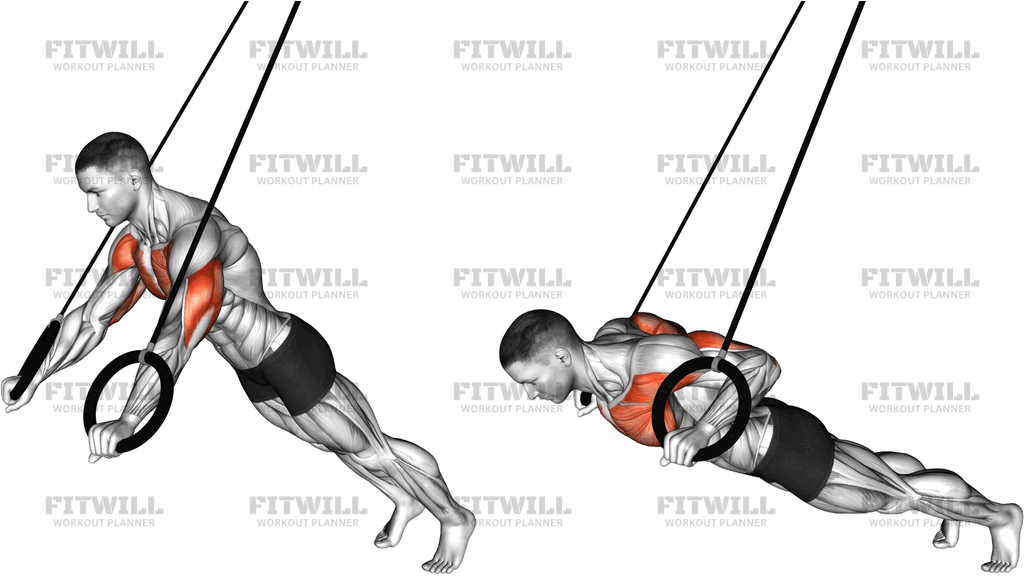
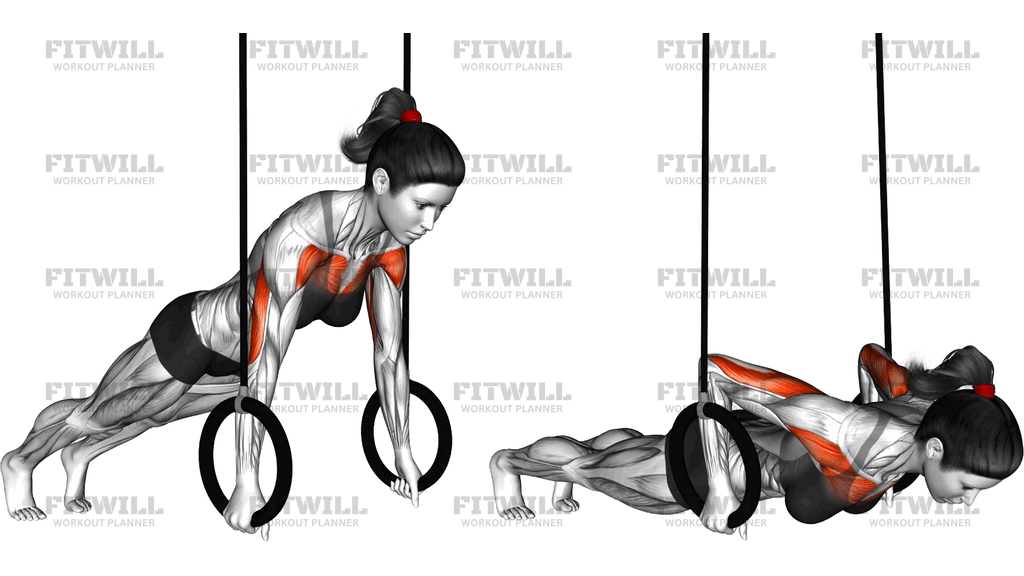
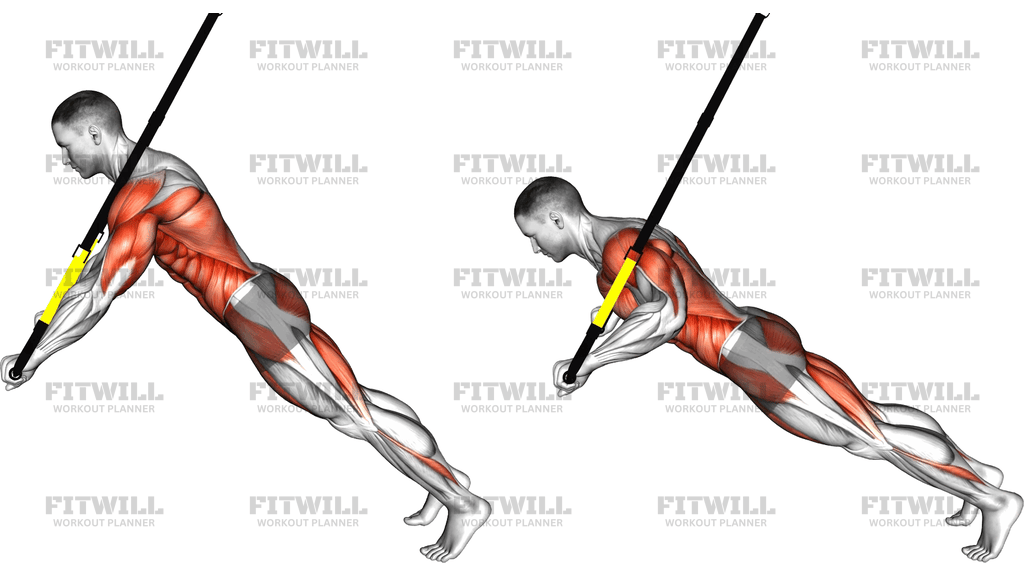
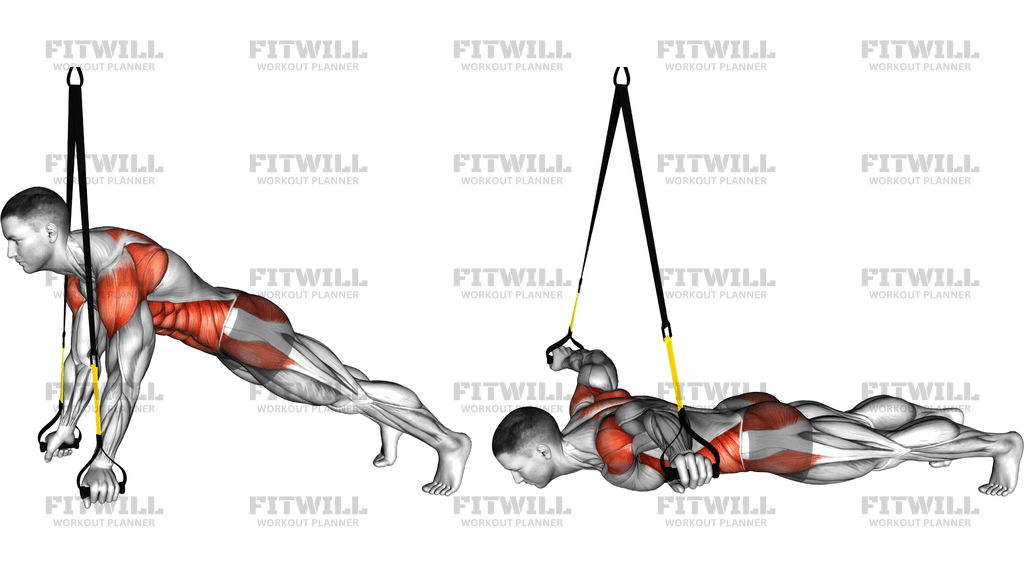
Suspender Front Raise
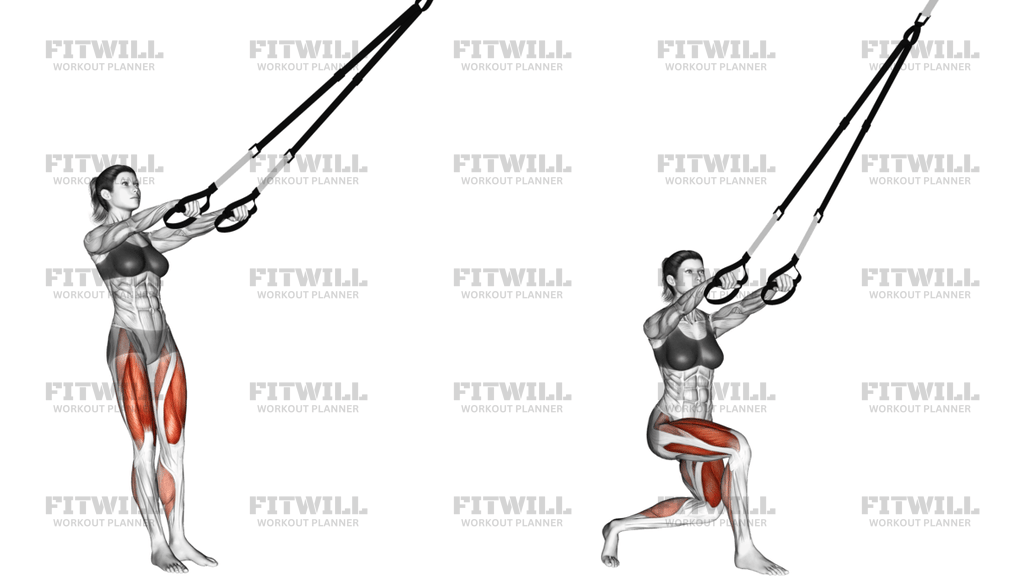
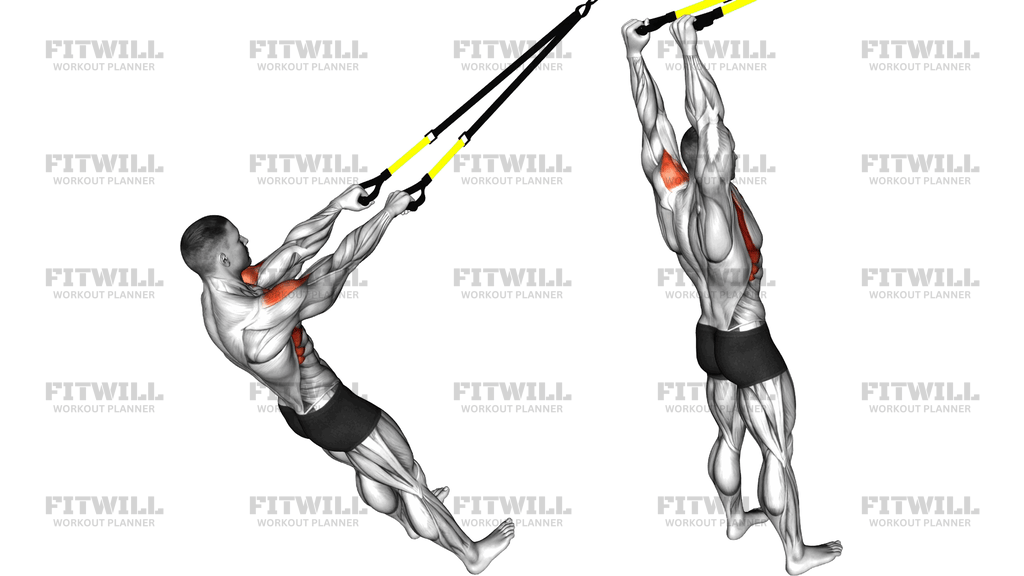
The Suspender Front Raise is a suspension trainer variation of the front raise in which your own bodyweight replaces the dumbbell. You stand facing the anchor point, grip the handles with straight arms, and lean back until the straps are taut and your body forms a rigid incline. From there you raise your arms up overhead toward the anchor, letting your body rise toward a more upright position, then lower back under control. Because the load comes from the angle of your lean rather than a fixed weight, you can scale the difficulty instantly by adjusting your foot position.
The main work is done by the front shoulders, which lift the arms against bodyweight resistance, with the upper chest and upper traps assisting as the arms travel overhead. What separates this from a standing front raise with a dumbbell is the demand on your trunk: your core, glutes, and legs must hold a straight line from head to heels while the straps pull you forward and down. That anti-extension job makes this a genuinely useful exercise for people who want shoulder work and trunk stability in the same rep.
Setup matters more here than in most front raise variations. If the anchor is too low or your lean is too aggressive, the exercise turns into a core endurance test and your shoulders stop getting the intended stimulus. Start conservatively — a slight backward lean with the straps under mild tension — and only walk your feet further back once you can finish every rep with straight elbows and no sagging hips.
To perform it well, think of your arms and torso as one rigid lever. Keep your elbows nearly locked, pull your shoulder blades slightly down before you start, and raise the handles in a smooth arc until they point at the anchor and your arms are beside your ears. Avoid jerking the straps or letting your lower back arch as your arms pass overhead. The return should be just as controlled as the lift, with the body sinking back to the starting incline.
This movement suits lifters who train with minimal equipment, people rehabbing toward heavier overhead pressing, and anyone who finds a bar or dumbbell front raise awkward on the wrists, since the neutral grip of the handles is much friendlier to the shoulder joint. It also fits well as a warm-up activation drill before pressing days or as a finishing high-rep movement, because a two-foot step is all it takes to change the load.
[ Workout Log & Planner ]
Put your next workout in Fitwill
Keep your plan and training log ready when you are.


Instructions
- Anchor the suspension trainer to a secure overhead point and adjust the straps to roughly mid-length so the handles hang near your waist.
- Face the anchor, take one handle in each hand with a neutral grip, and walk your feet back until the straps are taut and your arms are extended straight forward at shoulder height.
- Set your feet about hip-width apart, lean back into the straps, and brace your core so your body forms one straight line from head to heels.
- Pull your shoulder blades gently down and back to stop your shoulders from rounding forward at the start.
- Keeping your elbows nearly straight, raise both arms up in an arc toward the anchor until your hands are overhead and roughly in line with your ears.
- Let your body rise to a more upright angle as your arms lift, but keep the straps taut the entire time — do not step in to slacken them.
- Pause briefly at the top with arms fully extended overhead and shoulders pulled down away from your ears.
- Lower your arms back down along the same arc, controlling your body back into the starting lean without letting your hips sag or your lower back arch.
- Exhale as you raise your arms, inhale as you lower back to the starting position.
- Complete all reps on one foot position, then reset your stance and strap tension before the next set.
Tips & Tricks
- If your hips drop and your lower back arches as the arms go overhead, your lean is too aggressive — step your feet back toward the anchor to shorten the lever and reduce the load.
- A common mistake is bending the elbows to help the arms up, which turns this into a pull rather than a raise; keep the elbows locked and reduce your lean if you cannot finish the rep.
- Do not let the handles drift apart or behind your head at the top — aim your hands straight at the anchor point so the front shoulders, not the side shoulders, do the lifting.
- Shrug your shoulders toward your ears at the top and the traps take over; actively keep them pulled down throughout the arc.
- Squeeze your glutes before the first rep. Without that, the straps will pull your pelvis into a forward tilt and the movement becomes a lower back exercise.
- Because the straps are your only resistance, tempo is your loading tool — a slow three-second lower makes a modest lean feel far harder than stepping back an extra foot.
- If the handles twist or the straps rub your arms, shorten the straps slightly so your hands travel clear of your body at the top.
- Stop the set when your trunk position breaks down, not when your shoulders fatigue; a sagging hip on rep twelve tells you the core, not the delts, ended the set.
- For a shoulder-friendly warm-up, use a very shallow lean and higher reps — the neutral grip places far less stress on the shoulder joint than a barbell front raise.
Frequently Asked Questions
Which muscles does the Suspender Front Raise work?
The front shoulders are the primary movers, with the upper chest and upper traps assisting as the arms travel overhead. Your core and glutes work isometrically to keep your body in a straight line against the pull of the straps.
How is the Suspender Front Raise different from a dumbbell front raise?
Instead of lifting a fixed weight, you lean away from the anchor and lift a portion of your own bodyweight. This lets you adjust the load instantly by moving your feet, and the reclined position adds a constant trunk-stability demand.
How far back should I lean during the Suspender Front Raise?
Start with only a slight lean where the straps are just taut and you can complete all reps with straight elbows and solid form. Walk your feet further back only when that position feels easy, since a steeper angle means more resistance.
Should my elbows stay straight during the movement?
Yes, keep them nearly locked throughout. Bending the elbows shortens the lever and shifts work toward the arms, turning the raise into a partial pull instead of a shoulder exercise.
Why do my hips sag when I raise my arms overhead?
As the arms rise, the straps pull you forward and the demand on your core spikes. Squeeze your glutes and brace your abs before each rep, or reduce your lean — a sagging hip means the position, not the effort, is the problem.
Is the Suspender Front Raise suitable for beginners?
Yes, and it is actually a good introduction to front raises because the resistance is easily scaled. Begin with a very shallow lean and a slow tempo, and only progress the angle once your trunk stays rigid for all reps.
What can I use instead of a suspension trainer for this exercise?
A light resistance band anchored low in front of you works as a substitute, though you lose the bodyweight lean. A cable set to a low pulley with a neutral-handle grip also mimics the arm path reasonably well.
How high should I anchor the straps?
Anchor them at or slightly above head height on a sturdy overhead point. Too low an anchor changes the angle of pull and makes the setup feel unstable, so test that the straps stay clear of your body at the top of the raise.
How many reps should I do?
Because the load is adjustable by foot position, aim for a range where the last two or three reps are challenging but your body line never breaks — typically 8 to 15 reps for strength work or 15 to 20 with a shallow lean as an activation drill.
Is it safe to do this exercise with shoulder problems?
The neutral grip and self-adjustable resistance make it gentler on the shoulder joint than many barbell front raise versions, but if you have a current or previous shoulder issue, use a very shallow range at first and stop if you feel pinching rather than muscle effort.