Jump Shrug
The Jump Shrug is an explosive barbell exercise that blends a vertical jump with a powerful shrug performed at the top. You hold a barbell at arm's length against the front of your thighs, dip a few inches by bending the knees and hips, then drive through the floor as hard as you can. As the hips and knees finish extending, you snap the shoulders up toward the ears and rise onto the toes, letting the bar float upward with the body rather than pulling it with the arms.
This movement is a staple in strength and conditioning because it teaches triple extension — simultaneous extension of the ankles, knees, and hips — which is the foundation of sprinting, jumping, and every Olympic lift. Weightlifters use it to groove the transition from leg drive to the shrug, while field-sport athletes use it to build rate of force development without the technical demands of a full snatch or clean. Because the arms stay relaxed, it lets you overload the hip and leg extensors with heavy loads while keeping the shoulders and elbows in a safe, straight-line position.
Although the traps are the visible star at the top of the rep, the bulk of the work comes from the quads, glutes, and hamstrings during the drive, with the calves finishing the push and the forearms and grip holding the bar steady. The shrug itself is fast and short — a sharp elevation of the shoulder blades, not a long pull. Flexibility in timing matters more than strength here: the shrug should peak exactly as the legs finish extending, not before and not after.
Setup makes or breaks this lift. The bar should sit against the thighs with a shoulder-width or slightly wider grip, arms fully straight, feet about hip-width apart, and your weight balanced over the middle of the foot. A braced trunk and neutral spine keep the dip controlled; letting the chest drop or the knees slide forward turns the dip into a soft squat and bleeds power out of the jump. Keep the bar close to the body throughout so the force travels straight up through the bar path rather than swinging it away.
Because each rep ends with a landing, the Jump Shrug rewards a controlled return. Come down onto full feet with soft knees, reset your brace, and take a breath before the next rep rather than rattling off rapid touches. Start light — even an empty bar or a pair of small plates — until the dip-drive-shrug rhythm feels automatic, then build the load gradually as the movement stays crisp.
Fitwill
Log Workouts, Track Progress & Build Strength.
Achieve more with Fitwill: explore over 9600 exercises with images and videos, access built-in and custom workouts, perfect for both gym and home sessions, and see real results.
Start your journey. Download today!




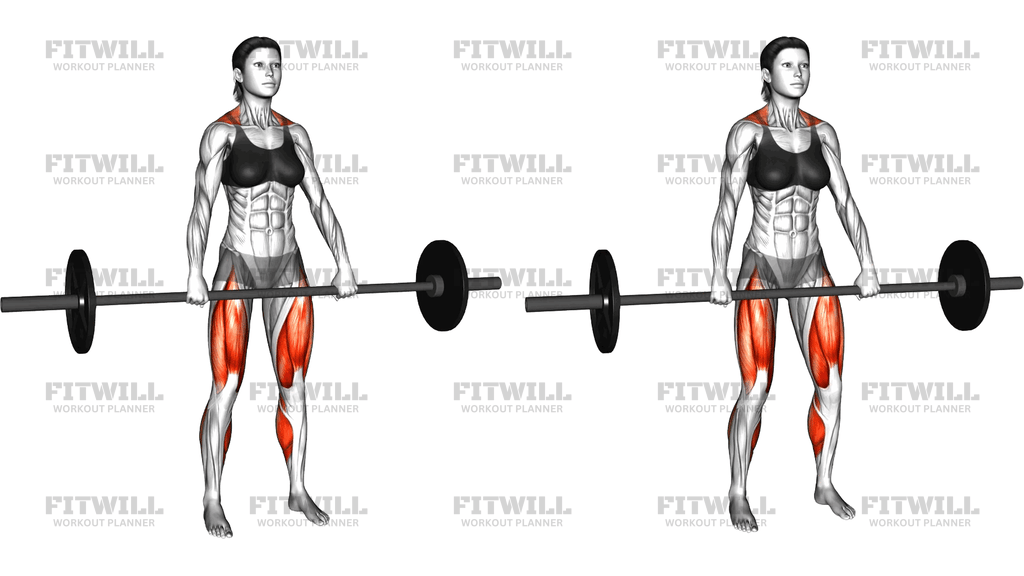
Instructions
- Stand with feet about hip-width apart and roll or lift a barbell up to your thighs, gripping it with hands slightly wider than shoulder-width and arms completely straight.
- Position the bar against the front of your thighs with shoulders back, chest tall, and your weight balanced over the middle of each foot.
- Brace your trunk by tightening the abs and lower back, keeping the spine neutral and eyes forward.
- Dip by bending the knees and hips together, lowering only a few inches so the bar slides down to just above the knees.
- Reverse the dip explosively — drive the feet through the floor and extend the hips, knees, and ankles fully in one aggressive push.
- At the top of the drive, shrug your shoulders straight up toward your ears as fast as possible while keeping the elbows locked and arms relaxed.
- Rise onto the balls of your feet as the shrug peaks, letting the bar drift slightly up with the body without bending the elbows.
- Lower the balls of your feet back to the floor first, then absorb the landing with soft knees as the bar settles back against your thighs.
- Exhale during the drive, then reset your brace and take a fresh breath before starting the next dip.
- Complete the set, then lower the bar under control to the floor or return it to a rack rather than dropping it between reps.
Tips & Tricks
- The most common fault is bending the elbows to curl the bar up — think of your arms as hooks and ropes, and let the legs and shrug create all the height.
- If the bar swings away from your thighs, your hips are shooting back too early in the drive; keep the hips under the bar and push the floor straight down.
- Keep the dip short. Dropping into a deep quarter squat turns the rep into a slow grind and kills the elastic snap that makes the Jump Shrug effective.
- Count the timing as one word — dip, jump-shrug — rather than three separate movements; the shrug should feel like it fires at the instant the legs lock out.
- Avoid rolling the shoulders backward at the top; the shrug travels vertically, so the shoulder blades rise straight up instead of circling.
- Look straight ahead and keep the neck neutral; craning the chin up during the drive tends to tip the chest forward and pulls the bar off the thighs.
- Use a hook or overhand grip you can trust with a heavy bar, and chalk your hands if grip starts failing before your legs do.
- Land quietly. Loud, stiff landings mean your knees and hips are absorbing the descent instead of your muscles, which adds wear without adding benefit.
- Keep each rep deliberate and reset between them — this is a power exercise, so speed under fatigue only teaches sloppy timing.
Frequently Asked Questions
Which muscles does the Jump Shrug work the most?
The traps get the visible contraction at the top, but the quads, glutes, and hamstrings produce most of the power during the drive, with the calves finishing the push. The forearms and grip work isometrically to hold the bar.
Is the Jump Shrug good for beginners?
Yes, it is one of the friendliest entry points to explosive barbell training because the arms stay straight and there is no catch overhead or on the shoulders. Start with a light load and master the dip-drive-shrug rhythm before adding weight.
How heavy should I go on the Jump Shrug?
Use a load you can accelerate fully — if the bar moves slowly and the shrug feels sluggish, the weight is too heavy. Many lifters use 20–40% less than their power clean working weight for crisp, explosive reps.
What is the difference between a Jump Shrug and a regular barbell shrug?
A regular shrug is done standing still and isolates the upper traps, while the Jump Shrug adds a knee and hip dip plus a vertical drive so the whole lower body contributes power. The shrug in the Jump Shrug is shorter and sharper, timed to the top of the jump.
How deep should the dip be before the jump?
Only a few inches — enough to load the legs, with the bar sliding from mid-thigh to just above the knees. A deeper dip slows the reversal and turns the rep into a grinding squat instead of a jump.
Should my elbows bend at the top of the Jump Shrug?
No, keep the elbows locked and relaxed throughout. Bending the arms turns the rep into an upright row and steals force from the legs and traps while stressing the shoulder joints.
How many reps and sets work best for this exercise?
Because it is a power movement, lower reps work best — around 3–6 reps per set for 3–5 sets, with full rest between sets. Stop the set when the shrug height or jump speed noticeably drops.
Can I do the Jump Shrug with dumbbells instead of a barbell?
Yes, dumbbells held at the sides work well and are easier on the grip, though the barbell version allows heavier loading. Keep the same rule: straight arms, short dip, explosive drive, sharp shrug.
Is it safe to do Jump Shrugs with lower back sensitivity?
The neutral-spine dip and landing are generally manageable, but the movement does load the trunk dynamically. If you have a history of back issues, start with a very light bar, prioritize bracing, and check with a qualified professional before loading it heavily.
Where should the Jump Shrug fit in my training week?
Place it early in a session, after your warm-up and before heavier strength work, while your nervous system is fresh. It pairs naturally with cleans, snatch-grip work, or squat variations on lower-body power days.