Cable 45 Degrees Single Arm Reverse Fly
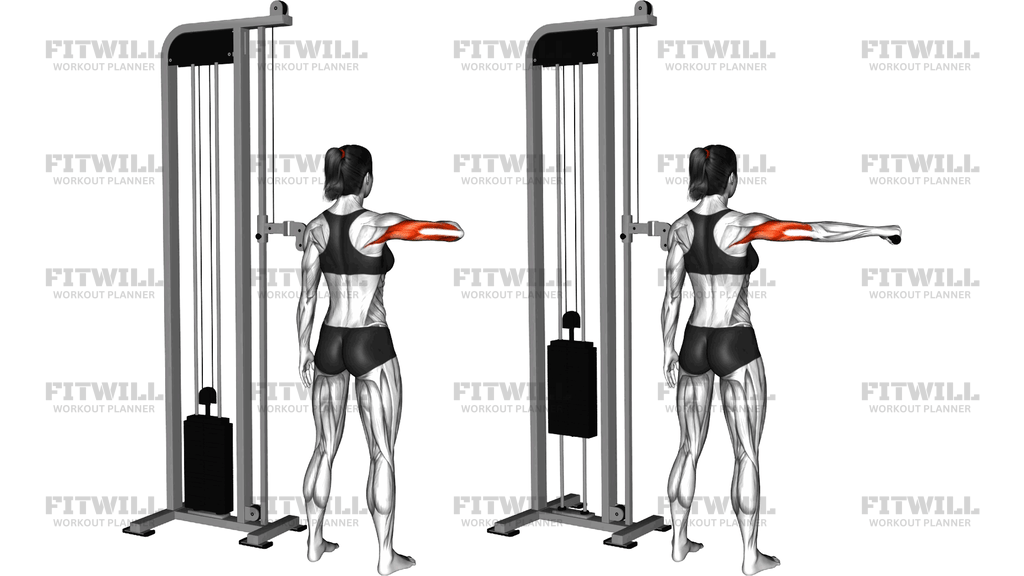
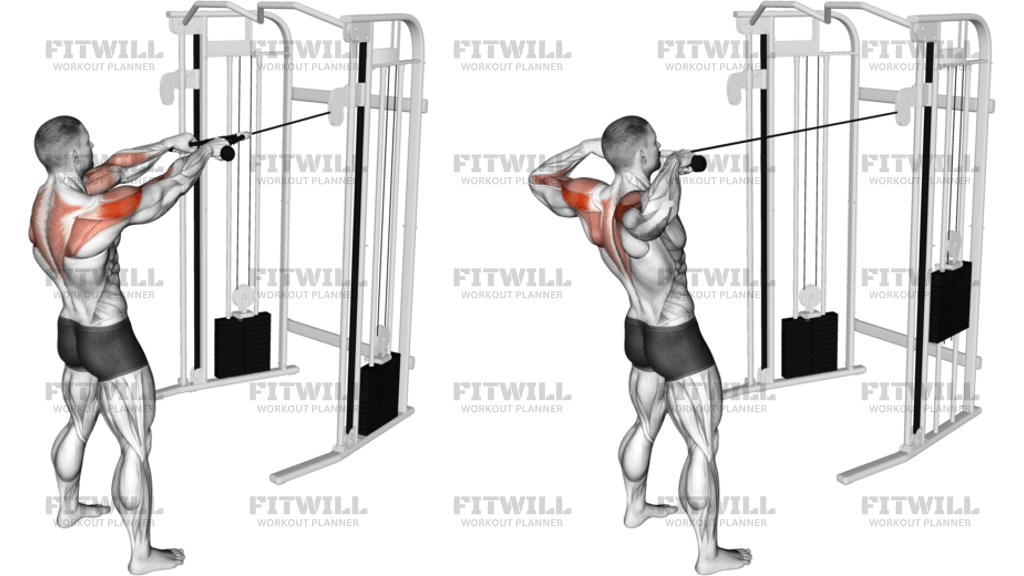
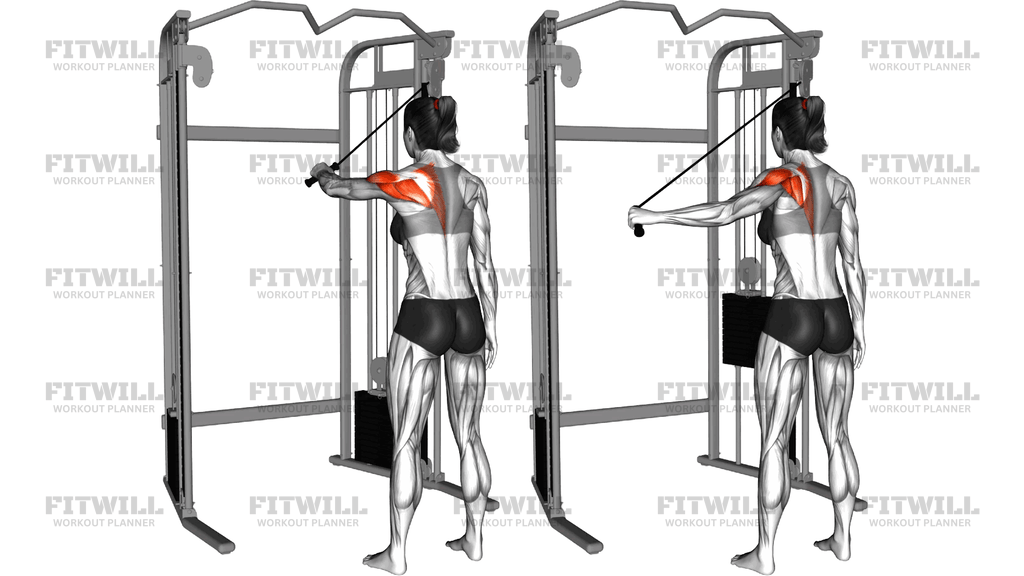
The Cable 45 Degrees Single Arm Reverse Fly is a standing horizontal abduction exercise performed one side at a time with a cable pulley set high so the line of resistance runs down toward your working hand at roughly a 45-degree angle. You grip a single handle with one arm extended across your body, then sweep it out and back in a wide arc until it reaches shoulder height beside you. Because the cable pulls diagonally rather than straight back, the tension on the rear shoulder and upper back changes throughout the range, which is something a dumbbell reverse fly simply cannot recreate.
This movement is a strong choice for anyone whose rear shoulders lag behind the front and side heads, which is extremely common in people who bench press, press overhead, or sit at a desk for long hours. The diagonal cable path also recruits the rhomboids and middle trapezius as the shoulder blade retracts at the end of the pull, so you get rear delt and upper back work in one controlled motion. Training one arm at a time also exposes left-to-right differences that usually hide in two-arm variations.
Setup matters more here than in most fly variations. Stand far enough from the machine that the cable stays taut with your arm extended across your body, and position yourself so the cable angle roughly matches the line from the pulley down to your hand. If you stand too close, slack builds up at the start and you lose tension in the stretched position; too far away and the start feels like a heavy cross-body pull instead of a fly.
Execution should feel like drawing a wide, slow arc with your hand. Keep the elbow slightly bent and fixed, let the motion come from the shoulder, and finish with the arm out to the side at or near shoulder height before resisting the cable on the way back. The weight should stay light enough that your torso does not rotate into the pull — the moment your chest or hips twist, the rear shoulder stops doing the work.
You will see this exercise used as a secondary shoulder movement after pressing work, as a prehab tool for people managing cranky shoulders from heavy benching, and as a finisher in upper body or pull-focused sessions. Because each arm works independently against the cable, it is also a practical way to address the weaker side first and match its reps on the stronger side.
[ Workout Log & Planner ]
Put your next workout in Fitwill
Keep your plan and training log ready when you are.


Instructions
- Set the pulley to a high position and attach a single handle so the cable will run diagonally down toward your working hand at about 45 degrees.
- Stand sideways to the machine with your feet roughly shoulder-width apart, and grip the handle with the arm on the far side of your body so the cable crosses in front of your torso.
- Step away from the machine until the cable is already taut with your arm extended across your body, then soften your knees and brace your core.
- Hold a light bend in the working elbow and keep it locked in place for the entire set; the arm should move as one piece from the shoulder.
- Pull the handle out and across in a wide arc until your arm is extended out to your side at about shoulder height, leading with the elbow rather than the hand.
- Pause briefly at the end position and squeeze the back of your shoulder and your shoulder blade toward your spine.
- Slowly resist the cable as it draws your arm back across your body to the starting position, keeping tension the whole way.
- Exhale as you pull the handle out, inhale as you return it across your body under control.
- Complete all reps on one side, then switch your stance and grip to train the other arm.
Tips & Tricks
- Choose a lighter weight than you think you need — the diagonal cable angle makes the start position much harder than a standard reverse fly, and ego weights usually turn this into a torso swing.
- If your chest or hips rotate toward the handle as you pull, reduce the load or imagine your torso is glued to a wall facing sideways to the machine.
- Keep the working wrist straight and in line with the forearm; bending the wrist back to cheat the handle out shifts work away from the rear shoulder.
- Do not straighten the elbow completely at any point — a locked elbow turns the movement into an uncomfortable triceps and joint stretch instead of a shoulder fly.
- If the cable goes slack when your arm is crossed over your body, take one small step back from the machine; the stretched position is where much of the benefit lives.
- Lead the pull with the elbow and think about sweeping the arm wide, not lifting it up — a vertical raise pattern switches the work to the side shoulder.
- The hand should finish at or just below shoulder height. Pulling dramatically higher than that usually means the upper traps are shrugging to take over.
- Match reps and weight between sides, and always start with your weaker arm so the strong side cannot set an unfair pace.
Frequently Asked Questions
Which muscles does the Cable 45 Degrees Single Arm Reverse Fly work?
The rear shoulder is the primary mover, with the rhomboids and middle trapezius assisting as the shoulder blade retracts at the end of the pull. Small stabilizers around the working shoulder joint also stay active throughout.
Why is the cable set at a 45-degree angle in this exercise?
The high pulley creates a diagonal resistance line, so tension stays high while your arm is crossed over your body and shifts as you sweep out to the side. That changing resistance curve is the main advantage over a dumbbell reverse fly, which is hardest only at the top.
Is the Cable 45 Degrees Single Arm Reverse Fly suitable for beginners?
Yes, as long as the weight is kept light and the arc stays slow. Beginners often benefit from doing it first with no weight or a very light stack to learn the arc before adding load.
How far should I stand from the cable machine?
Far enough that the cable is already taut when your arm is extended across your body. If there is slack at the start, step back slightly; if the start position feels like a heavy drag, step in a little closer.
Should my elbow stay bent during the movement?
Yes, keep a small, constant bend in the elbow and do not let it change throughout the rep. Straightening or pumping the elbow turns the exercise into a triceps movement and strains the joint.
My upper traps burn when I do this — what am I doing wrong?
That usually means you are shrugging or pulling the hand too high above shoulder level. Lower the end position slightly, relax the shoulder toward the floor, and focus on sweeping the arm wide rather than up.
What can I use instead of the Cable 45 Degrees Single Arm Reverse Fly?
A bent-over single-arm dumbbell reverse fly or a band pull-apart with one arm anchored covers similar territory. The cable version is still preferable when available because the diagonal tension keeps the stretched position loaded.
Can I do this exercise every shoulder session?
The rear shoulder tolerates fairly frequent work, but it still needs recovery like any muscle. Two to three sessions per week with at least a day between them is a sensible starting point.
Is it safe for my shoulder joint?
Performed with light weight, a fixed soft elbow bend, and no torso rotation, it is generally a joint-friendly way to train the back of the shoulder. If you feel pinching or sharp pain in the joint, stop and shorten the range before reassessing your setup.