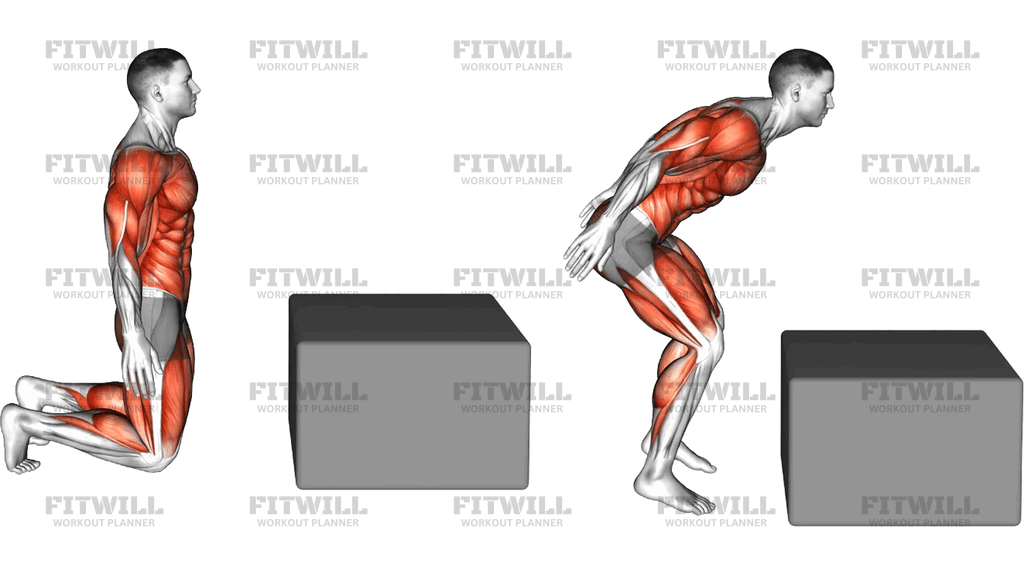
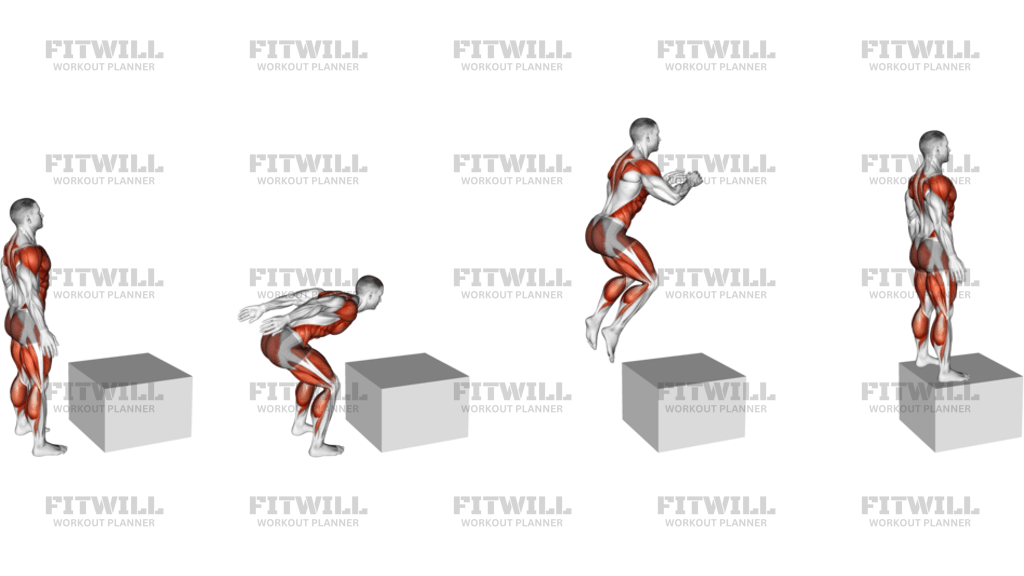
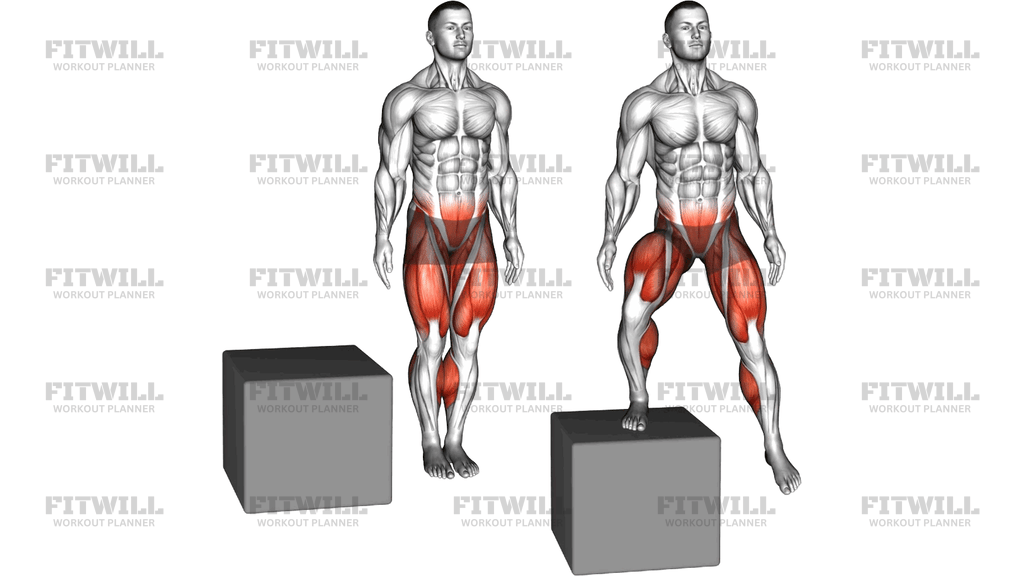
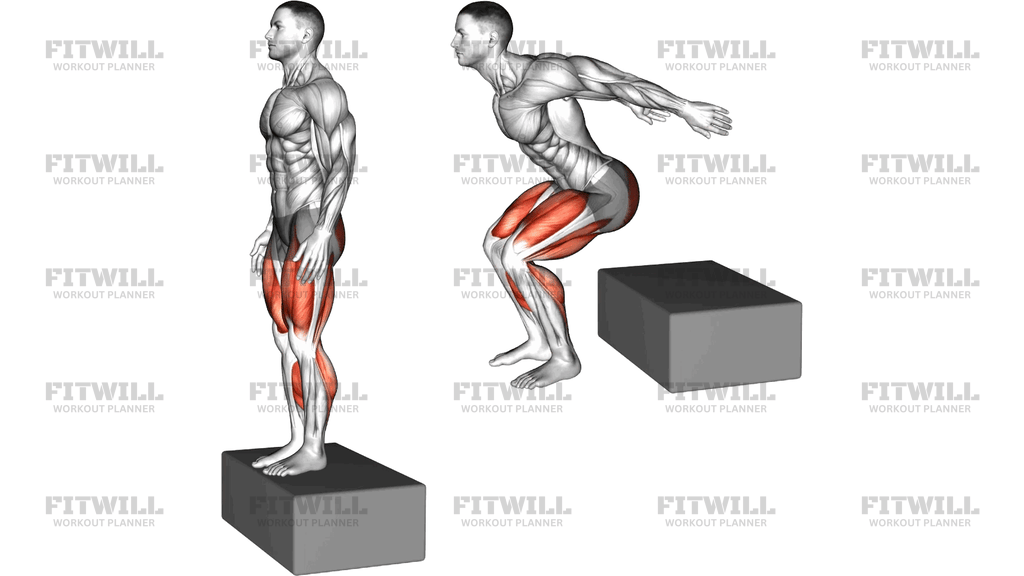
Lateral Box Jump
The Lateral Box Jump is a plyometric exercise where you stand beside a sturdy box or platform and jump sideways onto it, landing on both feet. Unlike a standard front-facing box jump, the lateral approach forces you to move and stabilize in the frontal plane, which is a direction most training and daily life rarely challenges. It is a simple setup — just you and a box — but the sideways component changes everything about how your hips, knees, and ankles absorb and produce force.
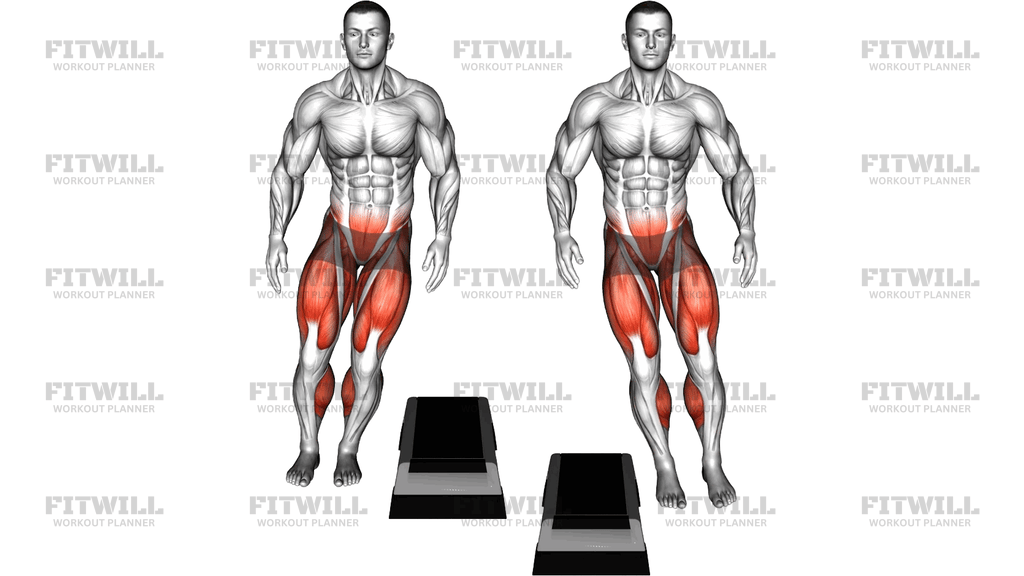
This movement primarily develops explosive power in the quadriceps and glutes, with strong contributions from the calves during takeoff and landing. Because you are traveling sideways, the hip abductors and stabilizers on the outside of the working leg have to control your alignment, and the obliques work to keep your torso stacked over your pelvis as you move. That combination makes it a useful tool for athletes in sports that demand cutting, court movement, or quick changes of direction.
Setup matters more than it looks. The box needs to be stable, on a non-slip surface, and at a height you can land on cleanly from the side — often slightly lower than what you would use for a front-facing jump. Start with roughly 12 to 18 inches if you are new to lateral jumping. Stand close enough to the box that a lateral push covers the distance, but far enough that your foot will not clip the edge.
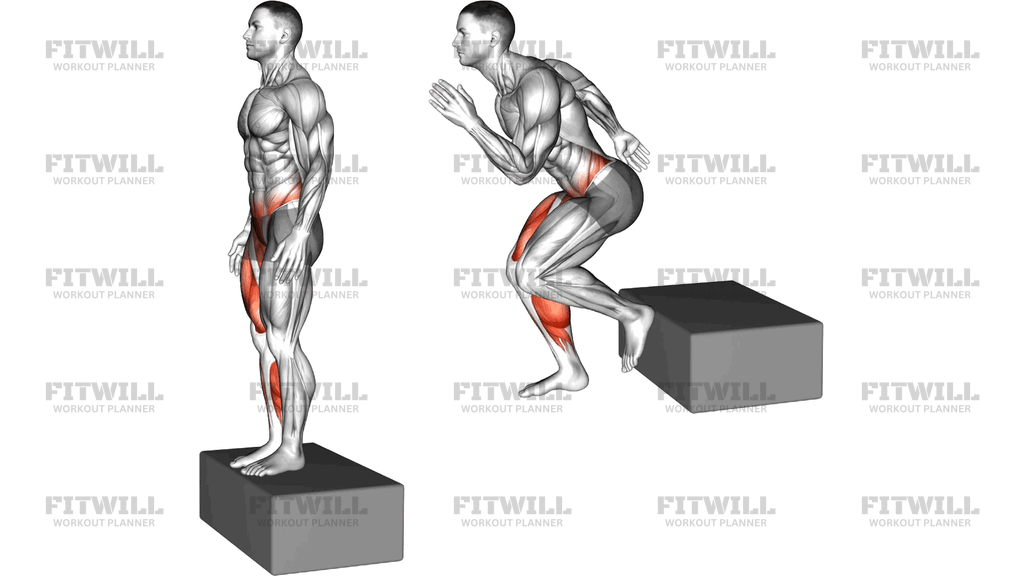
To execute it well, dip into a shallow quarter squat, then drive sideways off the near leg while swinging your arms up and across for momentum. Land softly in the middle of the box with both feet, knees bent, chest over the hips, and eyes forward. The landing is the real training stimulus — quiet, controlled contact with the box is the goal, not just getting on top. Step back down rather than rebounding off the box, then reset and repeat from the same side or alternate sides as your program calls for.
Common use cases include athletic warm-up ramp-ups, speed and agility blocks, and lower-body power sessions where front jumps are already part of the routine. Coaches often program it at low volume — 3 to 5 sets of 3 to 6 jumps — because quality collapses quickly with fatigue.
From a safety standpoint, never attempt a height that forces you to tuck aggressively or land with a rounded back, and stop if your landings start drifting to one side or your heels are slamming down. If you cannot land quietly, the box is too high or you are too tired.
[ Workout Log & Planner ]
Put your next workout in Fitwill
Keep your plan and training log ready when you are.


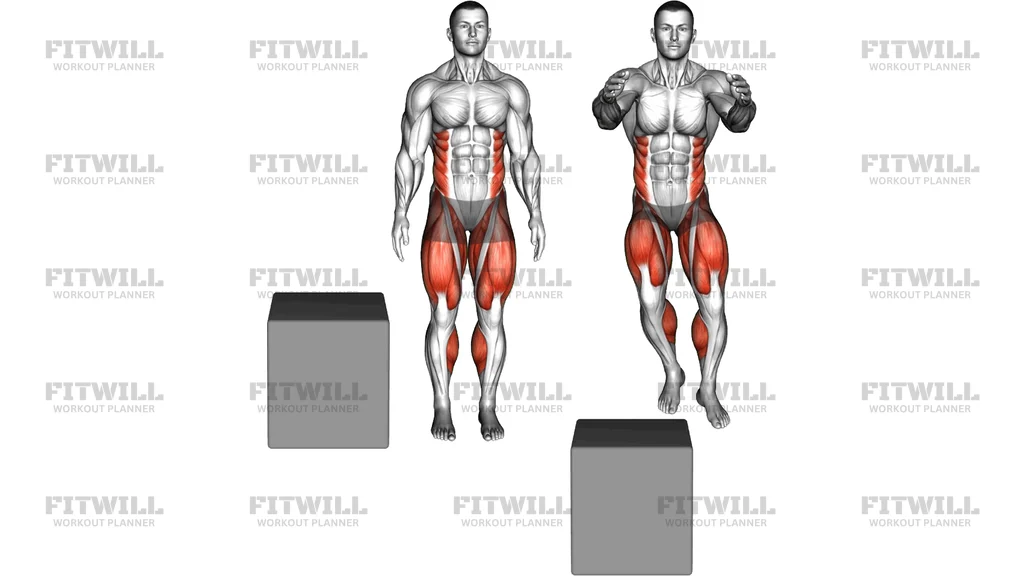
Instructions
- Place a stable box or plyo platform on a flat, non-slip surface and stand to its side, facing perpendicular to it, with your feet about hip-width apart and roughly a forearm's length from the edge.
- Choose a height you can clear comfortably from the side — 12 to 18 inches is a sensible starting point — and check that the box does not wobble when you press on it.
- Let your arms hang naturally at your sides, brace your core as if bracing for a light punch, and set your gaze forward rather than down at your feet.
- Bend your knees and hips into a shallow quarter squat, loading the leg closest to the box while keeping your weight spread across the whole foot.
- Push sideways off the near leg and swing both arms up and across your body to carry yourself over the box in one explosive, lateral movement.
- Land in the middle of the box on both feet at the same time, with soft knees tracking over your toes, hips back slightly, and arms forward for balance.
- Stand fully upright on top of the box to complete the rep, holding the tall position briefly to prove you landed in control.
- Step down one foot at a time back to the starting side — do not jump off the box — and take a breath before the next rep.
- Exhale sharply during the jump, inhale during the reset, and complete all reps on one side before switching to the other side.
- If your landings become loud, off-center, or one-sided, end the set and rest rather than pushing through sloppy reps.
Tips & Tricks
- Most people stand too far from the box and end up leaping forward at an angle — the path should be almost purely sideways, so adjust your distance until the jump feels short and sharp.
- If your knee caves inward on landing, think about spreading the floor with your feet on takeoff and landing with your kneecaps tracking over your second toes; this is the most common fault in lateral jumps.
- Land through the balls of your feet and let your heels settle under control — a flat, quiet landing means your ankles and calves are absorbing force the way they should.
- Keep your chest stacked over your hips during the sideways jump; leaning your torso toward the box is a sign the box is too high or you are trying to cheat the distance.
- Step down instead of bouncing off — rebounding adds impact on tired ankles and turns a power exercise into an ankle-roll risk, especially from a height.
- Start every set with a lower box than you think you need; landing confidence from the side builds faster when the height is easy than when you are fighting to clear it.
- Use your arms deliberately — a strong upward and across swing adds real height, while lazy arms leave the jump entirely to your legs.
- Alternate sides across sets rather than within a set at first, so you can groove the mechanics on your weaker side without mid-set fatigue masking imbalances.
- Cut the set the moment your contact sound changes — quieter is better is the rule here, and the first loud landing is your cue to stop.
Frequently Asked Questions
What muscles does the Lateral Box Jump work?
The main drivers are the quadriceps and glutes, which produce the explosive sideways extension, with the calves contributing at takeoff and absorbing force on landing. Because the movement travels sideways, the hip abductors and obliques also work to keep your body aligned over the jumping leg.
How is the Lateral Box Jump different from a regular Box Jump?
A regular Box Jump travels forward onto the box, while the Lateral Box Jump moves you sideways, which challenges the hip stabilizers and obliques in a way the front version does not. The lateral approach also mimics cutting and change-of-direction demands more closely.
How high should the box be for a Lateral Box Jump?
Start with 12 to 18 inches and only increase the height once you can land quietly and centered on every rep. A lower box executed with clean landings builds more usable power than a max-height jump with sloppy contact.
Is the Lateral Box Jump suitable for beginners?
Yes, provided you start with a low, stable box and master a quiet two-foot landing before adding height or volume. Beginners who struggle with the sideways element can first practice stepping up laterally, then progress to small jumps.
Why do my knees cave inward when I land on the box?
That inward collapse usually points to weak or late-firing hip abductors and glutes, or simply a box that is too high for current control. Drop the height, focus on landing with knees tracking over the toes, and add dedicated lateral hip work if the pattern persists.
How many reps and sets of the Lateral Box Jump should I do?
Keep the volume low and the quality high — 3 to 5 sets of 3 to 6 jumps per side works well for power. Stop the set as soon as your landings get loud or off-center, because tired reps train bad landing habits.
Should I jump back down or step down from the box?
Step down, especially from the side, where an off-balance landing on the floor is a common way to roll an ankle. Jumping down adds significant impact with little training benefit for this exercise.
What can I substitute if I do not have a box?
A sturdy bench, low platform, or stable step can work as long as it will not tip or slide. Without any platform, lateral squat jumps to the side on flat ground train a similar pattern with less landing height.
Can the Lateral Box Jump help with sports performance?
Yes, it is a direct tool for sports that involve sideways movement, cutting, and rapid changes of direction, such as basketball, tennis, and soccer. Training the frontal-plane jump also builds resilience in the hips and knees for those exact motions.
Is it safe to do Lateral Box Jumps every day?
Daily jumping is not necessary and can overload the ankles and knees before they adapt. Two to three focused sessions per week, kept fresh and high-quality, give a better return than frequent tired-volume work.