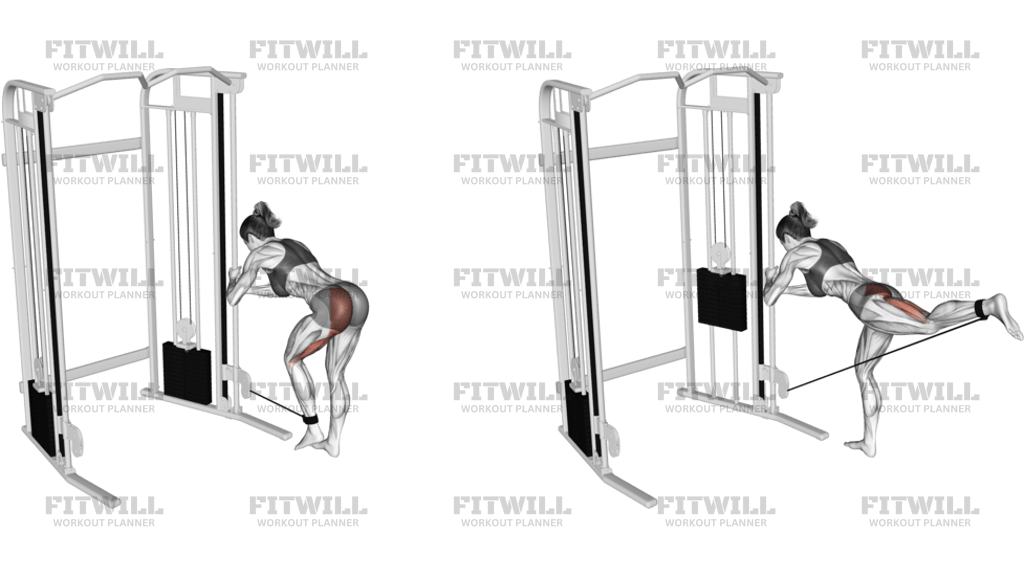
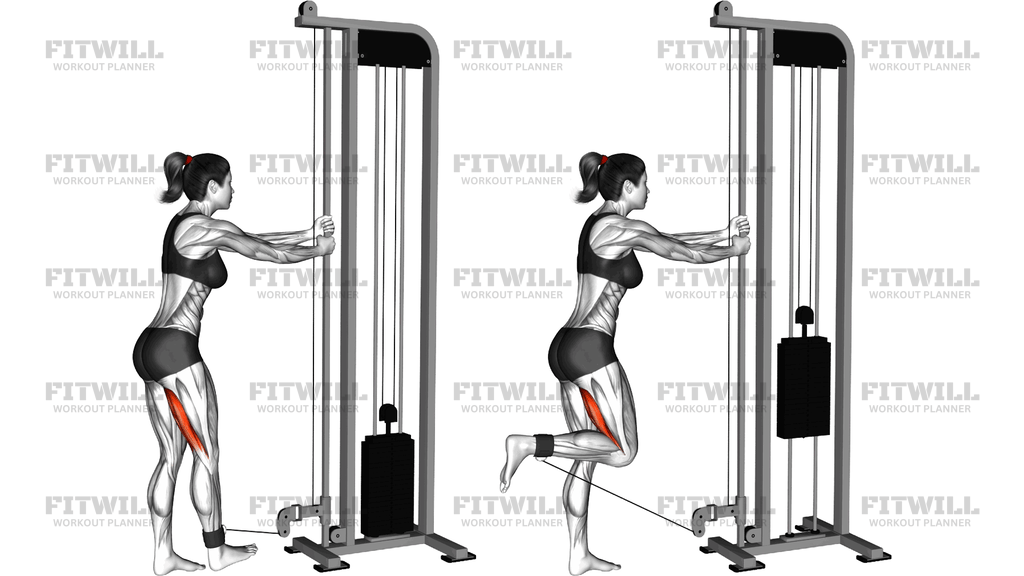
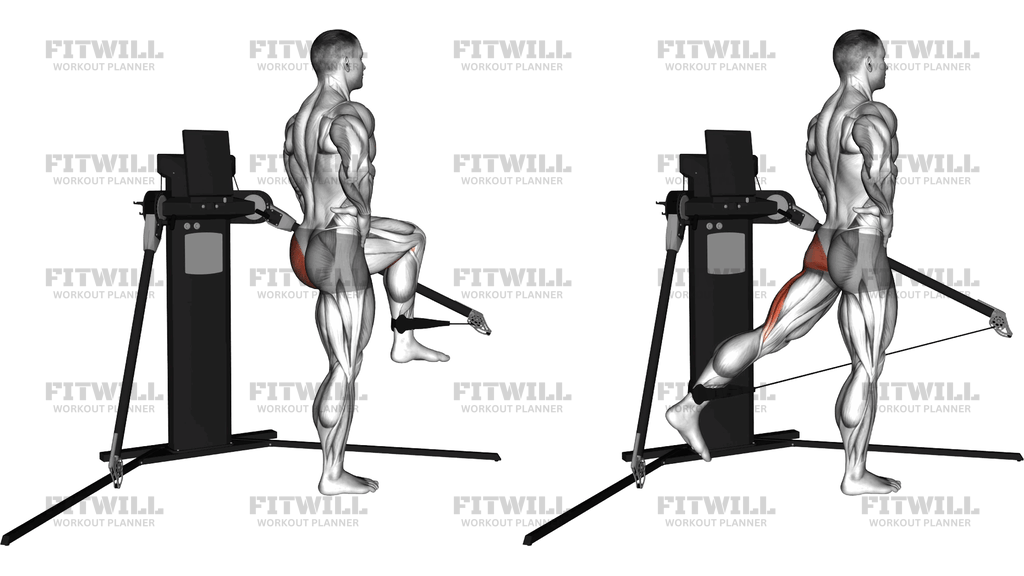
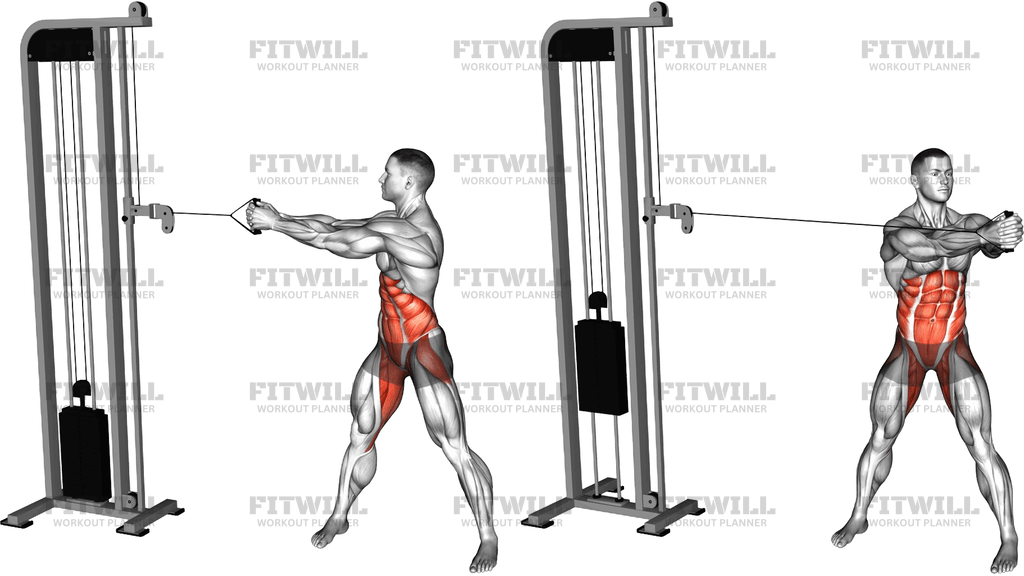
Cable Side Leg Kick From Back
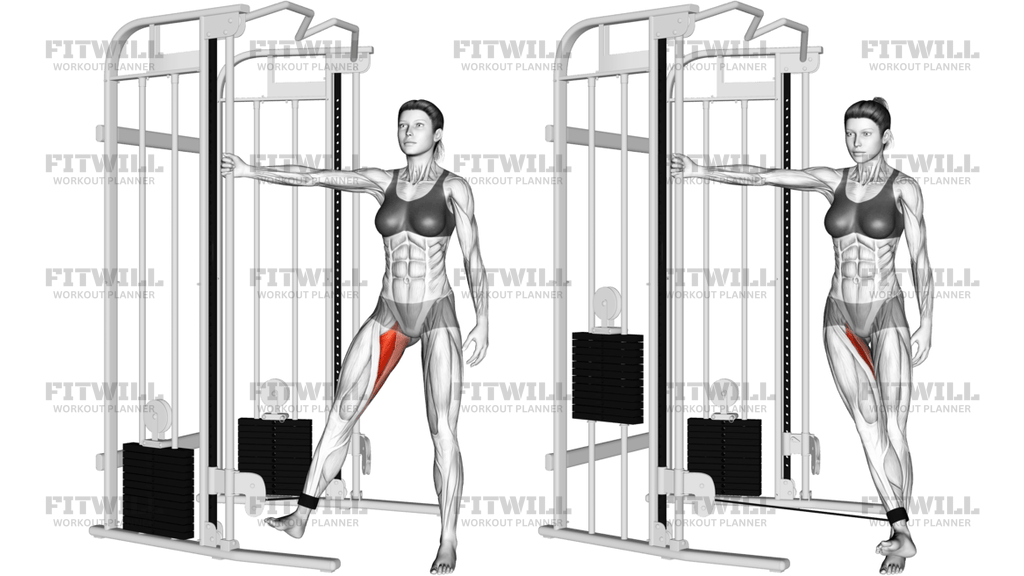
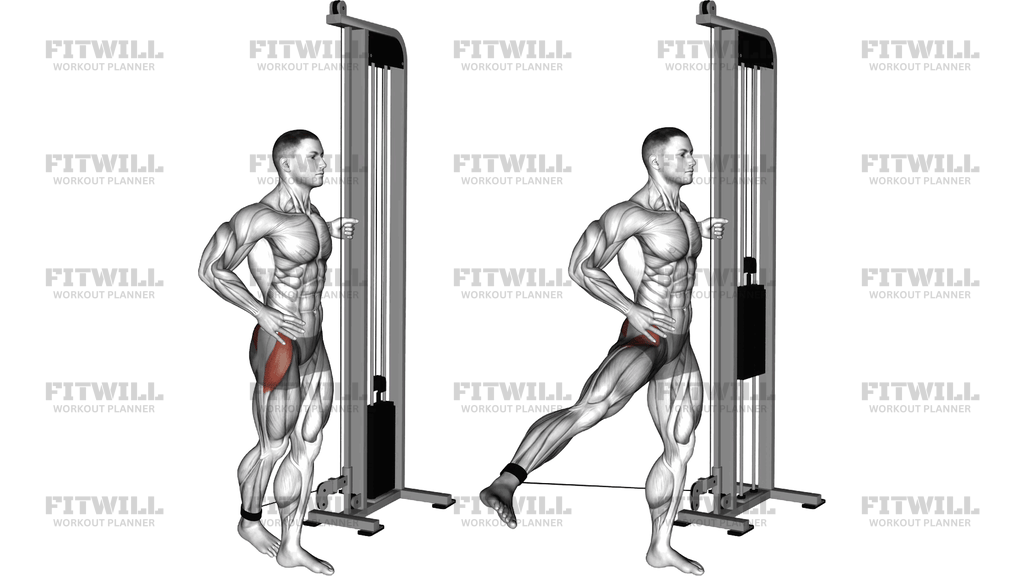
The Cable Side Leg Kick From Back is a single-leg cable movement where you stand sideways to a low pulley with an ankle strap on your working leg, let that leg hang behind your body, and then sweep it up and out to the side in a controlled kick. One hand rests on the machine frame for balance while the other sits on your hip, keeping your torso upright and quiet so the hip does the work. The cable provides constant tension through the entire arc, which is something side-lying leg raises and banded work cannot fully replicate.
The main target is the glutes, with particular emphasis on the gluteus medius and upper glute fibers that lift the leg away from the midline. Because the leg starts behind the body, the first part of the kick also recruits the gluteus maximus as the hip extends before it abducts. The standing leg works overtime as a stabilizer, and the core braces to stop your trunk from tipping away from the cable as tension pulls on the ankle.
This movement suits lifters who want focused hip work without loading the spine, people rehabilitating or strengthening around the hip after guidance from a professional, and anyone whose side-lying abduction work has stalled. It is also a useful add-on at the end of a lower body session when the legs are already fatigued but the hips still need targeted volume.
Setup matters more here than in most cable exercises. If you stand too far from the pulley, the strap drags on your ankle and the resistance angle changes mid-rep. If your torso leans into or away from the machine, you start stealing momentum from the trunk instead of moving the femur at the hip. Stand close enough that the cable runs clear of your body, grip the frame firmly, and keep both hips square to the direction you are facing.
To execute it well, shift your weight onto the leg nearest the machine, allow the strapped leg to hang slightly behind your stance leg, and kick it up and out on a smooth diagonal until it reaches roughly hip height or just below. Pause briefly, then lower it back behind you under control so the glute lengthens under tension rather than dropping. The tempo should feel slower on the return than on the kick itself.
A common use case is two to three sets per side of ten to fifteen reps as a finisher after squats, deadlifts, or lunges. Keep the weight modest at first; this is a small-muscle movement where sloppy, swinging reps deliver far less than slow, deliberate ones. If you feel it in your lower back or the outside of your knee rather than the side of your hip, reduce the load and shorten the range.
[ Workout Log & Planner ]
Put your next workout in Fitwill
Keep your plan and training log ready when you are.


Instructions
- Attach an ankle strap to the low pulley of a cable machine and secure it snugly around your working ankle.
- Stand side-on to the machine with your working leg on the far side of your body, close enough that the cable runs clear of your stance leg.
- Grip the machine frame with the hand nearest to it for support and place your free hand on your hip.
- Shift your weight fully onto the stance leg and let the strapped leg hang behind your body so the cable is taut before the rep begins.
- Brace your core and keep your chest up and hips square, resisting the pull of the cable on your trunk.
- Kick the strapped leg up and out to the side on a smooth diagonal, leading with the heel, until the leg reaches about hip height.
- Pause for a beat at the top with the glute squeezed and no sideways lean in your torso.
- Lower the leg slowly back behind your body until the cable is just short of slack, keeping tension on the hip.
- Exhale as you kick out and inhale as the leg returns behind you.
- Complete all reps on one side, then swap the strap to the other ankle and repeat with your opposite side facing the machine.
Tips & Tricks
- If the strap slides down your ankle during the set, re-fasten it higher on the calf line above the ankle bone; a loose strap changes the pull angle and lets the toes take over.
- Swinging is the most common fault here. If you need to fling the leg to reach the top, the weight is too heavy or your torso is rotating for help.
- Do not let the stance knee buckle inward. Push it slightly out and think of the standing leg as a fixed pillar while the other leg moves.
- Point your toes forward or very slightly outward. Turning the foot strongly upward changes which hip muscles dominate and can irritate the outer hip.
- Keep the kick on a diagonal back-to-side path rather than straight sideways; the starting position behind the body is what separates this from a standard standing abduction.
- If your balance fails before your glutes fatigue, hold the frame with a firmer grip and shorten the pause at the top before progressing the weight.
- Stop the kick just below or at hip height. Kicking far above it usually forces the trunk to lean away to fake extra range.
- Lower the leg in two to three seconds. Letting it drop back behind you wastes the eccentric half of the rep, where much of the hip benefit lives.
- If the cable rubs against your stance leg, step a few inches further away from the machine until the line of pull clears your body.
Frequently Asked Questions
What muscles does the Cable Side Leg Kick From Back work?
The primary work comes from the glutes, especially the gluteus medius and upper glute fibers that lift the leg out to the side. Because the leg starts behind the body, the gluteus maximus assists in the early part of the kick, and the standing leg plus core stabilize throughout.
Why does the leg start behind the body instead of at the side?
Starting from behind puts the hip through a longer diagonal arc, engaging the gluteus maximus on the way to the side kick. It also keeps constant cable tension in a position where simple side-lying raises lose resistance.
Is the Cable Side Leg Kick From Back suitable for beginners?
Yes, as long as the weight stays light and the first few sessions are used to learn balance. Beginners often benefit from holding the frame with a firm two-point grip until the movement feels steady.
How high should I kick my leg during the Cable Side Leg Kick From Back?
Aim for roughly hip height or slightly below, and stop as soon as your torso starts to lean or your pelvis tilts. Extra height beyond that point comes from trunk movement, not extra hip work.
Should the strap be on the ankle or lower calf?
Fasten the strap just above the ankle bone so it stays secure without squeezing. Too low and it may slip toward your foot during the kick, which changes the line of pull.
What is the most common mistake with this exercise?
Using too much weight and swinging the leg up with momentum while the trunk rotates for help. Drop the load until you can kick smoothly, pause at the top, and return the leg under control.
Can I do this exercise without a cable machine?
A resistance band anchored low and looped around the ankle is the closest substitute, though tension fades near the top. Side-lying leg raises also hit similar muscles, but without the back-to-side diagonal that makes this version distinct.
How many sets and reps should I do of the Cable Side Leg Kick From Back?
Two to three sets of ten to fifteen controlled reps per side works well, usually as a finisher after main lower body lifts. Since it targets smaller hip muscles, higher reps with clean form beat heavy, sloppy sets.
Is it safe for my knees or lower back?
The movement itself is gentle on the spine because the load is carried by the ankle strap rather than the back. Keep the weight moderate, avoid twisting the torso, and stop if you feel pinching in the outer hip or strain in the lower back.
Do I need to hold the machine frame during the kick?
Holding the frame is recommended, especially early on, because it removes the balance burden and lets you focus on the glute. Advanced lifters can place both hands on the hips, but only when the leg moves smoothly without leaning.