Bodyweight Single Leg Deadlift Against Ball
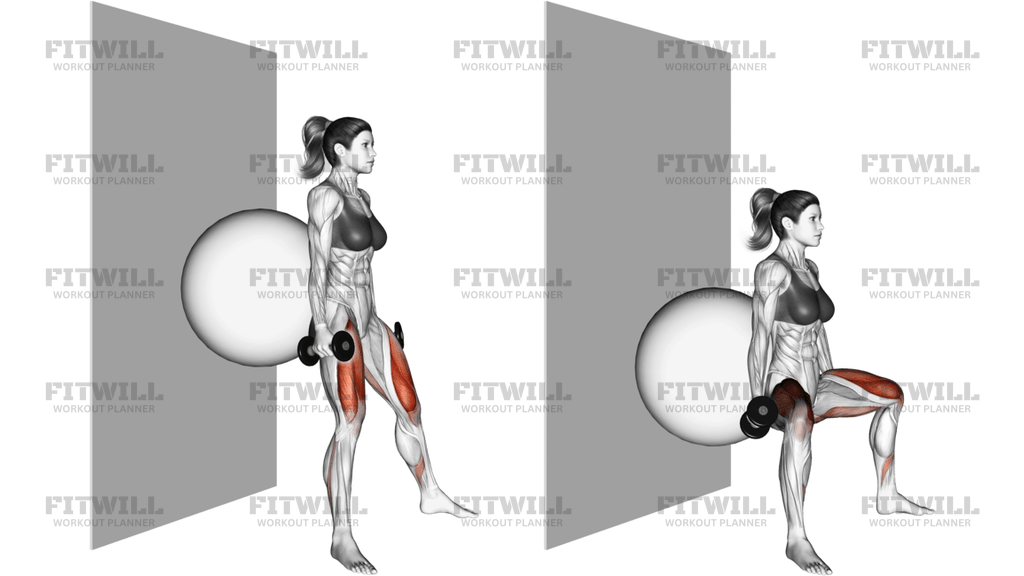
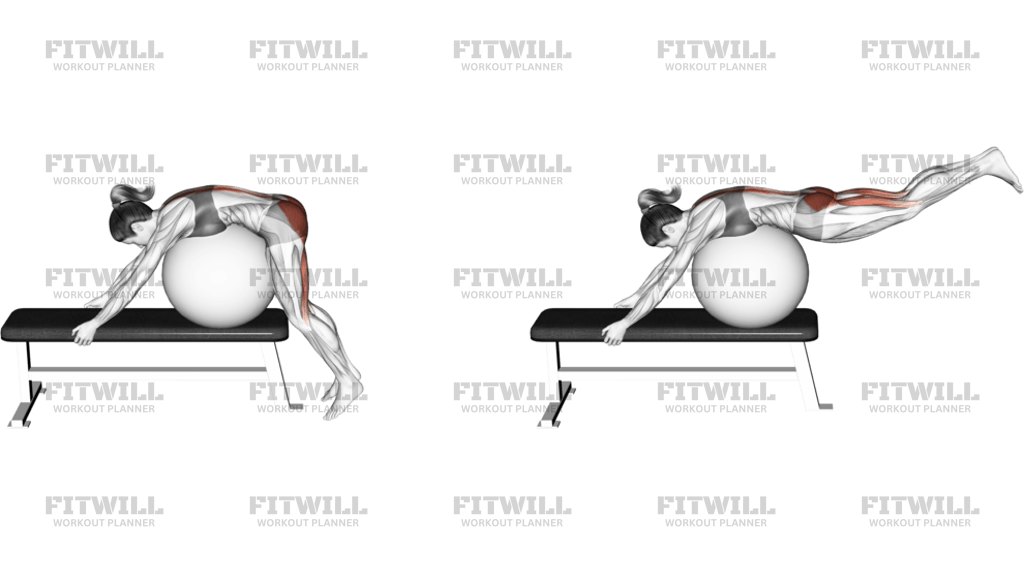
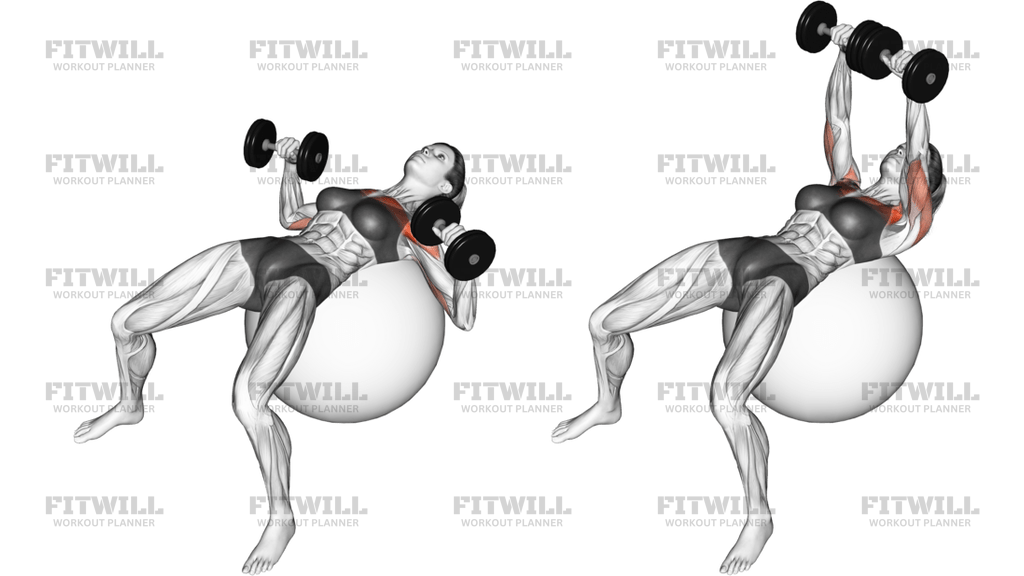
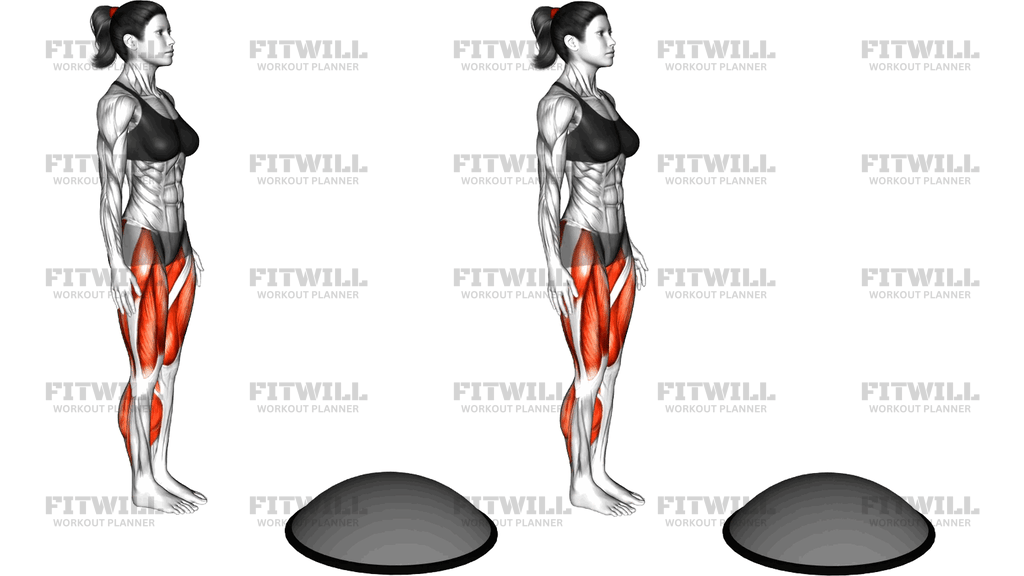
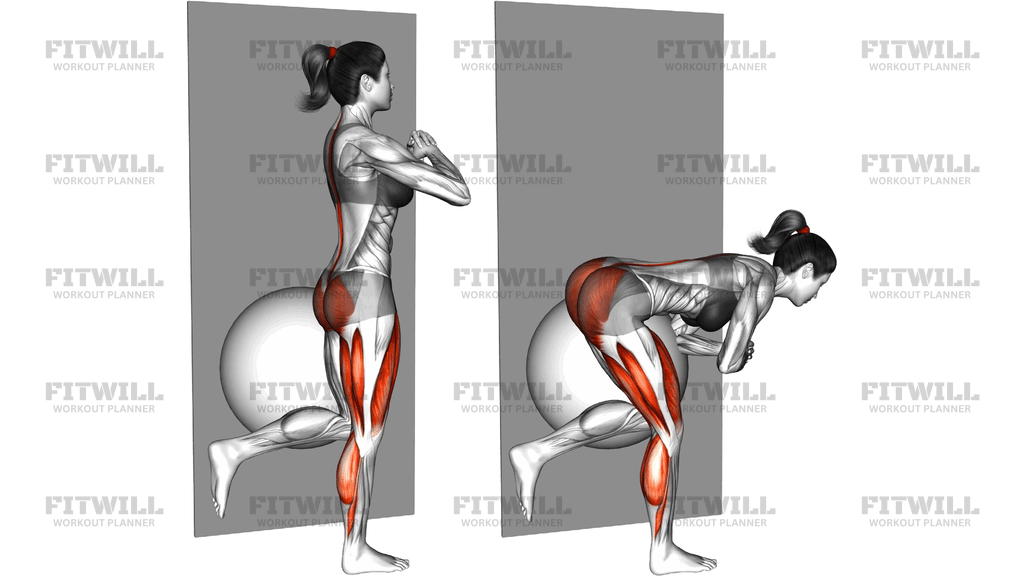
The Bodyweight Single Leg Deadlift Against Ball is a hip hinge performed on one leg with a stability ball sandwiched between your lower back and a wall. As you push your hips back and fold forward over your standing leg, the ball rolls up against the wall behind you, giving you a moving point of contact that guides your spine and takes some of the balance demand out of the movement. The free leg extends behind you as a counterweight, and you finish the rep by driving through the standing heel to stand tall again.
This version exists because a true single leg deadlift is brutally honest about balance. Most people fail the exercise not because their hamstrings are weak, but because they wobble, twist, or lose their hinge before the hamstrings ever get loaded. The ball against the wall removes most of that stumbling. It keeps your back on a predictable track, lets you focus on feeling the hamstring and glute of the working leg stretch under load, and gives beginners or anyone returning from a layoff a way to learn the pattern with confidence.
The primary work lands on the glutes and hamstrings of the standing leg, with the erector spinae in the lower back working hard to hold your torso in one long line as you hinge. Because you are on one foot, the smaller stabilizers around the ankle and hip are also active the whole time, and your core has to resist rotation so your chest stays square forward rather than peeling open to one side.
Setup matters more here than in most bodyweight drills. The ball height, your distance from the wall, and where the ball contacts your back all determine whether the movement feels like a smooth hinge or an awkward lean. The ball should sit roughly at hip or sacrum level when you stand tall, and it should stay in light contact with the wall through the entire rep, rolling up toward your mid back as you fold over.
To execute it well, think hips back rather than chest down. Soften the standing knee slightly, let the torso tilt forward as one rigid piece, and reach the free leg straight behind you so it roughly lengthens your body line rather than swinging up toward the ceiling. Stop when you feel a solid stretch in the standing hamstring or when your back starts to round, then push the floor away to return.
This is a useful drill for beginners learning the single leg hinge, for lifters using it as a warm-up before deadlifts or single leg work, and for anyone whose balance limits heavier hinge variations. Move slowly, keep the reps controlled, and treat the ball contact as your quality check: if it leaves the wall, the rep is done.
[ Workout Log & Planner ]
Put your next workout in Fitwill
Keep your plan and training log ready when you are.


Instructions
- Stand with your back facing a clear section of wall and trap a stability ball between your lower back or glutes and the wall, positioned so it contacts you around hip height when you stand tall.
- Shift your weight onto one foot, keeping it flat with the toes pointing forward, and extend your other leg behind you with the knee soft and the foot relaxed.
- Clasp your hands together in front of your chest and gently press back into the ball so it stays in contact with the wall.
- Brace your core as if bracing for a light push, and pull your shoulders back so your torso can move as one long, rigid piece.
- Push your hips backward and hinge forward over the standing leg, letting the ball roll up your back along the wall as your torso lowers toward the floor.
- Let the free leg reach straight back behind you so your head, torso, and lifted leg form one long line, and stop when you feel a firm stretch in the standing hamstring or your torso approaches parallel to the floor.
- Press through the heel and midfoot of the standing leg to drive your hips forward and return to a tall standing position, keeping the ball in contact with the wall the whole way up.
- Exhale as you hinge down under control and inhale as you drive back up, or simply keep your breathing steady and never hold it at the bottom.
- At the top, stand fully upright with the hips extended and glutes squeezed before starting the next rep.
- Complete all reps on one leg, then reposition the ball and repeat on the other side.
Tips & Tricks
- If the ball slides out from behind you at the bottom of the hinge, you are probably standing too far from the wall or bending at the waist instead of sitting the hips back — move a few inches closer and reload the hips backward.
- Resist the urge to crank the lifted leg toward the ceiling; when it swings up high, the lower back usually rounds and the hamstring stretch disappears. Let the back leg simply follow your torso.
- Watch for the hips opening toward the lifted leg side. Keep both hip points facing the wall ahead of you so the glute of the standing leg, not your lower back, does the work.
- Keep only light pressure on the ball. If you lean hard into it, it becomes a back support instead of a guide, and the standing leg stops having to stabilize anything.
- The standing knee should stay softly bent and pointing forward. A knee that caves inward as you hinge is a common sign the ankle and hip stabilizers are being skipped.
- Slow the lowering phase down to two or three seconds. Rushing the descent is the fastest way to round your back and lose contact with the ball.
- If your calf or foot cramps on the standing leg, that is normal early on — the single leg stance loads the ankle heavily. Shorten the range and build up gradually.
- Do not chase parallel to the floor. A clean hinge to a moderate angle with the ball tracking smoothly beats a deep hinge with a rounded back every time.
- Progress by first mastering the two-leg version against the ball, then this single leg version with a shorter range, and only then extending the range and adding reps.
Frequently Asked Questions
Which muscles does the Bodyweight Single Leg Deadlift Against Ball work?
The glutes and hamstrings of the standing leg do most of the work, while the lower back muscles hold your torso straight as you hinge. Because you are balancing on one foot, the ankle stabilizers and core are also working throughout the rep.
What does the stability ball actually do in this exercise?
The ball acts as a rolling guide between your back and the wall. It keeps your spine on a consistent path, reduces the balance challenge, and gives you instant feedback — if the ball leaves the wall or your back peels away from it, your form has drifted.
Is the Bodyweight Single Leg Deadlift Against Ball good for beginners?
Yes, and that is largely the point of the ball. Beginners who wobble in a freestanding single leg deadlift can learn the hip hinge pattern here with support, then progress toward the unsupported version once the movement feels natural.
How far should I stand from the wall?
Close enough that the ball stays lightly trapped between your lower back and the wall when you stand tall. If the ball drops or slides away as you hinge, step in a few inches; if it jams and blocks your hinge, step out slightly.
Should the back leg go as high as possible behind me?
No. The back leg is a counterweight that follows your torso, not a target to chase. Lifting it high usually rounds the lower back and kills the hamstring stretch on the standing leg — let it reach straight back in line with your body.
Why does my standing foot or calf feel tired doing this exercise?
Balancing on one leg heavily loads the ankle and foot stabilizers, which often fatigue before the hamstrings do. This settles with practice; shorten the range and slow the tempo while your stability catches up.
What can I use instead of a stability ball for this exercise?
You can perform a regular bodyweight single leg deadlift without the ball once your balance allows, or hold lightly onto a wall, rack, or chair with one hand for a similar amount of support while learning the hinge.
How deep should I hinge in the Bodyweight Single Leg Deadlift Against Ball?
Hinge until you feel a strong, comfortable stretch in the standing hamstring or your torso nears parallel to the floor. If your lower back starts to round or the ball loses contact with the wall, that is your stopping point.
Can I do this exercise if I have lower back discomfort?
The ball support makes this one of the gentler hinge variations, but hinge exercises do load the lower back. Keep the range modest, move slowly, and if any movement reproduces sharp or radiating discomfort, stop and consult a qualified professional.
Where should this exercise fit into my routine?
It works well as a warm-up before deadlifts or single leg strength work, or as a main exercise for higher-rep sets when training at home with minimal equipment. Two to three sets of eight to twelve controlled reps per leg is a solid starting point.