Lying Supine Isometric Single Leg Hamstring Curl
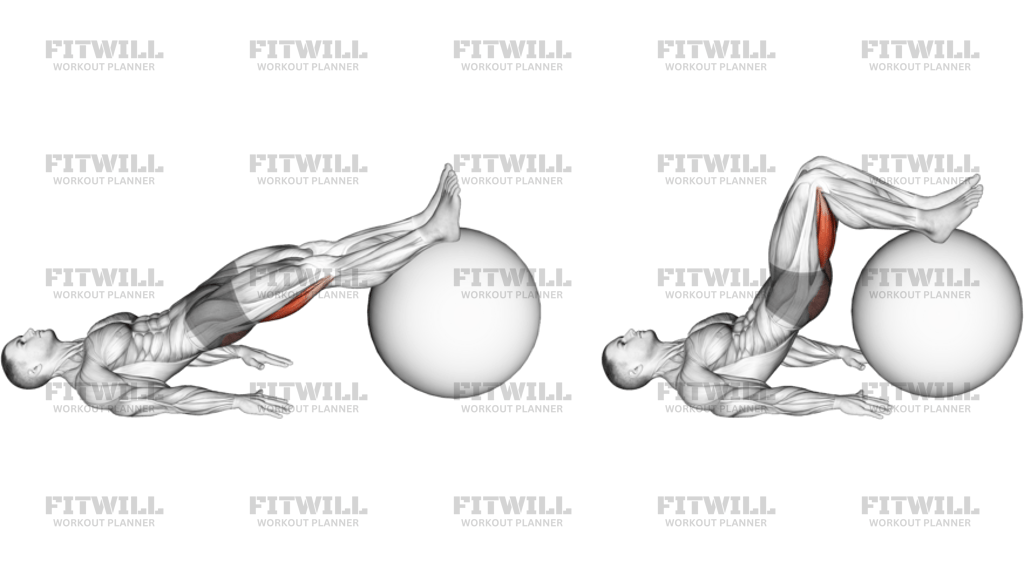
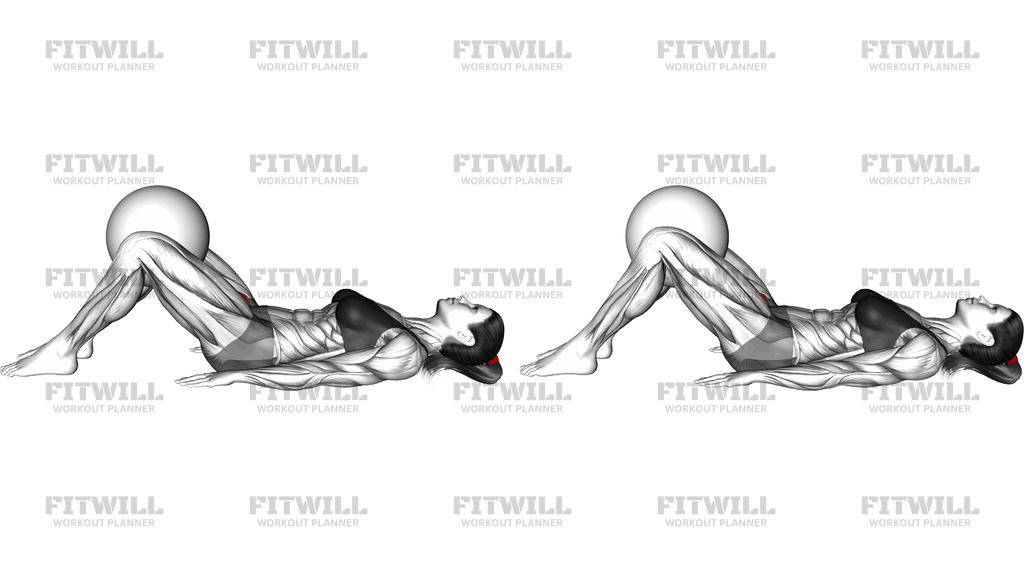
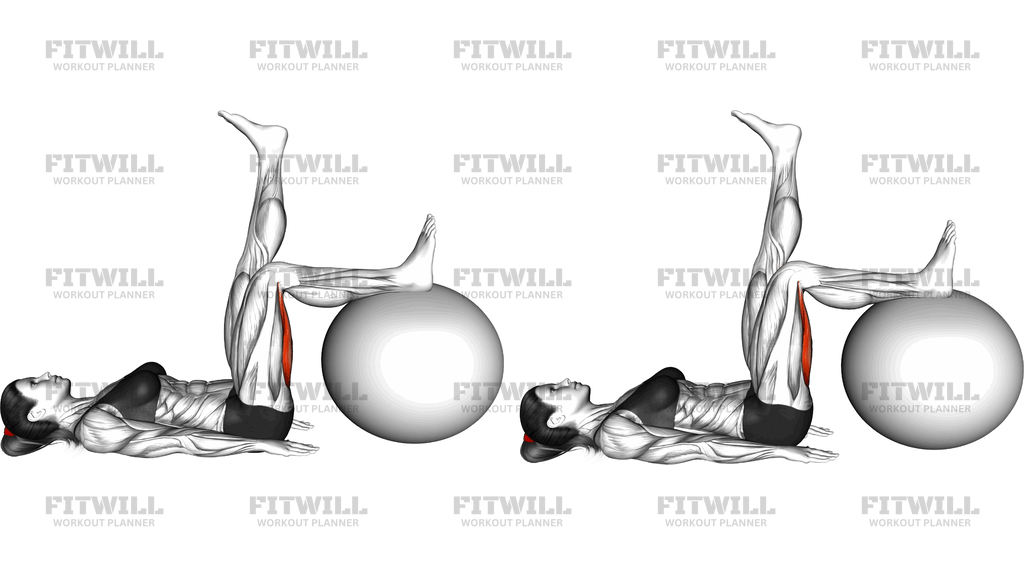
The Lying Supine Isometric Single Leg Hamstring Curl is a low-tech hamstring exercise performed on the floor with a stability ball. You lie on your back with one knee bent to roughly 90 degrees and the heel of that foot planted on top of the ball, then press the heel down and back into the ball as hard as you can without letting the leg actually move. Because nothing rolls and no joint angle changes, the hamstring works continuously at a fixed length, which is what makes the effort isometric rather than dynamic.
This version suits people who want strong hamstring activation without heavy equipment or repetitive knee flexion. It is a good fit for beginners learning to feel their hamstrings, for lifters who want a burnout or activation drill before deadlifts and leg curls, and for anyone rebuilding confidence in the hamstrings after time away from training. Because only one leg works at a time, it also exposes and helps correct left-to-right strength differences that often hide in two-legged exercises.
The setup matters more than it looks. The height of the ball and the bend of the working knee set the muscle length at which you hold the contraction, and a slightly softer ball or a lower position under the heel makes the hold easier, while a firmer ball and a deeper knee bend make it harder. Your free leg can point straight up toward the ceiling, as shown, which helps you balance and keeps your hips from tilting. Pressing through the heel rather than the toes shifts tension toward the hamstrings and away from the calf.
To execute it well, brace your core lightly so your lower back stays in contact with the floor, then build pressure gradually over a second or two rather than slamming into the ball. Hold a strong, steady effort for the target time while breathing normally, and keep the hip of the working leg extended so the thigh stays in line with the torso rather than drifting toward the chest. The most common errors are pushing hard enough to roll the ball away, letting the hips lift or rotate, and holding your breath through the entire set.
In practice, this exercise is used as a hamstring primer, a rehabilitation-style strength hold, and a travel-friendly option since a stability ball and a patch of floor are all you need. Hold times typically run from 10 to 30 seconds per side for 2 to 4 sets. If the ball slides on a smooth floor, place it against a wall or use a mat underneath to keep it anchored, and always stop the set if you feel cramping in the calf or hamstring, which is common when pressing maximally.
[ Workout Log & Planner ]
Put your next workout in Fitwill
Keep your plan and training log ready when you are.


Instructions
- Lie on your back on an exercise mat with your arms resting at your sides and your palms flat on the floor.
- Bend one knee to about 90 degrees and place the heel of that foot on top of a stability ball, with the foot flexed so the heel makes solid contact.
- Extend your other leg straight up toward the ceiling and keep it tall and still to help stabilize your pelvis.
- Lightly brace your abdominal muscles so your lower back stays in contact with the floor and your ribs stay down.
- Press your heel firmly down and back into the ball, building the pressure over one to two seconds until the effort is strong but the ball does not roll away.
- Hold that maximum-effort push for 10 to 30 seconds, keeping the knee angle, hip position, and ball position completely unchanged.
- Breathe steadily throughout the hold; avoid bearing down or holding your breath.
- Release the pressure slowly and smoothly instead of dropping the push all at once.
- Complete all repetitions on one side, then reset the ball under the opposite heel and match the hold time on the other leg.
Tips & Tricks
- If the ball rolls away as you push, anchor it against a wall or place a mat under it on smooth flooring before adding more effort.
- Cramping in the calf or hamstring is the most common problem with this hold; reduce the pressing intensity and shorten the hold rather than pushing through the cramp.
- Keep the thigh of the working leg vertical and in line with your torso. If it drifts toward your chest, the hip is flexing and the hamstring is no longer working at the intended length.
- Drive through the heel, not the ball of the foot, so the gastrocnemius does not take over the job the hamstrings should be doing.
- If your hips twist during the hold, press the opposite-side arm and shoulder blade harder into the floor and keep the raised leg pointing straight up.
- Experiment with knee angle: a bend closer to 90 degrees challenges the hamstrings near mid-length, while a flatter, straighter leg position makes the same press noticeably harder.
- Do not ramp up to full effort instantly. A one-to-two second build-up produces a cleaner contraction and protects the knee from a sudden jerk.
- Match hold times exactly between legs, and always start your next set with the weaker side so the imbalance does not grow.
Frequently Asked Questions
What muscles does the Lying Supine Isometric Single Leg Hamstring Curl work?
The hamstrings are the primary movers, working isometrically as you press the heel into the stability ball. The glutes and calves assist, and the core stabilizes to keep your hips and lower back still.
Why does one leg stay pointed straight up during this exercise?
The raised leg acts as a counterweight that keeps your pelvis level and stops your torso from rotating while the other leg pushes into the ball. Keeping it vertical also gives you a visual check that your hips have not shifted.
Is the Lying Supine Isometric Single Leg Hamstring Curl suitable for beginners?
Yes. There is no external load and the movement is a simple static press, so most beginners can learn it quickly. Start with 10-second holds at moderate effort before building to longer or harder sets.
How is an isometric hamstring curl different from a regular stability ball leg curl?
In a regular curl, the ball rolls toward you as the knee bends and straightens through a range of motion. In this isometric version, the ball stays fixed and you simply push into it, holding the hamstring at one constant length.
How hard should I push into the stability ball?
Push as hard as you can while the ball stays completely still and your body position does not change. If the ball rolls or your hips lift, the effort has exceeded what your setup can hold.
What should I do if the stability ball slides across the floor?
Place the ball against a wall or lay an exercise mat between the ball and the floor to add friction. A slightly softer ball also deforms against the ground and grips better than a fully inflated one.
How long should I hold each repetition?
Start with holds of 10 to 20 seconds per side for 2 to 3 sets, resting briefly between sides. As your endurance improves, extend toward 30 seconds or add an extra set instead of increasing the push abruptly.
Can I substitute anything if I do not have a stability ball?
You can press your heel into a heavy object that will not slide, such as a firmly planted dumbbell or a low piece of furniture, or have a partner provide resistance against your foot. The key is that the target stays immovable so the contraction stays isometric.
Is it safe for my knees and lower back?
When performed with a controlled build-up of pressure and a braced core, the static nature of the hold puts minimal shear stress on the knee. Stop if you feel sharp pain rather than muscular effort, and keep the lower back in contact with the floor throughout.
Where does this exercise fit into a leg workout?
It works well as an activation drill before deadlifts or leg curls, or as a finishing hold after your main hamstring work. Because it is done on the floor with no load, it is also a convenient option for travel or home sessions.