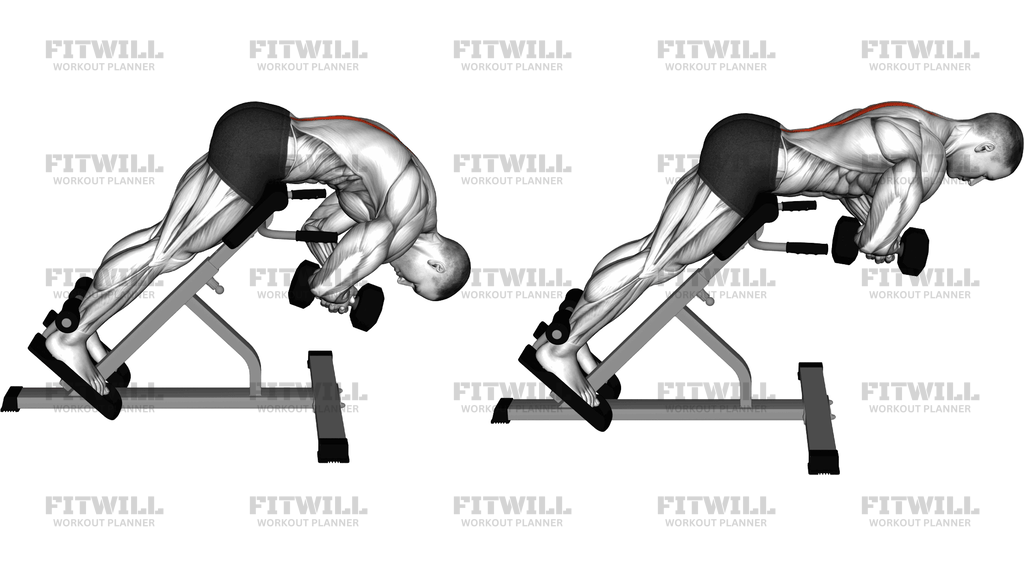
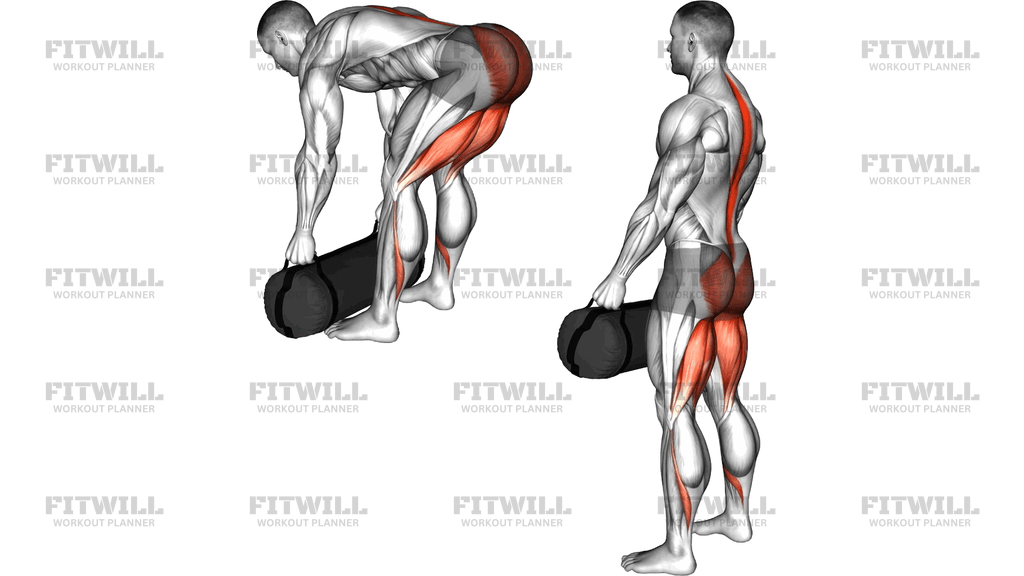
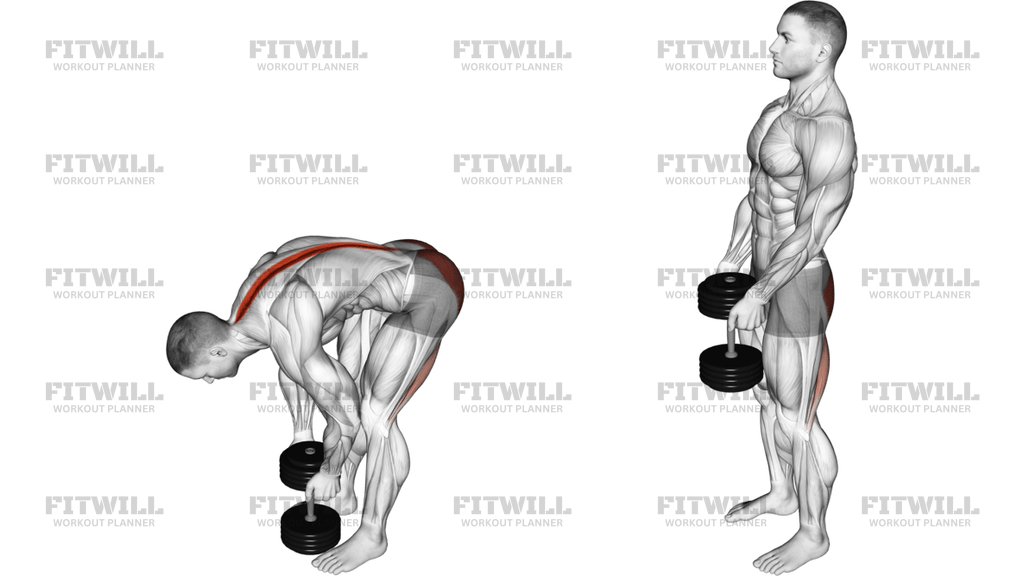
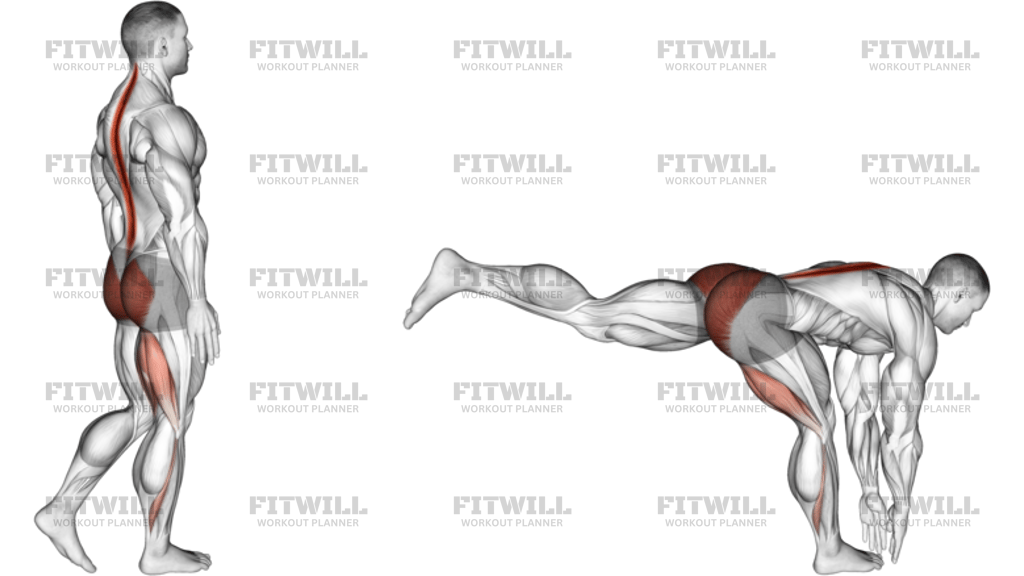
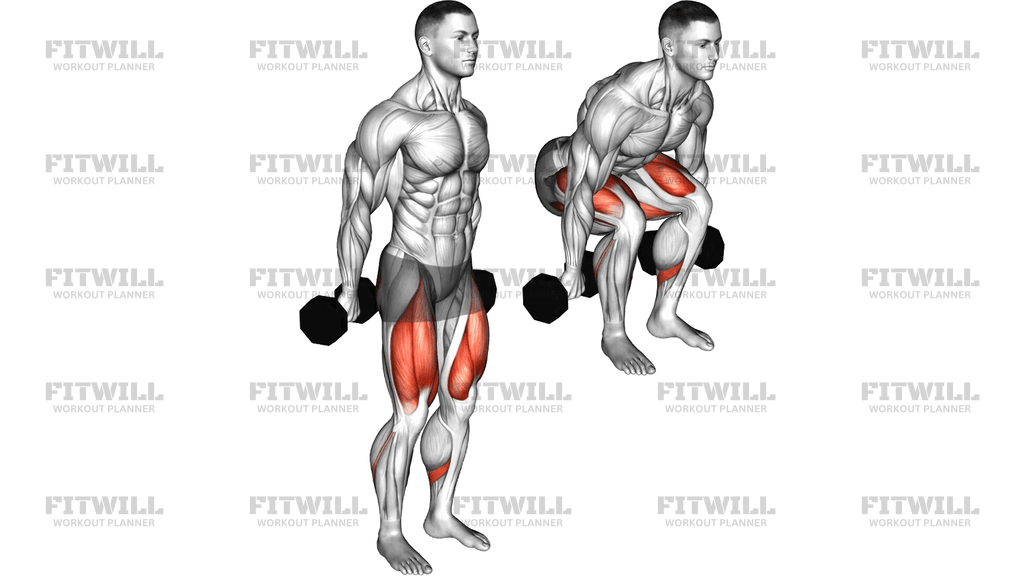
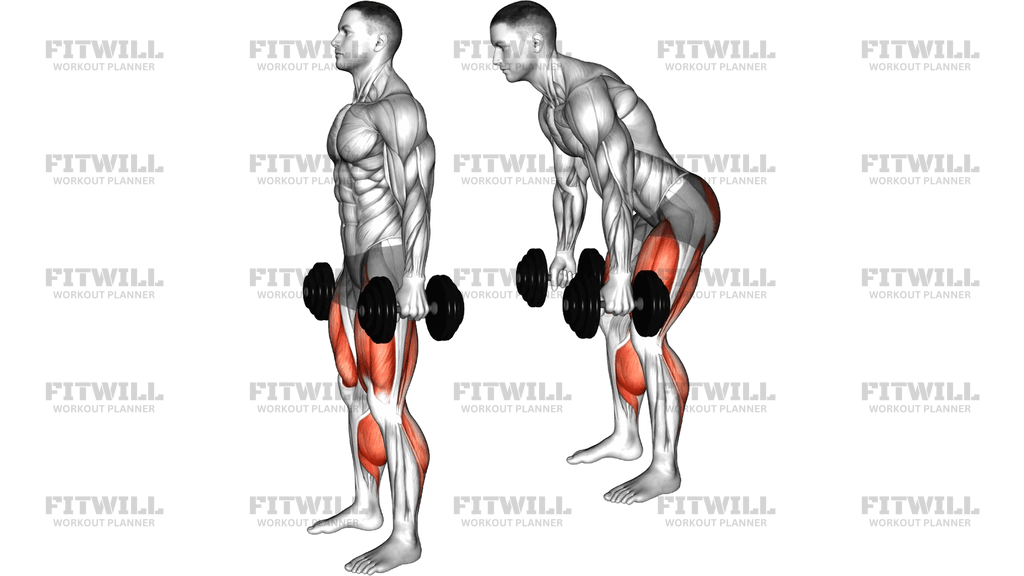
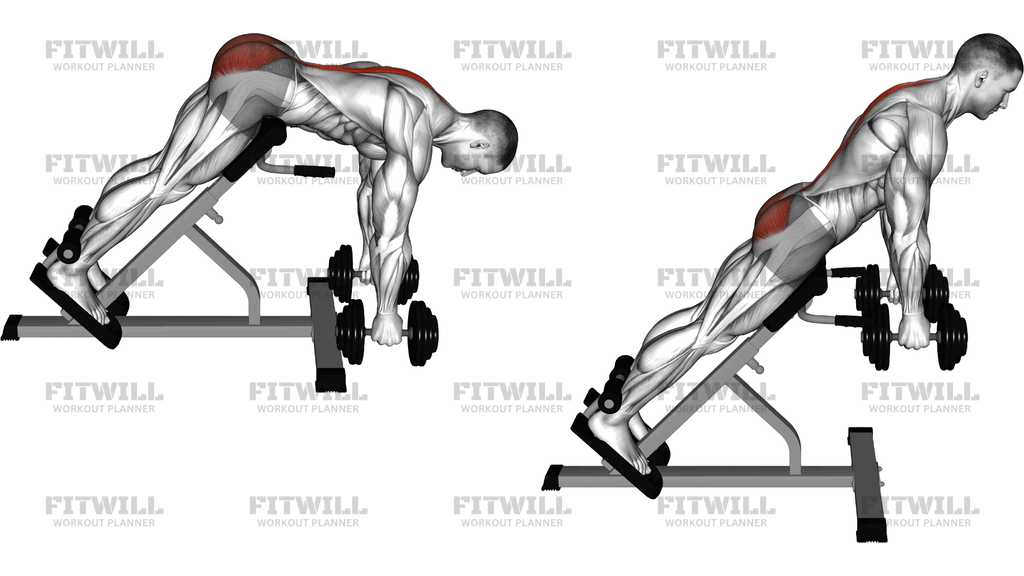
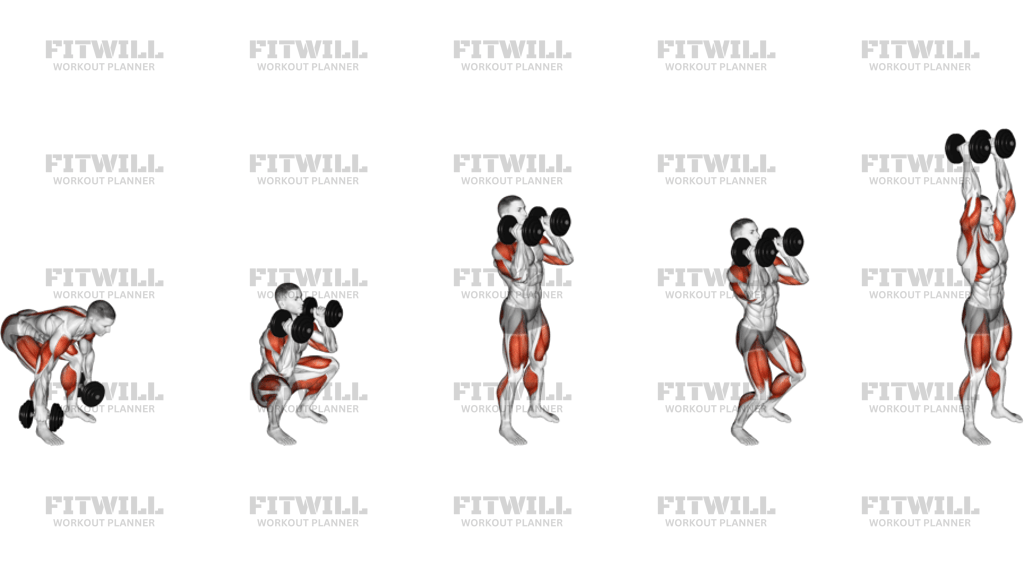
Dumbbell Single Leg Romanian Deadlift On Bench
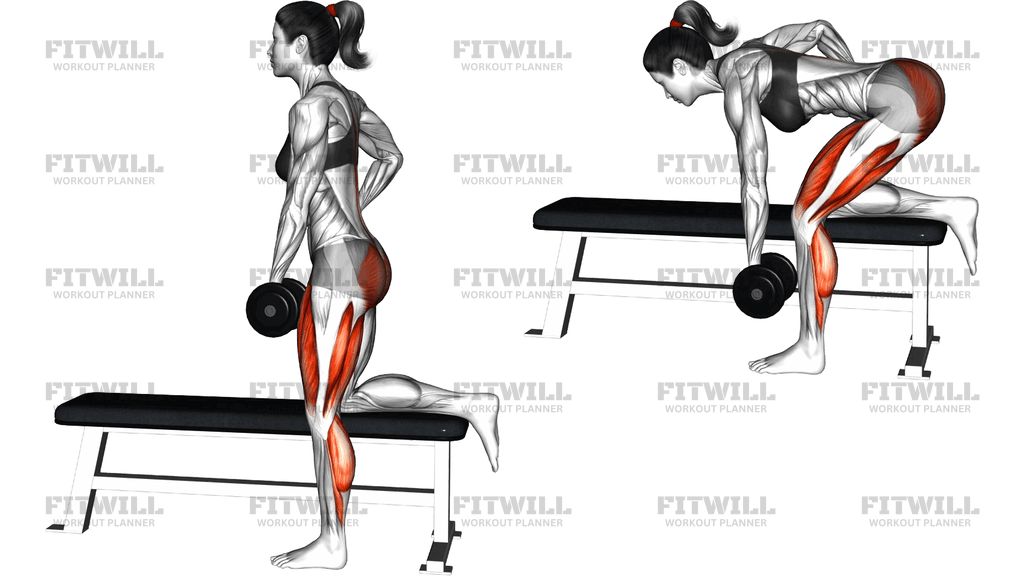
The Dumbbell Single Leg Romanian Deadlift On Bench is a unilateral hip hinge performed with the rear foot elevated and resting on a flat bench behind you. You stand on one leg, hold a dumbbell in one hand, and hinge forward at the hips until you feel a strong stretch along the hamstring of the standing leg, then drive the hips through to return upright. The bench takes away your ability to cheat with the trailing leg, which forces the working leg and hip to handle the load entirely on their own.
This movement is especially useful for lifters who have mastered the standard single leg Romanian deadlift and want a greater balance and stability demand, or for anyone whose rear leg tends to drift and assist too much during unilateral hinges. Elevating the rear foot lengthens the effective range of motion at the hip, so many people feel a deeper hamstring stretch than they do from a floor-based version. It is a popular accessory exercise for squat and deadlift days, and it carries over well to running, sprinting, and change-of-direction sports where each leg must produce and absorb force independently.
The primary work comes from the hamstrings and glutes of the standing leg, which extend the hip as you return to standing. The lower back works isometrically to hold your spine in a neutral position as you fold forward, and the muscles around the ankle and foot of the working leg work hard to keep you from wobbling side to side. Because you hold the dumbbell in one hand, the core also resists rotation, which quietly trains anti-rotational strength along with the hinge.
Setup matters more here than in most hinge variations. The height of the bench, the distance your front foot sits from it, and which hand holds the dumbbell all change the balance challenge and the feel of the stretch. Set the front foot far enough forward that you can hinge without the knee jamming past the toes, and keep the rear leg mostly for balance rather than support. A dumbbell held in the hand on the same side as the rear foot is the most common setup, as shown in the standard execution of this exercise.
To execute it well, think of pushing your hips back and down rather than simply leaning over. The chest travels toward the floor while the rear leg lifts behind you as a counterbalance, and your back stays long and flat throughout. Stop when your torso approaches parallel to the floor or when your hamstring stretch feels firm but not strained. Reverse the motion by squeezing the glute of the standing leg and driving the hips forward until you are tall again.
Common use cases include fixing left-to-right hamstring and glute imbalances, warming up the posterior chain before heavier lifts, and building single leg stability during rehab or return-to-training phases. Start with a light dumbbell and slow tempo, and only add load once you can complete your reps without the hips twisting or the standing foot rolling inward or outward.
[ Workout Log & Planner ]
Put your next workout in Fitwill
Keep your plan and training log ready when you are.


Instructions
- Place a flat bench behind you and stand about two to three feet in front of it, holding a dumbbell in one hand at your side with a neutral grip.
- Reach the foot on the same side as the dumbbell back and place the top of that foot or your shoelaces on the bench, leaving your front leg planted and mostly straight with a soft knee.
- Shift your weight fully onto the front leg and square your hips so both hip bones face forward toward the bench line.
- Brace your core, pull your shoulders back, and set your gaze on a spot on the floor a few feet ahead of you.
- Hinge at the hips by pushing your glutes back and letting your torso lower toward the floor while the rear leg rises behind you as a counterweight.
- Keep the dumbbell hanging close to your standing leg and continue until your torso is near parallel to the floor or you feel a strong hamstring stretch.
- Pause briefly at the bottom, then drive your hips forward by squeezing the glute of the standing leg to return to a tall standing position.
- Exhale as you hinge down under control and inhale as you drive back up, keeping the breath steady throughout the set.
- Complete all reps on one side, set the dumbbell down, then switch hands and place the opposite foot on the bench before starting the other side.
Tips & Tricks
- If you keep losing balance, hold the dumbbell in the hand on the same side as your rear foot and reach the free arm out to the side or place it on your hip; this widens your base of stability.
- A rounded lower back at the bottom is the most common fault here. Cut the depth short until you can hinge with a flat back, and only work deeper as hamstring flexibility improves.
- Do not let the rear foot push into the bench to help you up. The toes should rest there for balance only; if you feel yourself driving off it, you are using too much weight.
- Keep the hips square to the front. If the hip on the dumbbell side opens toward the ceiling, lighten the load and consciously rotate that hip back down before each rep.
- Keep the knee of the standing leg soft and tracking over the toes. A knee that locks or caves inward shifts stress away from the hamstrings and destabilizes the ankle.
- Move slowly on the way down. A two to three second lowering phase makes the balance demand manageable and gives the hamstrings the loaded stretch this exercise is built around.
- If your standing foot rolls or your toes grip the floor, spread the toes and think about pressure through the middle of the foot and heel rather than the front of the foot.
- Start with a very light dumbbell or no weight at all for your first session. This setup is significantly harder to balance than a floor-based single leg hinge, and control should come before load.
- Set the front foot far enough from the bench that you can fold forward without the rear leg pulling you backward; a cramped stance shortens the hinge and turns the movement into a balance drill.
Frequently Asked Questions
Which muscles does the Dumbbell Single Leg Romanian Deadlift On Bench work?
The hamstrings and glutes of the standing leg do the main work, while the lower back holds the spine neutral and the ankle stabilizers control balance. Holding the dumbbell in one hand also challenges the core to resist rotation.
Is the rear foot on the bench supposed to support any of my weight?
No, it should rest on the bench only for balance and position. If you feel yourself pushing off the rear foot to stand back up, reduce the weight and shift your focus to driving through the standing heel.
Can beginners do the Dumbbell Single Leg Romanian Deadlift On Bench?
It is better treated as an intermediate progression. Beginners should first get comfortable with a standard Romanian deadlift and a floor-based single leg hinge, then add the bench elevation once balance is no longer the limiting factor.
Should I hold the dumbbell on the same side as the standing leg or the rear foot?
The standard setup holds the dumbbell in the hand on the same side as the rear foot, which leaves the front leg to bear the load directly. Holding it on the standing leg side shifts balance demands and is usually harder to stabilize.
How far forward should my front foot be from the bench?
Far enough that when you hinge, your shin stays roughly vertical and your knee does not travel past your toes. If the stance is too short, the rear leg pulls you back and the hinge turns into a lunge-like position.
How deep should I hinge during the Dumbbell Single Leg Romanian Deadlift On Bench?
Lower until your torso is close to parallel with the floor or until you feel a firm hamstring stretch, whichever comes first with a flat back. Depth achieved by rounding the spine is not useful range and should be avoided.
What should I do if I keep wobbling or falling to one side?
Lighten the weight or perform the movement with no dumbbell, slow the lowering phase down, and keep a soft knee on the standing leg. Extending the free arm out to the side also gives you an easy counterbalance.
What can I use instead of a bench if I do not have one?
Any stable, knee-height surface such as a plyometric box works, or you can drop the elevation entirely and perform a floor-based single leg Romanian deadlift with the rear leg free, which is slightly easier to balance.
Is it safe for my lower back?
When performed with a braced, neutral spine and a load you can control, it is a well-tolerated posterior chain exercise. Stop short of the depth where your back starts to round, and avoid this variation if you cannot hold your torso position without pain.