Dumbbell Power Clean And Jerk
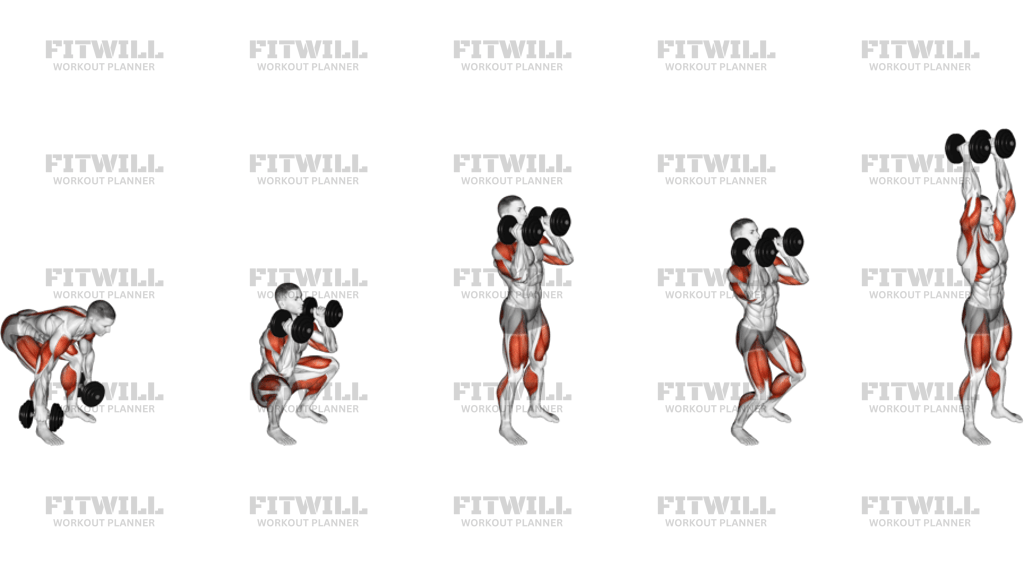
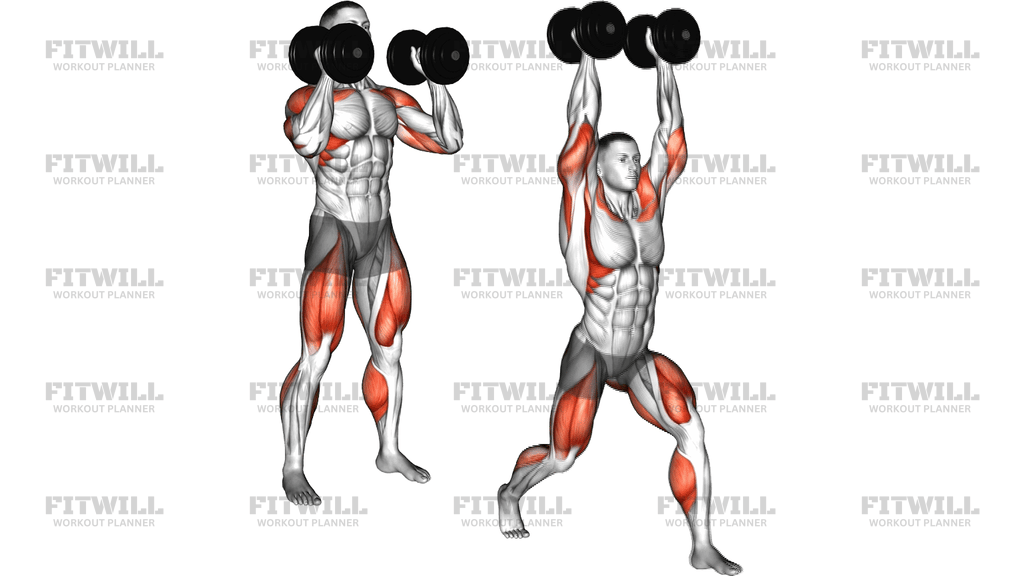
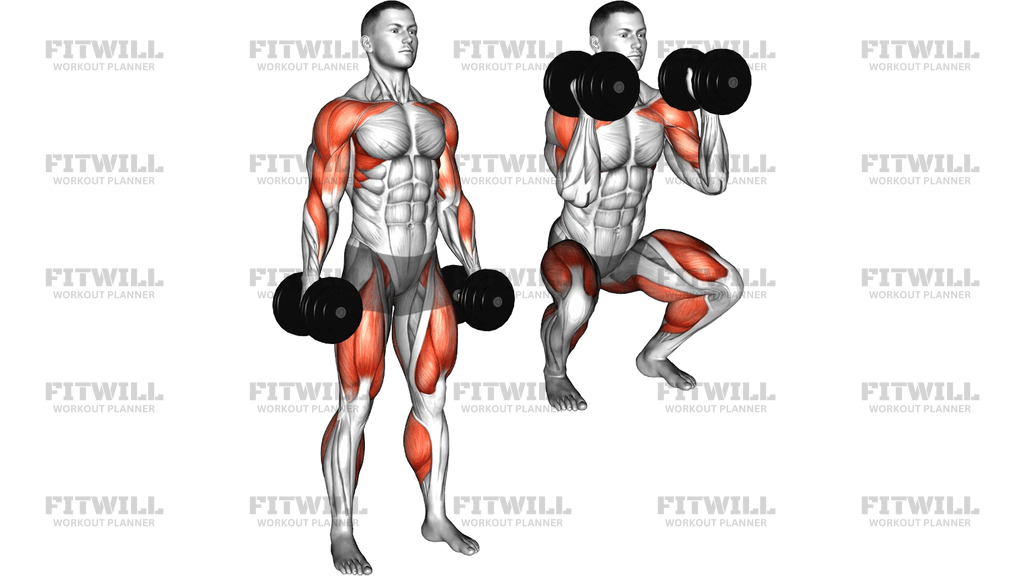
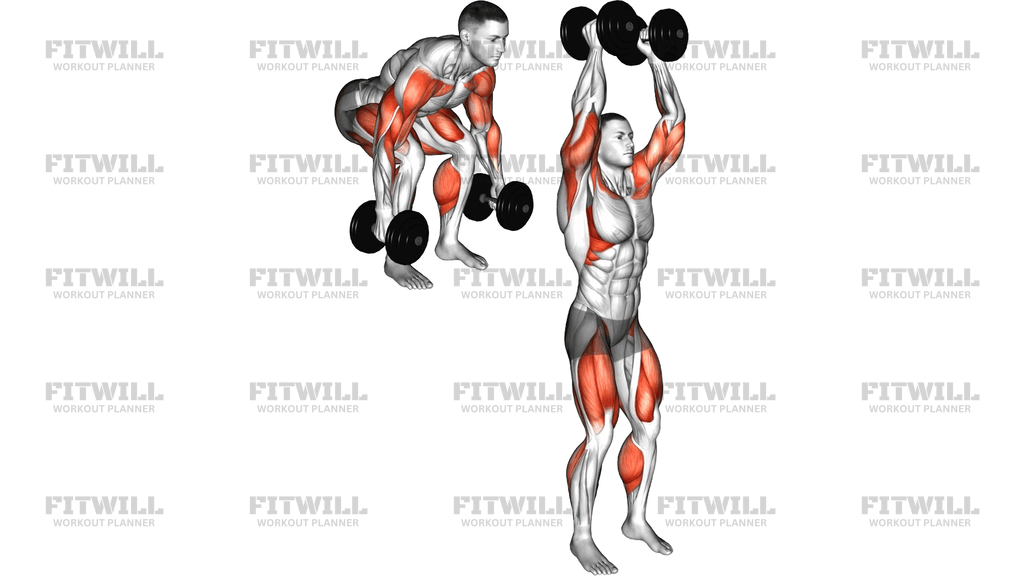
Dumbbell Power Clean And Jerk is a two-part explosive lift that takes a pair of dumbbells from the floor to the shoulders and then overhead. It blends lower-body drive, fast hip extension, upper-back pull, and a strong overhead finish, so the exercise is useful when you want power work that also challenges coordination and timing.
The clean portion trains the legs, glutes, hamstrings, traps, and upper back to accelerate the dumbbells without turning the rep into an arm curl. The jerk adds shoulders, triceps, and core control as you dip, drive, and lock the weights out overhead. Because the movement is dynamic, the quality of the catch and the stability of the overhead finish matter as much as the speed of the pull.
Good setup is what keeps the rep efficient. Start with the dumbbells close to your feet, hinge with a flat back, and keep your chest proud enough to see the floor ahead of you. The dumbbells should travel close to the body on the way up, and the catch should be crisp, with the bells secured at the shoulders before you initiate the next drive.
On the clean, extend through the hips and knees first, then pull under and receive the dumbbells in a partial squat rather than sinking into a deep catch. Stand tall to reset, then use a short vertical dip and a strong leg drive to send the dumbbells overhead. Finish with straight arms, the dumbbells stacked over the shoulders, and the ribs kept down so the lower back does not take over.
This is a demanding full-body movement, so the best rep quality comes from moderate loads and sharp timing rather than grinding. It fits well in power blocks, athletic conditioning, or strength sessions where you want a movement that builds explosive force without long pauses between phases. If the clean gets sloppy, the rack feels unstable, or the overhead finish turns into a lean-back press, the weight is too heavy for productive reps.
Beginners can use Dumbbell Power Clean And Jerk, but only after learning the hip hinge, front-rack catch, and overhead lockout separately. When the sequence is clean and repeatable, the exercise builds power and body control without needing maximal loading.
[ Workout Log & Planner ]
Put your next workout in Fitwill
Keep your plan and training log ready when you are.


Instructions
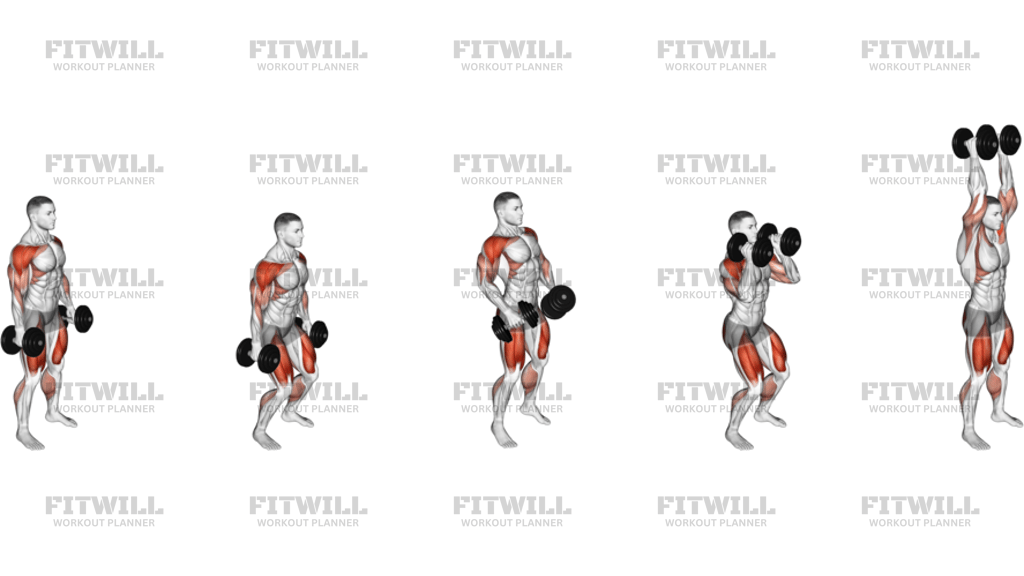
- Stand with your feet about hip-width apart and place a dumbbell just outside each shoe so the handles are easy to reach.
- Hinge at the hips, bend your knees, and grip the dumbbells with a neutral hold while keeping your back flat and your chest angled over the thighs.
- Set your shoulders just in front of the bells, brace your torso, and keep the dumbbells close to your shins before you start the pull.
- Drive through the floor to extend your hips and knees, then let the dumbbells travel straight up close to your body.
- Pull yourself under the bells and catch them on the fronts of your shoulders in a quarter squat with soft knees.
- Stand up fully to stabilize the rack position before starting the jerk.
- Dip straight down a few inches with an upright torso, then explode upward through the legs to send the dumbbells overhead.
- Lock out your elbows with the dumbbells stacked over your shoulders and your biceps close to your ears.
- Lower the dumbbells back to your shoulders, then guide them to the floor under control before the next rep or the end of the set.
Tips & Tricks
- Keep the dumbbells brushing close to your legs on the first pull; if they swing away from the body, the clean becomes slow and harder to catch.
- Think about jumping the bells up with the hips instead of curling them with the arms.
- Catch the clean above parallel, not in a deep squat; sinking low usually means the load is too heavy or the pull is too slow.
- After the clean, freeze the rack for a beat before dipping for the jerk so you do not press from an unstable base.
- Make the jerk dip short and straight down. A forward knee slide or a big knee bend wastes leg drive.
- Finish overhead with the ribs stacked under the dumbbells; if you have to lean back to lock out, lighten the load.
- Keep the dumbbells slightly in front of the face as they pass overhead, then punch to a stable lockout instead of pressing in a slow grind.
- If the wrists feel crowded in the rack, let the elbows angle slightly forward and keep the bells resting on the shoulders rather than the hands.
- Stop the set when the clean catch gets noisy, the feet keep shifting, or the overhead lockout starts to wobble.
Frequently Asked Questions
What muscles does Dumbbell Power Clean And Jerk work most?
It emphasizes the legs, glutes, hamstrings, traps, shoulders, triceps, and core, with the clean and jerk each shifting the load a little differently.
Can beginners perform this exercise?
Yes, but beginners should learn the clean catch and the overhead lockout separately first. Start light enough that every rep stays crisp and balanced.
Should the clean be caught in a full squat?
No. A power clean is caught above parallel in a partial squat, then stood up before the jerk. If you are dropping deep, the weight or timing needs to come down.
Do the dumbbells stay on my shoulders before the jerk?
Yes. Reset them on the fronts of your shoulders, stand tall, and only then dip and drive overhead.
What is the most common mistake in Dumbbell Power Clean And Jerk?
Most people either curl the dumbbells up or turn the jerk into a slow shoulder press. The lift should come from hip and leg drive, not arm effort alone.
Can I use one dumbbell instead of two?
You can, but the pattern changes. A single-dumbbell clean and jerk is useful for unilateral work, while the two-dumbbell version trains symmetry and coordination.
How heavy should Dumbbell Power Clean And Jerk be?
Use a weight you can catch cleanly, stabilize overhead, and repeat without drifting into a press-out or a sloppy rack position.
Is this more of a power exercise or a strength exercise?
It is mainly a power exercise with a strength component. The speed of the clean and the leg drive of the jerk matter more than grinding the load.