Dumbbell Romanian Deadlift To Squat
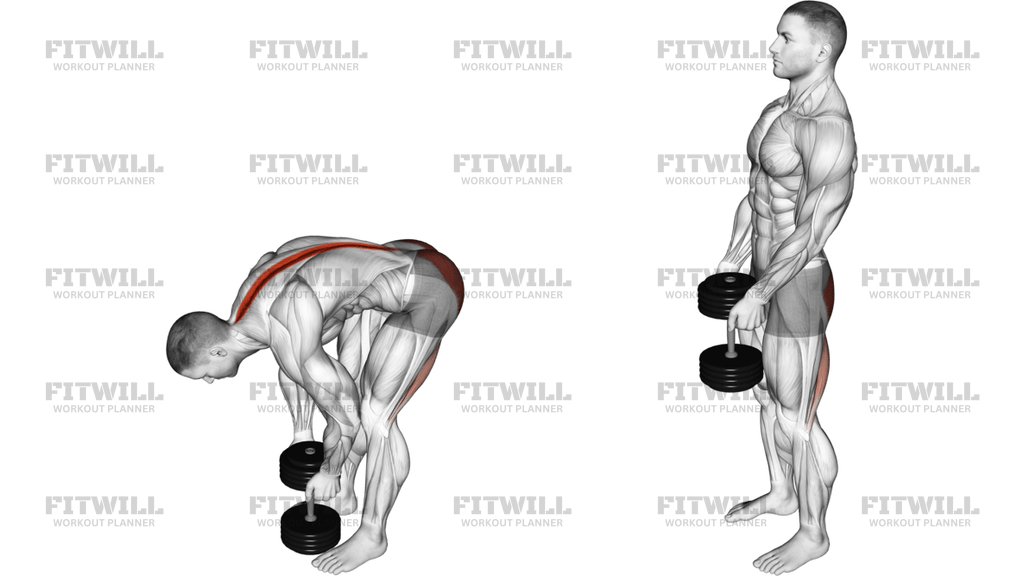
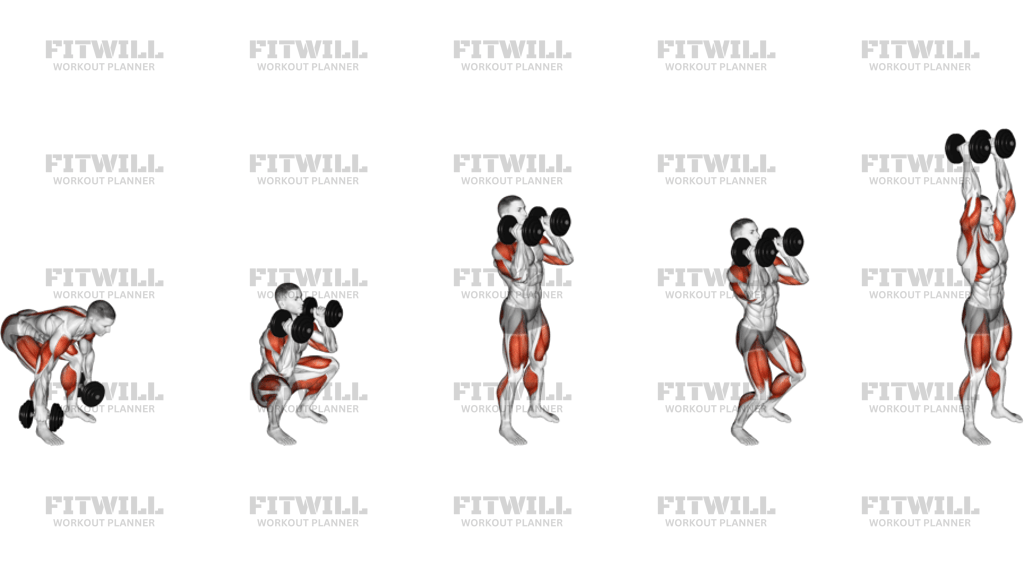
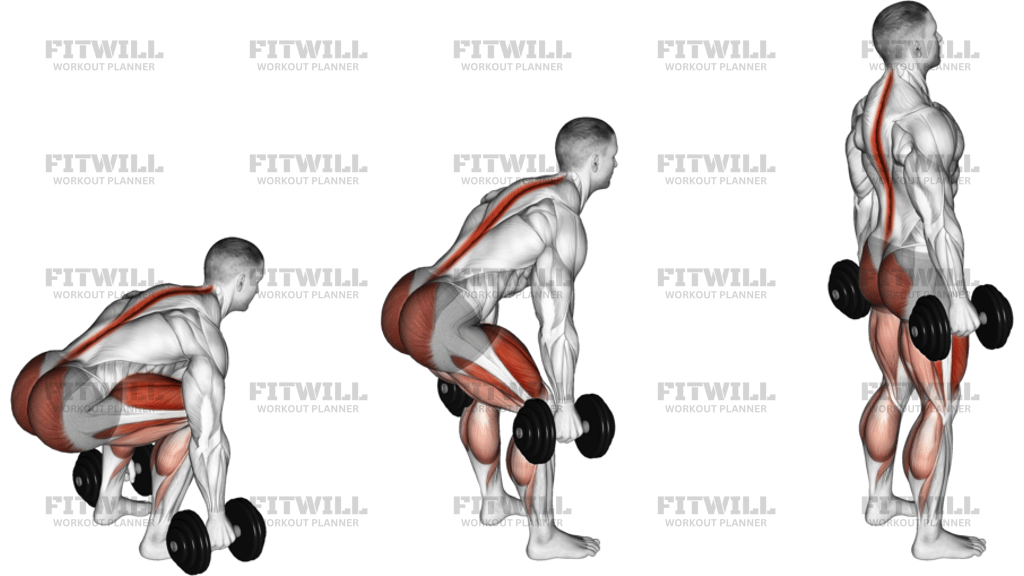
The Dumbbell Romanian Deadlift To Squat is a hybrid lower-body lift that chains two fundamental patterns into one rep: a hip hinge followed by a squat. You start standing tall with a dumbbell in each hand, hinge back into a Romanian deadlift to load the hamstrings, then from the upright position drop into a squat before standing back up to complete the rep. Because the two movements feed into each other, you get both a strong hamstring stretch under load and a full quad and glute drive out of the bottom of the squat.
This combination works well for anyone who wants more training density from a single lower-body movement. Lifters short on time, people training at home with only dumbbells, and intermediate trainees who have mastered the hinge and squat separately all benefit from linking them together. It also builds coordination between the two patterns, which carries over to Olympic lift variations and athletic movements that require you to switch between hinging and squatting positions smoothly.
The muscles involved span the whole leg and hip. The Romanian deadlift portion targets the hamstrings and glutes through a long stretch, while the squat shifts the emphasis toward the quads and glutes as you descend and drive up. Your lower back works isometrically the entire time to hold your spine neutral, and your grip, upper back, and core stabilize the dumbbells against your thighs. Expect your hamstrings and glutes to be the limiting factor rather than your quads on most sets.
Setup matters a lot in this lift because you are transitioning between two positions where a soft spine or a drifting weight path becomes immediately punishing. Use a hip-width stance with the dumbbells held just outside your thighs, keep the weights tracking close to your legs through both the hinge and the squat, and reset your brace between reps. If the dumbbells drift forward during the squat or your back rounds during the hinge, drop the weight and rebuild the pattern with lighter dumbbells.
Execute each rep with intent: hinge until you feel a clear hamstring stretch, stand up fully, squat to at least thigh-parallel depth with an upright torso, then drive back to standing before starting the next hinge. Keep the tempo moderate and controlled. This is not a speed exercise, and rushing the transition between the hinge and squat is the most common way people lose position on it.
Treat the Dumbbell Romanian Deadlift To Squat as a secondary lower-body movement placed after your main squat or hinge work, or as the primary lift in a minimalist dumbbell-only session. Two to four sets of eight to twelve reps works for most lifters. Because fatigue accumulates in the lower back and grip across the set, stop the set when your hinge position starts to degrade rather than pushing to complete technical failure.
[ Workout Log & Planner ]
Put your next workout in Fitwill
Keep your plan and training log ready when you are.


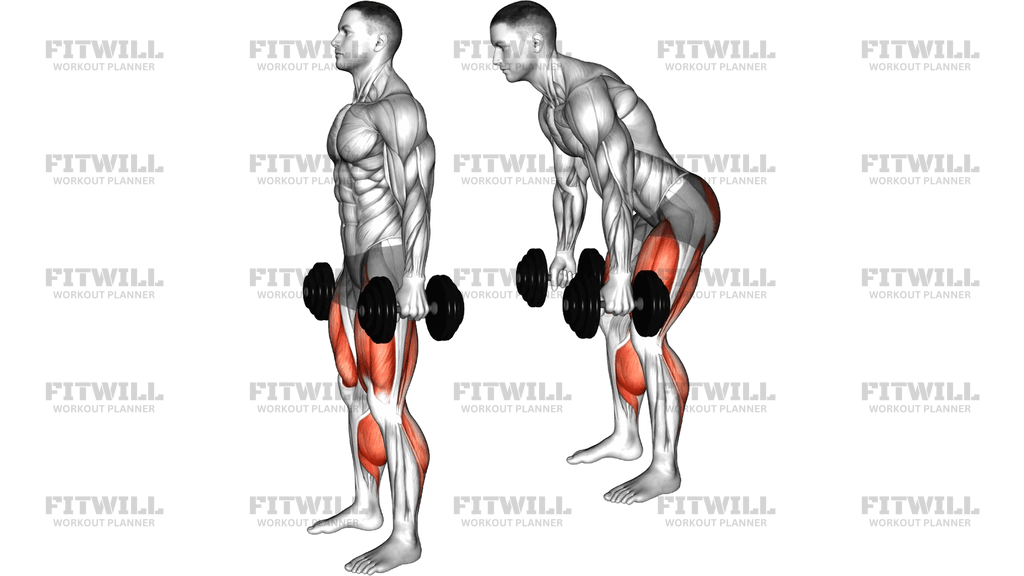
Instructions
- Stand with your feet about hip-width apart and hold a dumbbell in each hand at arm's length, palms facing your thighs, with the weights resting just outside your legs.
- Set your stance so your weight is balanced across the whole foot, then take a breath into your belly and brace your core like you are about to be nudged in the stomach.
- Begin the rep with the Romanian deadlift: push your hips back and let your torso lean forward, sliding the dumbbells down the front of your thighs toward your knees while keeping your back flat and your neck neutral.
- Hinge only as far as you can while maintaining a neutral spine and straight knees with a soft bend — most people feel a strong hamstring stretch when the dumbbells reach mid-shin or knee level.
- Drive your hips forward and squeeze your glutes to return to a full standing position, keeping the dumbbells close to your legs the whole way up.
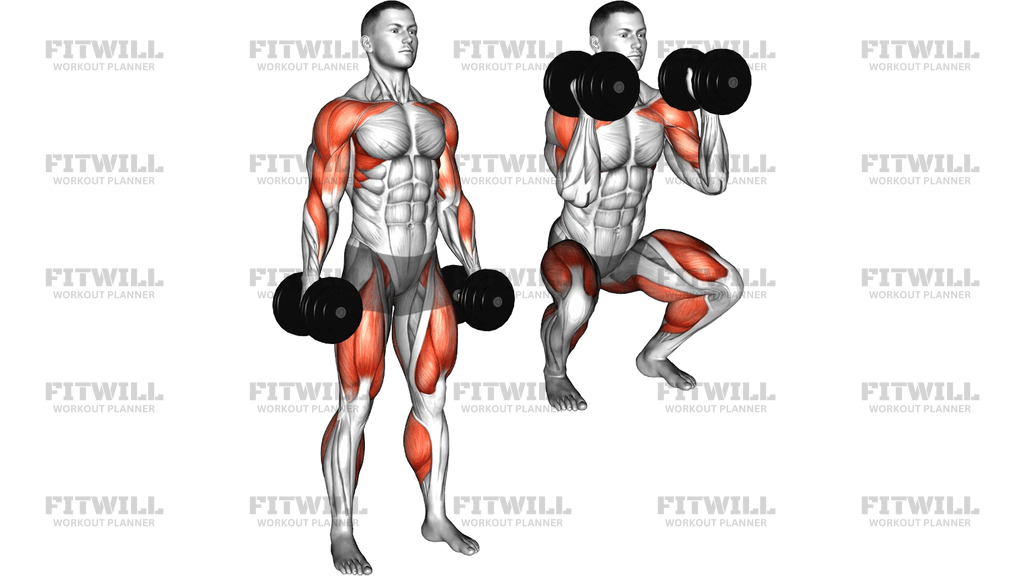
- Without pausing, lower into a squat: bend your knees and hips together, let the dumbbells hang straight down in front of you, and descend until your thighs are at least parallel to the floor with your heels planted.
- Push through the floor to stand back up out of the squat, finishing with your hips and knees fully extended and the dumbbells back at your sides.
- Exhale at the top of the squat, re-brace, and take a brief reset breath before starting the next hinge.
- Complete all reps with the dumbbells finishing at your sides, then set them down on the floor with a flat back rather than rounding over to drop them.
Tips & Tricks
- The most common mistake is turning the hinge into a squat, so during the Romanian deadlift phase keep your shin angle nearly vertical and focus on your hips moving back, not your knees bending forward.
- During the squat phase, the opposite error shows up: people keep hinging and lean too far forward. Once you stand from the hinge, lift your chest and let your knees travel forward so the dumbbells hang vertically rather than out over your toes.
- If your lower back rounds at the bottom of the hinge, you have gone deeper than your hamstrings allow — cut the depth back to where your back stays flat; you do not need to touch the dumbbells to the floor.
- Keep the dumbbells in light contact with your legs through the hinge but let them hang freely in the squat; gripping them tight and pulling them up with your arms fatigues your grip and pulls your shoulders forward.
- Choose a weight you could strictly Romanian deadlift for the target reps, since the combined pattern taxes your hamstrings and grip far more than either lift alone.
- Reset your brace at the top of every rep. Doing the hinge and squat on one long held breath fatigues your lower back and degrades your spine position by the middle of the set.
- If your heels lift in the squat, widen your stance slightly or turn your toes out a few degrees; forcing depth on a narrow stance pushes your weight onto your toes.
- Film yourself from the side once in a while — from your own view the hinge and squat can feel identical, and a side view instantly shows whether your hips are actually traveling back or your knees are doing all the work.
- Stop the set when your hinge position slips, not when your legs give out; a rounded-back hinge with heavy dumbbells is the main safety risk in this movement.
Frequently Asked Questions
Which muscles does the Dumbbell Romanian Deadlift To Squat work the most?
The hamstrings and glutes do the bulk of the work, with the hamstrings loaded hardest during the hinge and the glutes and quads driving the squat. Your lower back, core, and grip work throughout to hold position and control the dumbbells.
Is the Dumbbell Romanian Deadlift To Squat suitable for beginners?
It can be, but only after you can perform a Romanian deadlift and a bodyweight squat with clean form separately. If either pattern is still new to you, spend a few weeks on each in isolation before chaining them together.
Should the dumbbells touch the floor during the Romanian deadlift portion?
No — this is a hinge, not a deadlift from the floor. Lower the dumbbells to around knee or mid-shin height, or wherever you reach a strong hamstring stretch with a flat back, then stand back up.
How deep should I squat in the Dumbbell Romanian Deadlift To Squat?
Aim for at least thighs parallel to the floor while keeping your heels down and your torso as upright as your mobility allows. Depth without position is not worth much, so build depth gradually if your ankles or hips limit you.
Why do my lower back and grip fatigue before my legs on this exercise?
Both the hinge and the squat keep your spinal erectors and forearms under continuous tension, so they accumulate fatigue faster than the larger leg muscles. Lighter dumbbells, a firm but relaxed grip, and resetting your brace between reps all help.
Can I substitute a barbell or kettlebells for the dumbbells?
Yes. Kettlebells hang in nearly the same position and work well, while a barbell changes the weight path to the front of your shins and makes the transition between the hinge and squat less natural, so dumbbells or kettlebells are the better fit.
How many reps and sets should I do of the Dumbbell Romanian Deadlift To Squat?
Two to four sets of eight to twelve controlled reps covers most goals. Because form breaks down when your lower back and grip tire, favor ending sets a couple of reps before failure over grinding out extra reps.
Should I do the hinge and squat as one continuous flow or pause between them?
Keep the transition smooth but not rushed, and stand fully upright between the two phases so each pattern gets its own complete range. Pausing briefly at the top to re-brace is fine and often improves the quality of later reps.
Is it safe for my lower back to combine a deadlift and squat with dumbbells?
With a neutral spine, a braced core, and a weight you can control, this is a demanding but safe combination. The risk comes from rounding in the hinge or letting the dumbbells drift forward in the squat, so cut depth or weight the moment either happens.