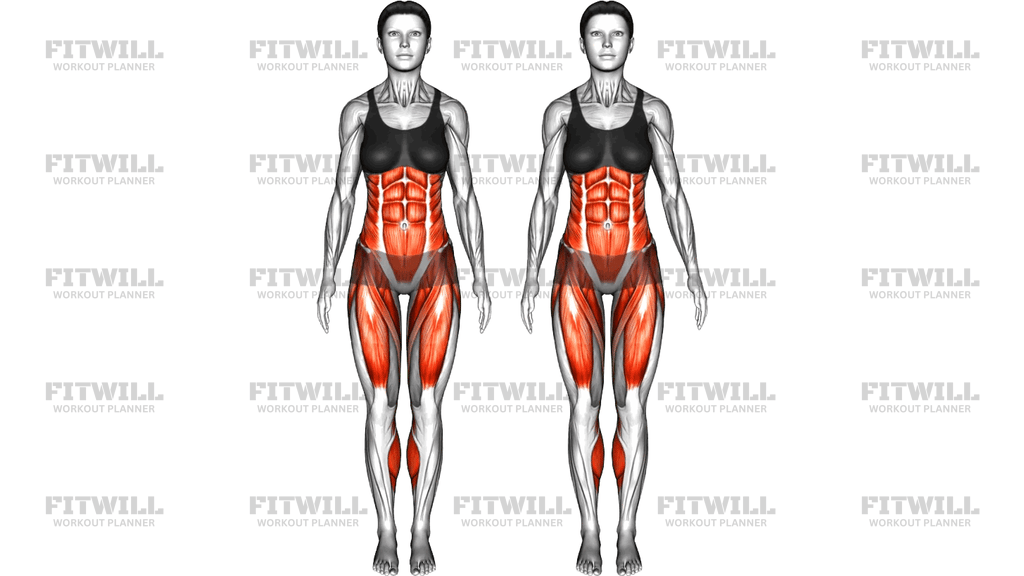
Bodyweight Split Squat Hold
The Bodyweight Split Squat Hold is an isometric exercise where you hold a staggered, split stance position with one leg forward and one leg back, keeping your knees bent and your body lowered for a set period of time. Instead of moving up and down through repetitions, you settle into the position and fight to stay there, which creates sustained tension through the front leg's quadriceps and glutes while the rear leg and trunk work to keep you stable. It looks deceptively simple from the outside, but within twenty to thirty seconds most people feel a deep burn in the front thigh.
This exercise is especially useful for building single-leg strength and endurance without any equipment, making it a solid choice for home training, warm-ups, or travel workouts. Because each leg works independently, it also exposes and helps correct side-to-side differences in strength and balance that exercises like regular squats can hide. Runners, cyclists, and field sport athletes benefit from the knee and hip stability it develops, and it serves as a good stepping stone toward lunges, step-ups, and more demanding single-leg work.
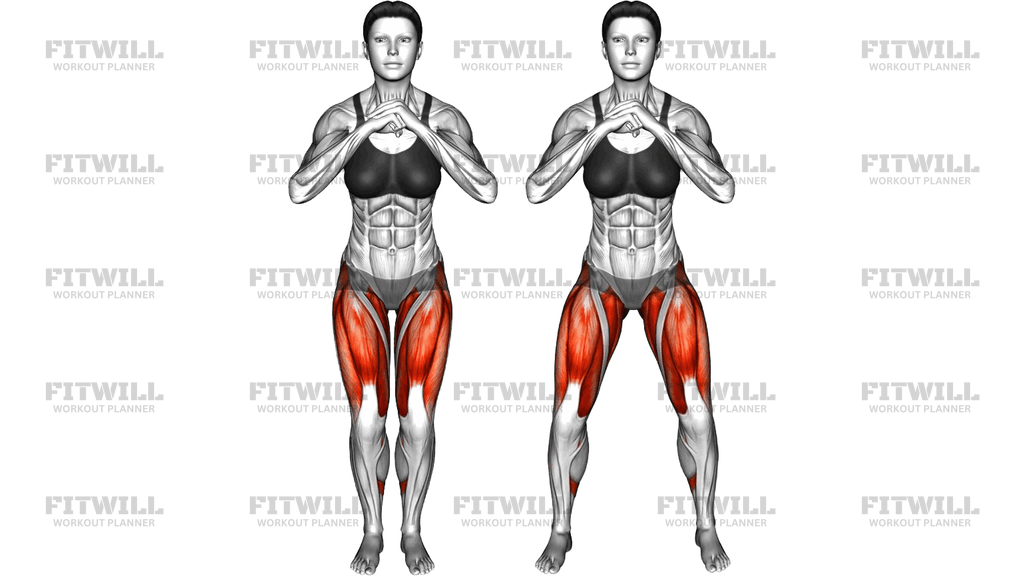
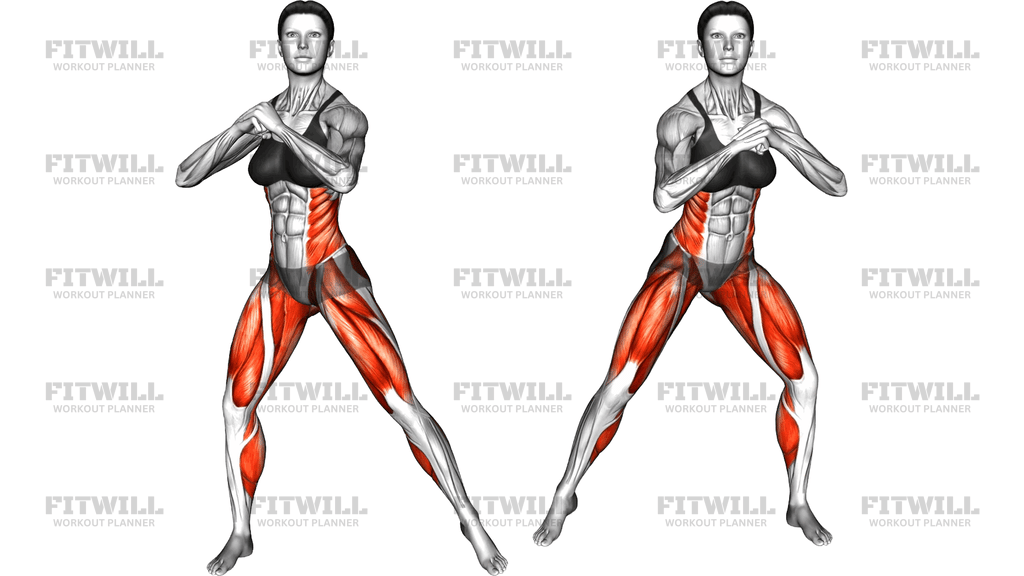
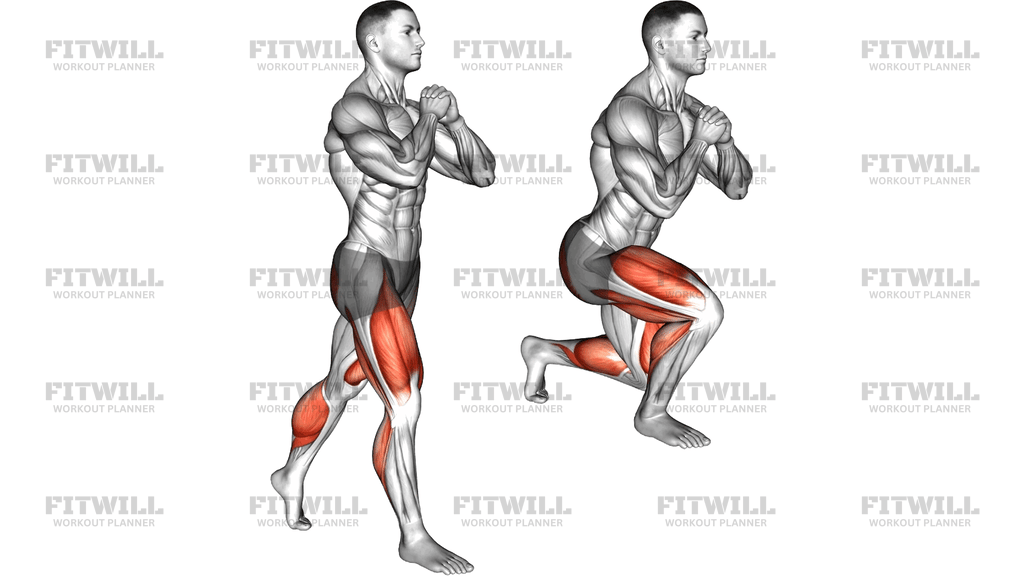
Setup matters more than people expect. A stance that is too narrow turns the hold into a balance struggle and piles stress onto the front knee, while an excessively long stance limits how low you can comfortably sit and strains the hip flexor of the back leg. Aim for a stance roughly the length of your own stride, with the back heel lifted and the weight spread between the front foot's whole base and the ball of the back foot. Keeping the torso upright with hands clasped at the chest, as shown in the standard position, helps you stay tall and balanced rather than collapsing forward.
To execute the hold well, lower until both knees are bent close to ninety degrees, with the front knee stacked over or slightly behind the ankle and the back knee hovering just above the floor. Breathe steadily, brace the trunk lightly, and hold that position for the target time without letting the hips rise or the front knee drift inward. When time is up, push through the front foot to stand back up, shake out the legs, and repeat on the other side.
Common use cases include finishers after a lower body session, timed intervals in circuit training, and rehab-style strength work where controlled, low-load tension is preferred. From a safety standpoint, the main things to watch are knee tracking and stopping the set before your form breaks down. If your balance is the limiting factor, hold onto a wall or chair with one hand at first rather than sacrificing position, and progress the difficulty by extending hold times before adding load.
[ Workout Log & Planner ]
Put your next workout in Fitwill
Keep your plan and training log ready when you are.


Instructions
- Stand tall with your feet hip-width apart, then take a long step forward with one leg so your stance feels like a natural stride, roughly two to three feet between your feet.
- Clasp your hands together in front of your chest and lift the back heel so your weight sits on the ball of the back foot.
- Brace your core lightly and keep your chest up and shoulders relaxed, looking straight ahead rather than down at the floor.
- Bend both knees and lower your hips straight down until your front knee is bent near ninety degrees and your back knee hovers a few inches above the floor.
- Check your positions: the front shin should be close to vertical with the knee stacked over the ankle, and your torso should stay upright without leaning heavily over the front thigh.
- Hold this lowered position for the planned time, keeping even tension in both legs and breathing steadily instead of holding your breath.
- If the front knee starts drifting inward or your hips creep upward, reset them immediately rather than letting the position degrade.
- When the hold ends, press through the whole front foot to stand back up to the starting split stance with control.
- Step back to a neutral standing position, shake out your legs, and repeat the hold on the opposite side for the same duration.
Tips & Tricks
- Set your stance width, not just length: keeping the front and back feet roughly hip-width apart sideways gives you a stable base, whereas a tightrope stance makes the hold a balance test.
- The most common failure point is the front knee caving inward as fatigue builds — think of spreading the floor with your front foot to keep the knee tracking over the toes.
- If your hips rise halfway through the hold, that is your legs trying to escape the tension. Instead of following them up, accept a shorter hold time and build up gradually.
- Keep the load on the front leg by pressing that foot into the floor; if the back leg is doing all the work, shorten the stance slightly until the front thigh is genuinely loaded.
- Do not let the back knee rest on the floor. Hovering just above it keeps constant tension and protects the kneecap from pressure.
- A slight forward torso lean is fine, but if you are folded over your front thigh, your stance is probably too long or your core has stopped bracing.
- Time your holds with a clock or app rather than guessing — the difference between twenty and forty seconds is significant with an isometric like this.
- If balance is shaky early on, place one hand lightly on a wall or chair for support and wean off it as your stability improves.
- Start with twenty to thirty seconds per side and only extend hold times once you can keep the knee stacked and hips level the entire duration.
Frequently Asked Questions
What muscles does the Bodyweight Split Squat Hold work?
The front leg's quadriceps do most of the work, with the glutes supporting hip extension and holding you down in the lowered position. The hamstrings, calves of the rear leg, and core stabilizers also stay active throughout the hold.
How long should I hold the Bodyweight Split Squat Hold?
Twenty to thirty seconds per side is a good starting point for most people. As you get stronger, work up to forty-five or sixty seconds per side before making the exercise harder in other ways.
Is the Bodyweight Split Squat Hold good for beginners?
Yes, provided you use a comfortable stance depth and can keep the front knee over the ankle. Beginners can shorten the range by not lowering as far, or hold a wall lightly for balance until control improves.
Why does my front knee hurt during the Bodyweight Split Squat Hold?
Knee discomfort usually comes from the front knee drifting inward, pushing too far past the toes, or sitting too low too early. Reset the knee over the ankle, reduce the depth slightly, and stop the set when you can no longer hold the position cleanly.
Should my back knee touch the floor during the hold?
No, keep it hovering an inch or two above the floor. Touching down removes tension and puts direct pressure on the kneecap.
How is the Bodyweight Split Squat Hold different from a lunge?
A lunge is dynamic, moving through repetitions up and down, while the split squat hold is isometric, holding one fixed lowered position under continuous tension. The hold builds endurance and stability in a specific joint angle rather than strength through a full range.
What can I use instead of the Bodyweight Split Squat Hold if it is too difficult?
Try a shorter stance with less depth, a wall sit for a simpler isometric, or a supported split squat hold with one hand on a chair. Reverse lunges with a slow tempo are another way to build up the same leg strength.
How do I know my stance length is correct?
When you lower down, both knees should bend to roughly ninety degrees at the same time, with the front shin near vertical. If the front knee shoots far past your toes or the back hip pinches, adjust the stance longer or shorter accordingly.
How should I breathe during the Bodyweight Split Squat Hold?
Breathe slowly and steadily through the entire hold instead of holding your breath. Bracing the trunk lightly is helpful, but continuous breathing keeps the hold sustainable and your tension controlled.