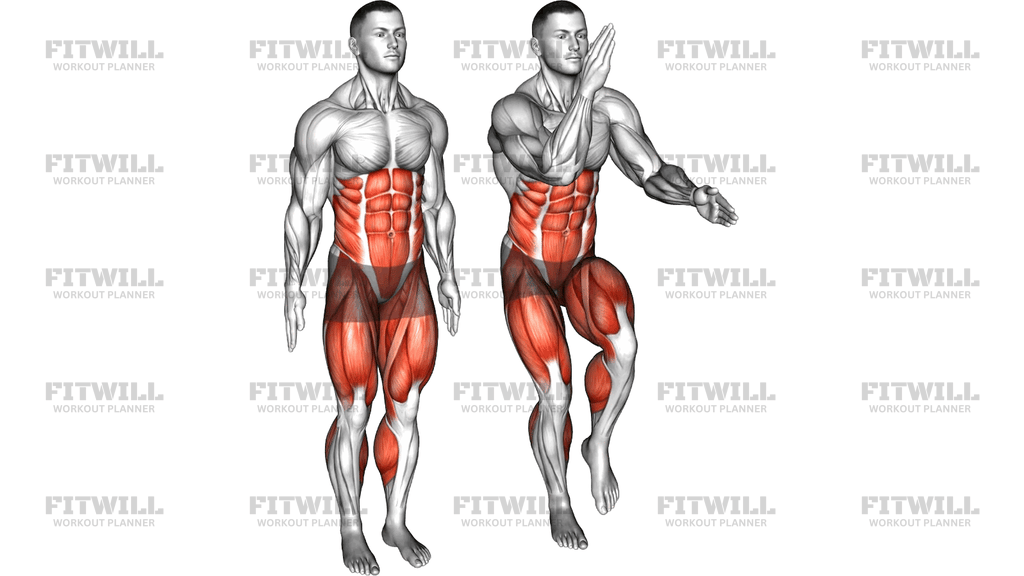
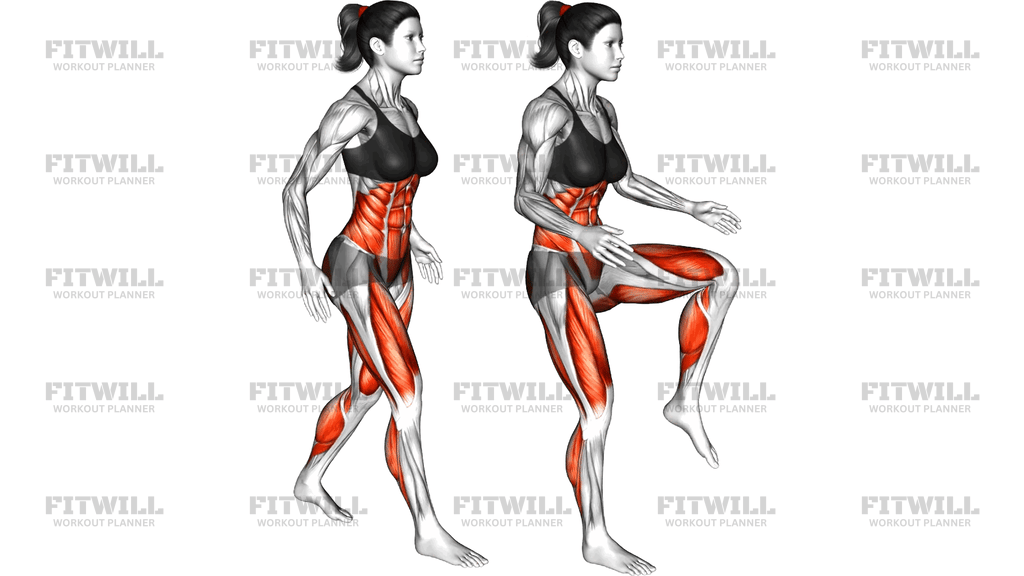
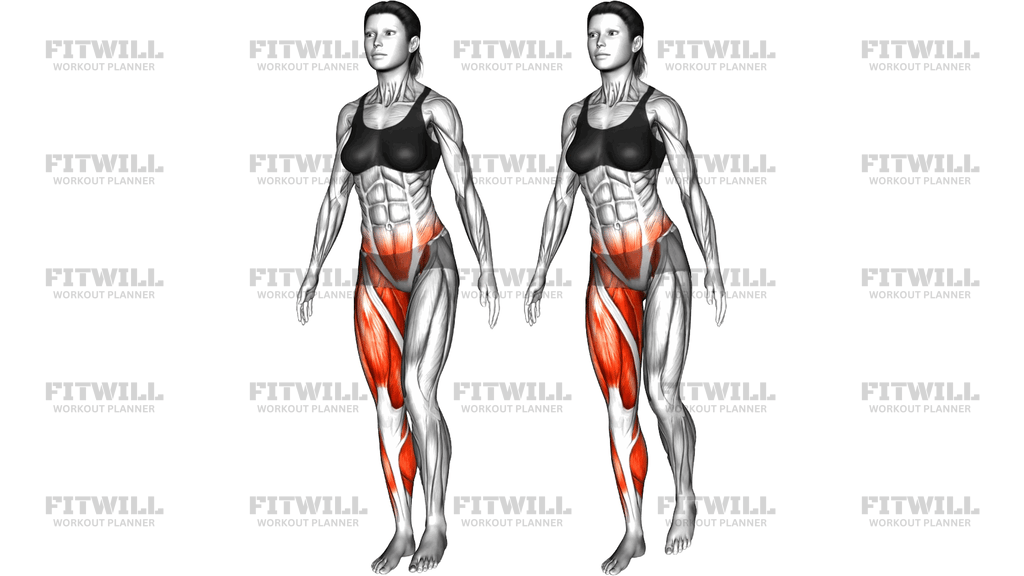
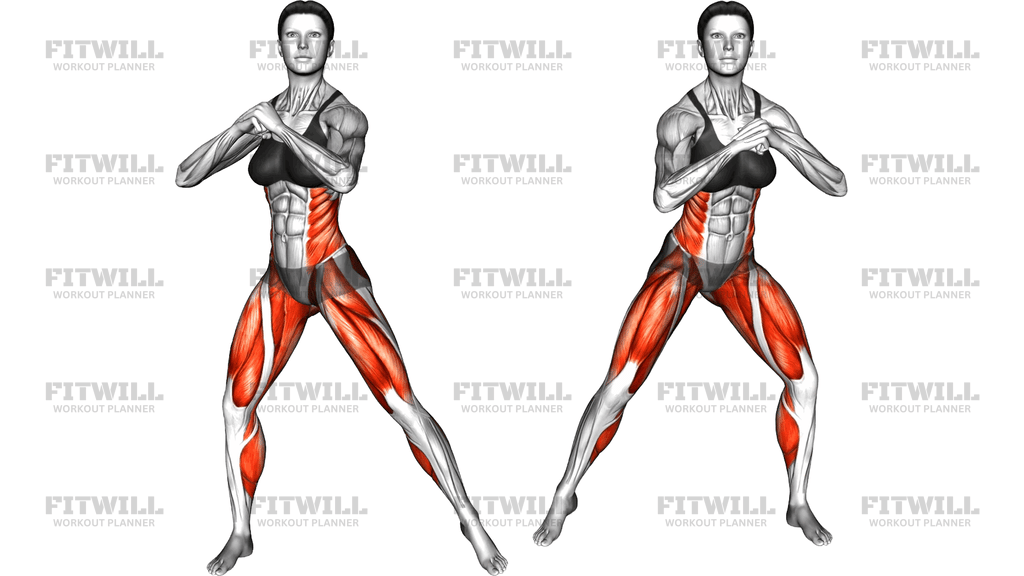
Bodyweight Quarter Squat
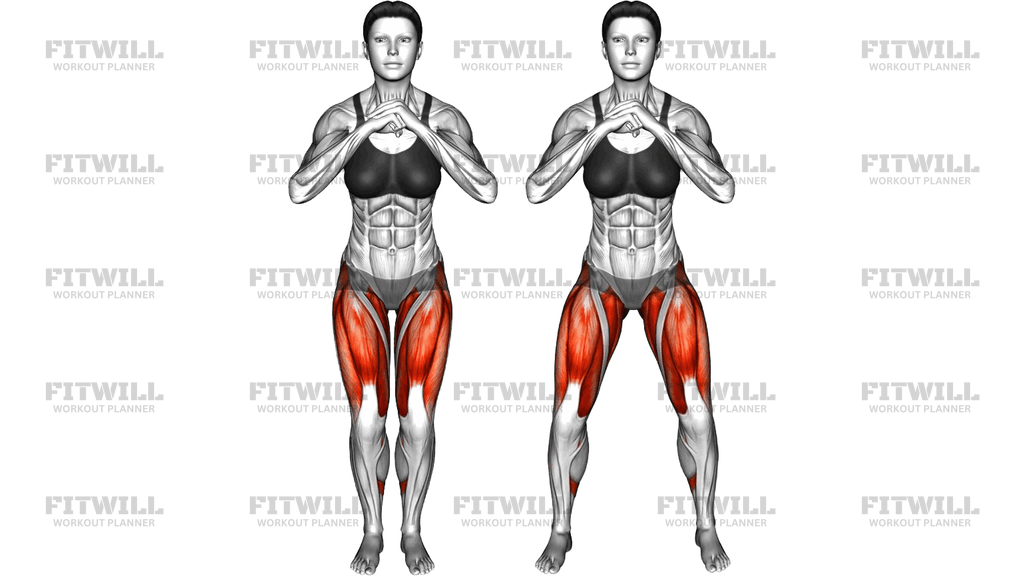
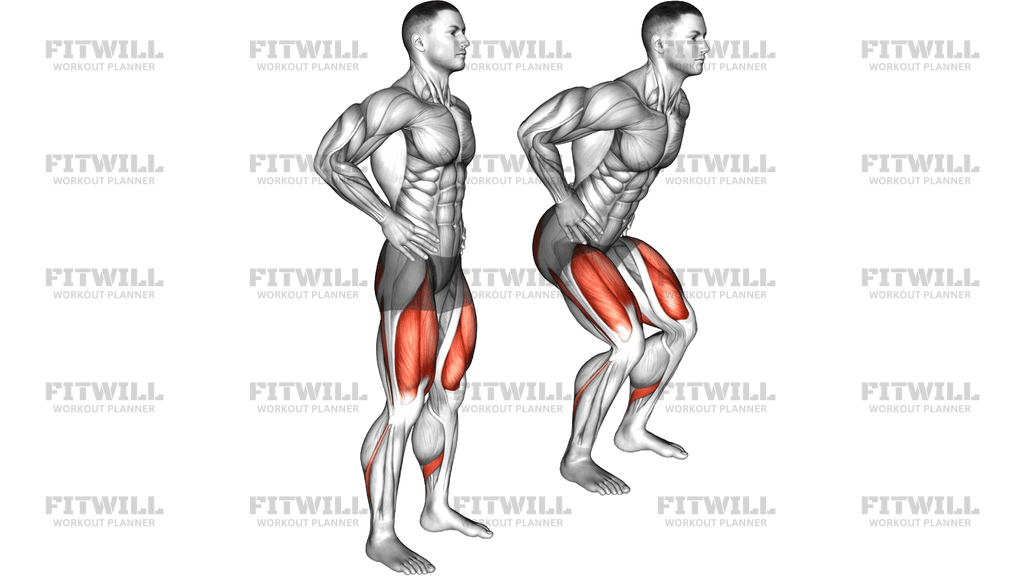
The Bodyweight Quarter Squat is a shallow knee-bend performed from a tall standing position with no equipment, making it one of the simplest ways to load the legs with just your own body. Unlike a full or parallel squat, the quarter squat stops well above parallel — you only descend a short distance, roughly a quarter of the way down, before driving back up to standing. In the setup shown here, the hands rest lightly on the hips and the feet stay planted about hip-width apart, which keeps the emphasis squarely on the thighs and hips without any balance aids or external load.
This movement is a great fit for beginners who are still learning what a squat should feel like, for older adults who want to maintain leg strength and independence, and for anyone rehabbing back into knee-dominant training after time off. Because the range is short, the knees and hips stay in a comfortable zone, and most people can hold good posture throughout. It is also useful as a warm-up drill before heavier squatting or running sessions, since it wakes up the quads, glutes, and calves without producing much fatigue.
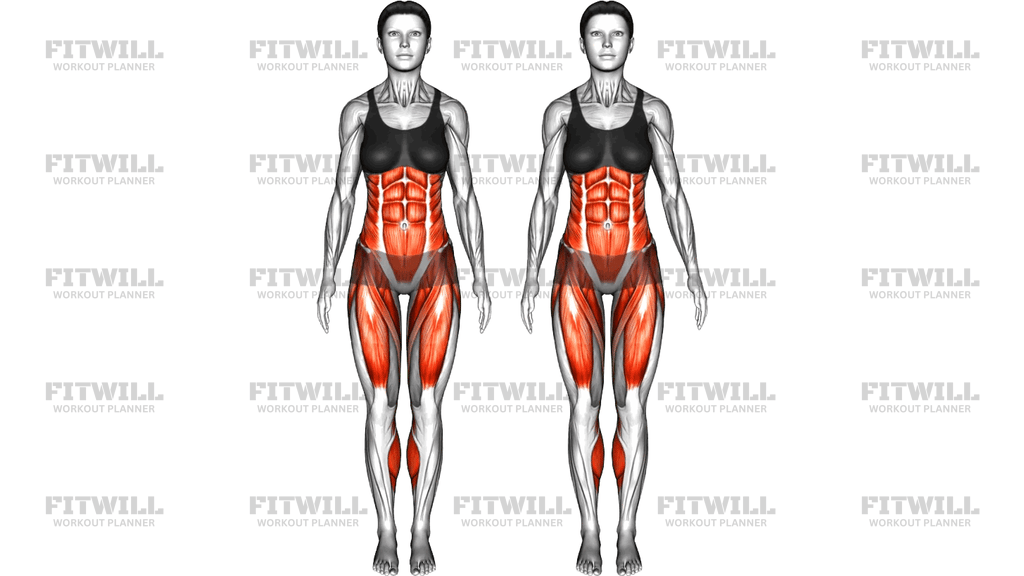
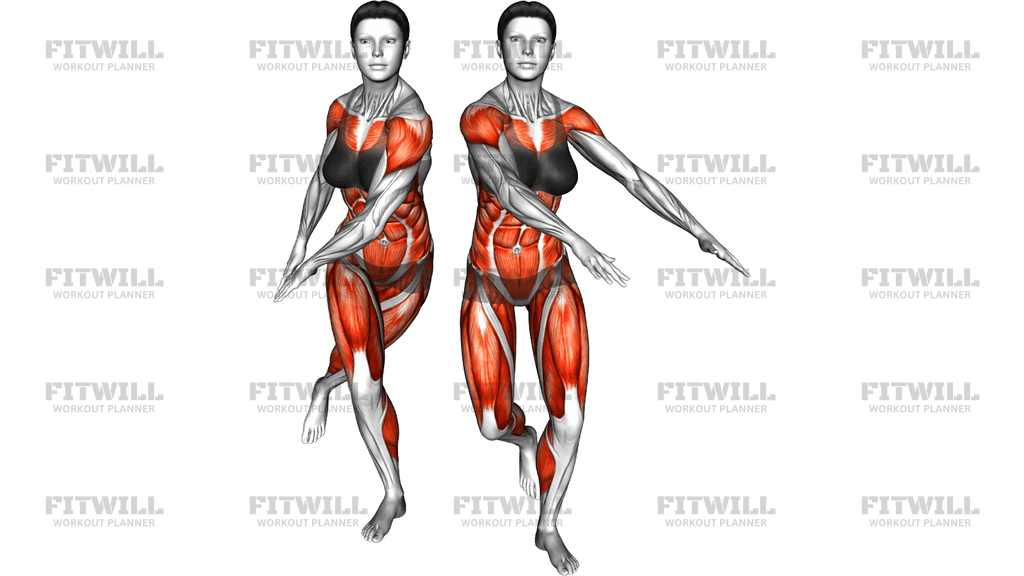
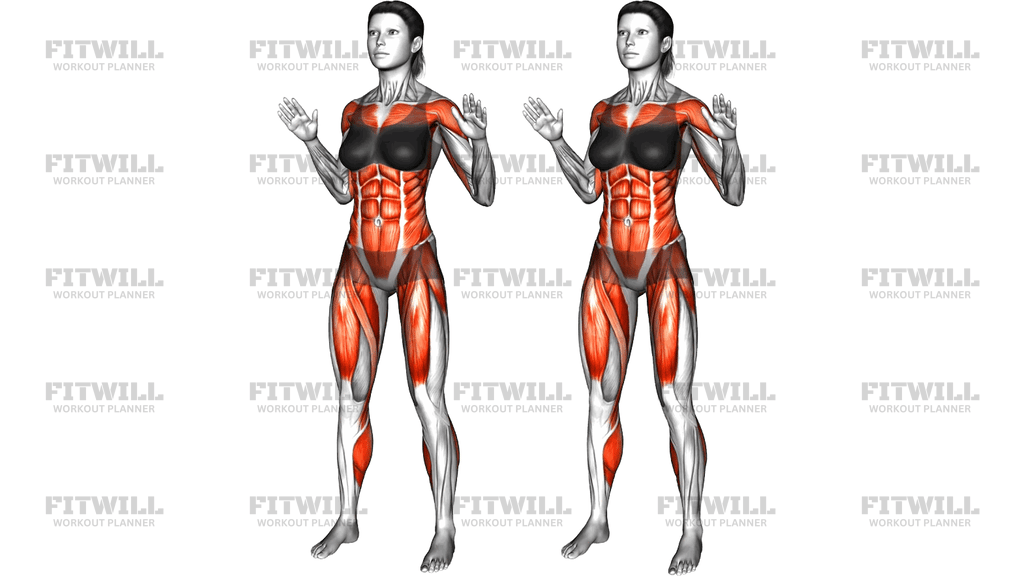
The main work is done by the quadriceps at the front of the thigh, which extend the knees as you stand back up. The glutes help control the short descent and finish the movement at the top, while the hamstrings and calves stabilize the knee and ankle joints through the small arc of motion. Because you remain upright with your hands on your hips, your trunk muscles also work isometrically to keep your torso tall — you will feel your core engaged if you brace properly.
Setup matters more than it might seem for such a short movement. Standing tall with the chest open, feet flat and about hip-width apart, and toes turned slightly outward gives your knees a clear track to travel forward and outward. Keep the weight balanced across the whole foot rather than letting it drift to the toes. From there, the movement is simply a small, controlled sit-back-and-down: the hips and knees bend together, the torso leans forward only slightly, and the shins stay close to vertical.
Execution quality in the quarter squat comes down to control and repeatability. Descend smoothly over two counts, pause briefly at the bottom of the short range, then push the floor away to return to a full stand with the hips and knees extended. Avoid bouncing at the bottom or letting the knees cave inward, and keep your hands on your hips so you are not tempted to swing your arms or lean excessively. A good cue is to think of stopping when your knees reach about a quarter of the depth you would hit in a full squat.
In practice, the Bodyweight Quarter Squat shows up in warm-ups, beginner full-body circuits, active recovery days, and higher-rep endurance work. Because it places less demand on mobility than a deep squat, it is an accessible entry point for people with stiff hips or ankles, and it can be progressed later by adding depth, tempo, load, or volume as strength improves.
[ Workout Log & Planner ]
Put your next workout in Fitwill
Keep your plan and training log ready when you are.


Instructions
- Stand with your feet about hip-width apart, toes turned slightly outward, and place your hands on your hips.
- Lift your chest, look straight ahead, and set your weight evenly across both feet from heel to toe.
- Take a breath and brace your abdominal muscles to keep your torso tall and steady.
- Push your hips back slightly and bend your knees, allowing them to travel forward and in line with your toes.
- Stop the descent after a short distance — roughly a quarter of the way toward a full squat, well above parallel.
- Pause briefly at the bottom, keeping your heels flat and your torso leaning only slightly forward.
- Press through the whole foot to straighten your hips and knees, returning to a tall standing position.
- Exhale as you rise, then take a fresh breath at the top before starting the next repetition.
- Reset your stance and posture at the top of each rep so every squat starts from the same solid position.
Tips & Tricks
- A common mistake is drifting into a deeper squat than intended — pick a reference point, such as when your thighs are still well above parallel, and stop there consistently.
- If your knees collapse inward as you bend, consciously drive them out toward your pinky toes during both the descent and the ascent.
- Rising onto the toes usually means you are rushing or squatting too deep for the quarter range; slow the tempo down and keep the heels glued to the floor.
- Hands on the hips are there for posture, not leverage — avoid pressing so hard on your thighs or hips that you help yourself up with your arms.
- Keep the forward torso lean minimal; if you feel the movement shifting into your lower back, lift your chest and sit back into the hips a little more.
- For a stronger quad and calf emphasis, try pausing two to three seconds at the bottom of the shallow range on some reps.
- Since the range is short, reps can pile up quickly — start with a moderate number and add gradually so your knees are not surprised by volume.
- If your ankles feel tight and your heels want to lift, widen your stance slightly and turn the toes out a bit more rather than forcing the depth.
Frequently Asked Questions
How deep should I go in the Bodyweight Quarter Squat?
Descend only about a quarter of the way toward a full squat, stopping well above parallel with your thighs still angled down rather than level. The exact depth matters less than hitting the same shallow range on every rep.
Which muscles does the Bodyweight Quarter Squat work?
The quadriceps at the front of the thighs do most of the work, with the glutes assisting on the way up. The hamstrings and calves stabilize the knee and ankle joints through the short range of motion.
Is the Bodyweight Quarter Squat good for beginners?
Yes, it is one of the friendliest starting points because the shallow range keeps stress on the knees and hips low while you learn the squat pattern. Once you can control it comfortably, you can progress toward deeper squats.
Why are the hands placed on the hips in this exercise?
Hands on the hips keep your arms out of the movement and make it easier to stay upright, since you cannot use arm swing or forward hand reach to balance. It also makes it easy to feel whether your torso is staying tall.
What is the most common mistake in the Bodyweight Quarter Squat?
The most common errors are drifting into a much deeper squat than intended and letting the knees cave inward. Both are fixed by controlling the descent and actively tracking the knees over the toes.
Can I use the Bodyweight Quarter Squat as a warm-up?
Absolutely. A set of ten to fifteen smooth reps is a simple way to warm up the quads, glutes, and calves before squatting, running, or jumping.
What can I do if the Bodyweight Quarter Squat feels too easy?
Slow the tempo, add a two to three second pause at the bottom, or increase the rep count. When those feel manageable, progress to deeper bodyweight squats or add external load.
Should my heels stay flat during the Bodyweight Quarter Squat?
Yes, keep your whole foot in contact with the floor throughout the rep. If your heels lift, your weight has shifted too far forward or your stance needs widening.
How does the Bodyweight Quarter Squat differ from a full bodyweight squat?
The quarter version uses only the top portion of the squat range, which reduces knee and hip flexion and places less demand on ankle and hip mobility. A full squat travels all the way to parallel or below and generally produces more overall leg work per rep.
Is it safe to do the Bodyweight Quarter Squat every day?
For most healthy people, yes — the short range and lack of external load make it a low-stress movement. Keep the volume reasonable and stop if you notice persistent knee discomfort rather than normal muscle fatigue.